
The Brandywine Museum offers a tiny peek into a Wyeth family Christmas
The Chadds Ford museum has been collecting dollhouses for years. The holiday exhibition features its latest acquisition.

From Philly and the Pa. suburbs to South Jersey and Delaware, what would you like WHYY News to cover? Let us know!
Most of us will never know what it would be like to join the Wyeth family of artists for the holidays.
But we can peer inside a quirky family passion for miniatures at the Brandywine Museum’s exhibit of extravagant, custom-made dollhouses.
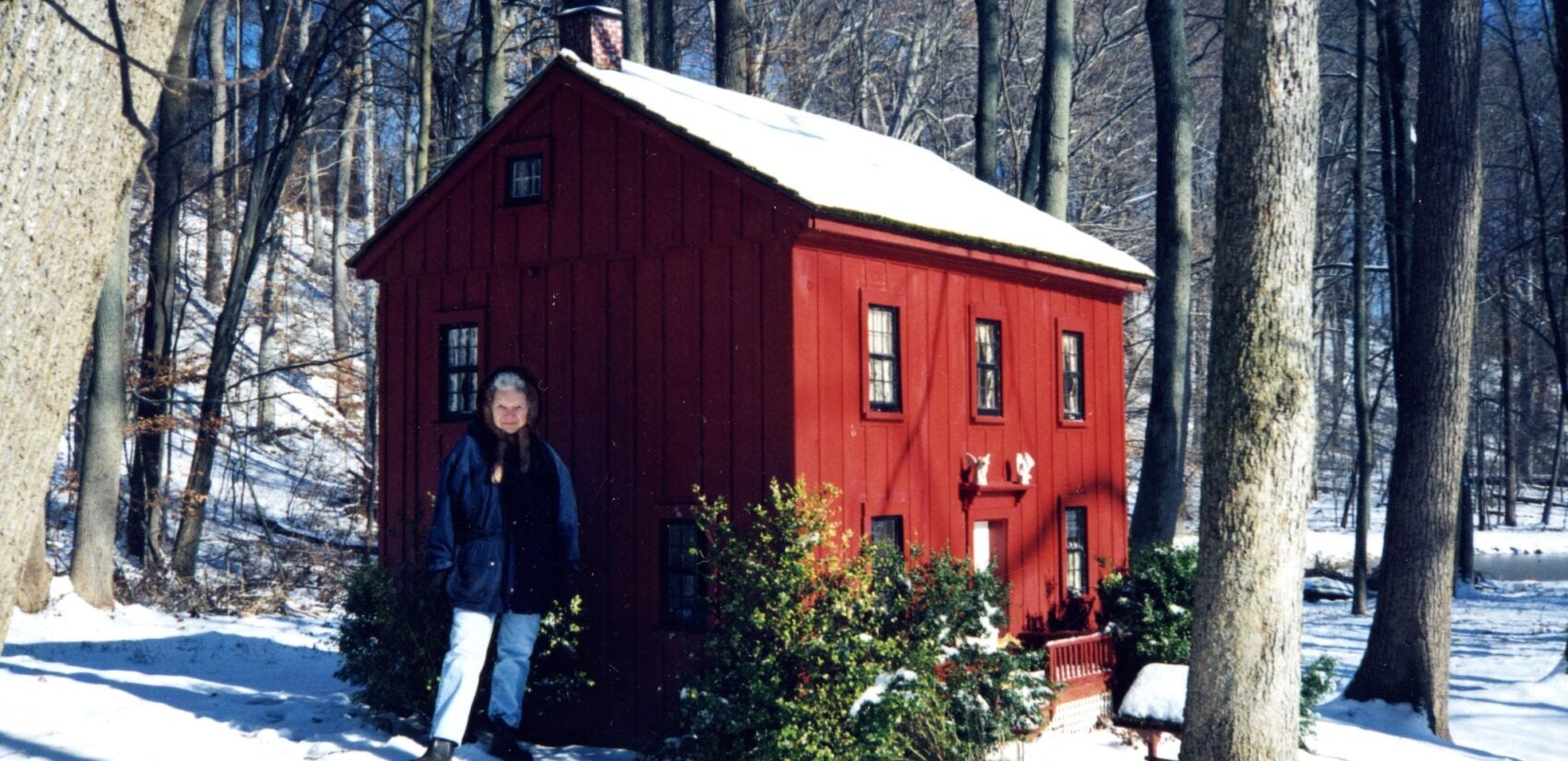
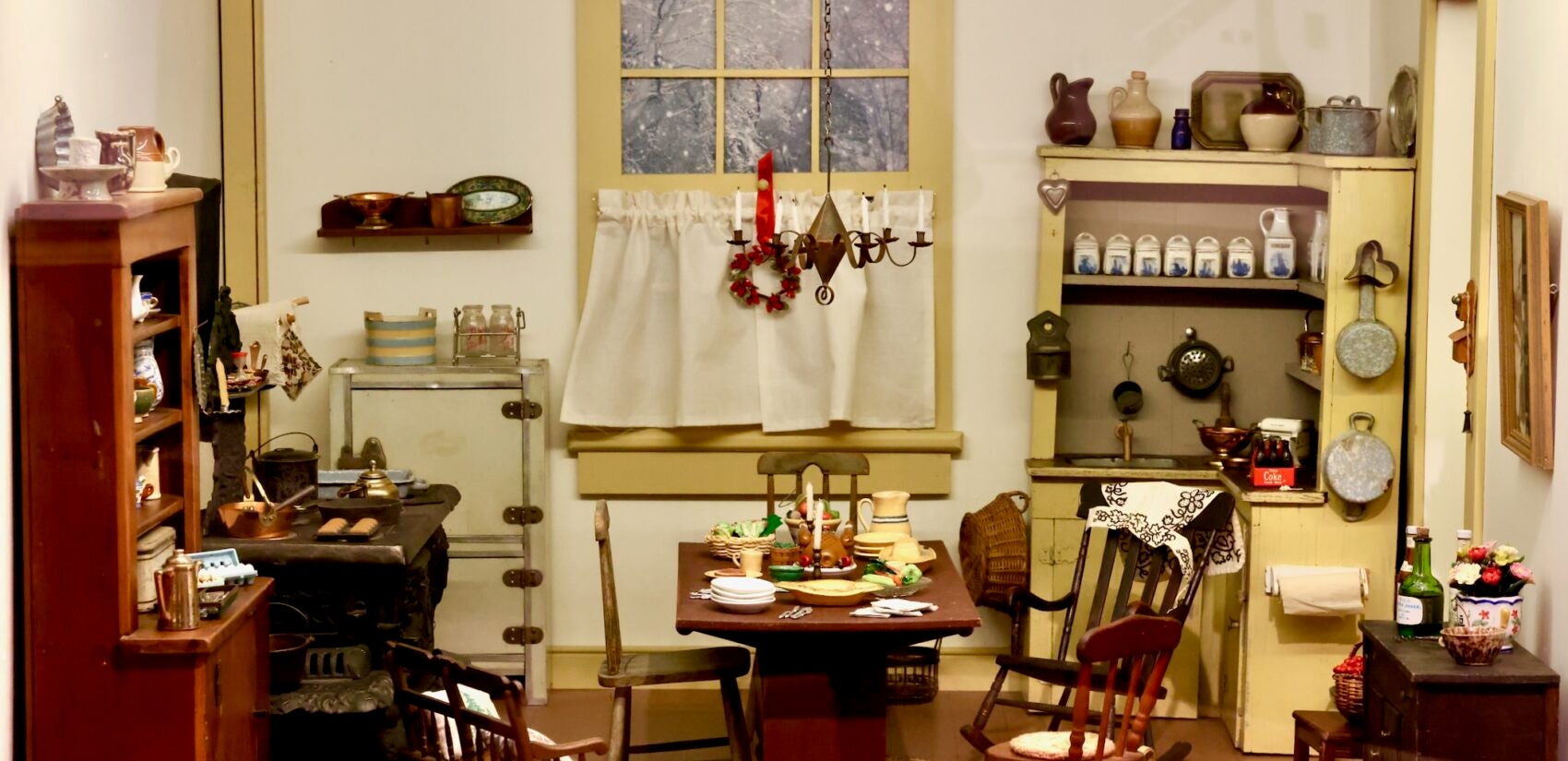
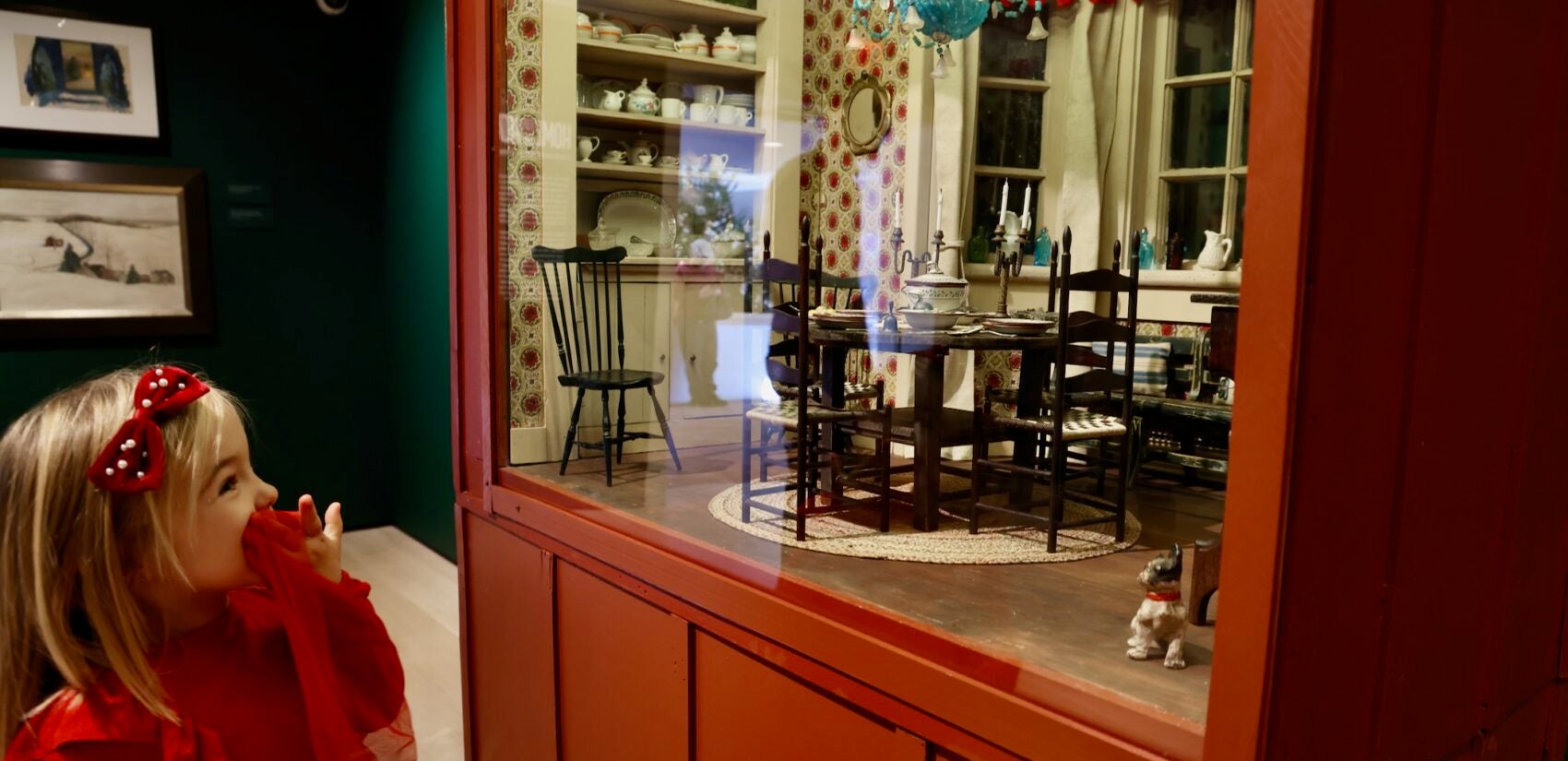
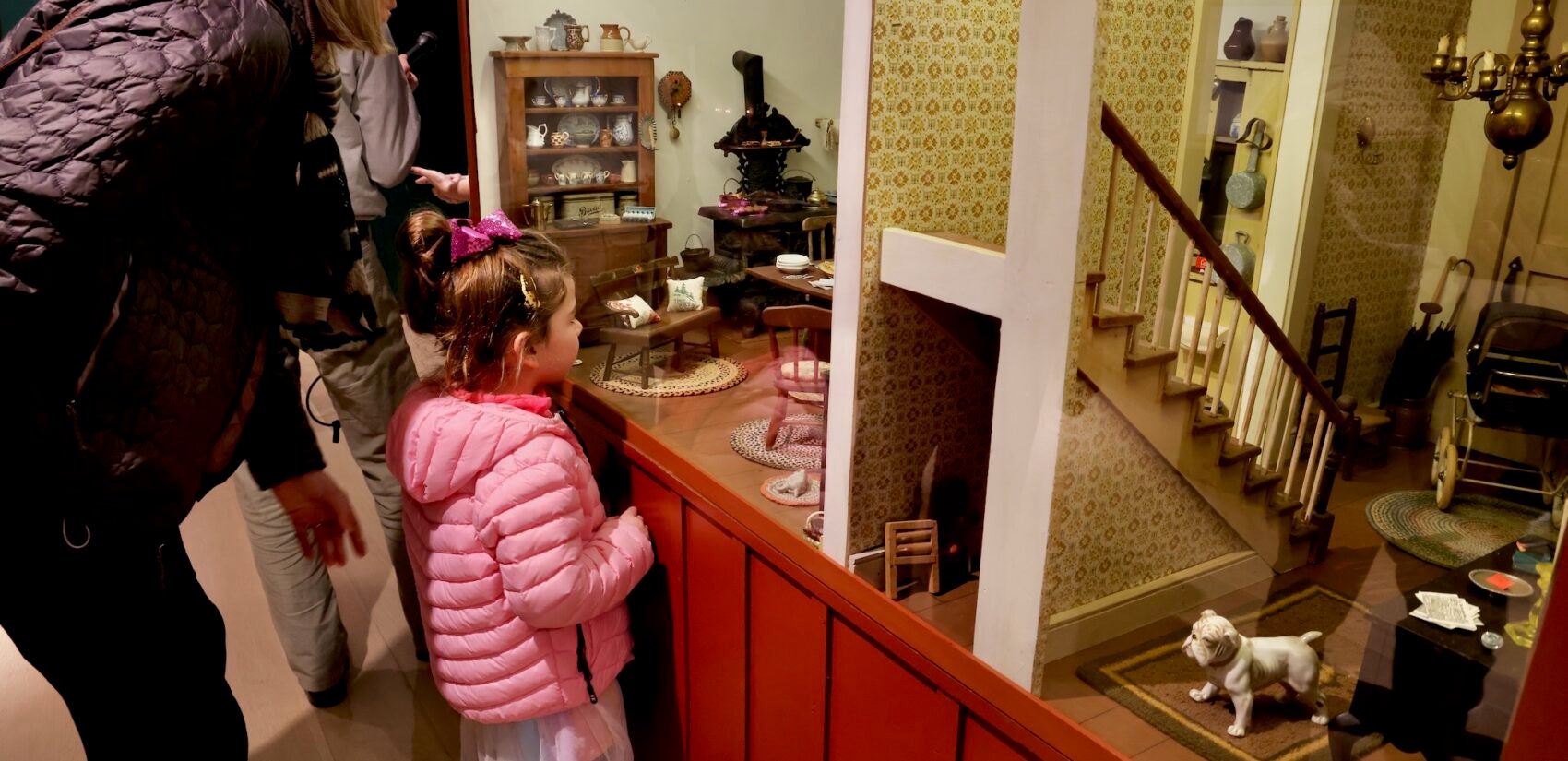
Andrew Wyeth’s sister, Ann Wyeth McCoy, and her husband, John McCoy, had built and outfitted a dollhouse out of a repurposed, 9-foot-tall tool shed. Its six rooms are modular, able to be individually removed from the whole. Two of its six rooms are now on display as part of the Brandywine’s “Home for the Holidays” exhibition.
“There is a long tradition in the Wyeth family of loving miniatures,” said associate curator Kerry Bickford.
“Nathaniel Wyeth, Anne Wyeth McCoy’s elder brother, was building models from the time he was 10. [His father] N.C. Wyeth was an artist and they were growing up in an artistic household,” she said. “Building models, playing with miniatures and building miniatures was something that they were doing from a young age, for a lot of the family.”
The dollhouse is a family affair for a large and complicated artistic dynasty. The McCoys built the house, and Anne’s brother Nathaniel handcrafted furniture for it. An original, miniature painting was contributed by Peter Hurd, an artist who married Anne’s sister, Henriette Wyeth, who was herself an artist.
The family tree gets complicated. The Brandywine Museum has produced a handy chart to keep track of the expansive Wyeth family of artists.
Family patriarch and illustrator N.C. Wyeth and his wife Carolyn had five surviving children, four of whom became artists of note. The youngest, Andrew Wyeth, became the most renowned.
“Many of the daughters married N.C. Wyeth’s art students, so they were also painters and artists,” Bickford said. “Several of his children went on to be practicing artists and even the one who we think of as not being a practicing artist, Nathaniel Wyeth, an engineer, made miniatures and had his own craft practice.”
Hidden clues to the Wyeth family
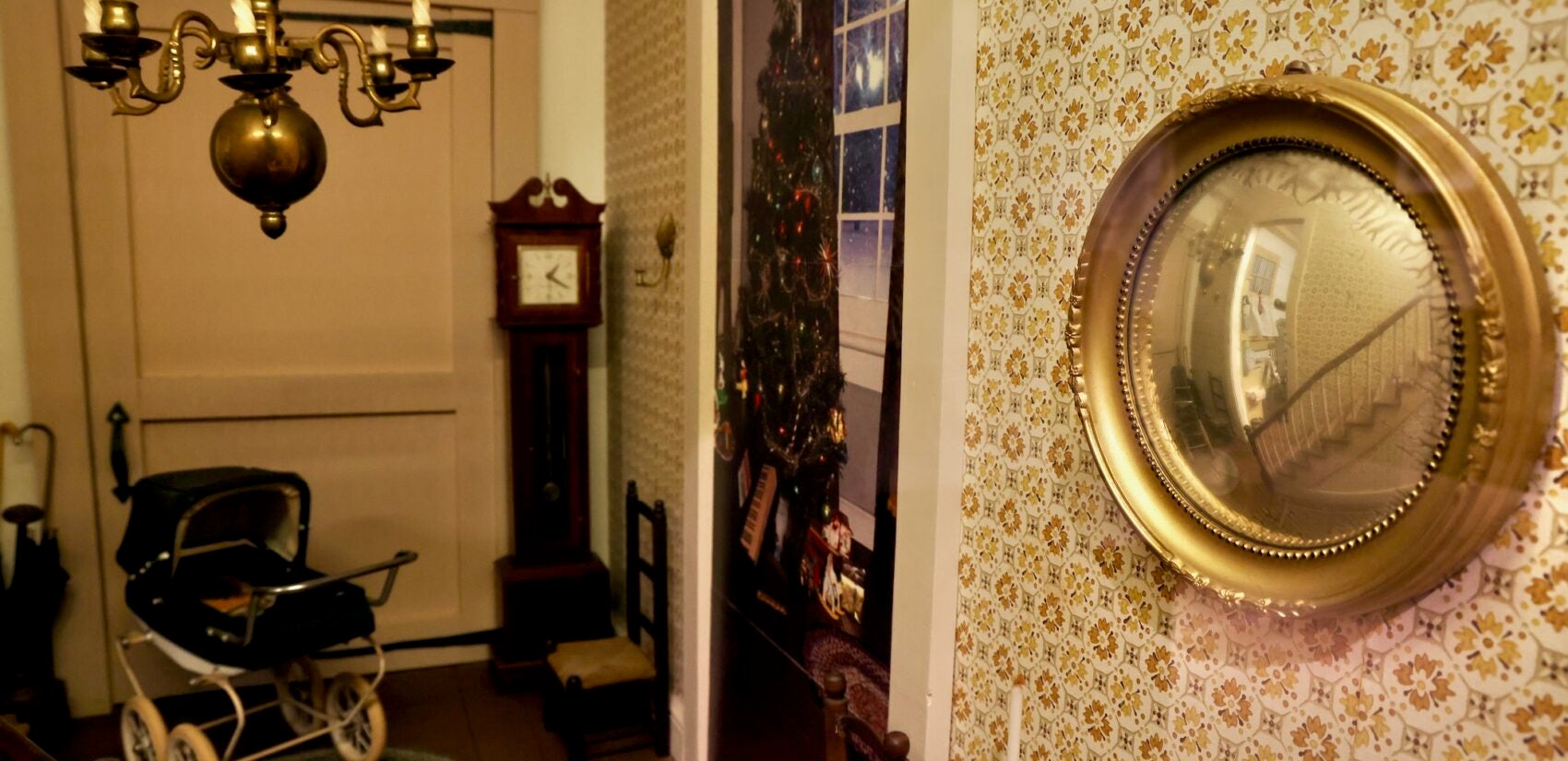
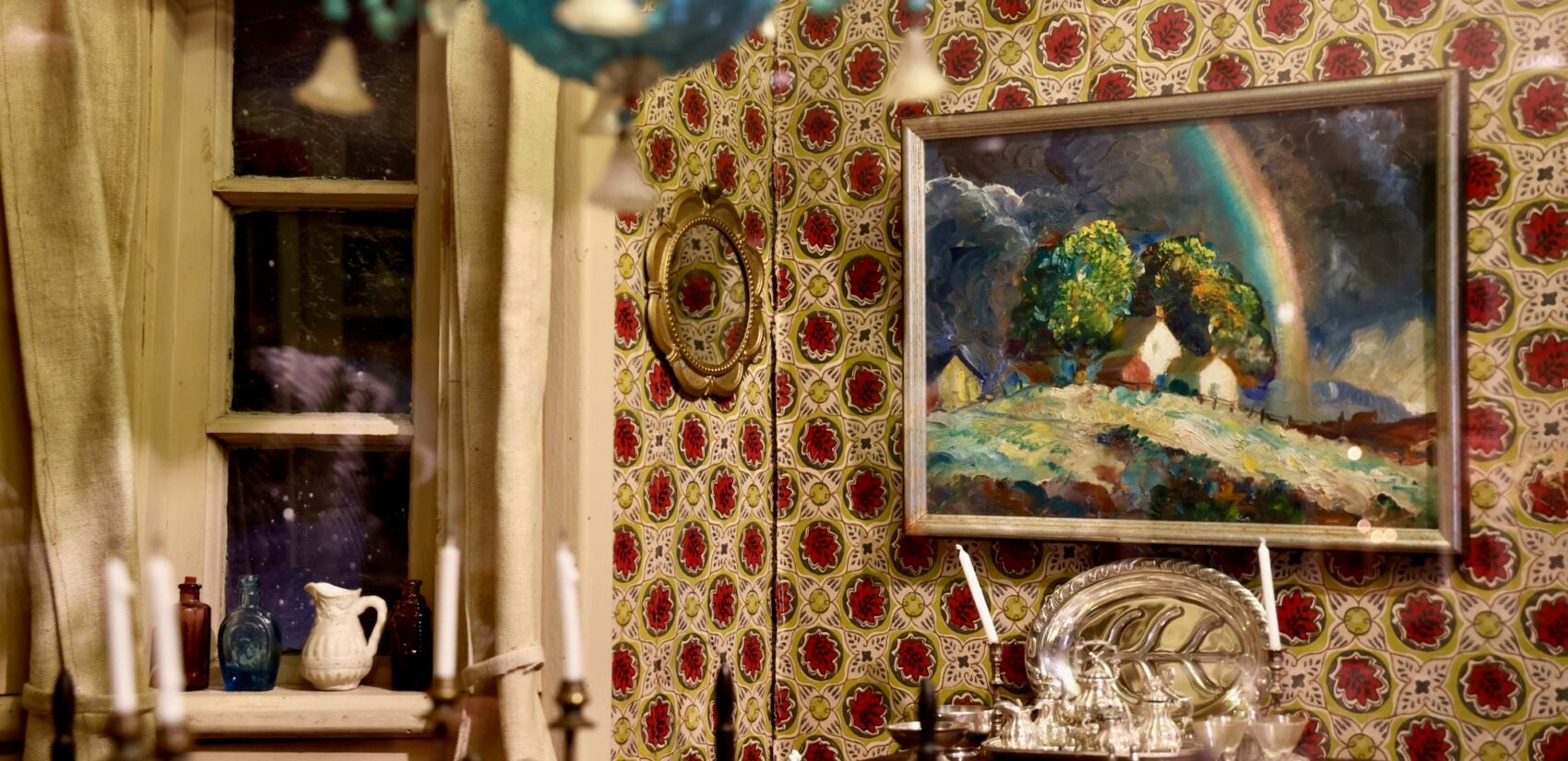
The dollhouse has a few easter eggs that hint at Wyeth family memories and inside jokes. The walls are adorned with miniature versions of paintings by Andrew, Henriette and Jamie Wyeth. In the kitchen is a tiny six-pack of Coca-Cola, which might be a reference to the advertising work N.C. Wyeth did for that company.
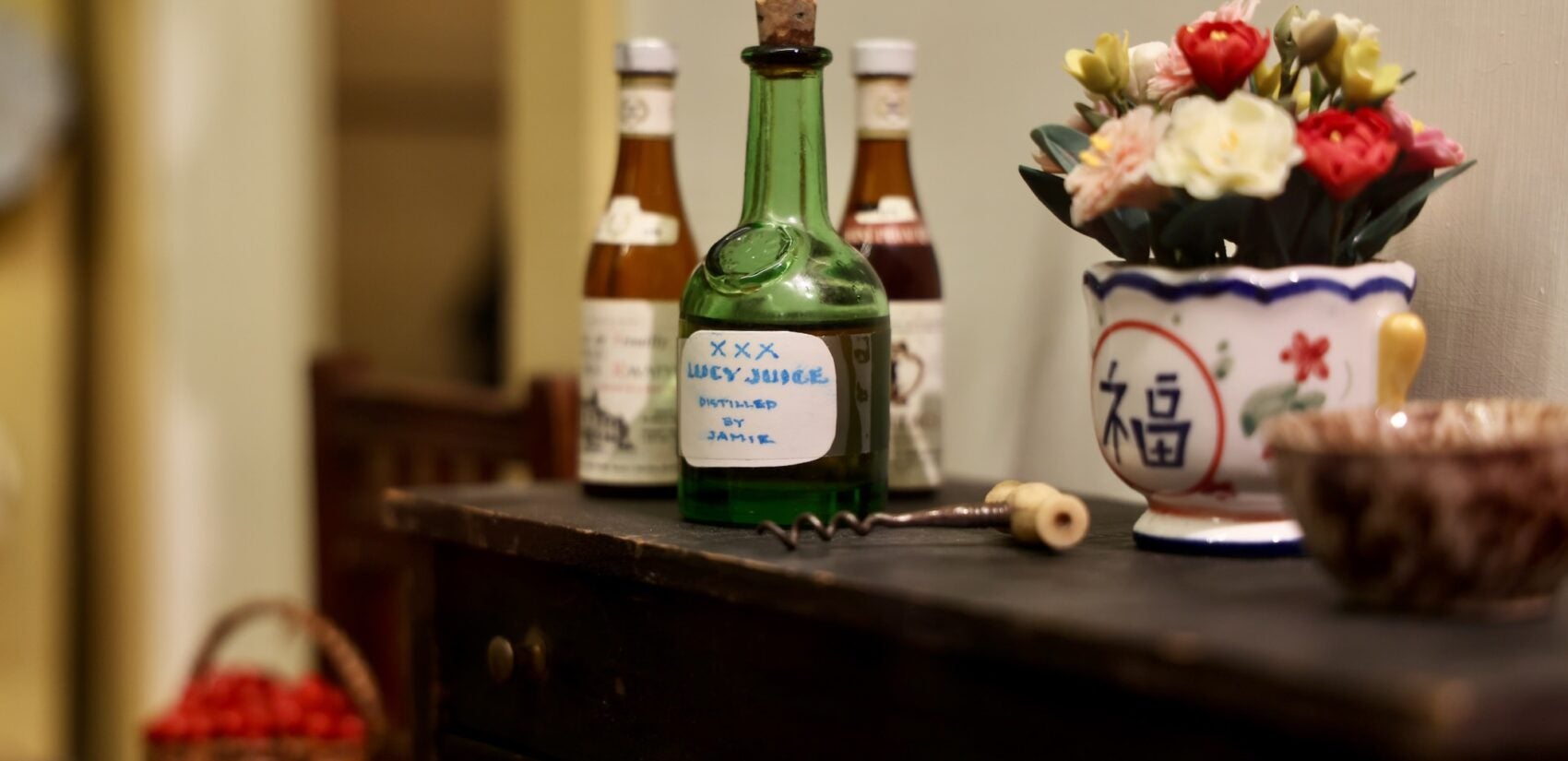
On a small sideboard is a tiny bottle made labeled “Lucy Juice,” in reference to Lucy Farnsworth, the art benefactor who, in 1944, posthumously established the Farnsworth Art Museum in Rockland, Maine, a major repository of the Wyeths’ work.
“Lucy Juice” is the contribution of Jamie Wyeth, Andrew’s son and Ann’s nephew.
“Jamie Wyeth liked to tease Ann Wyeth McCoy that the ghost of Lucy Farnsworth haunted the doll house,” Bickford said. “He likes to leave her an offering to let her know that she didn’t have to cause any trouble.”
Related Content
Dead cats and cataracts: Jamie Wyeth is ‘Unsettled’
The artist is leaning into the strange and his anxieties about cataract surgery in a new art exhibit.
2 years ago
Listen 1:51Brandywine’s newest dollhouse
Over the years the Brandywine Museum has acquired several dollhouses for its collection, including a 1930s commercially fabricated house designed in the International Style of architecture, its starkly modernist rooms furnished with clear acrylic furniture.
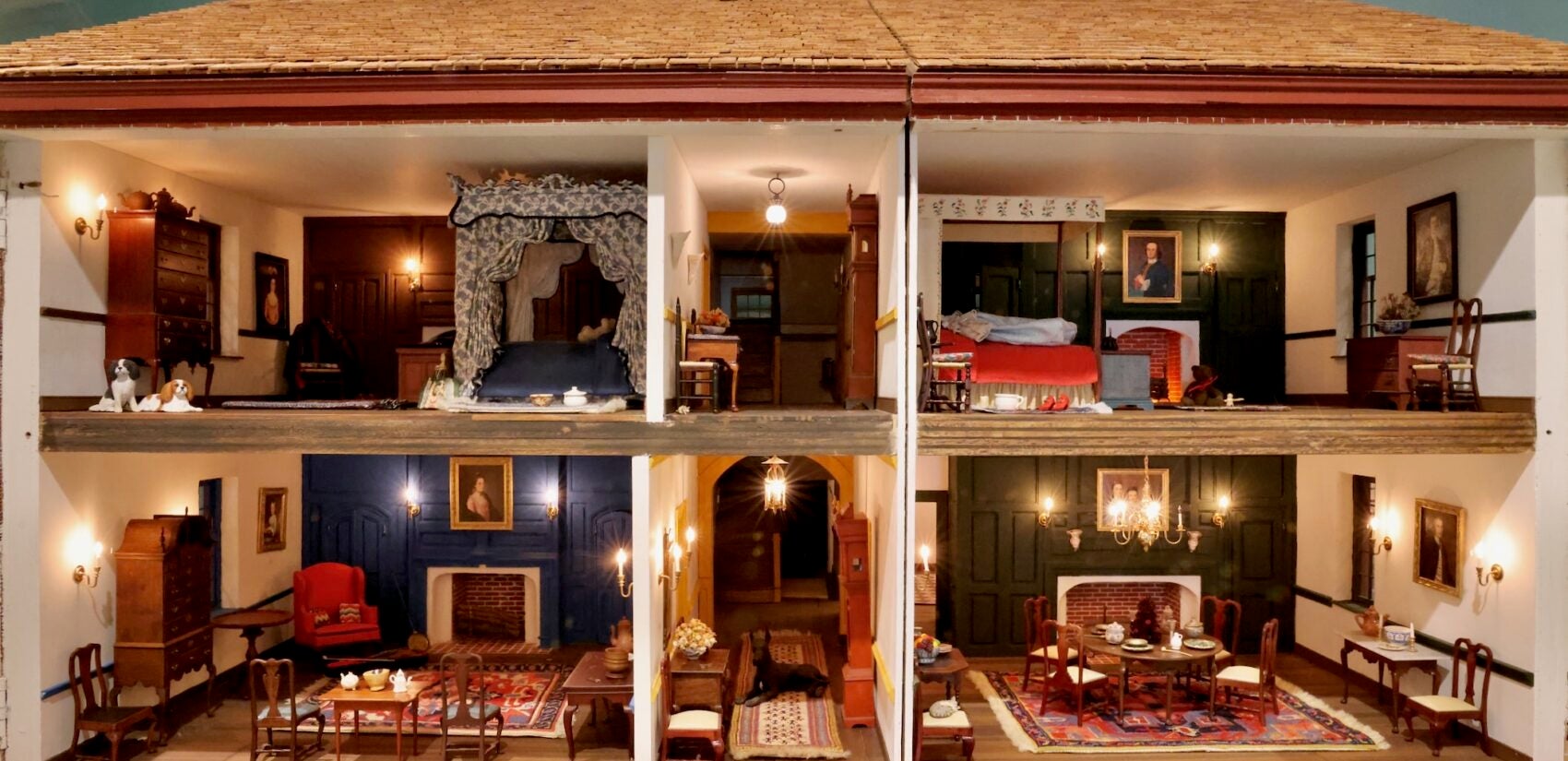
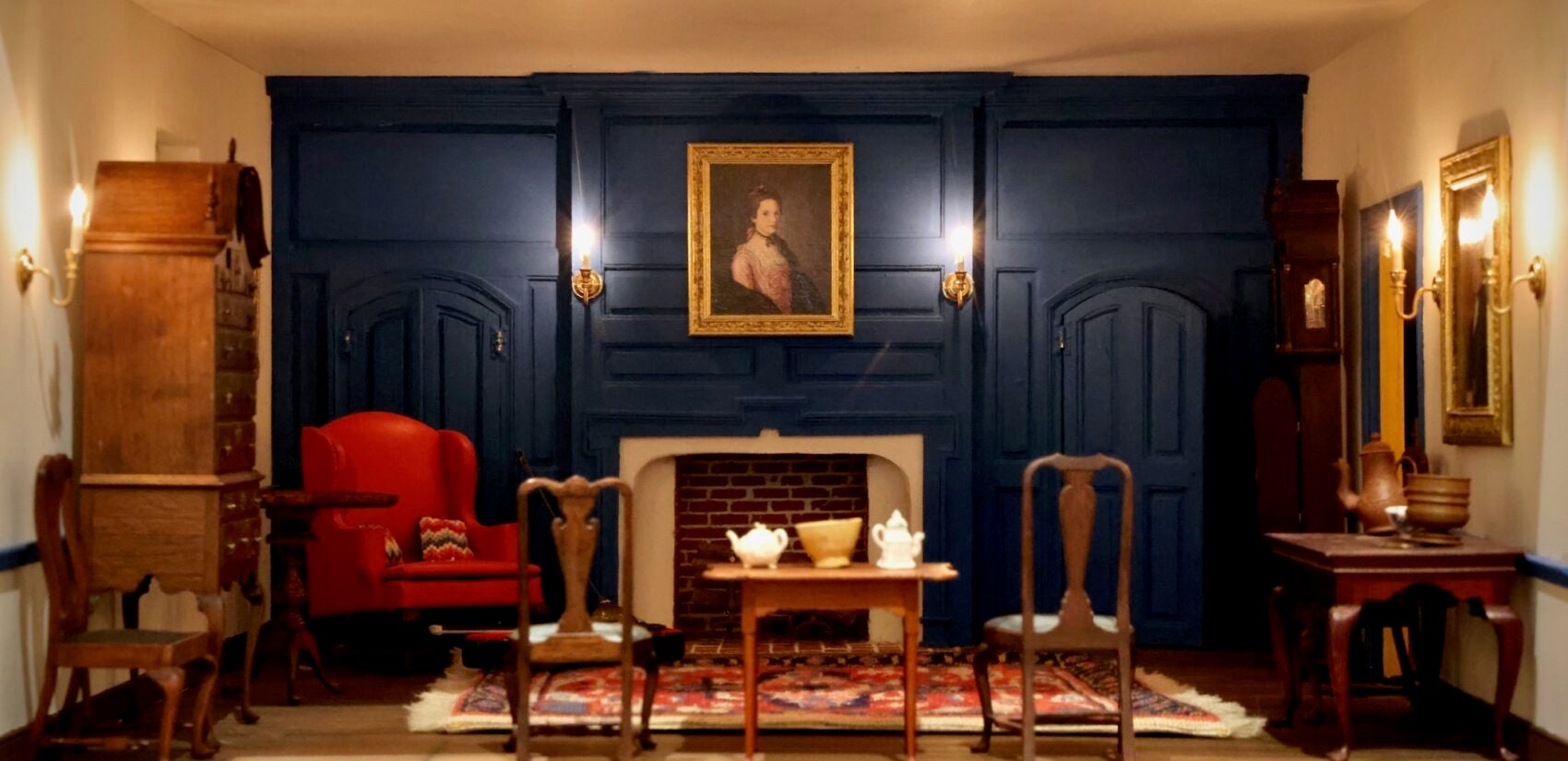
The Brandywine’s most recent acquisition is the Peters-Herdeg house, a miniature replica of an 18th century mansion in Chadds Ford. Bought in 1963 by Judith and John Herdeg, the couple spent years restoring the house to its original colonial condition and furnishing it with colonial-era antiques and original paintings by 18th century artists like Charles Willson Peale and John Singleton Copley.
Then they decided to do it all over again, but at 1/12 scale.
While the Wyeth dollhouse plays fast and loose with scale, Judith Herdeg commissioned artisan Roger Demers to spend 5 ½ years making sure the miniature house is faithful to the original from floor to roof.
“It’s hard to express how exacting he was with this house,” Bickford said. “Because the floorboards were irregular colonial architecture, if you look in the house they are equally irregular. That’s 5,000 handcrafted cedar shingles [on the roof]. It weighs 175 pounds. An immense piece of craftsmanship.”
Judith Herdeg hired more than 50 craftspeople to make furniture for the dollhouse. The replicas of paintings by Peale and Copley are actual paintings themselves, tiny copies of the original portraits.
“Until her death in 2024, [Judith] was commissioning miniaturists to replicate the pieces in there, the same level of detail,” Bickford said. “Drawers pull out of dressers. Folding tables have working hinges. The one thing I found that doesn’t work is the tall clock, it does not have working clockwork.”
The exhibit features interior and exterior photographs of the real Peters-Herdeg house, so visitors can examine the reproduction’s precision. The house, its restoration and interiors are the subjects of a book, “The Stories They Tell…from the Herdeg Collection” (2021).
After Judith Herdeg died in 2024, the house was sold to a new owner. The historically designated building remains a private residence.
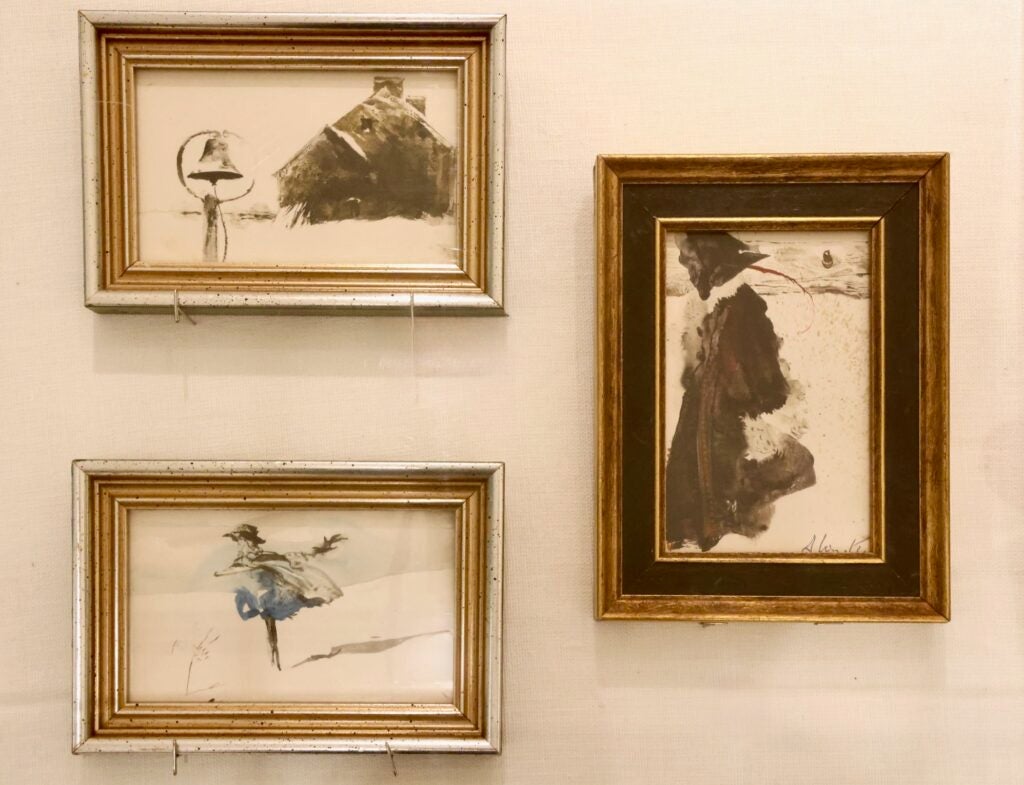
The “Home for the Holidays” exhibition is rounded out with paintings and holiday cards made by members of the Wyeth family. John McCoy, Ann Wyeth’s husband, designed cards for Hallmark, and Henriette Wyeth painted a Christmas watercolor scene.
Neighbor and family friend Karl Kuerner painted a winter scene with a figure of Carolyn Wyeth, the daughter of N.C. Wyeth and Keurner’s art teacher.
Andrew Wyeth and his sister Ann were known for painting one-of-a-kind cards and mailing them to friends.
“Christmas was a really important time for the Wyeth family. They really love to celebrate the holidays and they were a very close-knit family,” Bickford said. “Ann Wythe McCoy lived in the area for the majority of her life, as did many of the many of N.C. Wyeth’s children. These dollhouses are replicating a lot of that memory from their own childhood.”
“Home for the Holidays” will be on view at the Brandywine Museum of Art until Jan. 4.

Saturdays just got more interesting.
WHYY is your source for fact-based, in-depth journalism and information. As a nonprofit organization, we rely on financial support from readers like you. Please give today.
Drill dance troupe Maci Lago Universe brings love and grit to Chester
Maci Lago Universe is competing for a national championship while changing lives back at home.
8 months ago
Listen 3:14
Shakespeare goes up the country in ‘Ballad of King Henry’ at Swarthmore’s Players Club
A version of “King Henry IV” adapted into Americana folk songs is getting its world premiere.
11 months ago
Listen 3:18
‘Delco: The Movie’ set for world premiere at Media Theatre
The crowdfunded, independent film is the brainchild of a Sun Valley High School alum.
1 year ago
Listen 1:08