

Blood Bank of Delmarva urges donations amid winter challenges during National Blood Donor Month
As winter challenges reduce blood donations, the Blood Bank of Delmarva highlights lifesaving stories and urges Delawareans to give.
Listen 1:07
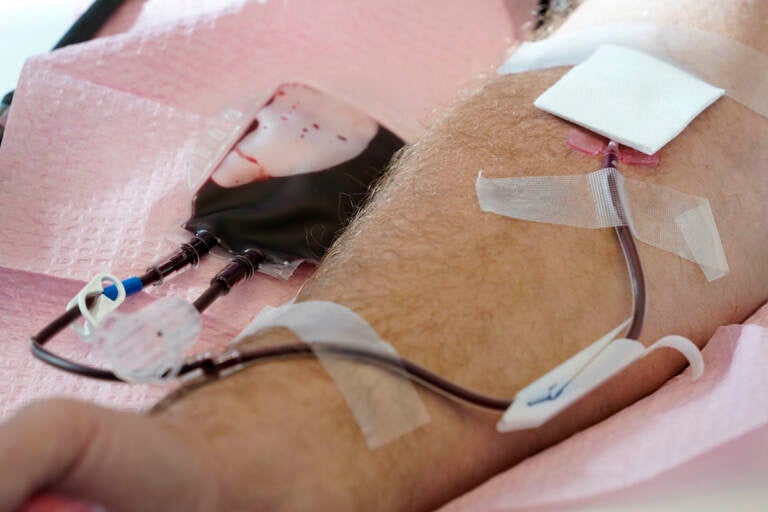
File photo: Tubes direct blood from a donor into a bag in Davenport, Iowa, on Friday, Nov. 11, 2022. (AP Photo/Charlie Neibergall, File)
What are journalists missing from the state of Delaware? What would you most like WHYY News to cover? Let us know.
January is one of the most challenging months for blood donation, and health care leaders in Delaware are urging residents to make giving blood a priority.
The Blood Bank of Delmarva marked National Blood Donor Month on Tuesday at its Christiana donor center, joined by local elected officials, first responders and patients whose lives depended on donated blood. During the event, the Blood Bank of Delmarva received a National Blood Donor Month proclamation from Gov. Matt Meyer’s office, officially recognizing the observance in Delaware.
According to the Blood Bank’s Tony Prado, a blood transfusion is needed in the United States every two seconds, yet only 3% of eligible donors donate blood.
“National Blood Donor Month was actually first proclaimed by President Richard Nixon in 1970 to address the annual winter decline in blood donations,” said Kristin Frederick, vice president at the Blood Bank of Delmarva.
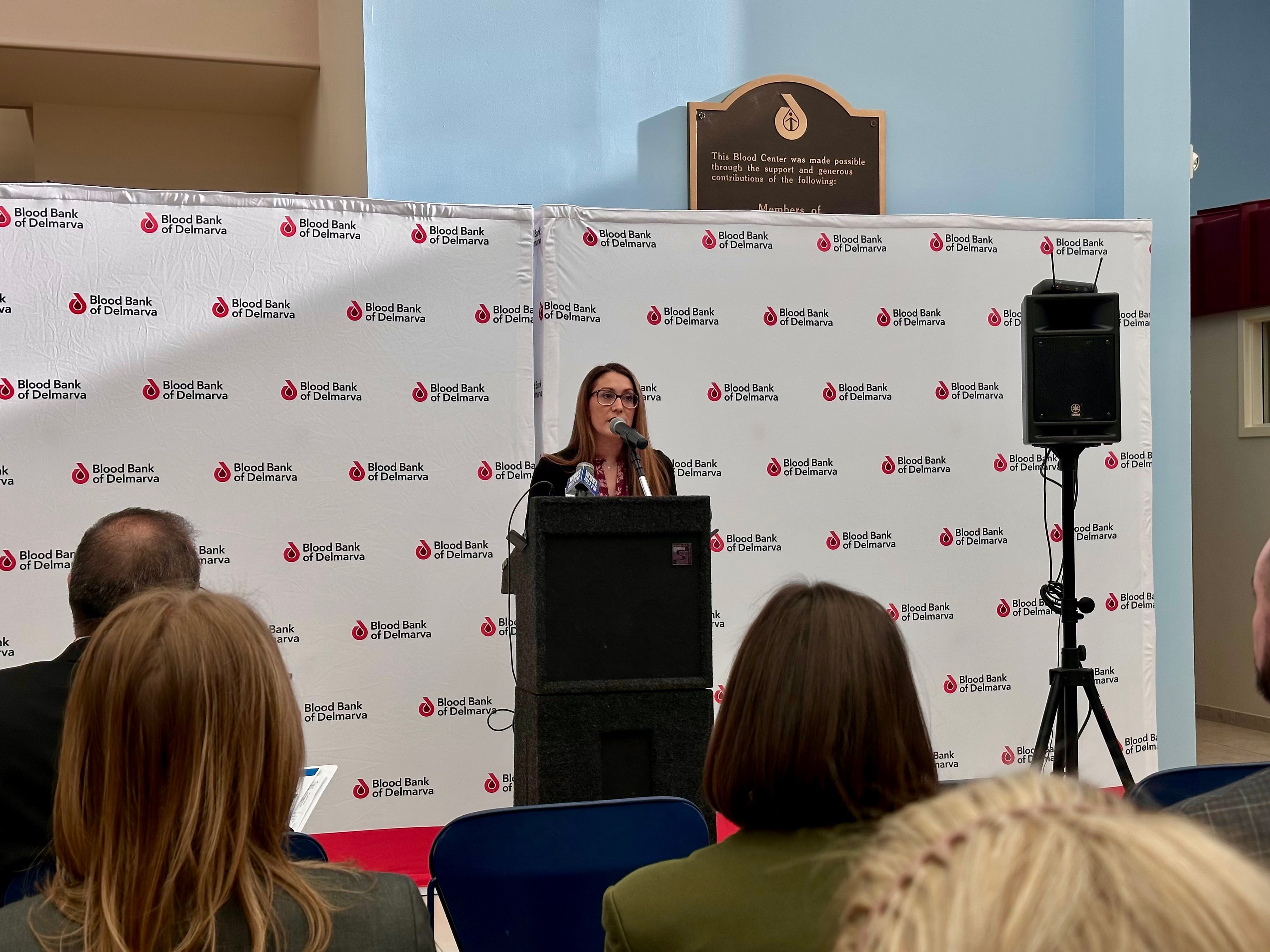
According to Frederick, donations typically decrease during the winter months.
“Our goal of providing a stable blood supply comes with challenges this time of year. Things such as holiday travel, which draws our donors out of town and prevents them from sticking to their routine,” she said. She added that other seasonal challenges include “illnesses such as the flu or COVID, which decreases the amount of healthy eligible donors we have and severe weather, which means the potential for reduced blood-centered hours or canceled mobile blood drives.”
As those circumstances reduce donations, patient needs remain constant.
“These factors cause a sharp decline in donor turnout, while the demand for blood products from our health care system remains the same, if not higher,” Frederick added.
Related Content
Blood donations were down 25% nationally in July compared to the same time last year, according to the American Red Cross.
2 years ago
Listen 1:09‘What kept me alive’
The event also highlighted the real-life impact of donated blood through testimony from Peyton Harter, an 18-year-old freshman at the University of Delaware who received blood at the scene of a serious crash.
“Nine months ago, a team of heroes saved my life,” Harter said. “The heroes weren’t just the calm voices, steady hands and compassionate care of the first responders on the scene … but none of that would have been possible without something just as vital: blood.”
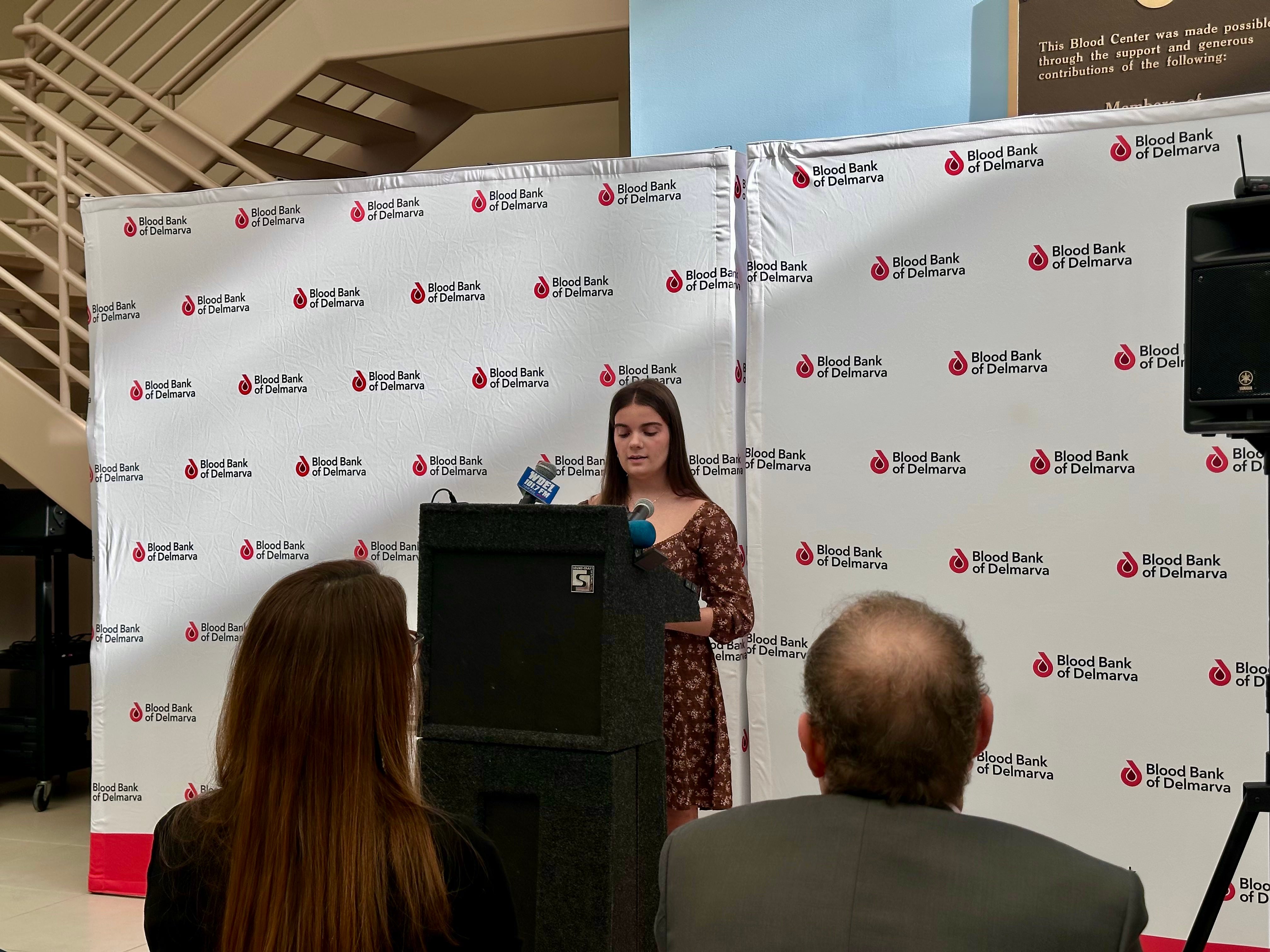
Harter said blood donations made the difference for her survival.
“The blood I received before I ever reached the hospital is what kept me alive … Pre-hospital blood transfusion gives patients a fighting chance when minutes matter,” she said. “Because someone donated, I was able to attend my senior prom, graduate high school, take a trip with my senior with my best friend, move into my college dorm and start classes at the University of Delaware.”
Health care leaders say the need for blood donations does not end in January. They stress that consistent, year-round donations are critical to maintaining a stable blood supply and ensuring lifesaving care is available when emergencies happen. Community members are encouraged to consider scheduling their next blood donation and making it a regular part of their routine.

Get daily updates from WHYY News!
WHYY is your source for fact-based, in-depth journalism and information. As a nonprofit organization, we rely on financial support from readers like you. Please give today.
Part of the series


New addiction recovery programs and family support services coming to Sussex County
Pennsylvania nonprofit Be a Part of the Conversation is launching recovery programs and parent partnership services in southern Delaware for families affected by addiction.
3 months ago
Listen 1:11
The overdose death of their son 13 years ago led to the Keisters’ creation of atTAcK Addiction.
4 months ago
Listen 1:46
‘Stretched thin’: Medicaid cuts threaten Delawareans’ access to health care in rural areas
Delaware has a plan to transform health care in the state’s rural areas, but is dealing with billions in federal funding cuts.
6 months ago
Listen 1:00