

South Jersey’s historic Whitesboro community says flawed property records are putting its future in jeopardy
Residents have formed a preservation project to stomp out gentrification and put Whitesboro back on the historic map.
Listen 4:04
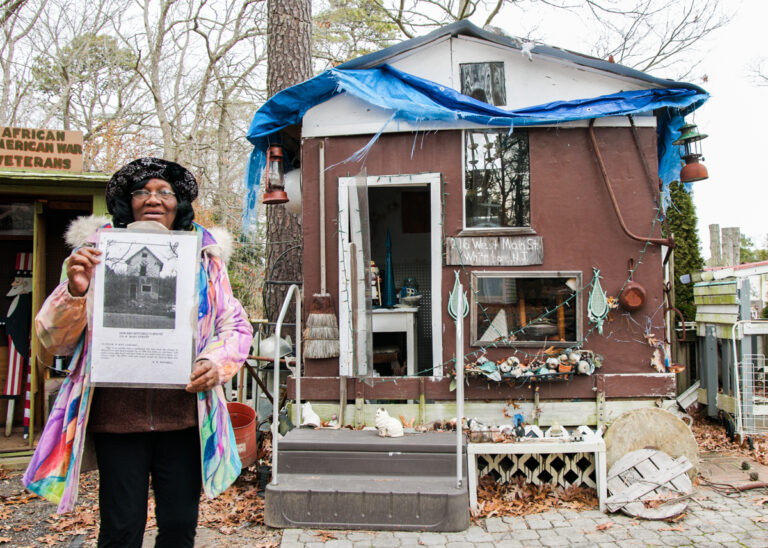
Shirley Green, executive director of the Whitesboro Historical Foundation, built a replica of the historic Black town at her home with youth groups she works with. (Kimberly Paynter/WHYY)
From Camden and Cherry Hill to Trenton and the Jersey Shore, what about life in New Jersey do you want WHYY News to cover? Let us know.
Shirley Green said she is worried about Whitesboro’s future.
She said gentrification and discrepancies in the property deeds of some existing homeowners are threatening the identity of this once thriving Black community in Cape May County’s Middle Township.
Green, executive director of the Whitesboro Historical Foundation and Museum, said the inconsistencies in official property records are raising concerns that some residents are paying taxes on the wrong properties and could lose their homes through tax sales. Middle Township officials told WHYY News they have not yet received any complaints, but residents dispute that.
Why do discrepancies between deeds and tax maps happen?
Deed discrepancies are not uncommon, according to Timothy P. Duggan, chairman of the eminent domain and property valuation group at the law firm Stark and Stark. However, inconsistencies in paperwork can lead to a variety of problems, including boundary line disputes.
“For example, if there is a dispute over whether a driveway or fence is on the correct property, the deed is the best place to look to determine where the boundary lines lie,” he said.
Duggan added that record inconsistencies and discrepancies can also cause problems with mortgage liens.
“The property subject to the mortgage needs to be described in the mortgage itself,” he said. “If the deed is wrong, the mortgage will be wrong.”
The county clerk’s office archives all deeds. But municipalities hire independent tax assessors. Their maps may differ from what the deed holders have and from what the county has on record, Duggan said.
“The problem is if the tax map’s been changed over time, you could have a big discrepancy in the tax record and what’s actually in your deed,” he said.
Duggan has also seen various deeds that may not have the information needed to describe the property.
“I think the question could be back in the day, when a lot of these properties were transferred, what were they using to describe the property and the deeds,” he added.
Green said she and others reached out to the township with their worries, but were told that only the state has the power to make any alterations or modifications. She said officials failed to direct them to the appropriate state agency.
“It’s creating mushroom issues by them doing what they’re doing and nobody’s addressing it,” she said, adding that there are concerns that property taxes and insurance payments could be applied to the wrong properties.
Related Content
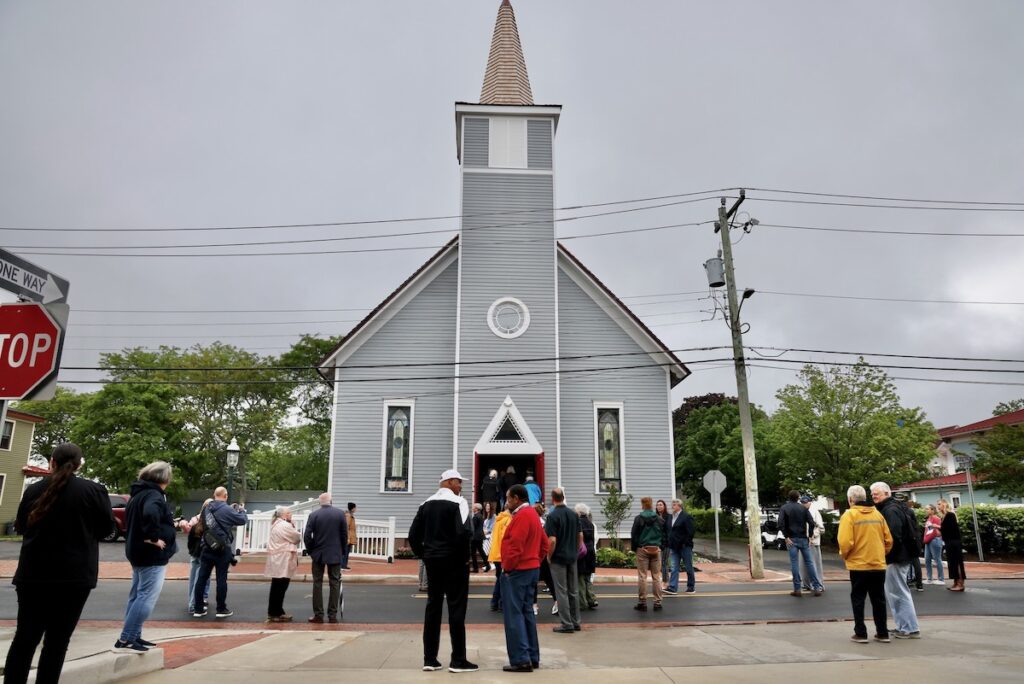
Cape May’s historic Allen AME Church is now a theater space
The church associated with the Underground Railroad was sold to Cape May after it burned in 2018. It’s now the home of East Lynne Theater Company.
1 year ago
How Whiteboro’s deed discrepancies came to light
Green said she learned something was amiss a year ago, when she was preparing to establish a trust for the museum, which sits along Route 9 South. Michelle Brown, a friend who was assisting her with the process, discovered that the lot and block on the museum deed differed from what was on file with Middle Township.
Brown informed Green that the museum was recorded in the deed for the church next door.
“Not only did they do that, they merged ‘exempt from merged’ properties,” she said. “If you have an L-shaped property back to back and on three different streets, they merged it.”
Green began talking to her neighbors and friends in town and began noticing a pattern. For example, longtime resident Bobby Harrison’s home was listed in the official records under three addresses: one in the Villas, one in Cape May Courthouse and one in Whitesboro.
Harrison, who moved to Whitesboro more than 40 years ago because the town reminded him of his childhood home in rural South Carolina, said he got worried when Green approached him.
“[Green] said, ‘Do you know where you’re paying your tax at?’ I said, ‘Well, Cape May Courthouse, because Whitesboro had nothing so I couldn’t bring it here.’”
Harrison said he is very confused. He is also unsettled by all the changes coming to town.
“They’re building new houses, but more likely not to Blacks,” he said.
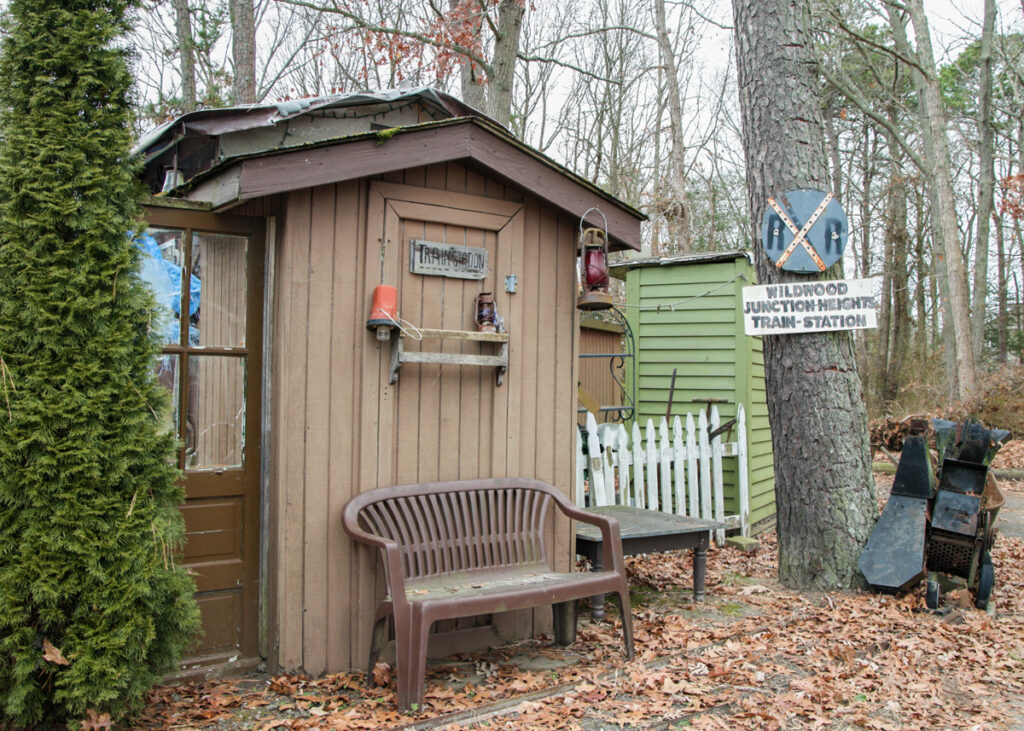
Green has been assisting other Whitesboro residents, like Harrision, in examining their property records. There are more than 2,700 residents in Whitesboro, according to Census data. So far, she said there are 50 different properties involved, including several that she owns.
The record keeping has not been uniform, she said. Some homeowners found that the documents simply list the lot and block numbers; others found deeds with more information, such as a description of the property and how the lines are drawn. Some deeds, she said, list old street names.
“If something happens to me today, my kids come up [with] this deed with this lot and block that don’t exist,” Green said. “If that happens, my kids won’t be able to inherit my property.”
Dawn Robinson, who has lived in Whitesboro for 35 years, expressed similar concerns. In addition to correcting the lot and block numbers on all four of her properties, she said she is currently fighting a second attempt to take one of her properties through eminent domain.
“I worked hard to get that and they can just take it away just cause somebody rich wants it,” she said. “They say there’s no value. I’m like, ‘Well, why do you want it if there’s no value?’ It’s value to me. It’s my legacy for my children to leave them something I worked hard all my life.”
Robinson said land sales have been happening frequently in Whitesboro.
She said so much construction has taken place, it’s at the point of overbuilding.
“They had the land sales every two or three months,” she said. “I asked them one time, ‘Why are you just keep having sale after sale, after sale, after sale?’ But they never really gave an answer.”
Preserving Whitesboro’s legacy
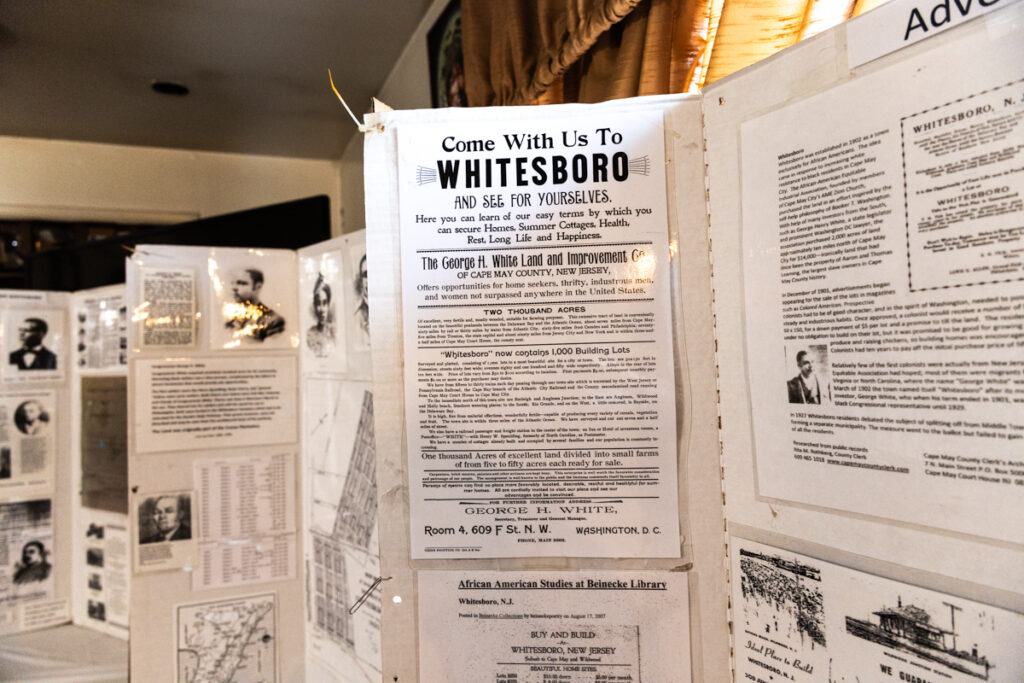
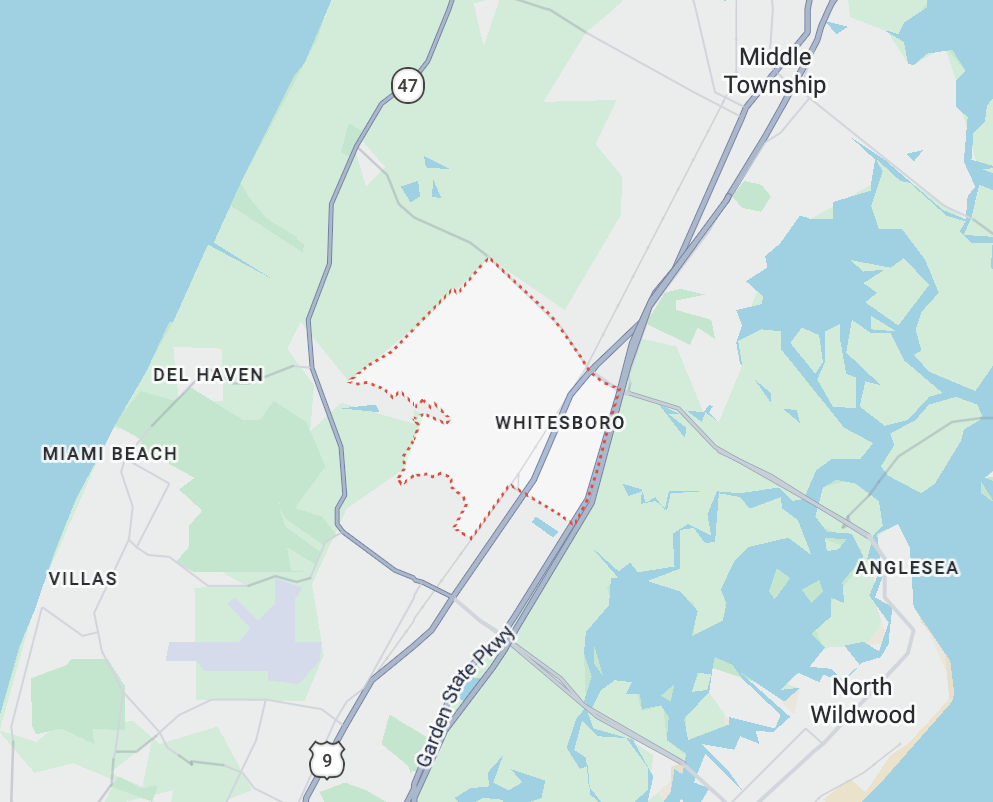
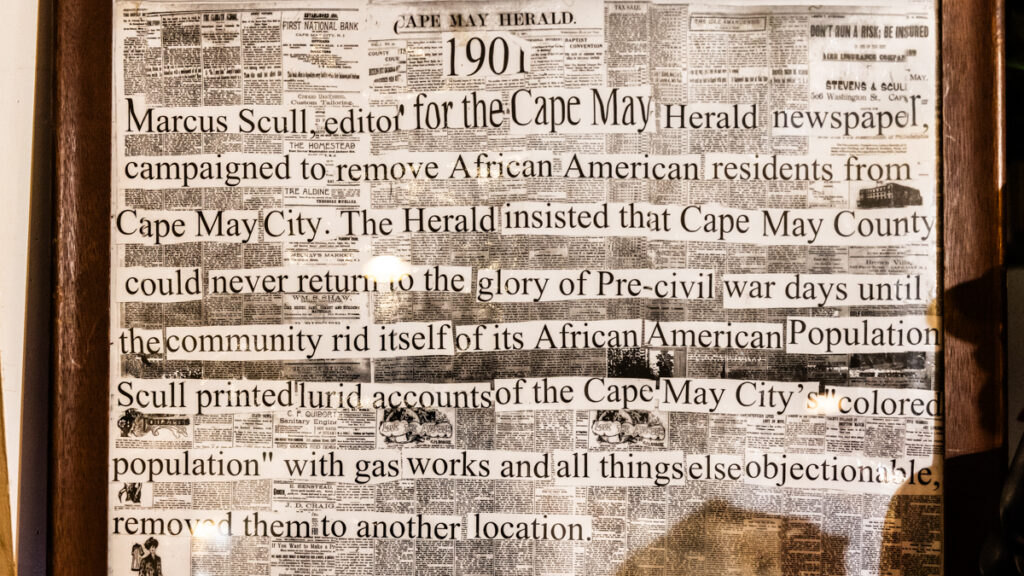
Whitesboro was founded in 1901 after Marcus Skill, then-editor of the Cape May Herald, campaigned for the removal of Black residents from Cape May City.
“He said in order to get back to the glory of the pre-civil war, they had to rid this city of the African American people,” Green said.
Former Congressman George H. White, who became a Philadelphia-based banker, intervened. His real estate company bought the land and established Whitesboro, a self-reliant, safe community for Black families, where they could own land, educate their children and live without fear of discrimination.
Whitesboro is among 155 Black settlements — 100 of which are Antebellum settlements — in South Jersey, according to Paul W. Schopp, assistant director of the South Jersey Culture and History Center at Stockton University. The enclaves, founded by local Black people, came about through the 1804 Gradual Manumission Act that freed the children of enslaved people, but not the adults, he said.
“You begin to see these enclaves spring up,” Schopp said. “There’s a couple of exceptions, but by and large, most of them spring up in the mid-1820s.”
Whitesboro continued to thrive and celebrate its legacy until the real estate boom of the mid-2000s, Green said. The town’s proximity to the nearby beaches of Wildwood and Cape May piqued the interest of developers. That’s when gentrification began, eroding the town’s history, Green said.
“Now we got these people interested in the town,” she said. “Not only are they just building, they’re overbuilding.”
Green is now leading the Whitesboro Historic Preservation Project to preserve the history and the village itself. She also wants to see Whitesboro added back to Cape May County’s tourism map of historic attractions.
County officials said they didn’t intend to slight Whitesboro by omitting the town from the map. They said Whitesboro was removed because the museum had closed.
Green said the museum is open, but only by appointment. Ultimately, she said she would like to see Whitesboro as its own incorporated town.
“We would govern ourselves and we would ordinance according to what we need,” she said. “We know it wouldn’t just be an African American town, we are real with that. But the people that would move here would know the history so that they would respect it accordingly.”

Get daily updates from WHYY News!
WHYY is your source for fact-based, in-depth journalism and information. As a nonprofit organization, we rely on financial support from readers like you. Please give today.
Campbell’s announces 13% salaried workforce reduction as part of campaign to improve bottom line
The soup and snack maker is hoping to cut costs by a half-billion dollars by 2030.
2 months ago
Listen 0:55
New Jersey restaurant patrons must ask for single-use plastic utensils starting Saturday
New restrictions take effect as part of the Garden State’s crackdown on plastic waste.
3 months ago

Want to grow native plants? This Hopewell Twp. group will help you get started
The Hopewell, NJ Native Plant Swap group gives away plants and seeds, and teaches newbies how to garden.
4 months ago
Listen 1:03