

Barnes Foundation removes a prized Renoir for overdue conservation
“The Henriot Family” by Pierre-Auguste Renoir is the “apogee of impressionism” but is often overlooked.

From Philly and the Pa. suburbs to South Jersey and Delaware, what would you like WHYY News to cover? Let us know!
For decades, Pierre-Auguste Renoir’s “The Henriot Family” had been given pride of place in the Barnes Foundation, but was likely overlooked by many.
The large painting of three figures sitting in what looks like a forest clearing had been hung over the main entrance door of the Barnes’ permanent gallery, such that visitors entering the room have to turn around and look behind them and upward about 10 feet to see the painting from a distance.
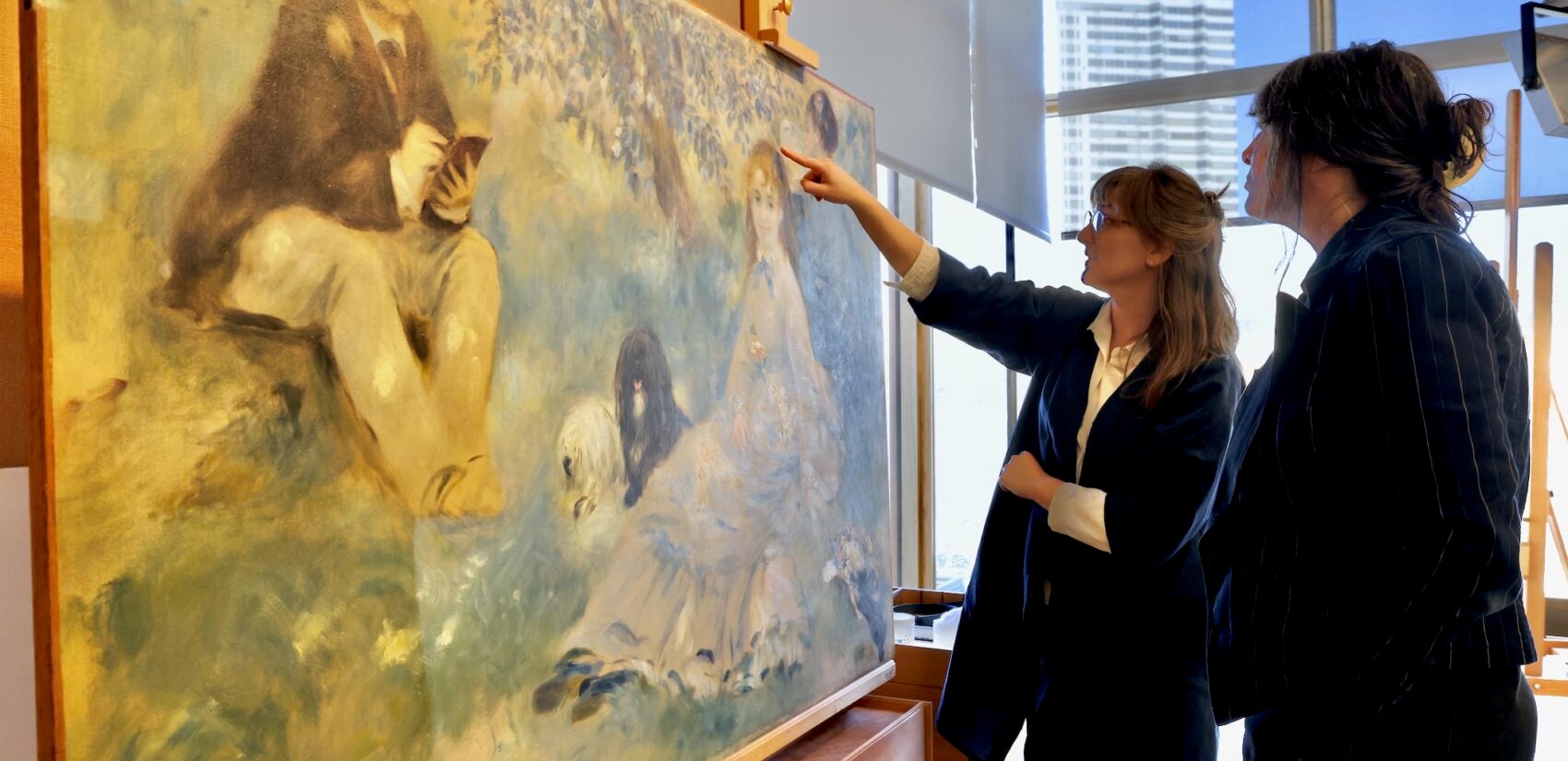
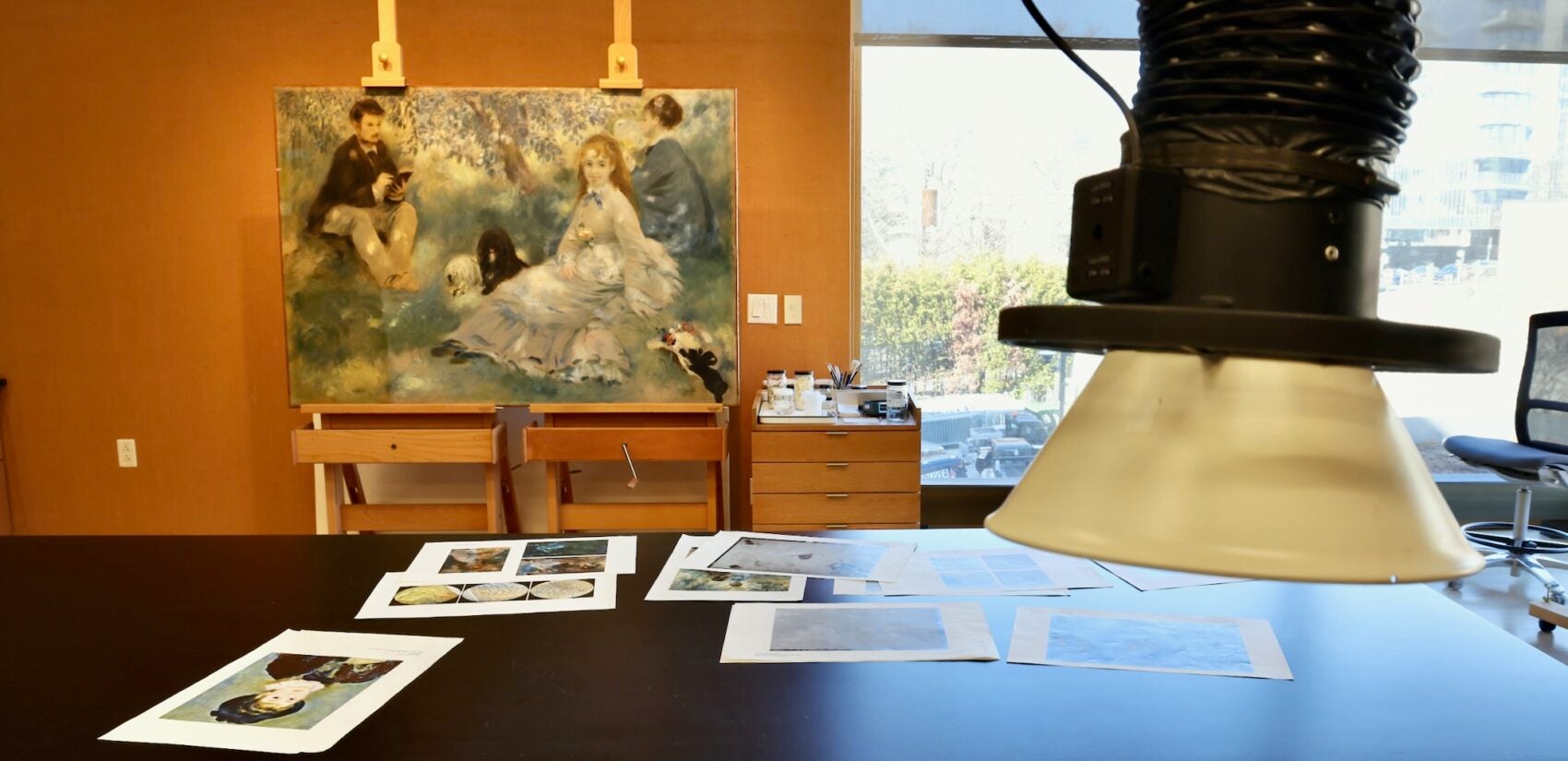
“The Henriot Family” is now undergoing extensive repair and cleaning in the Barnes’ conservation lab, where deputy director of education and interpretation Martha Lucy saw the painting in a new light.
“It’s so exciting to be standing in front of it looking at it at ground level and seeing the real colors that it’s supposed to be,” she said. “It’s so beautiful. It’s just glowing.”
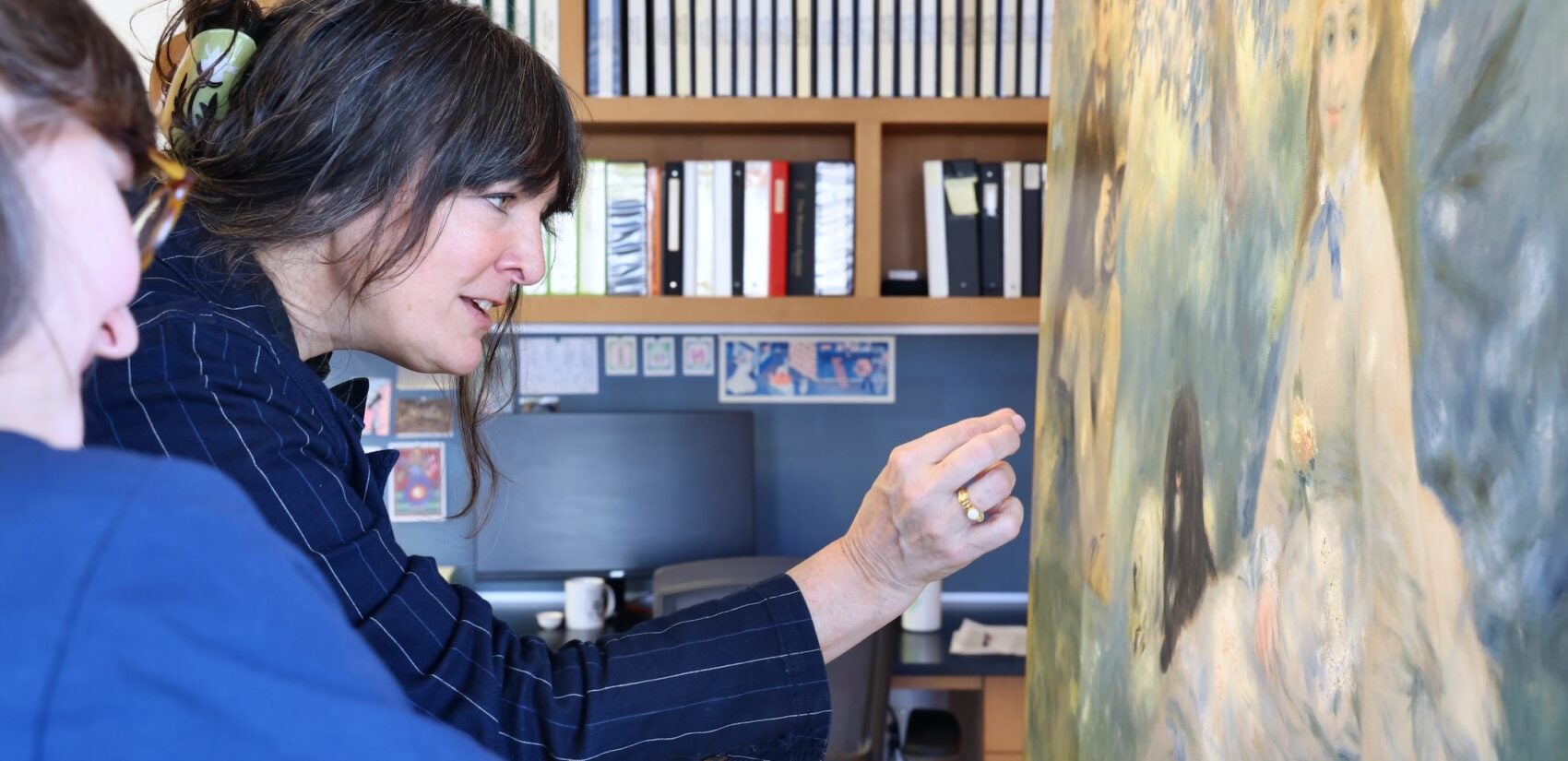
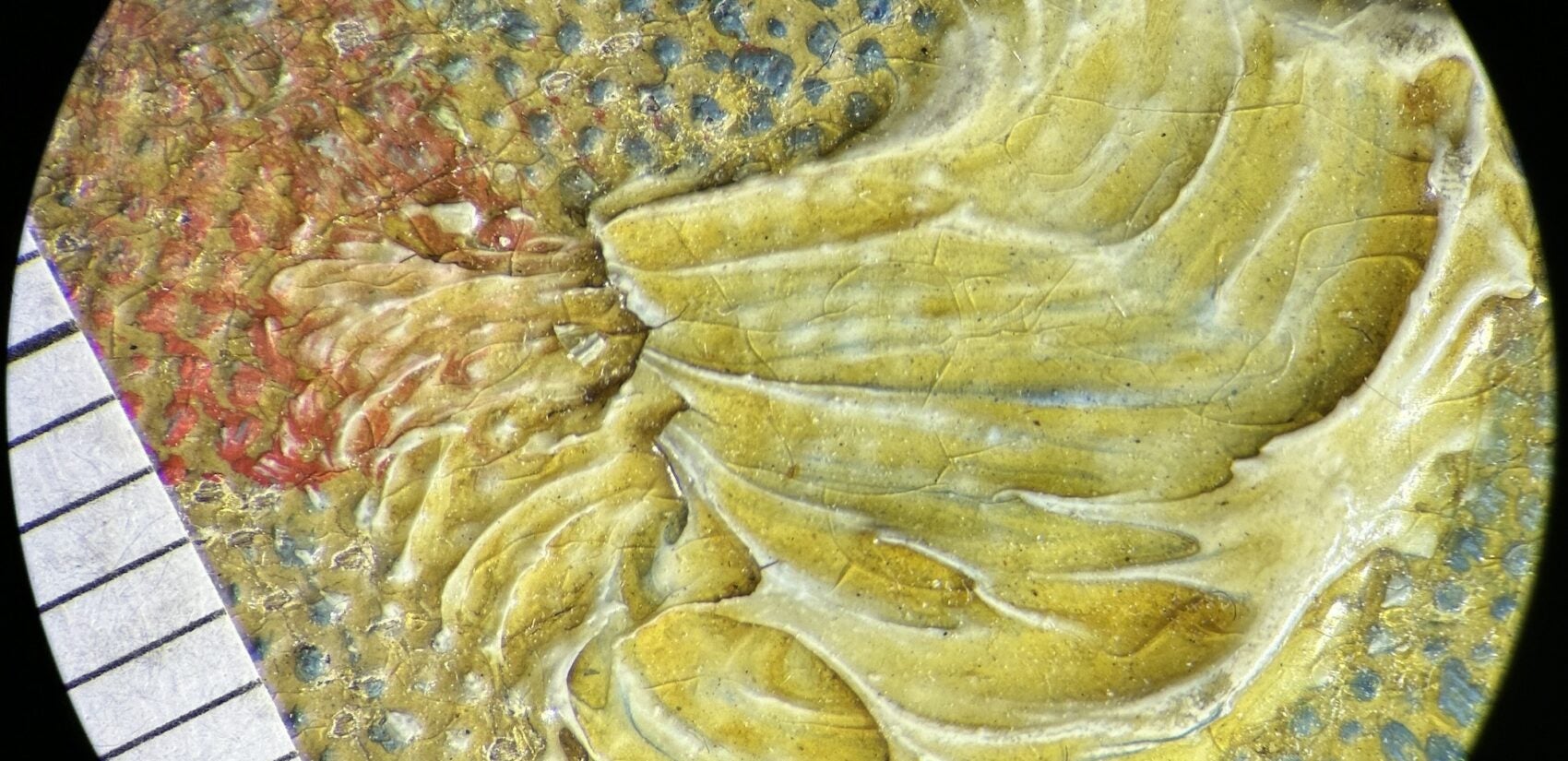
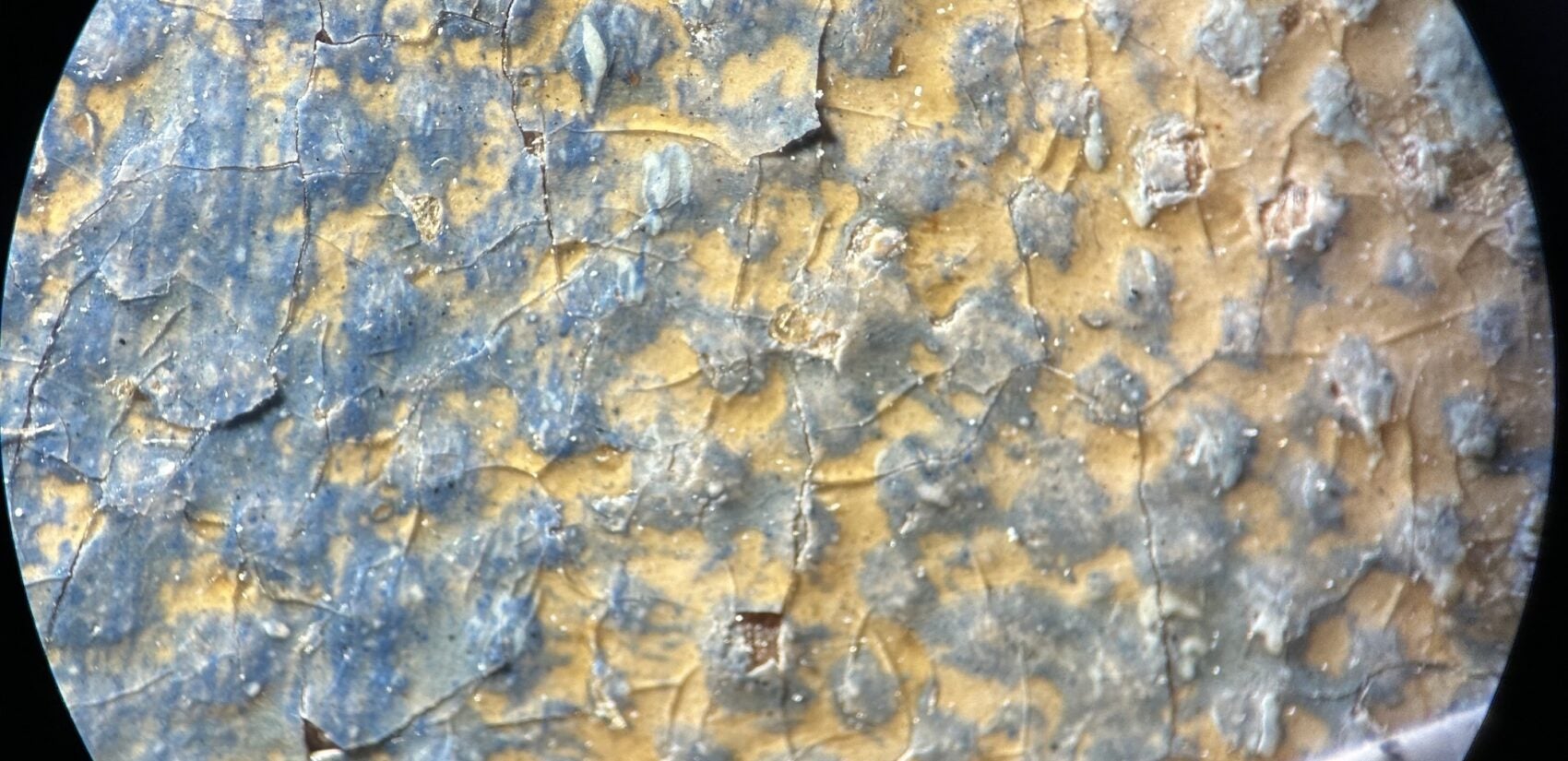
It was not just the north light bathing the conservation lab that made the painting look so good. It is being stripped of old varnish that had turned what was described in 1935 as a “study in blue and gray” into what is now a greenish yellow.
“The Henriot Family” is benefiting from a Bank of America grant. The amount is undisclosed but “significant,” according to a Barnes spokesperson. It is one of 16 conservation grants for specific pieces of art around the world.
The money allowed the Barnes Foundation to finally get to work on a painting that had been in bad shape for decades.
“It’s getting much better,” said conservator Christie Romano. “It was a department priority since the 1990s.”
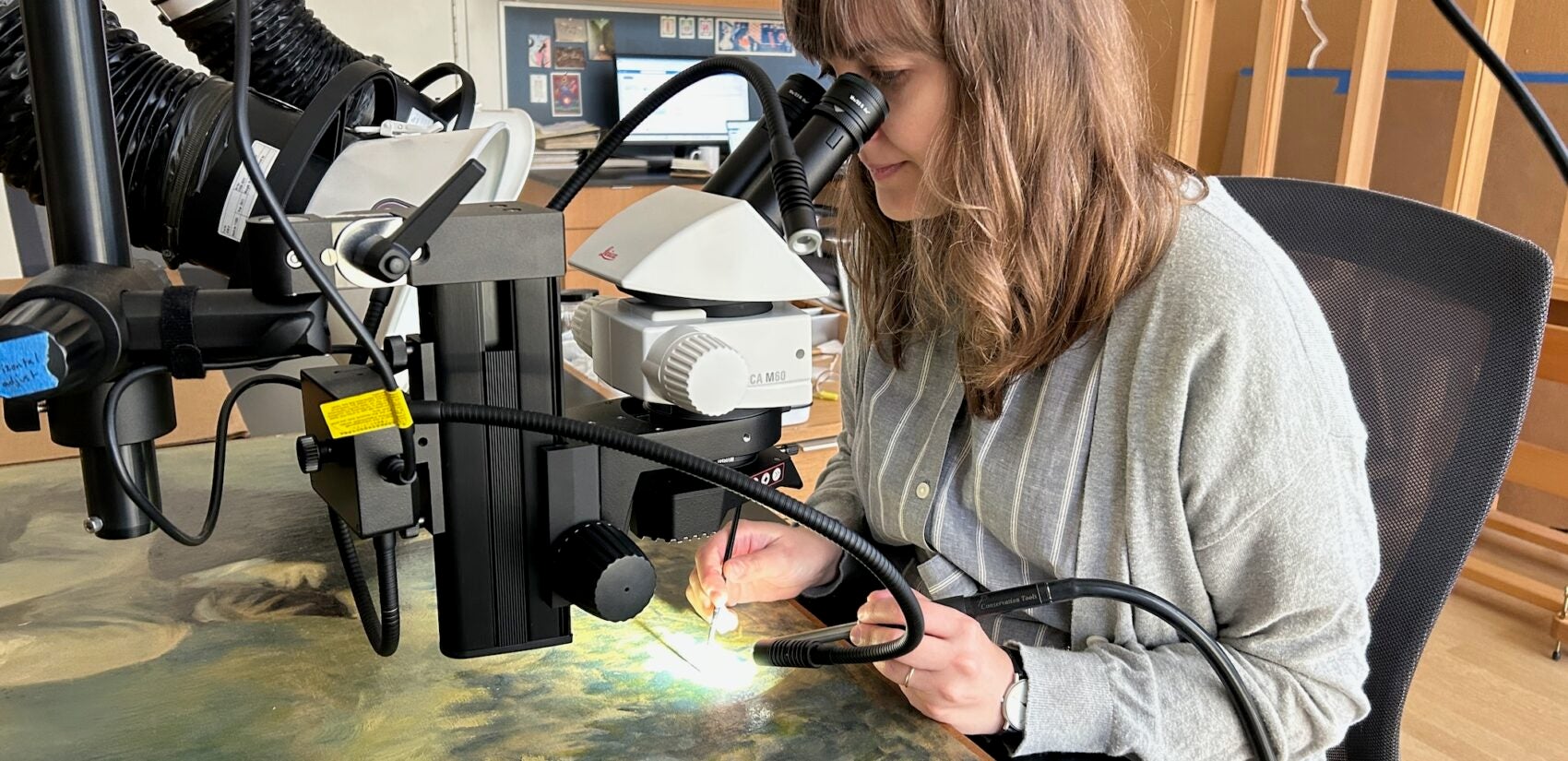
The painting had started separating from its own canvas by micro-flaking, or tiny sections of paint lifting off the base layer of primer. Romano spent 200 hours poring over the surface of the painting with a microscope, searching for loose pieces of paint and adhering them to the canvas with surgical precision.
“I find that kind of work enjoyable. You have to if you’re going into this line of work,” she said. “It means many hours of audiobooks and music to get into that flow state.”
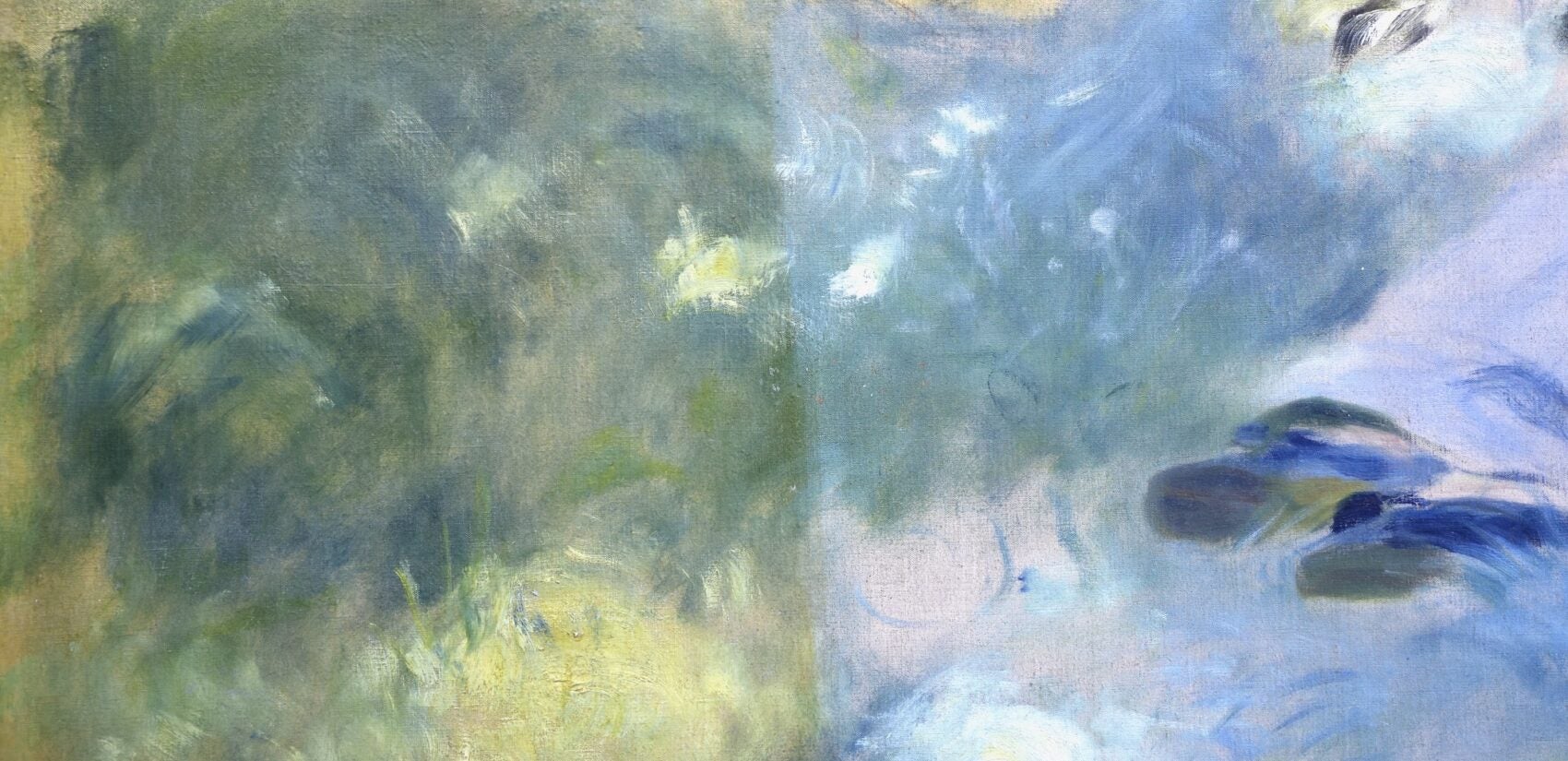
In places where micro-flaking has already resulted in missing flecks of paint, Romano fills in the tiny void with a paste of calcium carbonate and matches the paint color on top.
“Just like when you spackle a wall,” Romano said. “You don’t just paint over the divot. You fill it in so it looks nice and smooth.”
Related Content
The Brandywine Museum offers a tiny peek into a Wyeth family Christmas
The Chadds Ford museum has been collecting dollhouses for years. The holiday exhibition features its latest acquisition.
3 months ago
Listen 1:16The pinnacle of impressionism
The painting is worth the time and expense because it is the “apogee of impressionist achievement,” according to Lucy, who wrote about “The Henriot Family” in the 2012 catalog “Renoir in the Barnes Foundation.”
“The Henriot Family” was painted around 1875, making it a very early work of impressionism when the style was just starting to be recognized. Lucy said it exemplifies the rebelliously spontaneous characteristics of the art movement.
“You’re not thinking about all the rules of the academy in terms of shadow and perspective. You’re much more focused on recording visual sensations in the moment,” she said. “The way that the sunlight is flickering. That’s where the spontaneity comes in. That right there is a totally new way of thinking about what painting is, as a record of perception.”
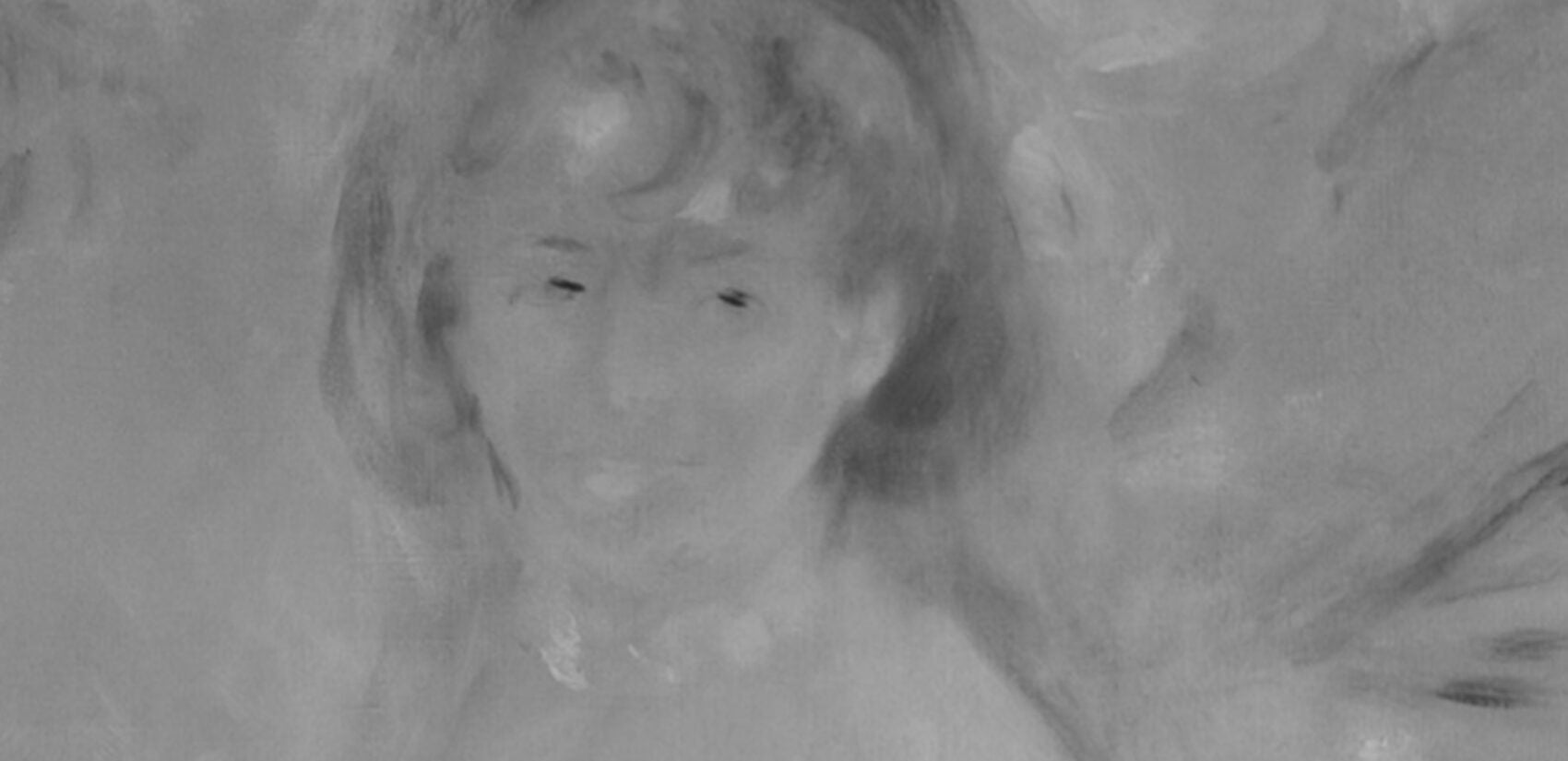
A close examination shows Renoir’s brushstrokes were quick and light, at times leaving the underlayer of canvas primer exposed as a background color. The radiography done during conservation shows he did not sketch the picture to the canvas but started composing the image straightaway with color.
The life of a painting
For reasons not clear, Renoir held onto “The Henriot Family” for almost 40 years. It finally left his studio in 1912, when Hungarian art collector Marczell de Nemes bought it and flipped it to collector Baron Herzog for 75,000 francs, or about $500,000 in today’s money.
The painting then spent the next two decades bouncing from owner to owner around the world, from Budapest to Berlin to Zurich to New York.
“Even though it wasn’t exhibited all that much, it is such a great example of that classic impressionist period,” Lucy said. “It would be a trophy painting for any of these aristocratic collectors.”
In 1934, art dealer Étienne Bignou of Zurich was planning a new gallery in New York City. Barnes Foundation founder Albert Barnes advised him to include “The Henriot Family” in its inaugural show, but in a sharply worded letter, Barnes made clear he was not interested in buying the painting.
“Let me emphasize that as a matter of fact we are not in need of the picture and would prefer not to have it,” Barnes wrote. “This is what I told you from the start.”
Related Content

Philly’s Pew Center names new director and announces $8.6M in arts funding
Christina Vassallo, previously of the Fabric Workshop and Museum, will run the major arts funder for the Philadelphia region.
3 months ago
Listen 1:09Lucy said that was typical of the Philadelphia collector.
“That is very Barnes,” Lucy said. “That is a strategy. He would pretend that he didn’t want things that he really did want, to try to get the price down.”
In 1934, Barnes advised Bignou to find someone who would buy “The Henriot Family” for $75,000. In 1935, Bignou put it on display, where it was reviewed as “replete with Renoir’s irresistible ability to project his sense of the deliciousness of life.”
Barnes then bought the painting for $50,000. It was his 175th Renoir. He would ultimately own 181.
“The Henriot Family” is expected to be returned to the Barnes Foundation gallery wall in February. Lucy believes the cleaned and repaired painting will convey a whole new vibe.
“Even though we knew the varnish was dirty, you think of it as that color, sort of a warm sunlight,” she said. “But here, it’s a totally different kind of atmosphere. It’s a totally different kind of day. It feels like it’s midday, or like early morning, rather than a late-afternoon golden sunlight.”

Never miss a moment with the WHYY Listen App!


WHYY is your source for fact-based, in-depth journalism and information. As a nonprofit organization, we rely on financial support from readers like you. Please give today.
The outsider who came in: Henri Rousseau retrospective opens at Philly’s Barnes Foundation
The celebrated French post-impressionist was dismissed during his lifetime as “naive,” but held many secrets.
5 months ago
Listen 1:19
Born of the COVID-19 pandemic, Barnes Foundation is now sharing its online education tech
The Visual Experience Platform is a unique way to teach object lessons. The Barnes is licensing it to other institutions.
8 months ago
Listen 1:17
Pew Center for Arts and Heritage moves to the Barnes Foundation in Philadelphia
As one of her final acts as director, Paula Marincola brought the Pew Center for Arts and Heritage into a partnership with the Barnes.
9 months ago
Listen 1:13