

Lewes considers pause on reviewing applications in response to affordable housing bill, following Sussex County’s lead
The proposed moratorium would last until the end of 2027, or until the city approves a comprehensive plan.
Listen 1:05
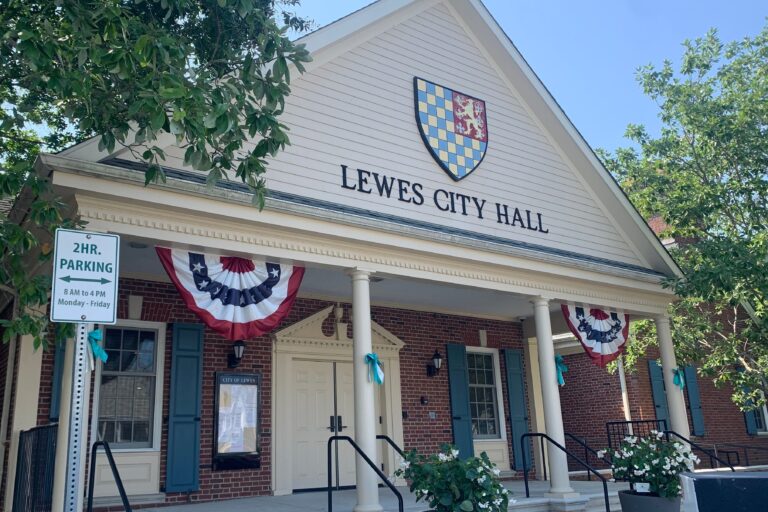
The Lewes City Council discussed pausing review of some residential development applications at their meeting Monday, Sept. 14, 2026. (Sarina Grossi/WHYY)
What are journalists missing from the state of Delaware? What would you most like WHYY News to cover? Let us know.
The Lewes City Council is considering a temporary pause on reviewing specific residential development applications in response to Senate Bill 23, or the “Housing for Every Delawarean Act,” signed into law earlier this summer.
The council moved to host a public hearing on a possible moratorium at its Monday meeting. The idea came from the Lewes Planning Commission, which officially recommended that the city adopt it last month.
The moratorium applies to major residential subdivision applications that would build five or more units. The commission recommended pausing application reviews until the end of 2027, or until the state approves the city’s new comprehensive plan. This excludes any applications already approved by the city.
Rich Innes, chair of the planning commission, said at the meeting that he sought legal counsel before issuing the recommendation and was told to limit the pause to a finite time, so that it’s legally defensible to the state.
“If it’s open-ended, if it seems to be arbitrary, then we’re going to be subject to challenge,” Innes said. “And we may be challenged on this.”
The comprehensive plan provides guidance for the city’s land use, development and housing decisions. The city is expected to adopt its next plan by October 2027. The last plan was approved in 2017.
In a letter to the city council, members of the commission said the moratorium would allow the commission “to present a comprehensive plan that addresses future development in the city in a way that meets the desires of current city residents and government leaders.”
Related Content
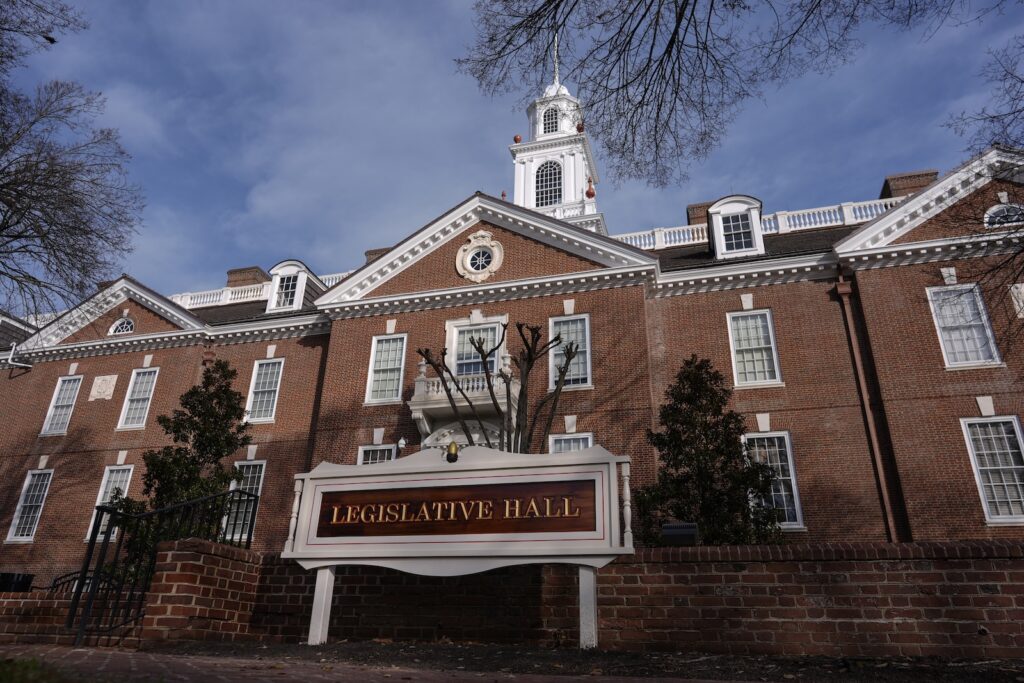
Sussex County pulls land use applications from review after Delaware adopts affordable housing law
Senate Bill 23 allows certain residential development applications to forego public hearings. Sussex County officials said they’re working to adjust approval processes.
3 months ago
Listen 1:03The purpose of the pause
SB 23 aims to increase the state’s affordable housing supply amid an ongoing shortage. According to the Delaware State Housing Authority’s most recent report, Sussex County would need to build about 13,400 affordable units by 2030 to keep up with its rising population. It accounts for nearly half of the state’s needed units.
The bill requires local jurisdictions with populations greater than 2,000 people to include affordable housing plans in their next comprehensive plan. Under this provision, jurisdictions should strive to have 20% of all housing units qualify as affordable. Housing should also be diverse and encourage higher residential density. Innes said at the meeting that the new law requires a city “to be very specific” with its plan’s standards.
Another aspect of SB 23 that has drawn criticism from local governments deals with “by-right” applications. It allows developments that meet all necessary zoning requirements outlined by a local jurisdiction to be approved without a public hearing.
Public meetings can still be held for by-right developments, but they can only focus on whether the project meets objective standards, and only written comments will be accepted.
“The new law limits public input on specific development proposals to the public hearings held to establish the comprehensive plan’s land use provisions,” planning commission officials wrote in a letter last month to the Lewes City Council.
“Allowing major development proposals to move forward before those hearings are held and the new comprehensive plan is written would be a grave disservice to the always-engaged Lewes community,” the letter stated.
Prior to SB 23’s passage, the Lewes City Council sent letters to state officials opposing the bill. In a letter to state Sen. Russ Huxtable, D-Lewes, the bill’s sponsor, the council said that they agreed that increasing affordable housing was important, but believed it was “too risky” to apply a “‘one size fits all’ statewide mandate.” They particularly cited by-right developments and the elimination of public hearings as main concerns.
“We are genuinely frustrated that the state is getting closer to overriding our ability to make informed, local land use decisions that reflect our community’s values,” the council wrote in the letter.
Kevin Keane, vice chair of the planning commission, told WHYY News that public hearings on developments would instead be reserved for the hearings required to develop the comprehensive plan, which the planning commission is still putting together.
“We haven’t had those conversations yet, those public meetings,” Keane said. “So the planning commission thought that until those hearings are held, and the public has had a right to participate in the process, we should put a hold on any large developments for five or more units that came before the city.”
Keane said Lewes does not have many parcels of land that would meet the standards to develop five or more units, and that there are no large development applications in the city’s pipeline. However, he said a pause would serve as a safeguard for the city.
“It’s simply an opportunity for us to take a breath, put together the comprehensive plan with public input and put that all in place before we consider, or the city considers, any type of large housing developments that may come on down the line,” Keane said.
According to Innes, the 2017 plan was partially vague, and by-right application approvals would be based on the current plan.
“The only thing that we have is to say, ‘Oh, well, it’s consistent with our comprehensive plan.’ Well, the existing comprehensive plan is not up to the task,” Innes said. “So we need to pause — and I would prefer to use that word — development until we get that plan.”
Innes also said the old plan conflicts with the law’s new requirements.
“We require, right now, a public hearing be held on any new development,” Innes said at the Monday meeting. “Well, that is at odds right now with the state law. We have to reconcile those two things.”
Sussex County also paused approvals of residential development applications after SB 23 was signed into law, with officials saying the by-right aspect was a major concern. The county also held public hearings as part of its typical approval process for developments. In an earlier letter urging the city council to adopt a moratorium, members of the planning commission cited Sussex County Administrator Todd Lawson, who called the law a “Trojan horse” for increasing development, not just affordable housing.
“We’re following someone else’s footsteps, who’s basically saying this is all brand new, and we need time to digest it,” Lewes Mayor Amy Marasco said at the meeting.
Lewes City Solicitor Alex Burns recommended the council hold a public hearing instead of voting on a pause this week, as state code requires hearings before establishing moratoriums.
Related Content
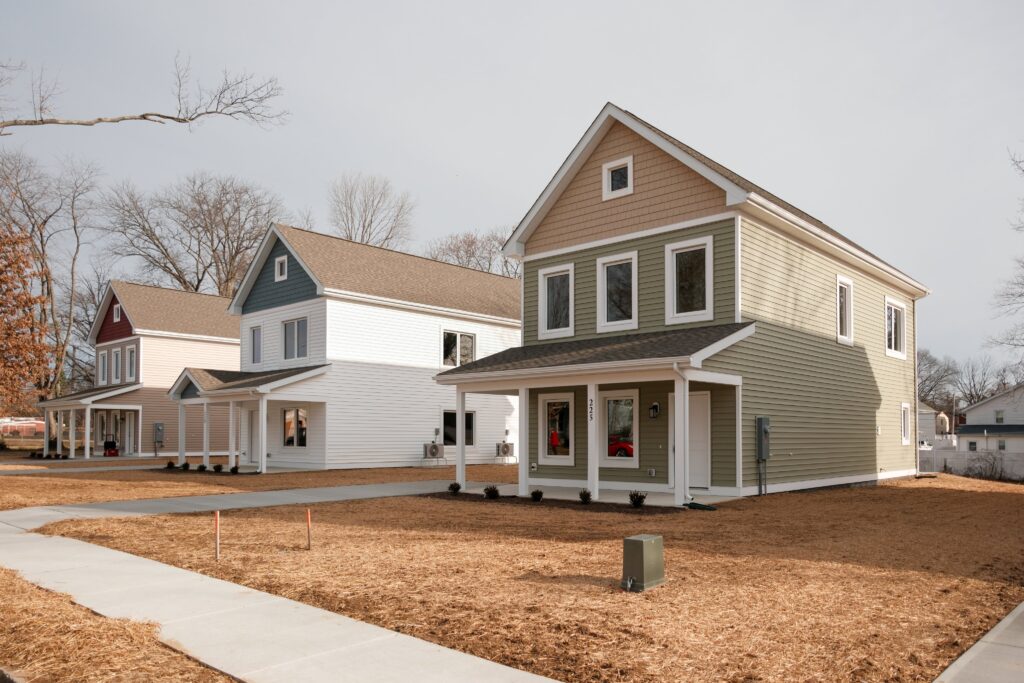
Laurel plans Meadow View community to expand affordable housing access in Sussex County, Delaware
Delaware needs an estimated 24,400 additional homes by 2030 to keep up with projected demand, according to a state report.
1 month ago
Listen 1:06A loophole for SB 23?
In addition, the city council discussed speeding up the timeline of adopting a comprehensive plan. Instead of adopting one in late 2027, it was proposed the city could adopt one by February.
The suggested timeline was based on what was believed to be a loophole in the law, where if a local jurisdiction adopted a plan before Feb. 1, 2027, it would not be required to adopt an affordable housing plan for another five years.
However, Marasco said that the council learned after meeting with state Sen. Huxtable that the exception was to accommodate the city of Newark, which is much further along in the comprehensive plan development process. However, the bill does not specifically name Newark in that line of text. The discussion was placed on the agenda before the council learned this information.
Marasco said that they should take advantage of the city’s established timeline to develop a strong plan.
“This is our huge opportunity to get the public involved and let’s not shortchange them,” Marasco said.
But Keane also said at the meeting that the February deadline would not be feasible for the planning commission.
“We would be left with a really crummy, shallow comprehensive plan that we would have to live with for five years,” he said.
Innes said that because public hearings won’t be available for by-right developments, it’s vital for the city to engage community members and get their feedback through the available public hearings for drafting the comprehensive plan.
“The issue that drove SB 23 is a very important and, in my view, ethical moral issue, and that is that we need to do our best to accommodate the people that live and work in our community in workforce housing,” Innes said. “We need to look at that issue up to the best of our ability and figure out how we can have the people that work at our hospitals, that teach our children, that they can have a place to live that they can afford.”
The council did not take action on an accelerated timeline. The planning commission also placed an item on the agenda for its Wednesday meeting, but followed suit with the council.
The public hearing on the moratorium is scheduled for Oct. 7 at 5:30 p.m.

Never miss a moment with the WHYY Listen App!


WHYY is your source for fact-based, in-depth journalism and information. As a nonprofit organization, we rely on financial support from readers like you. Please give today.

Tale of Two Cities: Lewes, Delaware, reconnects with sister city in England
Lewes Mayor Amy Marasco traveled to another Lewes in England earlier this month. She’s the first official to do so in about four decades.
3 days ago
Listen 0:59
Delaware recently implemented 2 land-use laws. Here’s what they mean for affordable housing
House Bill 450 and Senate Bill 23 both require Delaware counties and local governments to make changes in the way they approve developments.
2 weeks ago
Listen 1:02
The town council voted in favor of starting a repeal process for the divisive ordinance last month. The planning commission says there’s not enough evidence to support it.
3 weeks ago
Listen 1:06