
Tale of Two Cities: Lewes, Delaware, reconnects with sister city in England
Lewes Mayor Amy Marasco traveled to another Lewes in England earlier this month. She’s the first official to do so in about four decades.
Listen 0:59
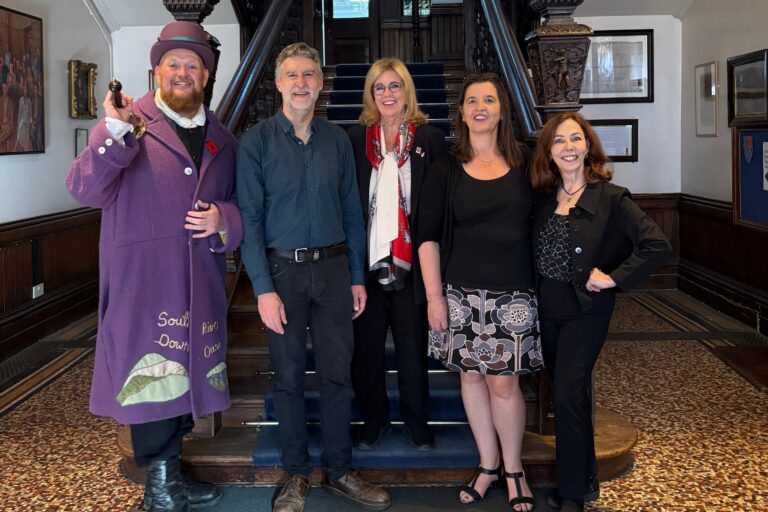
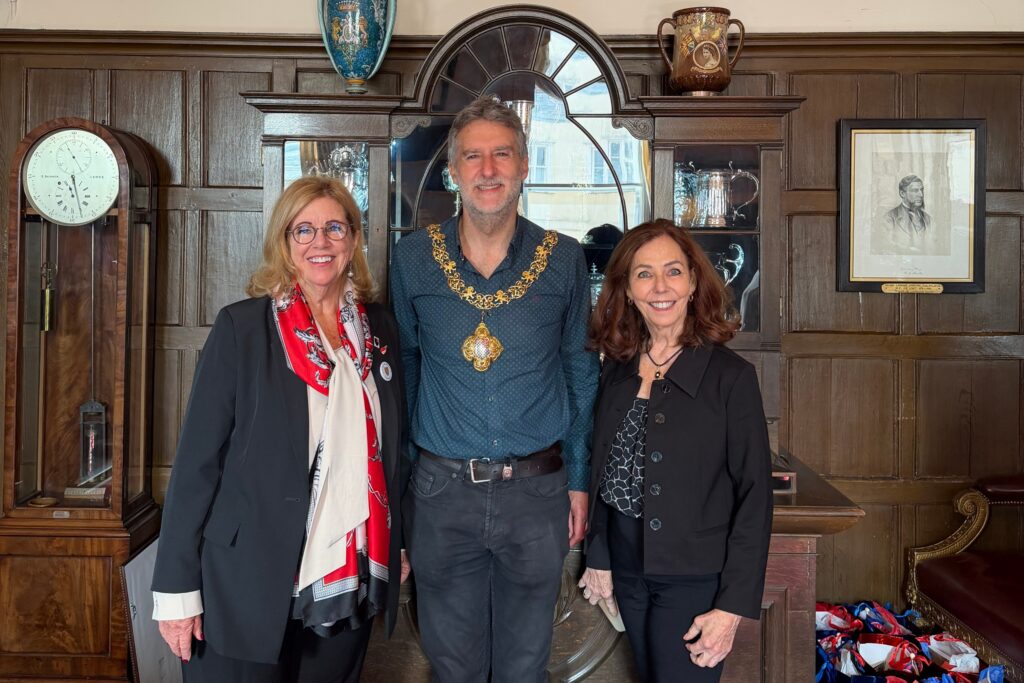
Town Crier Jon "Shouty Man" Borthwick; Adrian Ross, mayor of Lewes, England; Amy Marasco, mayor of Lewes, Delaware; Lewes Town Clerk Veronique Poutrel; and Mary Alice Kelly (Courtesy of Mary Alice Kelly)
What are journalists missing from the state of Delaware? What would you most like WHYY News to cover? Let us know.
Two municipalities separated by the Atlantic Ocean share “profound similarity.” That’s what Amy Marasco, mayor of Lewes, Delaware, took away from her trip this past month to Lewes, England.
“These two communities across the pond — who share a logo and emblem and name, but they share more than that,” Marasco said. “They really share an ethos. They share a citizenry feel of participation.”
Masasco toured the English town from Oct. 1-3. She was joined by Mary Alice Kelly, the chair for the Lewes 250 Committee, for part of the trip.
The two cities have had a longstanding honorary sister relationship, and Marasco and Kelly’s visit wasn’t the first of its kind.
Former Mayor Otis Smith visited Lewes, England in 1964, and in 1986, former Mayor Al Stango brought a group of public officials and residents to the other Lewes for a visit. The last time leaders from Lewes, England visited Delaware was in 2014 for the American city’s 375th anniversary.
“We always knew that there was a history there, but I think that it did start to get sort of lost in time,” said Ashley Akgoren, the city clerk for the Delaware-based Lewes.
Akgoren said that inside a conference room in city hall, there are honorary sister relationship documents and a clock that was gifted from leaders in Lewes, England. After Marasco was elected last year, she began to think about how the relationship could be revitalized.
“You sit in our city hall conference room, and you see this beautiful clock, and then you look at our emblem logo and theirs, and then you just start to say, ‘How come we haven’t had a stable sister city relationship, a vibrant one?’” Marasco said.
From there, Akgoren and Kelly began to search for more information about the relationship and dug up artifacts from the past. That includes plaques, artwork, decrees, pins and an itinerary from the 1964 trip. Kelly was also able to find a VHS tape that she converted to a DVD with 2 1/2 hours worth of footage from the 1986 visit to England.
“One of the things that the mayor of Lewes, England, said when we were there was, ‘This has been going on for a long time, and it seems like we re-engage and then it kind of falls apart,’” Kelly said. “A lot of that is because at the time it was difficult to keep up communication, but now it’s not that hard any longer.”
Kelly said that they are still digging through archival material and researching the relationship.
A brief history behind the shared name
Lewes was settled in 1631 by the Dutch with the goal of establishing a whaling operation, according to Historic Lewes. Originally named Zwaanendael, it was considered the first European settlement in Delaware. Though the city has a Dutch heritage, the settlement did not last long and was destroyed by the Siconese tribe.
By 1659, the Dutch built another settlement at the site, this time naming it Hoerenkill, or Whorekill as the English called it. But again it was short-lived and destroyed in 1673. The following year, England took possession of the region, and the village was dubbed Deale in 1680.
William Penn, the proprietor of Pennsylvania and the Three Lower Counties Upon Delaware, arrived from England in 1682. That year, he renamed the southernmost county Sussex after his home county, and the village after Lewes, a town in the same county.
Related Content
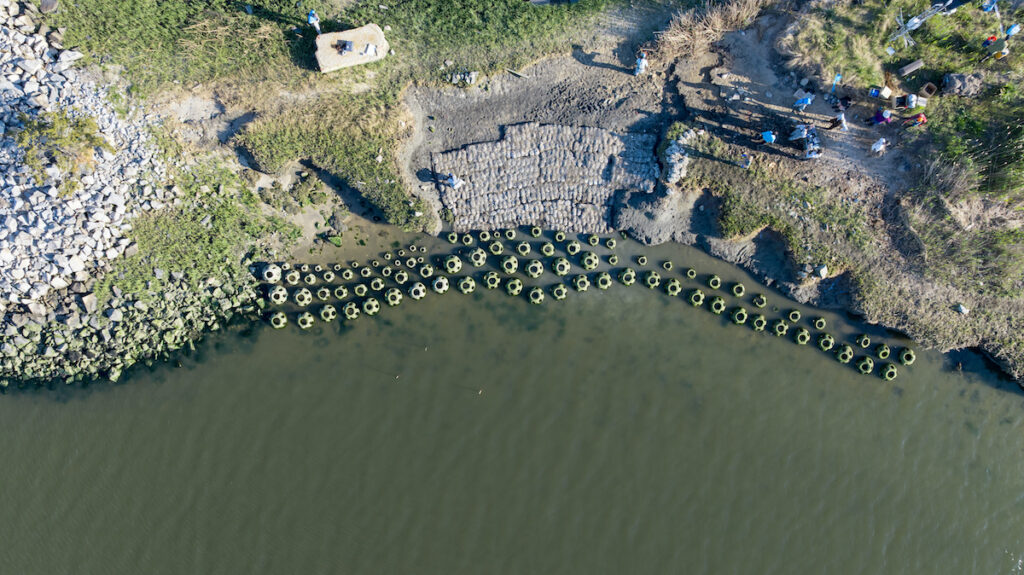
Living shoreline aims to mitigate flooding, erosion in Lewes, Delaware
The project aims to reduce the risk of infrastructure damage while supporting marine habitats and recreational fishing.
4 months ago
Listen 1:01Interdependence and Lewes 250
Though the rest of the country celebrated the United States’ 250th birthday on July 4, the party isn’t over for Lewes.
The city launched Lewes 250 at the end of 2025, a yearlong celebration of events commemorating America’s and the city’s history.
“[The program’s focus] is to tell the full and complete story of the community of Lewes,” Kelly said. “For its entire history, not just colonial times, but all of the history of Lewes over these 250 years of our country, and how we have influenced the country in all of those decades, and how we’ve been influenced by the freedoms and democracy here.”
Events throughout the year have been led by local nonprofits, businesses, volunteers and civic leaders. They ranged from concerts to lectures to themed dinners to historic dedications.
One of the year’s first events was a lecture featuring U.S. Rep. Jamie Raskin, D-Maryland, that focused on Thomas Paine’s “Common Sense.” It was held on Jan. 10, the 250th anniversary of the foundational text’s publication.
Before he wrote “Common Sense,” Paine actually lived in Lewes, England for a six-year period. Marasco said that learning this was also a partial inspiration behind the trip.
“The connections keep coming back on this critical thinking of Thomas Paine, and so it made sense. Let’s go to Lewes, England as part of 250 [celebration] on our own nickel,” Marasco said.
On July 4, officials in Lewes, Delaware, and Lewes, England, connected over a Zoom call. The English town also celebrates the day with a Thomas Paine Parade, due to his influence on American independence. Kelly said the Zoom call in particular felt like a celebration of “interdependence.”
“We really were so connected and so strongly influenced by all of the things in Lewes, [England],” Kelly said.
Sharing the same DNA
The trip started with Paine as well. Marasco and Kelly visited Bull House, where Paine lived from 1768 to 1774. It has since been converted to a museum.
There, they were invited to the first public unveiling of Princeton University Press’s six-volume collection of Paine’s writings. Marasco said they felt privileged to be part of the event and witness history in the making.
“The hotel we stayed in, which is the White Hart Inn, has the room and they still have it, it’s called the Headstrong Club and it’s where Thomas Paine would go and they would debate,” Marasco said. “He had been building through letters that the Princeton Press found, and through the Headstrong Club, he was formulating and hearing his own voice, what resonated and what didn’t.”
The next day, Marasco and Kelly were given a tour of the town by the designated town crier, who was dressed in full regalia and is nicknamed “Shouty Man.” Kelly said they learned more about Lewes’s history outside of Paine, including the Battle of Lewes in 1264 and the town’s connection to Henry VIII’s fourth wife, Anne of Cleves.
Related Content
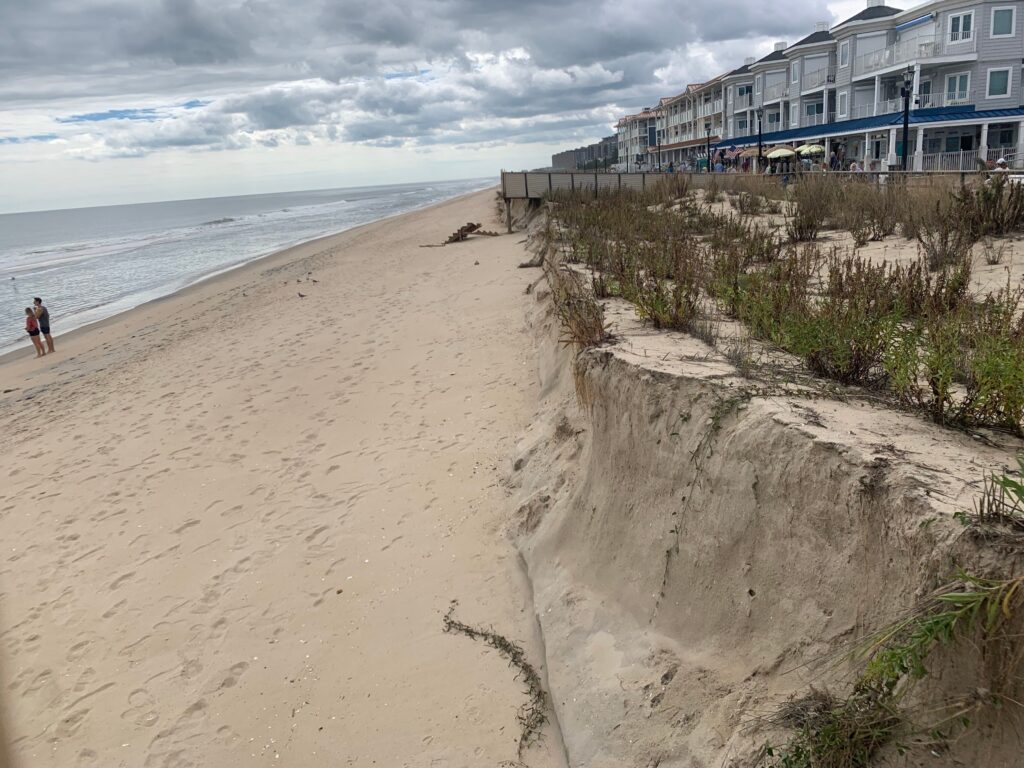
Some beaches saw significant dune loss following the recent nor’easter. However, regular nourishment projects are almost fully federally funded.
1 week ago
Listen 1:06Prior to the visit, Marasco and other members of the Lewes City Council signed a proclamation to reaffirm the relationship, and serve as an open invitation to “participate in building fresh avenues of cooperation, cultural exchange, and environmental leadership between our two historic communities.” That proclamation was presented to the Lewes Town Council, and Marasco said they were touched by the gesture.
“They know how challenging it is for any council to [have] everybody to agree on everything, and they’re challenged with that as well,” Marasco said. “They kept saying, ‘All of you signed it?’ That was very important to them.”
The exchanging of gifts was followed by tea time with the council.
While visiting, Marasco and Kelly learned that Lewes in Bloom, a nonprofit in the city that works on beautifying parks and gardens, won a national America in Bloom award. The nonprofit’s founder, Warren Golde, also won the Community Champion award.
Golde was inspired to create the nonprofit after he became stuck in Lewes, England, during 9/11. While he stayed there, he took note of the town’s gardens, and wanted to bring that beauty to Delaware.
“We heard that we had won, and we then sent that to the mayor and council to say, ‘It was your Lewes that inspired our Lewes,’” Marasco said.
Though the population of the English town is much larger, Kelly said both face a lot of the same problems.
“The engagement of the citizens there, the caring, the things that they’re doing with regard to resiliency and climate and educating their people, and music and arts, and affordable housing and flooding, all of the same sort of issues that [both communities are] addressing and trying to resolve,” Kelly said. “We feel like maybe if we collaborate, we can influence each other and solve them together, right?”
Kelly was invited to a flooding committee meeting earlier in the week. Lewes, England, had a major flood in 2000 that destroyed more than 600 homes. Kelly said the room was packed with concerned citizens.
Both cities are currently working to update emergency preparedness, and Marasco said they plan to share feedback on resiliency.
While overseas, Marasco and Kelly learned that a popular saying in Lewes, England, is “we wunt be druv,” which means that citizens won’t be pushed into doing something they don’t want to do. Marasco said it was very much like Lewes in Delaware.
“We’re a strong vibrant citizen-based community and we just found our sister city has that same DNA,” Marasco said.
Related Content
Delaware recently implemented 2 land-use laws. Here’s what they mean for affordable housing
House Bill 450 and Senate Bill 23 both require Delaware counties and local governments to make changes in the way they approve developments.
2 weeks ago
Listen 1:02How might the two Lewes’s connect in the future?
Marasco and Adrian Ross, the mayor of Lewes, England, wanted to find a way to keep the sister city program going independent of elected officials. That’s due to the fact that mayors in the English town are only elected to one-year terms, and the program may not be a focus for future mayors or councils.
Marasco and Kelly met with Leanne O’Boyle, the director of the Bull House, on how to maintain the relationship outside of local politics. The conversation ended with two potential paths the cities plan to take. One pathway focuses on correspondence, where nonprofits could be connected and decide to collaborate in whatever way they see fit.
“Basically, saying to all of the nonprofits on both sides of the pond, ‘You have a sister organization. If you want to connect whether it be music, education, commerce, resiliency,’” Marasco said.
Marasco used Lewes in Bloom as an example, and said the organization could host virtual garden tours with another organization in Lewes, England. She also said the University of Delaware could connect with another university, or create an internship program with Bull House.
Marasco said the two cities could also be connected by the city clerk, who can coordinate communication between different government officials, nonprofits or residents.
The cities also wanted to create a program that was more tangible and could happen sooner rather than later. O’Boyle proposed a program similar to the Flat Stanley Project, where students mail paper cut outs of the children’s book character to other students somewhere else in the world, and take photos with them, as well as write corresponding letters.
The Lewes-based project, however, would instead be called “Travelling Thomas,” and use Thomas Paine as the connecting character. Students from both cities would write about how Paine traveled to America, and then write their thoughts on the back of the character.
“We’re letting the kids of both sides tell us what are their hopes and their dreams, and what are their concerns?” Marasco said. “We might find that there’s a significant similarity between the two. In the meantime, our youth are going to learn more about their sister city.”
By January, the schools in both cities would start the project, and then exchange the characters by June. Cape Henlopen School District and Lewes Elementary School have shown interest in the project, according to Marasco and Kelly.
Marasco also said that when they visited the sister city, they found that Lewes, England, wanted to let “youth define for adults what they care about.” Kelly said that part of Paine’s philosophy was allowing each generation to define how they are governed.
“He planted the seeds of democracy and how we could take action. He traveled, and now these Thomases are going to travel as well,” Marasco said.
The relationship could also expand to exchange or pen pal programs in the future.

Never miss a moment with the WHYY Listen App!


WHYY is your source for fact-based, in-depth journalism and information. As a nonprofit organization, we rely on financial support from readers like you. Please give today.
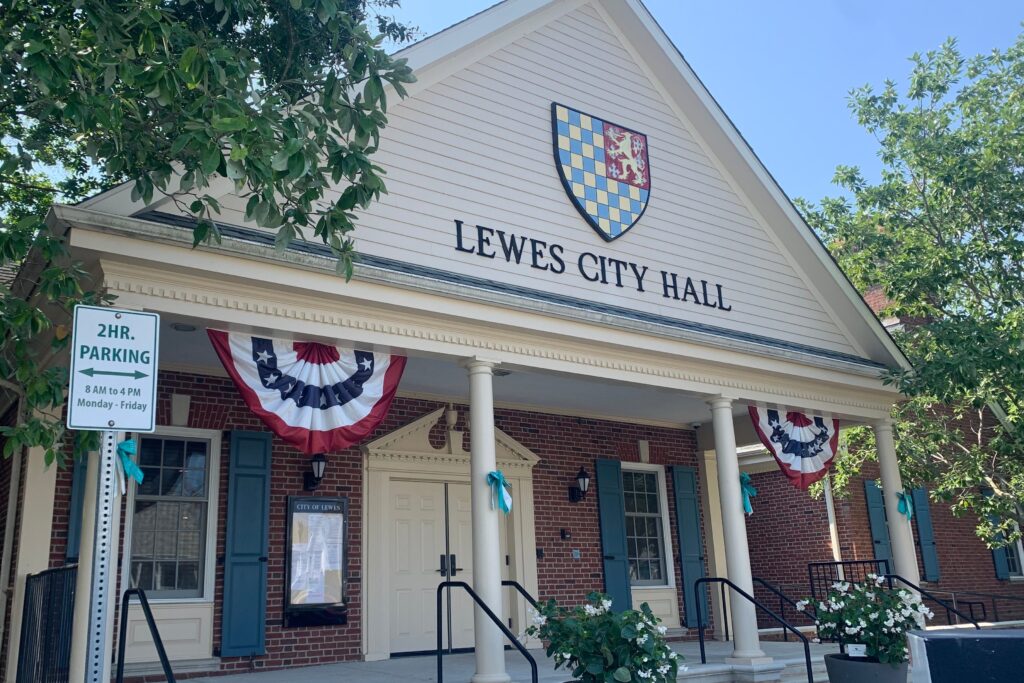
The proposed moratorium would last until the end of 2027, or until the city approves a comprehensive plan.
4 weeks ago
Listen 1:05
Delaware senator to lead visit to Denmark as President Trump continues to push to acquire Greenland
Trump has floated purchasing Greenland or taking it by military force.
9 months ago

BBC debate show host offers her take on presidential election ahead of show taping in Philly
BBC's "Question Time" arrives in Philadelphia to discuss the U.S. presidential election, featuring politicians, commentators, and spontaneous audience questions.
2 years ago
Listen 6:38