

Delaware leaders call for more federal funding to help rebuild beach dunes following nor’easter damage
Some beaches saw significant dune loss following the recent nor’easter. However, regular nourishment projects are almost fully federally funded.
Listen 1:06
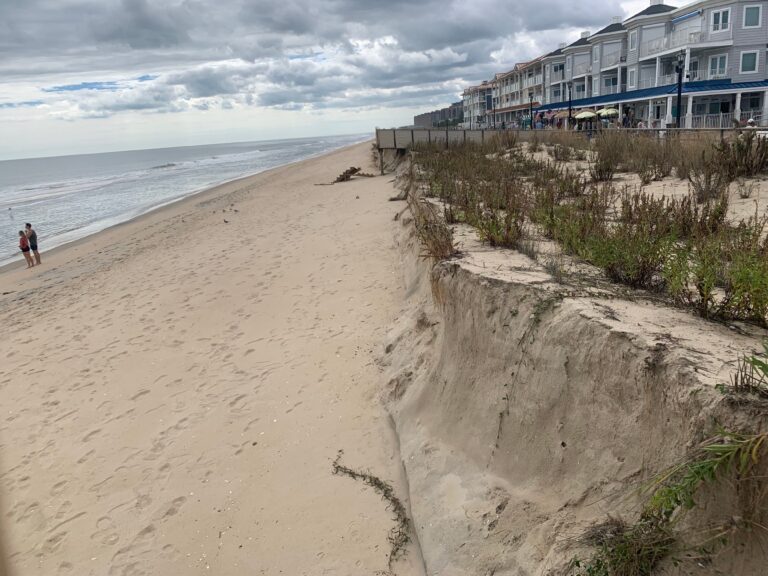
Bethany Beach in Sussex County suffered severe coastal erosion, resulting in a 12-foot drop-off near the boardwalk. (Sarina Grossi/WHYY)
What are journalists missing from the state of Delaware? What would you most like WHYY News to cover? Let us know.
As agencies continue to assess the damage Delaware beaches took in the recent nor’easter, the state’s congressional delegation is calling for more federal money to go towards rebuilding dunes.
U.S. Sen. Chris Coons’s office announced that he would be working to secure $30 million in federal funding for replenishment to address ongoing needs.
“Delaware’s beaches are critical to our communities, our economy, and our way of life, and we need to make sure they have the resources they need to recover from this storm and prepare for the next one,” Coons said in a press release.
A spokesperson for Coons said that the $30 million figure was created after coordinating with the state’s Department of Natural Resources and Environmental Control as well as Gov. Matt Meyer’s Office. They also said that it should be able to meet the state’s needs for full beach nourishment for fiscal year 2027.
Earlier this year, the state’s congressional delegation was able to secure $10 million in federal funding for replenishment projects from Cape Henlopen down to Fenwick Island. They are working with the U.S. Army Corps of Engineers on making the funding available as soon as possible.
“We’re kind of hopeful we could do more than one beach, and whatever the next one is, but now we’ve got this emergency response that is layered into that,” said DNREC Secretary Greg Patterson. “All of these things are going to come together and we’re going to have to figure out what the right and affordable path forward is in the next couple of years in the next ocean beach project.”
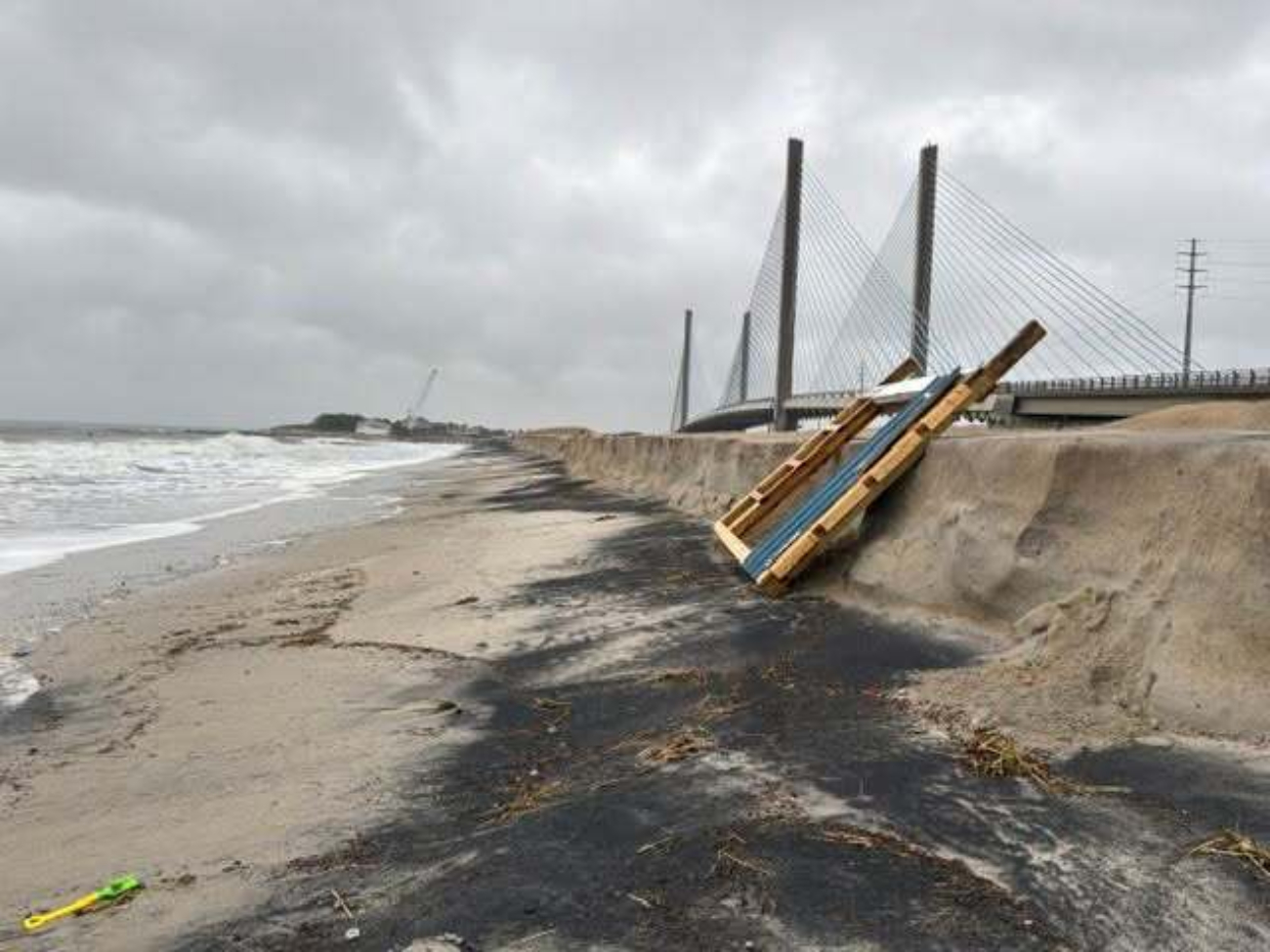
According to Patterson, heavily depleted beaches will take more time to fix and will need federal assistance. Those beaches, like Dewey Beach, Bethany Beach and South Bethany, are being actively assessed by DNREC and their partners with the Army Corps.
Dunes are designed to protect communities from the severe impacts of the storm. State and federal officials said that the dunes in the recent storm did their job.
“The dune and beaches are really designed to take the brunt of the impact from storms, and so having them absorb that energy from waves and other impacts rather than the infrastructure behind them, that’s the purpose of these projects,” said Steve Rochette, spokesperson for the Philadelphia District of the U.S. Army Corps of Engineers. “In Delaware, we have a lot of infrastructure, roads, boardwalks, homes, businesses, utility lines. All of those things are vulnerable and the projects are really designed to take that impact and be sacrificial in nature.”
The beaches along Delaware’s Atlantic Coast have constructed dunes that were put in place in the mid-2000s.
Related Content
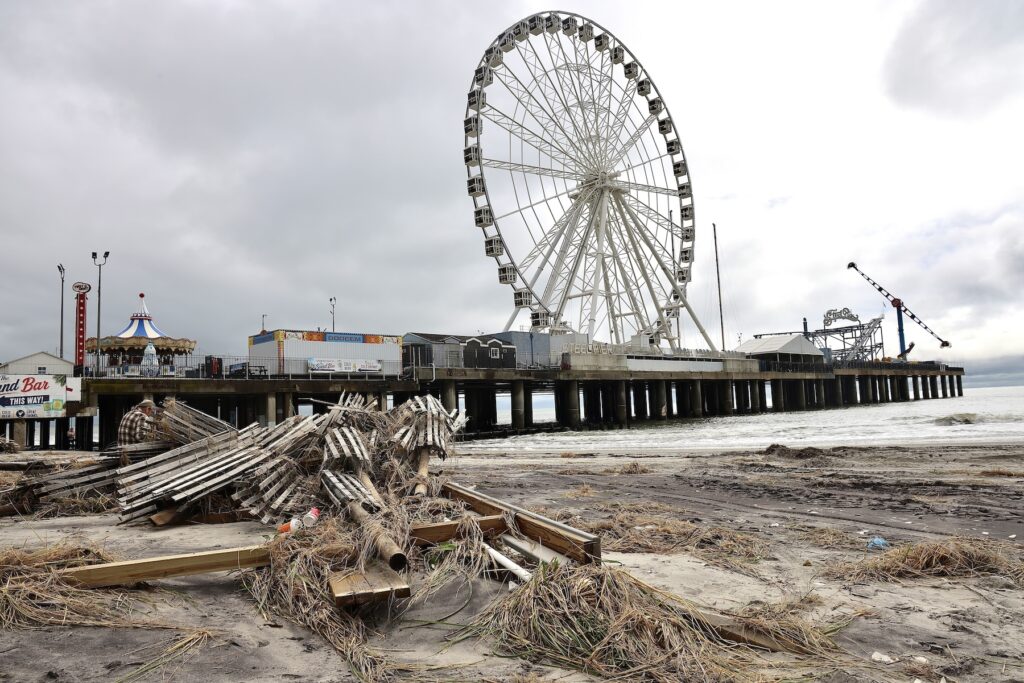
Nor’easter scoured Jersey and Delaware beaches, causing erosion and flooding
A 2025 beach-replenishment project in Atlantic City cost about $40 million, while work this year in Sea Isle, Strathmere and Ocean City had a $41 million price tag.
1 month ago
Nourishment funding
When it comes to ocean beach nourishment projects, Southern Delaware beaches are treated about every few years, depending on the area. That nourishment cycle is based on feasibility studies completed by the Corps that analyzed historic rates of erosion and calculated the estimated quantity of sand needed to maintain the dune system.
“That’s what periodic nourishment is all about — it’s maintaining that beach and dune system, which provides the protection and helps manage risk along our coastline. And so, each project has different cycles. In the case of Delaware, each one is a little different,” Rochette said.
Rehoboth Beach and Dewey Beach’s cycle is every three years, and so is Bethany Beach and South Bethany’s nourishment project. Fenwick Island’s dunes are replenished every four years, and for Lewes it’s every six years, according to Rochette.
The last time all the ocean beaches received regular nourishment was in 2023. Lewes Beach was replenished in 2024, according to Rochette. The projects would be eligible for nourishment projects, but it is dependent on funding. Emergency replenishment projects are not dependent on the cycle.
For these projects, Patterson said that they require dredging, which is when sand is picked up offshore or underwater and pumped onto the beach. The state is able to truck sand onto the beach, but is limited.
Rehoboth Beach and Dewey Beach were set to have their regular beach nourishment project last year, however, Patterson said funding was “not sufficient.”
“We had about $8 million from the federal government and that turned out not to be enough to do the work,” Patterson said. “The cost of beach replenishment like any other construction type project has gone up dramatically over the last couple of years.”
DNREC helps put the project together, handles any real estate easements and pays partially for the projects, but they are primarily run and funded at a federal level. About 20% of funding comes from the state, while 80% comes from the federal government.
According to Patterson, that funding structure makes the projects affordable for Delaware, but costly for the Corps.
“That coincided with a lack of federal funding going to the [Army] Corps of Engineers in this current federal administration. So those two things kind of put together have made it harder for the federal government to afford these projects,” he said.
Bay beaches, like Bowers and Slaughter Beach, historically have been paid for by the state, though about $60 million in federal funding was secured by former U.S. Sen. Tom Carper for large-scale replenishment. These projects were expected to start this fall, but were delayed due to real estate requirements.
Patterson said these projects are now scheduled for fall 2027.
The Army Corps is currently collecting data from DNREC to estimate how much it will cost to rebuild the dunes.
“From the congressional delegation, we know that there has been some talk about congressional disaster appropriation,” Patterson said. “A special bill that would run to potentially fund emergency work here and in other states, but that will all be subject to the winds in Congress, and all we can do is put the data together.”
As of now, a cost estimate for the storm’s damage is not available, but Patterson said that it will likely be “in the tens of millions of dollars.”
A spokesperson for Coons said that once a number is finalized, the congressional delegation will work to potentially secure emergency funding. They also said that supplemental funding will be discussed by Congress throughout the fall and likely into December.
Related Content
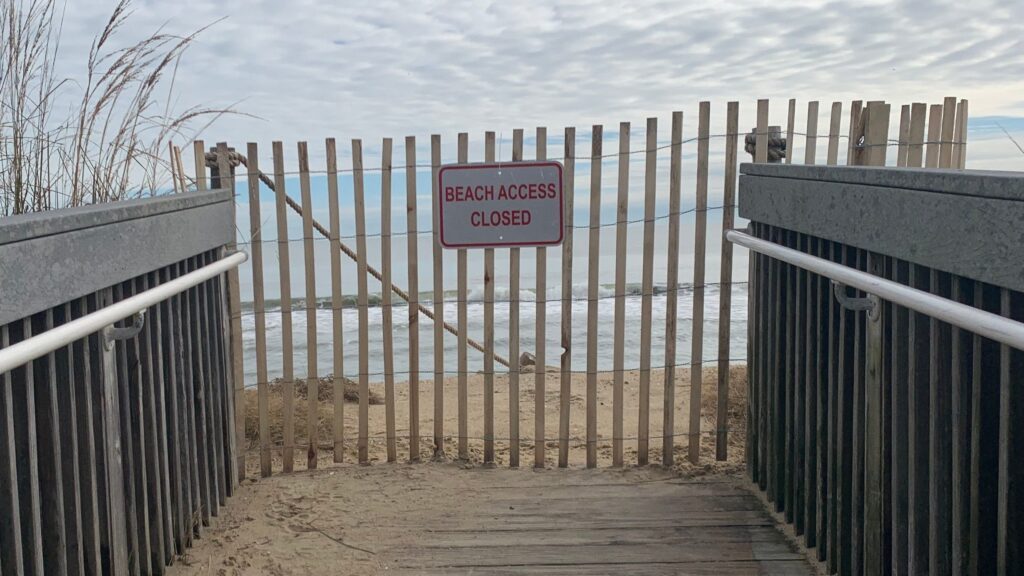
Nor’easter aftermath: Sussex County beaches could have long recovery ahead
State officials are working to restore beach access to places like Bethany Beach, which have seen significant dune erosion.
1 month ago
Current and future work at the dunes
Since the storm that hit the region on Sept. 26 and Sept. 27, DNREC teams have been working to restore access to beaches, crossovers and dunes with sand that is still available with heavy machinery. Crews were previously working on emergency access points to allow police and ambulances onto beaches, but have since moved on to public access points.
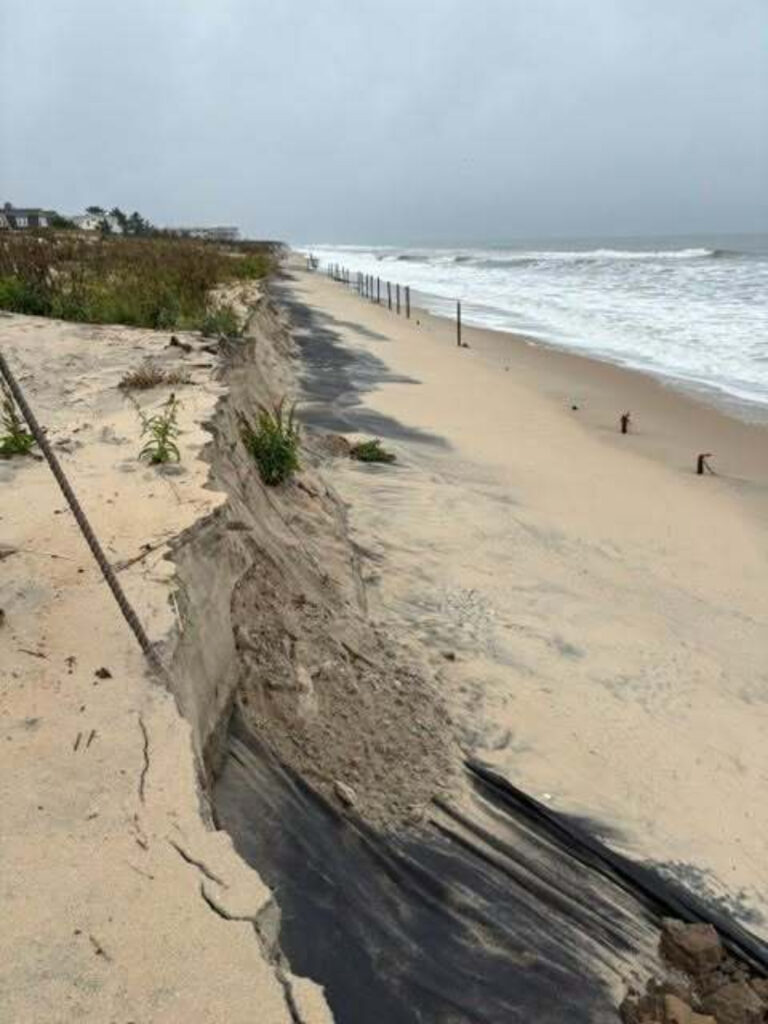
“On the Atlantic Coast, we have such large scarps or cliff faces that have formed through erosion that the sand isn’t available for us to functionally restore access,” said Josh Lippert, the program administrator for DNREC’s Shoreline and Waterway Management Section.
Lippert said that there is at least one public crossover open at each Atlantic Coast beach. Bethany Beach, one of the communities that saw significant coastal erosion, has about five crossovers open now on the north and south ends. Throughout the next few weeks, crews will also be doing work along the bay beaches.
Lippert noted that there were no dunes breaches from the storm, in which waters “carve it out” to the point that waves go through the dunes, potentially impacting private properties and roadways.
“When that occurs, it’s usually an emergency because we need to get that dune fortified so that it’s not impacting the infrastructure, the homes, the roadways behind the dune,” Lippert said.
However, recovery for ocean beaches right now is focused on large-scale beach nourishment, which is done with the Army Corps.
Lippert said the team monitors public beaches during the storm’s high tide to look at the tide’s impact on the beaches. The team has also been doing survey work with their federal partners, which coincides with surveys that already happen this time of year.
According to Rochette, the current assessment could take about one to two months to fully complete.
“We go through quite a rigorous process and that really informs our recommendations for eligibility under one of the emergency programs that we operate with,” Rochette said.
There will be a post-storm report release after survey work is complete that will be included in the department’s annual Beach Change Report.
The recent storm was considered an early one, as the winter months typically bring more nor’easter conditions. Lippert said that the Shoreline and Waterway Management team monitors possible weather events coming in the future.
Since some bay beaches were impacted by the nor’easter, DNREC crews will truck haul sand to those areas in the coming weeks so that they are prepared for the winter storm season.
Towns impacted by the storms do not contribute financially to federal projects, however, public works departments and other town or city staff are working with DNREC on preparing for future storms.
“We do dune fences, sand fences; we do beach grass plantings to stabilize our dunes and to collect sand on our dunes,” Lippert said. “And then, we even physically move sand up towards our dunes.”
Lippert also said that following storms, beaches typically see recovery bars, or sand bars in the water that move back toward the shore over time. Though this won’t fully restore the dunes, it can help partially stabilize them.

Get daily updates from WHYY News!
WHYY is your source for fact-based, in-depth journalism and information. As a nonprofit organization, we rely on financial support from readers like you. Please give today.
Part of the series

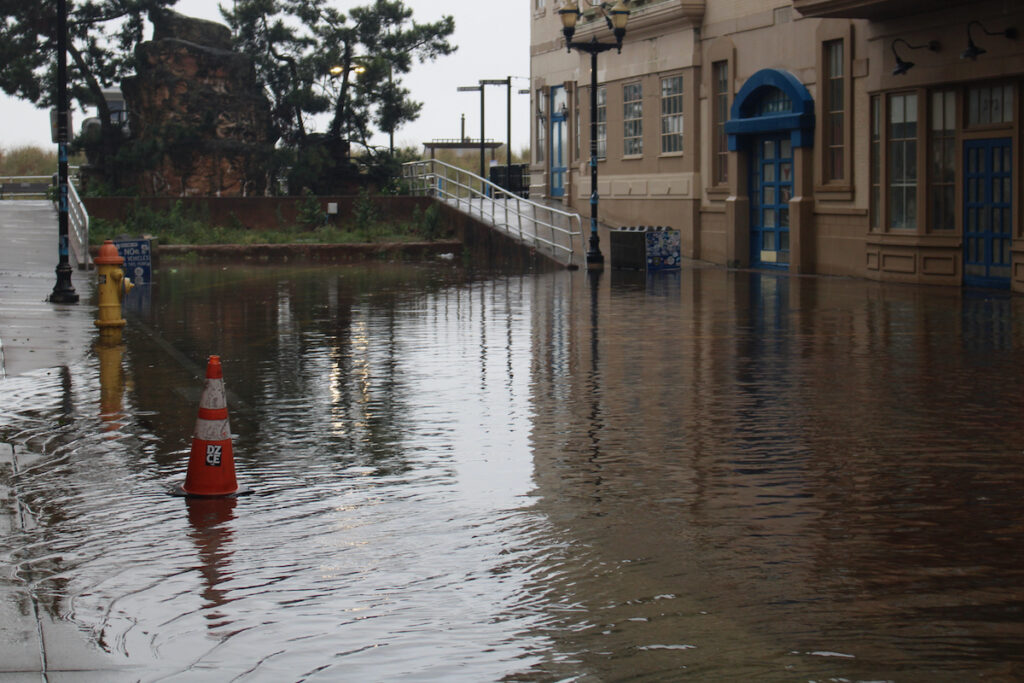
Shore towns saw the worst of the storm this weekend. Officials say more flooding may come.
1 month ago
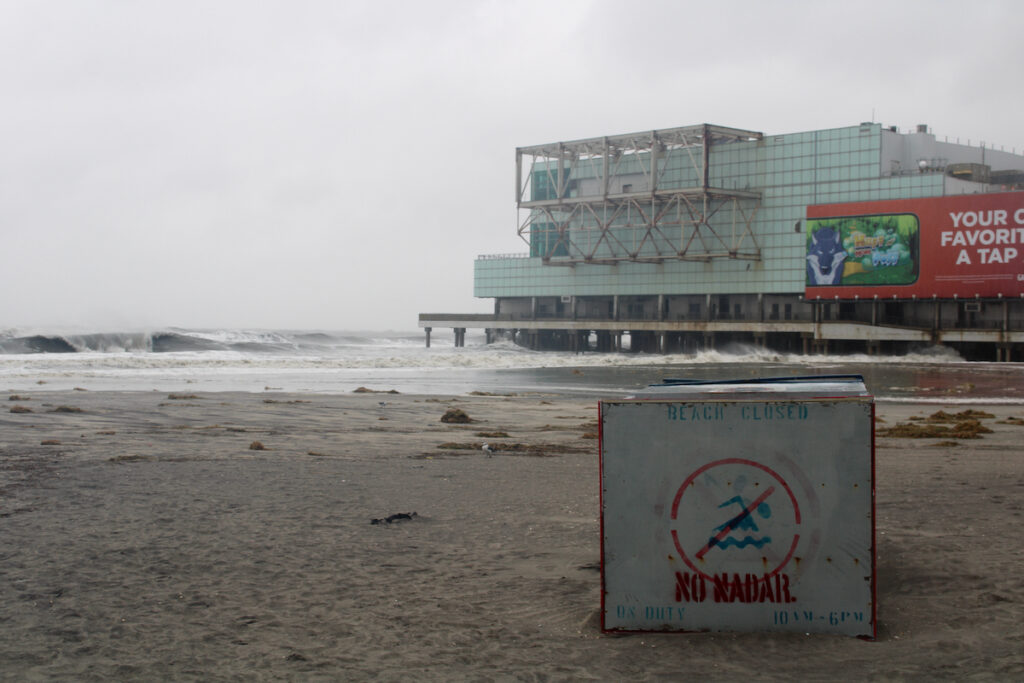
Nor’easter hits Philadelphia region, bringing high waves, coastal flooding to N.J. and Delaware
New Jersey Gov. Mikie Sherrill has issued a state of emergency for eight counties, with some shore towns issuing voluntary evacuation orders.
1 month ago
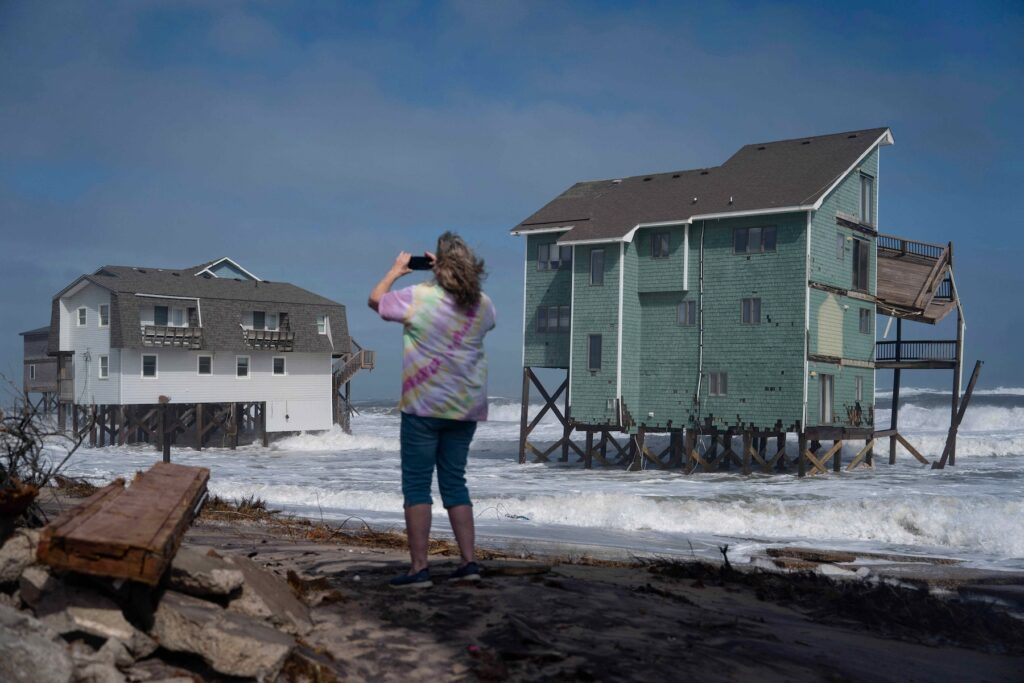
Gusty winds, dangerous waves, flooding expected along New Jersey, Delaware coast
A powerful nor’easter is expected to push strong winds and high surf along the coast.
2 months ago
Listen 1:00