
At Philadelphia summit, U.S. Sen. McCormick offers a prescription for high costs: Less government red tape
As other Republicans call for ending the Iran war or rolling back tariffs, the first-term senator is focused on eliminating “unnecessary” regulations.
Listen 0:59
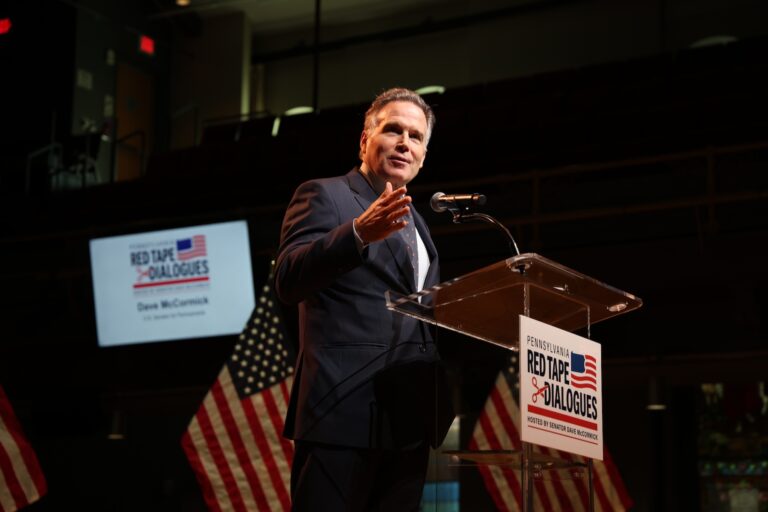
U.S. Sen. Dave McCormick spoke about government red tape at Temple University. Oct. 15, 2026. (Courtesy of Sen. Dave McCormick)
From Philly and the Pa. suburbs to South Jersey and Delaware, what would you like WHYY News to cover? Let us know!
As other politicians scramble to craft affordability messages ahead of November’s congressional elections, Pennsylvania U.S. Sen. Dave McCormick came to Philadelphia this week to press his campaign for cutting government “red tape.”
Republican senators in tight races have called for ending the Iran war to bring down high gas prices — a principal cause of recent jumps in the cost of living — and for reductions in President Donald Trump’s tariffs on Canada and other trading partners.
But McCormick, who isn’t up for reelection this year, argued during an event at Temple University on Thursday that state and federal policymakers should focus on eliminating what he called “unnecessary” regulations.
He said Pennsylvania has 166,000 regulatory restrictions, or 22% more than the average among U.S. states, citing a 2023 report from the Commonwealth Foundation, a fiscally conservative think tank in Harrisburg.
A more recent study from the Mercatus Center says the number has since fallen to 164,000, putting Pennsylvania in 14th place for the most restrictions.
“All of this comes at a cost. It comes at a cost to working families, according to the Pennsylvania Builders Association. Regulation at every level of government accounts for about 29.5% of the price of a new home,” McCormick said. “But the greatest costs are not just in price. They’re unseen. They’re the cost of investments that are never made, the businesses that are never started, the jobs that are never created.”
Asked about the Republican message to voters, the first-term senator said he always reminds people of the nation’s historically low crime and poverty rates, a new tax deduction for tips, and an accelerated depreciation for small businesses.
“Then I acknowledge the thing that I think we all know, which is gas prices are too high, health care costs are still too high, we’ve got work to do on housing, even though we’ve just passed a big housing bill,” he said. “I think the report’s pretty good, even though there’s still work to be done.”
Tariffs ‘have a huge impact’
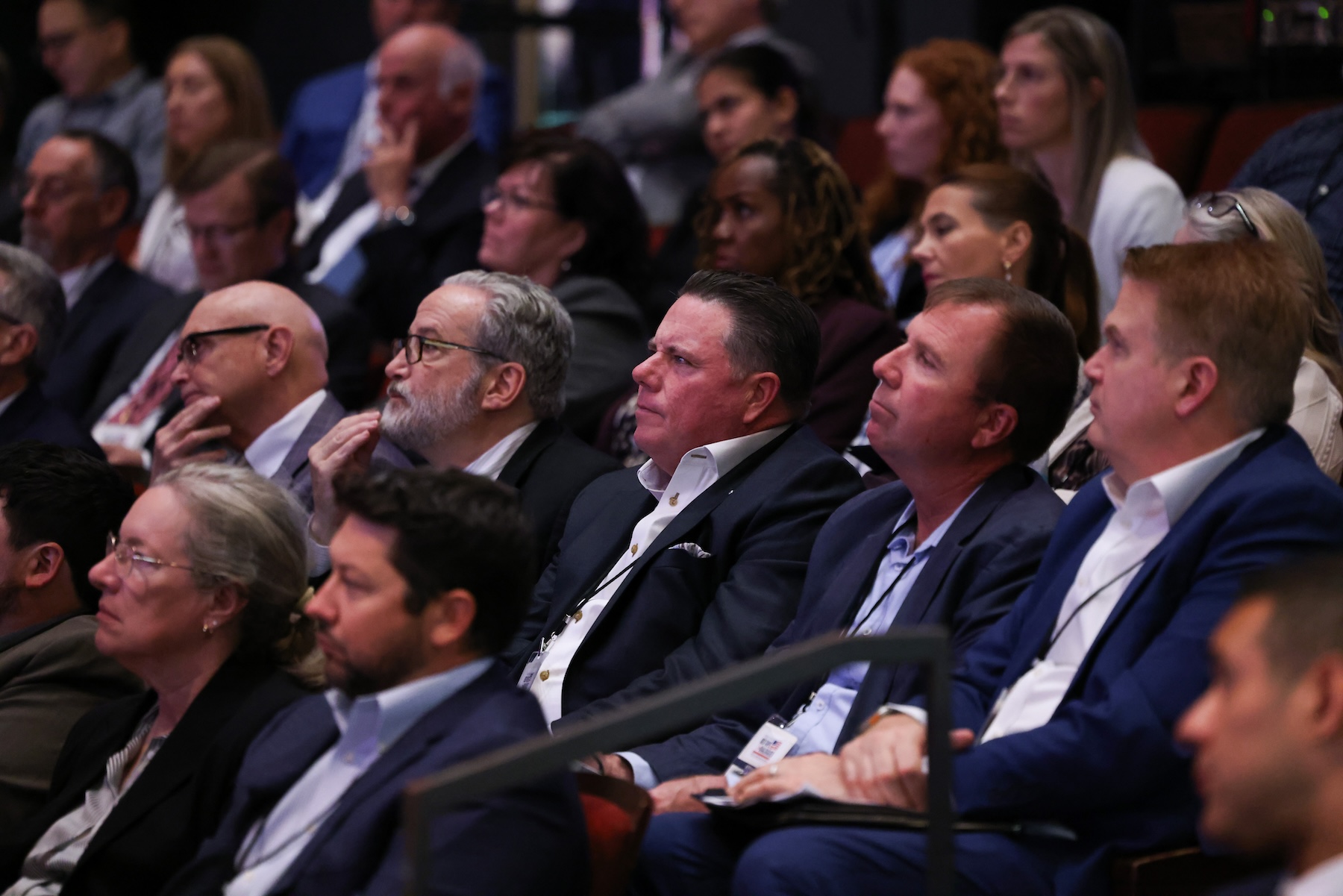
McCormick hosted his “Red Tape Dialogues” event at Temple to solicit proposals for government reforms from business and nonprofit leaders.
He was joined by former Arizona Gov. Doug Ducey, who championed elimination of business regulations during his two terms in office, and Trump administration officials.
“There are obvious issues that cause affordability to [decline], but the biggest obstacle in affordability is regulations,” said Tom Rossamondo, director of regional affairs at the U.S. Small Business Administration’s Office of Advocacy. “If you learn one thing from me today, please take this to heart: Regulations are a backdoor tax, plain and simple.”
Related Content
Philly-area manufacturers say fragmented economic-development efforts are holding them back
Business leaders say better coordination could help manufacturers overcome workforce shortages, transportation barriers and supply chain challenges.
3 weeks ago
Listen 1:15Several dozen business executives and public officials from around Pennsylvania huddled in industry-specific groups during the event to identify their top priorities for regulatory reforms.
They included easier approval of Medicare coverage for new medical devices, quicker visa processing for migrant agriculture workers and standardized applications for federal research grants.
Some of the speakers said the biggest impact would come from changing recent federal policy decisions rather than legislation or agency rule-making.
Brian Cohen, owner of a clothing store in State College, said he’s struggling with higher costs on imported fabrics due to tariffs imposed by Trump. He said they compounded the burden of older tariffs dating to the 1930s and 1960s.
“Tariffs have a huge impact on our type of business. Just this year, the cost equivalent to tariffs is like adding two extra employees to my business of 20 people,” he said.
“Can you maybe just spend a minute on the regulations that affect you? Putting tariffs aside for a second,” McCormick said.
“The tariffs, the layering of it, really, in a way, is the regulation. That’s the way I’m referring to that,” Cohen said.
A laundry list of industry asks
The 10 working groups asked McCormick to help them achieve the following changes.
- Agriculture and farming: Establish an investment tax rebate and an H-2A year-round visa program, and exempt agriculture and agricultural conservation districts from prevailing wage requirements.
- Defense and advanced manufacturing: Expand use of the Department of Defense’s “Other Transactions Authority” for small business contracting.
- Life sciences and biotech: Establish user fee agreements at the Centers for Medicare and Medicaid Services, funded by medical device makers, to speed up coverage approvals.
- Food processing and distribution: Shorten the processing time for EB-3 immigrant work visas from five years to 90 days.
- Housing construction: Revise the Pennsylvania Municipalities Planning Code to add expedited review of denied plans, restrict creation of new municipal building codes and reform the Pennsylvania Department of Environmental Protection’s implementation of federal stormwater regulations.
- Higher education: Create a standardized, two-stage application process for research grants across federal agencies.
- Retail and hospitality: Remove tariffs.
- Transportation logistics: Reform tort laws and allow interstate trucks to register in Pennsylvania.
- Independent health care and elder care: Eliminate the three-day qualifying hospital stay requirement for Medicare Part A coverage of skilled nursing facility care.
- Early childhood education and child care: Subsidize liability insurance for child care providers.

Get daily updates from WHYY News!
WHYY is your source for fact-based, in-depth journalism and information. As a nonprofit organization, we rely on financial support from readers like you. Please give today.
$1 billion in relief aid is tied up in Harrisburg as Pa. businesses face more COVID-19 pain
Lawmakers are grappling with how to respond to the economic carnage of COVID-19: Should the government opt for robust stimulus spending or austerity?
6 years ago
Amid trade uncertainty, Pennsylvania sheds manufacturing jobs
The head of Pennsylvania’s Manufacturer’s Association said he supports the president’s trade tactics.
7 years ago

Pa. making more than expected on casino auctions — so far
With eight bids to go, the state has already made $90 million of the $100 million dollars it earmarked in the state budget.
9 years ago