

Philly-area manufacturers say fragmented economic-development efforts are holding them back
Business leaders say better coordination could help manufacturers overcome workforce shortages, transportation barriers and supply chain challenges.
Listen 1:15
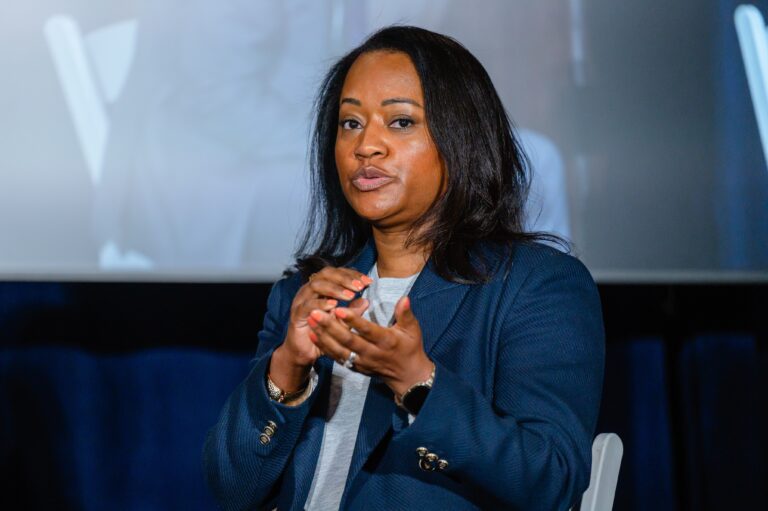
Karla Trotman, CEO of Electro Soft, Inc. in Montgomeryville, spoke at the Reimagining Manufacturing 2026 summit in University City, Oct. 9, 2026. (Courtesy of DVIRC)
From Philly and the Pa. suburbs to South Jersey and Delaware, what would you like WHYY News to cover? Let us know!
Southeast Pennsylvania has plenty of organizations focused on economic development and workforce training, but they have struggled to create the kind of local economic boost that similar efforts in other parts of the country have produced.
That’s according to a group of business owners who spoke at a conference on manufacturing at Drexel University last week.
Ronn Cort, CEO of Dunmore in Bristol, said he was previously part of a group that included 65 mid-sized manufacturers from Columbia, Montour and Luzerne counties in the northeast part of the state. Rather than competing for scarce resources or waiting for another organization to fix problems for them, they met to discuss their challenges themselves and worked with government to find solutions, he said.
“That’s one thing I don’t see here in this Greater Philadelphia area, is this kind of coordinated effort — not for manufacturers, but by manufacturers — to bring all these great public partners together,” said Cort, whose firm makes high-performance foils and films for the aerospace defense industry.
A regional group like that could help find fixes for challenges like finding workers, helping them get child care and arranging their daily transportation to job sites, he said.
The Reimagine Manufacturing summit last Friday was organized by the Delaware Valley Industrial Resource Center, one of the organizations trying to help local manufacturers grow their businesses.
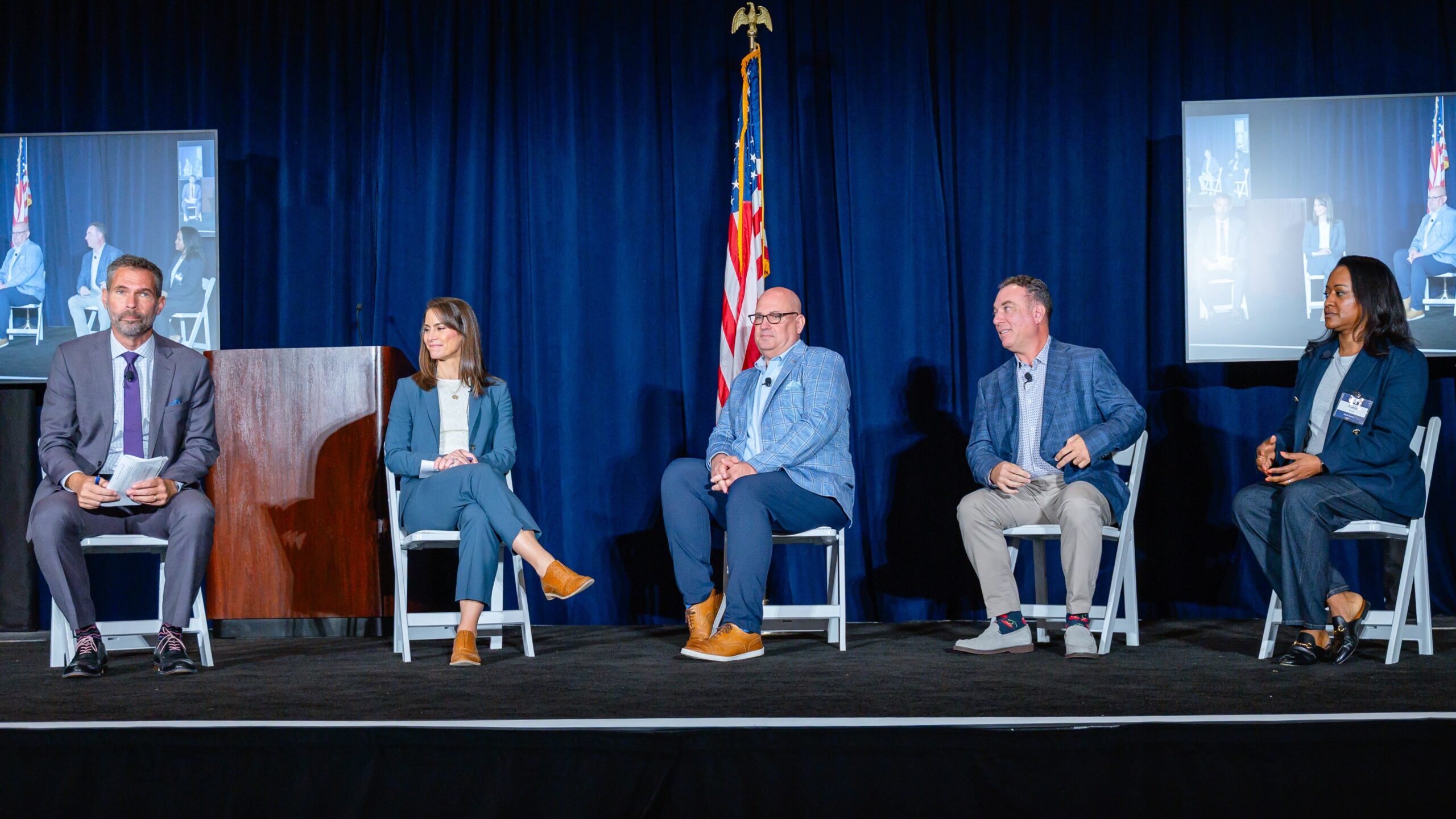
Other groups in the area include the Southeastern Pennsylvania Manufacturing Alliance, known as SEPMA, and the Manufacturing Alliance of Chester & Delaware Counties, said Marek Gootman of the Brookings Institution, who moderated the panel.
He noted that another such group, the former Manufacturing Alliance of Bucks and Montgomery Counties, has gone out of business.
Related Content
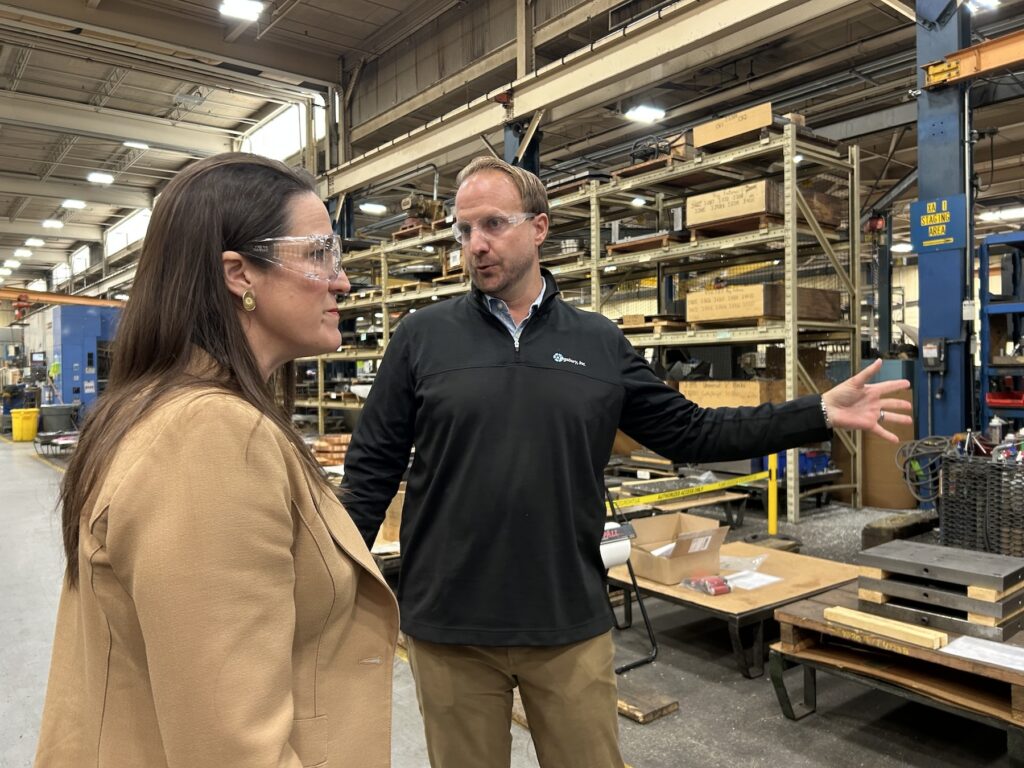
Hydropower parts manufacturer in Northeast Philadelphia lands federal research partnership
Kingsbury plans to test new materials for hydroelectric power equipment that can support the needs of modern-day grids.
1 month ago
Listen 1:09‘Wall after wall after wall’
SEPMA members have sought to address basic challenges to growth but have encountered a series of obstacles, said Karla Trotman, CEO of Electro Soft, Inc. in Montgomeryville and former SEPMA co-chair.
For example, the group tried addressing manufacturers’ hiring difficulties by commissioning research by the Drexel Solutions Institute. It found that companies should target their recruiting efforts at women, minorities, people of color and immigrants, groups who are largely unaware of those job opportunities, she said.
That finding pointed to the need for better marketing to draw attention to manufacturing generally, but also revealed thorny infrastructure barriers. Trotman she’d like to hire more Philadelphia residents like those identified in the study, but there are no transportation options to bring workers across the “last mile” to her company’s facility, after they have reached the end of their public transit line.
For a while, she paid for Ubers so new hires could get to their training, she said.
“The people that would be interested just can’t get to the locations, and that’s one of the biggest issues we were trying to work on with SEPTA. We were trying to see what grant money was available, and we constantly would hit these walls,” Trotman said. “Every time we would try to go down the line of solution, it would be wall after wall after wall. It doesn’t show lack of trying. It’s just that now, what are the resources that get us over the finish line?”
What is needed is a single, overarching organization with the power to make big changes quickly in response to companies’ requests, said Michael Araten, CEO of the Rodon Group, a plastic-injection moldings producer in Hatfield.
Araten, who is also CEO of toy maker K’NEX, said he’d like to see a business organization with the responsiveness of Amazon, the online retailing giant.
“We’ve got a lot of educational institutions, tech schools, et cetera. We’ve got workforce development boards. But what we don’t have is this single point of contact,” he said. “Can I get something very efficiently, when I want it, the way I want it? And how do we reduce that time?”
Related Content
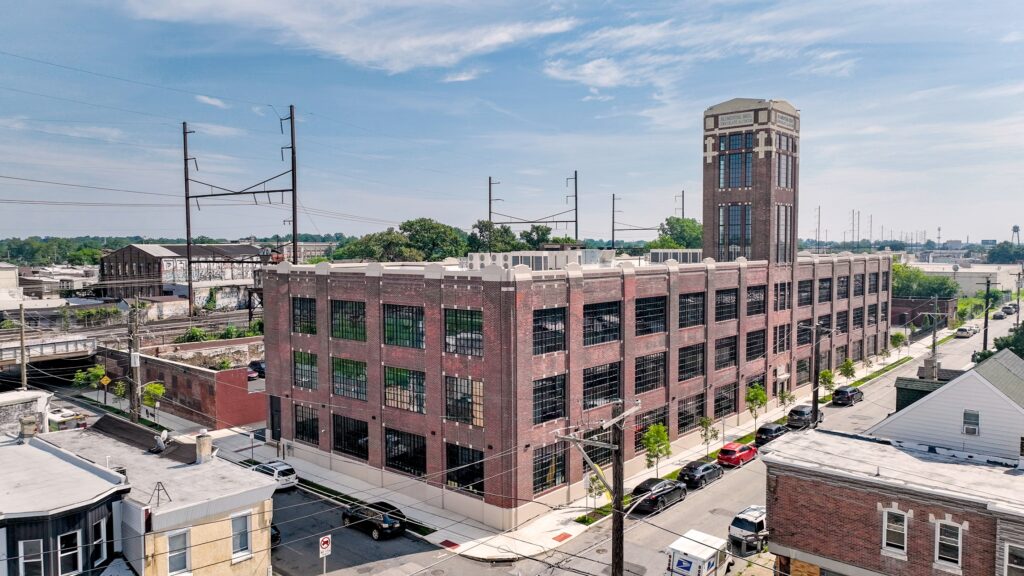
After sitting vacant for decades, the building has undergone a $14 million makeover, creating a space for nonprofits to provide social services, health care and education.
2 months ago
Listen 1:01Six-figure salaries
The panelists said they have a good story to tell about the growth of manufacturing and the many job openings in the field, both for college graduates and people who do not have four-year degrees.
With artificial intelligence affecting the availability of work in software engineering and other technical fields, there is now an opportunity to talk to young people about jobs in high-tech manufacturing, Araten said.
“You can get certifications in often less than a year, a year or two years. Your return on investment is good. You’re making six figures within often two years. It is that story that we have to tell,” he said.
As the SEPMA study showed, “People don’t know that there’s opportunities, and if they did, they think that they’re going to be doing something with soot on their face, and walking around with a lunch pail in a dark, scary environment,” Trotman said. “We need to do a better job of marketing what manufacturing looks like.”
Precision manufacturing accounts for close to 26,000 jobs in the region, said Claire Marrazzo Greenwood, executive vice president of economic growth at the Chamber of Commerce for Greater Philadelphia.
She said that’s a 4% increase over a decade earlier, in a region that has seen generally weak job growth. Two-thirds of the jobs do not require four-year degrees, and almost 60% are “opportunity jobs” or entry-level positions that allow for advancement within 10 years.
“We’re seeing growth happening in the last decade. The national trends I think are in our favor,” she said. “So we have something to build on.”
Related Content
Less than two years after a Wharton dropout co-founded it, Albacore has $10 million in investments and a contract to supply the U.S. Navy.
3 months ago
Listen 1:18A fragmented ecosystem
Greenwood heads the Greater Philadelphia Growth Partnership, a new initiative that aims to overcome the fragmentation of economic development efforts. The program will help manufacturing and other targeted sectors connect with workers, with the goals of increasing employment, reducing poverty and helping industries grow, she said.
The effort launched in May with $5.4 million in funding from corporate and philanthropic investors, including Wawa, Jefferson Health, Independence Blue Cross, Cencora, Pew and Essential Utilities. Subsequent commitments, including $2.4 million from JPMorganChase, have brought the total to nearly $9 million, according to the Chamber.
In addition to recruiting and transportation, the panelists cited a number of other challenges faced by mid-sized manufacturers in the region, like supply chain holdups. Those issues could be eased through better cross-industry coordination, they said.
“Your supply partner could be in the next county, but there’s no way of really knowing this, because we don’t have that community. We failed because we fragmented and started meeting in little clusters that were just convenient for us, or that worked for us, or where we were invited,” she said. “By bringing us all together, the opportunity exists for us to bring our supply chain closer, to have faster delivery times to our clients, better pricing. We just haven’t gone down that road.”
Court said manufacturers must also figure out how to update their training methods. Past workers learned by watching experienced hands do their jobs, but that won’t fly with younger generations who grew up using digital devices, he said.
“If we keep using the model on how they were trained to train our new employees, we’re done. We’re toast,” he said. “We’ve got to figure out how to engage this next generation of workforce. We as manufacturers have to have a collective strategy where we have a common way to approach and retain young talent to get new talent in. That’s going to require us to change how we do business.”
Disclosure: Drexel University, Independence Blue Cross and JPMorgan Chase are among WHYY’s financial supporters. WHYY News produces independent, fact-based news content for audiences in Greater Philadelphia, Delaware and South Jersey.

Get daily updates from WHYY News!
WHYY is your source for fact-based, in-depth journalism and information. As a nonprofit organization, we rely on financial support from readers like you. Please give today.
Philly Fed: Manufacturing slump lingers across the region
The Philadelphia Federal Reserve’s monthly survey of manufacturers found that activity in the region continued to decline for the ninth time in a row.
4 years ago

No, you’re not imagining it — package sizes are shrinking
Experts say shrinkflation proliferates in times of high inflation as companies grapple with rising costs for ingredients, packaging, and labor.
4 years ago
Amid trade uncertainty, Pennsylvania sheds manufacturing jobs
The head of Pennsylvania’s Manufacturer’s Association said he supports the president’s trade tactics.
7 years ago