

Delaware recently implemented 2 land-use laws. Here’s what they mean for affordable housing
House Bill 450 and Senate Bill 23 both require Delaware counties and local governments to make changes in the way they approve developments.
Listen 1:02
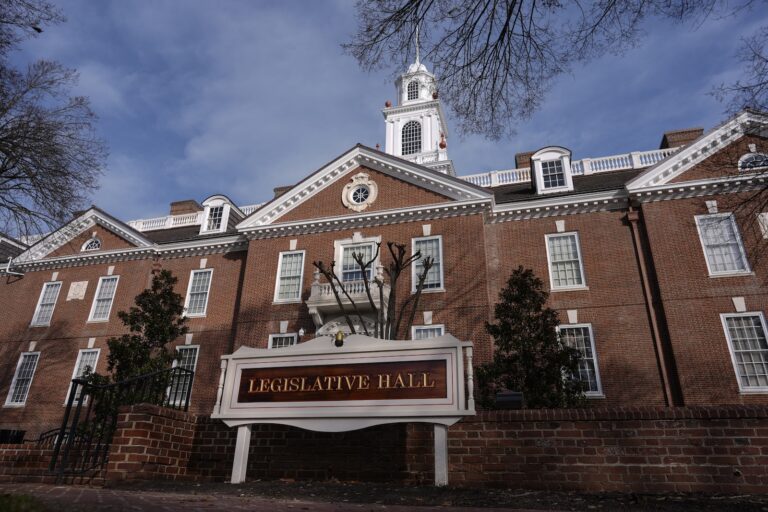
The Delaware Legislative Hall, the state capitol building of Delaware, is seen in Dover, Del., Tuesday, Dec. 17, 2024. (AP Photo/Carolyn Kaster)
What are journalists missing from the state of Delaware? What would you most like WHYY News to cover? Let us know.
Two Delaware bills signed into law this summer will play a critical role in future development throughout the state, to the dismay of some local leaders.
House Bill 450 and Senate Bill 23 are meant to address the state’s infrastructure gaps and affordable housing shortage from rapid growth, mainly through having local governments change their zoning code.
John Kane, director of policy and federal affairs for the governor’s office, said at a joint workshop between Sussex County and the state’s Department of Transportation last week that the bills posed the most meaningful shift in land-use policy in a generation.
“We have not seen significant changes to the way we do land use or planning and zoning from the legislature in a very long time,” he said.
In terms of annual percentage population growth, Delaware ranks sixth-highest, according to data presented by Kane at the workshop. From July 2024 to 2025, the state saw almost a 10% increase, which outpaced national trends.
Sussex County is a hot spot for growth, which is considered one of the fastest-growing counties in the nation. It’s estimated that the county saw a nearly 17% increase since 2020, according to data from the U.S. Census Bureau.
According to the Delaware State Housing Authority’s 2023 Housing Needs Assessment, the state needs to build about 2,400 units per year to keep up with growth through 2030. Sussex County makes up more than half of that need.
The Office of State Planning Coordination released initial implementation guidance on the bills last month. State officials held an implementation training and information session Sept. 25 and invited local representatives.
Sussex County Administrator Todd Lawson and other county staff attended the meeting virtually. He said the room was full, and that there were more than 100 attendees online, made up mostly of city and town representatives.
“My first takeaway is there was great interest, and I’m going to say great concern, that you heard in the room related to all of the questions up and down the state, from towns in Sussex to towns in New Castle,” Lawson said.
Though it is a statewide concern, local governments in Sussex County have been outspoken about their apprehension toward the bills. County officials paused hearings on residential development applications soon after the bills were adopted. Some municipalities like Lewes are considering moratoriums on reviewing residential developments, while representatives in the county’s seat, Georgetown, are citing the new bills as the reason their controversial cottage housing law should be repealed.
The released documentation is not meant to serve as legal guidance, but sought to simplify language around the complicated bills. Specific guidance from DelDOT and the Delaware State Housing Authority will eventually be released.
How do counties and local governments create guidelines for development?
Land-use decisions are primarily based on comprehensive plans. The plan creates the guidelines for policies, and it includes a future land-use map, which identifies growth areas for jurisdictions.
It also identifies community concerns like environmental preservation, economic development and affordable housing. The state legally mandates counties and municipalities to have a plan in place.
The plans are reviewed through the Preliminary Land Use Service, and later certified by the governor. Municipalities adopt new plans each decade and provide yearly updates, as well as a five-year update.
Related Content
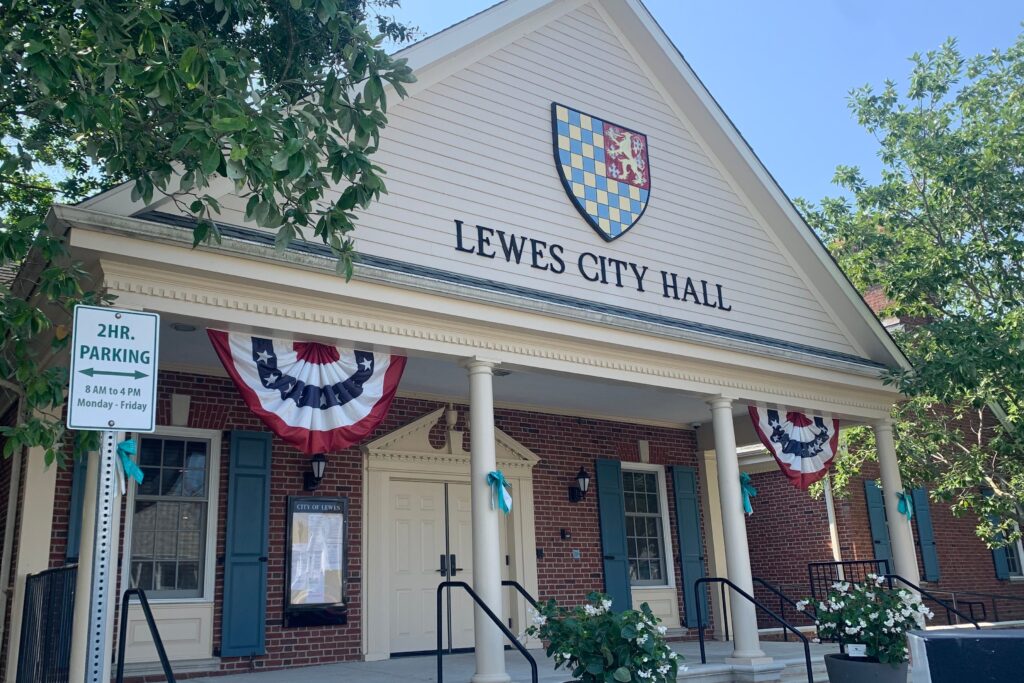
The proposed moratorium would last until the end of 2027, or until the city approves a comprehensive plan.
2 months ago
Listen 1:05What is HB 450?
HB 450 is known as the Reforming Opportunities and Accelerated Development for Delaware Act or “ROAD-DE Act.” Rep. Bill Bush (D-Dover) was the law’s primary sponsor. It applies to DelDOT, all three counties and all municipalities that regulate zoning and traffic impacts.
It builds on Gov. Matt Meyer’s Executive Order 18, which created the state’s Permitting Accelerator to speed up permitting for housing, energy and infrastructure projects.
A 2019 study found that it takes Delaware more than two years to process permits — a slower rate than neighboring states. That permitting time, according to HB 450, is mainly from “structural misalignment” and review processes across different agencies. The long permitting periods, in theory, create an economic disadvantage to the state, specifically when it comes to attracting businesses, as well as contribute to higher project costs and slower deliverables.
Changes in how traffic is studied
The law works with traffic-impact studies, or documentation that analyzes how a proposed development might affect traffic flow in a given area.
DelDOT and counties are expected to come to an agreement on standards for traffic-impact studies that will take place each time a rezoning application is submitted to the county. Rezoning happens when a property owner wants to change how the land is used, like moving agricultural land to be used as a residential site. The agreement is due by the end of June 2027.
Prior to HB 450, traffic-impact studies in the state were modeled off of total daily vehicle trips in the area being studied. The new law shifts the framework to peak-hour trips, or the number of vehicles seen when traffic is busiest.
DelDOT must establish a shared threshold with counties and municipalities for requiring a study, but the statewide minimum threshold is 500 peak-hour trips for residential development. For all other development types, the minimum is also 500 peak-hour trips, excluding bypass trips.
These studies are not necessary for developments in Downtown Development Districts or Downtown Development Corridors.
Developers will pay a fee
Under the law, DelDOT is set to create “transportation impact fees” statewide, which are paid by developers and go toward funding road improvement and other infrastructure projects.
The fees will be created for each county based on the shared cost to bring roads up to state standards. They also may vary by the county and land-use codes and depend on whether certain properties are part of a designated growth area.
DelDOT will publish its fees, and must reevaluate at least every five years. The fees must be paid before a building permit is issued.
The revenue from the fees will create a fund for the county it was collected in. However, that is based on local compliance. If the county does not adopt traffic-study or density regulations by June 1, 2027, DelDOT may use the revenue as the agency sees fit.
On top of the fee, an additional 2% surcharge will fund investments into farmland preservation, coastal resiliency, pathways for sidewalks or bikes, open space, water conservation and the Brownfields Development Program, a project that cleans up and builds on abandoned properties.
Projects financed by the Delaware State Housing Authority will qualify for waivers or fee reductions.
DelDOT must create the statewide fee by Jan. 1, 2027.
How does HB 450 factor into housing?
Though HB 450 is primarily an infrastructure-based law, it will impact housing density in growth areas of the state. Those are determined by the Office of State Planning Coordination’s Strategies for State Policies and Spending documentation.
Cities and towns are rated on a scale of level 1 to 4, with level 1 being the considered dense downtown areas and level 4 being considered rural. Level 1 and 2 areas are considered growth areas.
According to HB 450, zoning regulations in growth areas must allow for a variety of housing types, like townhouses, multifamily dwellings, stacked flats, apartments and mixed-use residential units.
Counties are also expected to “encourage development patterns that reduce vehicular trips, increase pedestrian connectivity, support transit-oriented development and promote mixed-use development” in line with DelDOT’s guidance, the bill states.
Under the new law, local zoning code must create a minimum density requirement of four units per acre for single-family homes. Other housing types will have higher density demands. Kane said the Delaware State Housing Authority will publish further guidance for communities by January.
According to Kane, there can be varying densities within growth areas on a case-by-case basis, and the state will work with local governments on their comprehensive plan to see where it might be applicable.
He used Lewes as an example at last week’s workshop, since the city has coastal zones and a historic district where it does not make sense to build more dense communities.
“We will work with you on those issues as we go forward,” Kane said. “The point is that starting [now], we’re needing to build tighter, more dense lots and encourage tighter development up, rather than tighter development out, because we are seeing sprawl and we need to preserve green space that way. So, the encouragement here is to bring it closer in and to focus it on downtowns.”
Lawson said that he was still concerned that the new density requirements will create a “tsunami” of development. He also said despite the new impact fee, incoming development might outpace road improvements, which the county does not control.
“We can certainly work with our state partners at DelDOT, and we can work through the [Capital Transportation Program] process, which takes years to implement,” Lawson said. “But in the meantime, we’re going to see thousands and thousands of residential housing units being built.”
Lawson said DelDOT and Sussex County have a strong relationship, and that they will need to keep working together to manage the growth that may come as a result of recent legislation.
“The thing that everyone worries about is traffic and the roads, and the thing that people talk about the most is traffic and roads,” he said. “There’s other things that are concerning and we hear about that as well, including the environment, water quality, wastewater capacity — but the roads are top of mind, no matter what you hear from constituents.”
Counties and municipalities must adopt new density standards by June 1, 2027.
Related Content
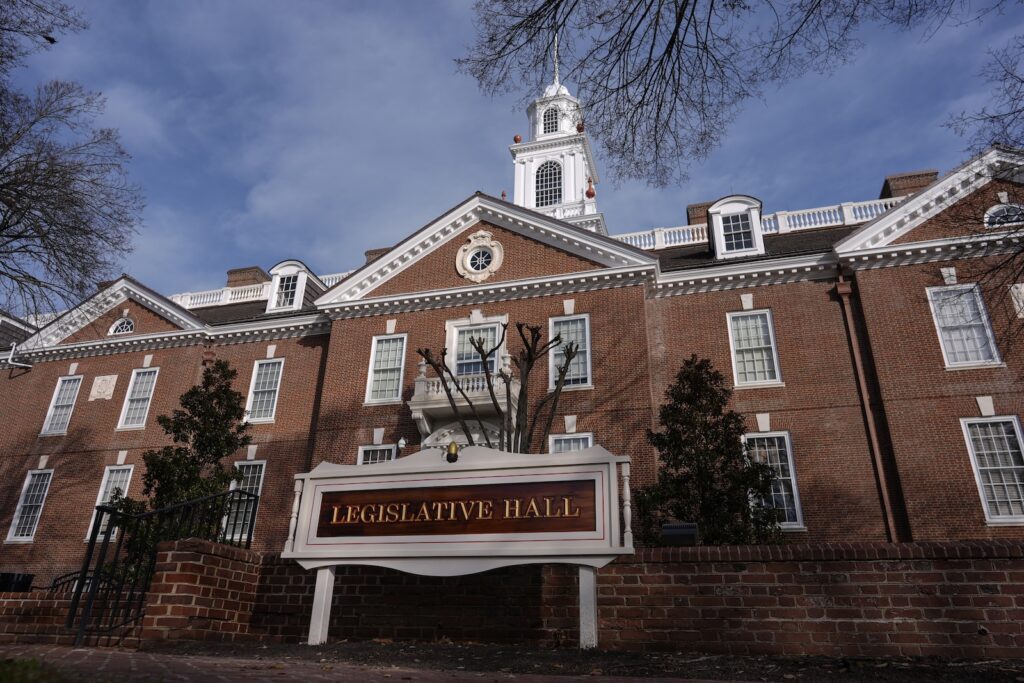
Sussex County pulls land use applications from review after Delaware adopts affordable housing law
Senate Bill 23 allows certain residential development applications to forego public hearings. Sussex County officials said they’re working to adjust approval processes.
3 months ago
Listen 1:03What is SB 23?
SB 23, or the “Housing for Every Delawarean Act,” was sponsored by state Sen. Russ Huxtable (D-Lewes). The goal of the law is to expand housing supply throughout the state, mainly through having local jurisdictions change their zoning framework.
It also builds on Senate Joint Resolution No. 8, which created a voluntary technical assistance pilot on zoning reform. The new law instead creates a mandatory statewide outline, which is “locally flexible,” according to the written guidance.
Kane said that the law came from worries about the state’s affordable housing shortage.
“With our population having grown 25 straight years, that’s putting an extreme burden on state budgets, which is, I think, what was the driving force behind the general assembly acting on this now, since they have been asking for affordable housing assistance for a while,” Kane said.
Affordable housing plans become mandatory
Per the bill text, SB 23 calls for local municipalities to adopt affordable housing plans into their comprehensive plans. This applies to counties, cities and towns with populations greater than 2,000 people.
The plans must have strategies that work towards two objectives: making progress toward having 20% of all housing units under jurisdictions qualify as affordable housing, and to diversity housing types.
Affordable housing in this instance means that people making at or below 80% of annual median income can afford the rentals, or people making 120% of the annual median income can buy a home.
Kane said that the two objectives, however, are “a stretch goal” and not every community will fully reach it.
“It’s expected that the communities try to make strides towards achieving it,” Kane said. “We recognize that there are going to be communities that are going to be well over 20%, and there are going to be communities that are landlocked, that may never reach 20%, or that have structures that will prevent them from reaching 20% because they’re just historical barriers that prevent that.”
The affordable housing plans will be adopted when jurisdictions also adopt their next comprehensive plan. Local governments that are set to adopt a comprehensive plan before next February are not warranted to have an affordable housing plan until their five-year comprehensive plan review is due.
As part of the law, affordable housing plans must include three mandatory elements. The first aspect focuses on increasing maximum permitted residential density, starting at four units per acre as HB 450 outlines and then adding more units from there. The second aspect authorizes mixed housing types without requiring a conditional-use permit or special exemption, which allows property owners to use land in a way that does not necessarily comply with zoning codes. The third element requires local governments to evaluate bulk standards, like lot size, unit size and open space, in relation to density.
Additionally, jurisdictions must choose five strategies out of the list to add to their plan. That includes:
- Density incentives for developments that include affordable units, like being allowed to have reduced parking or open-space requirements
- Zoning for “transit-oriented” developments, with density increases along fixed transit routes
- Expedited permit review for developments featuring affordable units
- Fee waivers, deferrals or reductions for projects featuring affordable units
- Reduction or waiver of local impact fees for affordable units
- Codes or alternative development standards in growth areas
- Allowing single-room occupancy housing by-right in at least one residential zone per future land-use map
- Allowing different forms of supportive housing by-right in at least one residential zone
- Allowing conversion of commercial, office or retail space to residential or majority residential mixed use
- Designating at least one zone where multifamily housing is a by-right permitted use
- Any other state-approved strategy for increasing and diversifying affordable housing
Any jurisdiction that took action toward these strategies on or after July 2024 will get credit toward them. Kane said the plans can be tailored specifically to community needs.
“We will work with you as you work through your new methodologies and your process to figure out how to do these appropriately because it is extremely important that we get these components in place so that the space strategies and maps also can reflect where to do appropriate investment,” Kane said.
By-right and the elimination of public hearings
One provision of SB 23 has drawn the most ire from local leaders and community voices regarding by-right projects.
For a project to be considered by-right, it must unconditionally meet zoning standards. Local governments must approve by-right projects, which Kane said was already required by law prior to SB 23.
Under the new law, a by-right application for a residential development must go through an administrative review and approval. However, it eliminates the formal public hearing from the review process. Public meetings are allowed, but are limited to whether or not the project meets “objective standards” outlined by a jurisdiction’s comprehensive plan, and to written comment.
The new guidance states that oral public comment can be accepted at a public meeting as part of the meeting’s records, “but will not be attached to the project itself.”
According to Kane, the idea behind the change was to move the public’s involvement in policy decisions to “earlier in the process” while local governments build their comprehensive plans instead of on a “project-by-project” basis. He also said that local governments will have more of a say over what projects would be approved as by-right.
“The community is defining where they want things built and what they want built there,” Kane said. “If they do not want it to be commercial or they do not want it to have affordable housing, that is a community decision for the rules process for there, rather than a project-by-project determination because it’s a property rights issue.”
Kane said that if there is a concern brought up through the comment process, like environmental or property conditions, nothing in the bill text prohibits jurisdictions from denying the project or setting a condition on the project. However, Lawson said that the county and its legal counsel did not read the law this way.
“Our initial read and understanding of the legislation and the intent is if you meet the objective standards, which are very clear, they’ll be very very clear and spelled out, you fast-forward right to approval,” Lawson said.
Vince Robertson, Sussex County’s assistant attorney, said at the workshop last week that the county will need to restructure its application review process, as it previously required public hearings.
“We have to develop a new set of standards of the process, how we’re going to get through from point A to point B on that,” he said.
Robertson also noted that the county is currently working on establishing objective standards to base by-right applications off of. The county will also need to rethink aspects of its comprehensive plan, like the future land-use map.
“It’s different and it’s going to be a heavier lift because it goes from aspirational to actual in the future landing map,” Robertson said. “Again, it takes out that subsequent opportunity to maybe correct things or get it right on the public hearing end of things, on the actual parcel-by-parcel landing application.”
The change in by-right approvals was enacted upon the law being adopted, and applies to every community in the state.
What else is expected of local governments?
All three counties must rezone land to match their future land-use map within a year of adopting their comprehensive plan.
If a county misses that deadline, rezoning applications in line with the future land-use map must be approved unless the county submits written findings that show the rezoning plan does not meet requirements. The county has 21 days to make sure an application is complete, and final action is due 120 days later. Denials must be submitted in writing and cite standards as to why a project was denied.
Once submitted, comprehensive plans will be reviewed by Gov. Matt Meyer for certification. If the plan is rejected and sent back to the community, they will have 45 days to revise and resubmit the plan. Kane said that jurisdictions may have to back up some of their previous deadlines when it comes to the comprehensive plan.
The Delaware State Housing Authority will work with the Office of State Planning Coordination on publishing an annual public report on local governments’ progress toward affordable housing plans. That is expected by May 2028.
For Sussex County, the next comprehensive plan is due in December 2028. Lawson said the county is in the beginning stages of drafting it, and that county staff are working on building objective standards to review residential development applications.

Get daily updates from WHYY News!
WHYY is your source for fact-based, in-depth journalism and information. As a nonprofit organization, we rely on financial support from readers like you. Please give today.
Part of the series


Delawareans celebrate bipartisanship with Return Day festivities in Sussex County
The more than 200-year-old Delaware tradition brings both winning and losing candidates together post-election.
1 day ago
Listen 1:12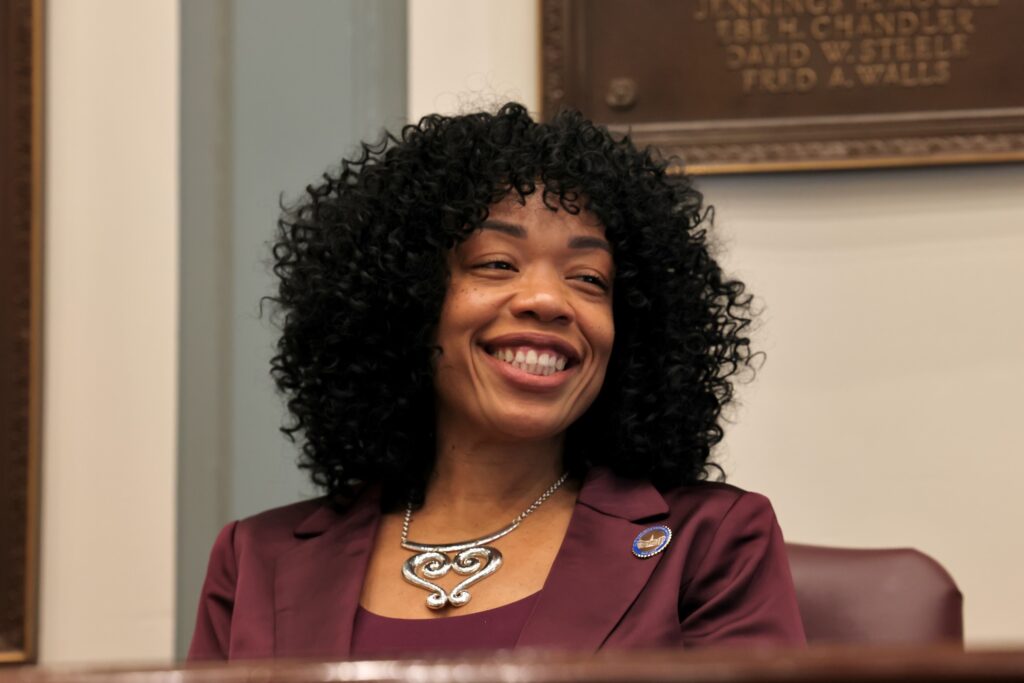
Delaware House speaker keeps her gavel despite leadership challenge
House Speaker Melissa Minor-Brown is the first Black woman and the second woman to serve in the role.
1 day ago
Listen 0:36
Democrats in the state House flipped three seats formerly held by Republicans throughout the state, including in typically red areas.
2 days ago
Listen 0:46