
With ACA sticker shock, Pennie specialists find themselves on the front lines of Pa. affordability crisis
Pennsylvanians have until Dec. 31 to switch health insurance plans for coverage to kick in on Jan. 1.
Listen 1:44
Laura Polo (right), a certified enrollment assister with Pennie through the Mendoza Group, talks to people about health insurance and open enrollment at a community holiday fair in West Philadelphia on Sat., Dec. 20, 2025. (Nicole Leonard/WHYY)
From Philly and the Pa. suburbs to South Jersey and Delaware, what would you like WHYY News to cover? Let us know!
Standing at a table with pamphlets, flyers and business cards, Laura Polo greeted people with a cheerful hello and a big smile as they walked around during a recent community holiday fair in West Philadelphia.
“If you know someone that needs health insurance, if they don’t qualify for Medicaid or Medicare, Pennie’s the marketplace for them,” she told one woman who passed through and said she’d take the papers home to her adult daughter to look at.
Polo is one of about 240 state-certified enrollment assisters who help guide people through the process of shopping or changing insurance plans on Pennie, which is Pennsylvania’s Affordable Care Act marketplace.
During a typical open enrollment period, which starts Nov. 1 every year, Polo said people have the usual questions: What do the deductible numbers mean? How do they find the Pennie shopper tool online? What documents do they need to enroll?
But this year has been especially chaotic, Polo said, as she finds herself helping more people who are stressed and panicked about the cost of their coverage in 2026.
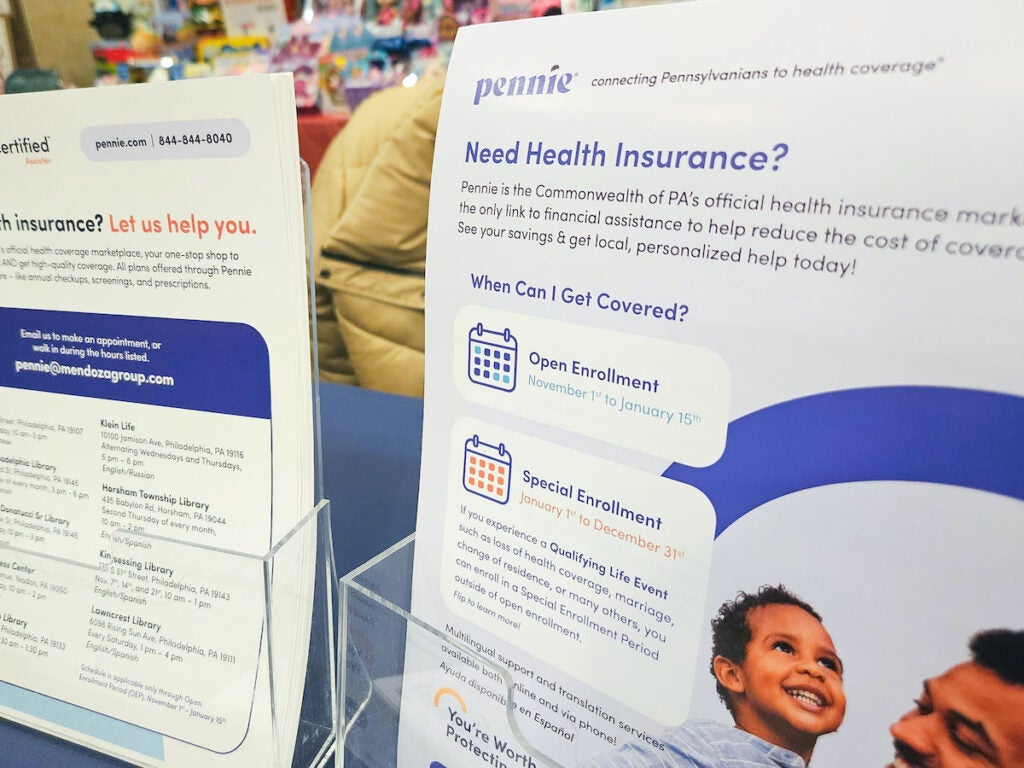
On average, out-of-pocket monthly premium costs will double in Pennsylvania, according to state officials. That’s due to a combination of rising insurance rates and the loss of boosted federal tax subsidies, which previously helped lower those monthly payments.
Without action from Congress, the advanced premium tax credits will expire in just a few days.
Meanwhile, enrollment assisters like Polo and other licensed brokers and insurance agents are hunting down resources and affordable options for people who face tough financial decisions.
“We’re going to do everything we can to ultimately give you some information so you don’t walk away thinking, ‘What am I going to do?’” Polo said.
Related Content
These new 2026 health care laws are taking effect in Pa., N.J. and Del.
Bills on diagnostic breast cancer testing, GLP-1 medications, lead paint and breastfeeding were signed into law.
5 months ago
Lingering uncertainty over federal tax credits
ACA open enrollment in Pennsylvania, which runs through Jan. 15, is the period when people can make changes to their insurance coverage for the next year, depending on their projected health care needs and financial situations.
A majority of customers have been able to rely on some amount of premium tax credits, which apply a discount to monthly payments. Congress approved additional subsidies in 2021, which made coverage even more affordable, but they are set to expire Wednesday.
The result was that more Pennsylvanians ended up enrolling in plans through Pennie. A record 496,661 residents got coverage through the marketplace this past year.
But many people are now facing sticker shock as they shop for plans with high price tags and limited financial assistance.
“Now it’s saying, from $800, your premium went up to $1,000,” Polo said. “So people are like, ‘Why, if I have the same income?’”
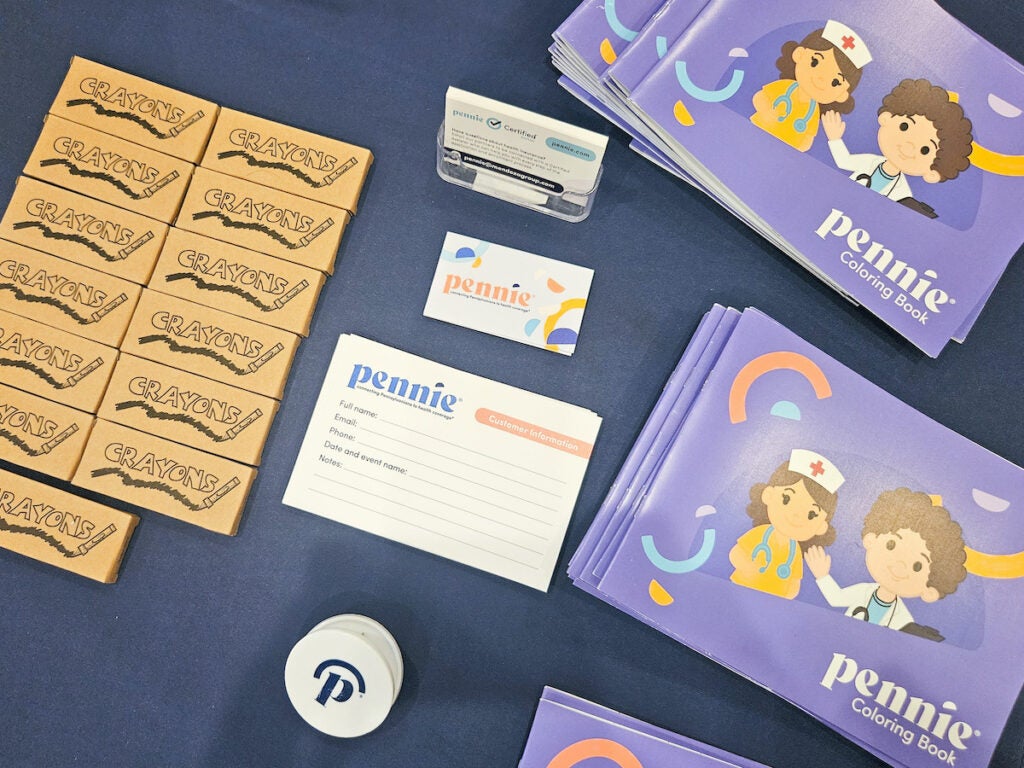
Enrollment assisters go through training every year to learn about new changes coming to marketplaces. Polo does this work with the Mendoza Group, one of several companies that contract with Pennie to offer free services in communities.
However, uncertainty about the future of federal subsidies has left assisters and other enrollment support specialists with few answers for their customers.
“The fear, too,” Polo said of her clients. “It’s like, “When are we going to know if it’s going to continue or if the tax credits are going away? Because now I have to see what I’m going to do in January.’”
Related Content
More than 400,000 Pa. seniors are expected to save with lower Medicare drug prices in 2026
Pennsylvanians will see their out-of-pocket costs for 10 medications drop by 53% on average, according to a new AARP report.
5 months ago
Future eligibility restrictions for subsidies
In addition to working a full-time job, Polo spends many nights and weekends providing as much assistance as she can to people who need it. As a native Spanish speaker originally from Colombia, she’s able to support people in underserved communities.
That often involves helping people who are in the country legally with visas or who have protected status as refugees and asylum seekers. Pennsylvanians with legal status are eligible to shop for health insurance on Pennie and can get premium tax credits if their incomes qualify.
But many people in these groups will no longer be eligible for any subsidies starting in 2027 due to new federal restrictions passed in the so-called “One Big Beautiful Bill.” They can still shop for coverage, but will have to pay full price for plans that may come with high deductibles.
Some people have chosen to fly back to their home countries for expensive medical procedures and care after weighing the costs, Polo said.
“They’re factoring in, ‘Is that amount going to take me home, allow me to see a doctor there, get some care and come back?’ Because if that’s the case, that’s what they’re going for,” she said.
Pennsylvanians have until Dec. 31 to lock in plans for coverage to kick in on Jan. 1. People who enroll in plans after that, but before the final Jan. 15 deadline, will get coverage starting Feb. 1.
Despite what some may call grim circumstances this year, Polo said she loves being out in the community as an enrollment assister, even if it’s just to lift a small amount of burden her clients are carrying.
“That’s a big part of what Pennie is for,” she said. “Pennie is for community.”

Get daily updates from WHYY News!
WHYY is your source for fact-based, in-depth journalism and information. As a nonprofit organization, we rely on financial support from readers like you. Please give today.

About 3 in 4 Pennsylvanians will still qualify for some tax credits, but the amounts will, on average, be smaller. Others face paying for plans at full price.
6 months ago
Listen 2:48
Pennsylvanians face higher health insurance costs as insurers propose 19% increase to 2026 premiums
Health insurers offering plans on Pennie, the state Affordable Care Act exchange, say rising costs and expiring enhanced premium tax credits are driving the increase requests.
9 months ago
Listen 1:07
Pa. opens public feedback on rate increases to 2025 health insurance plans
Pennsylvania health insurance companies are requesting average rate increases of 2.9% to 15.2% on individual plans sold in the ACA marketplace.
2 years ago
Listen 1:04