What’s ‘progressive’? Philly’s 3rd Congressional District primary tests the label before voters head to the polls
Sharif Street, Chris Rabb and Ala Stanford share many policy goals, but some divisions over Gaza and fundraising, plus a lack of public polling, make the race a guessing game.

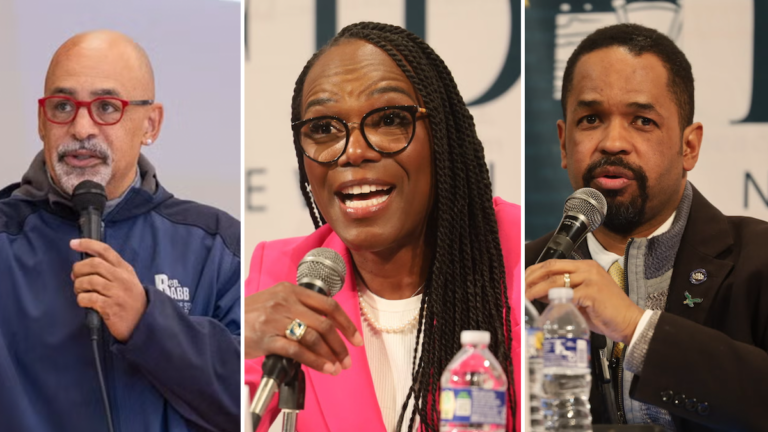
From left to right: Pa. House Rep. Chris Rabb, Dr. Ala Stanford, and state Sen. Sharif Street. (Carmen Russell-Sluchansky/WHYY; Kimberly Paynter/WHYY)
What questions do you have about the 2026 elections? What major issues do you want candidates to address? Let us know.
There are many similarities among the platforms of the three leading candidates to replace U.S. Rep. Dwight Evans in Congress. They all say they want to expand health care, abolish U.S. Immigration and Customs Enforcement and make life more affordable in Philadelphia.
As a result, the candidates have largely leaned on their backgrounds in their pitches to the electorate. State Sen. Sharif Street has presented himself as the Democrat who gets stuff done. State Rep. Chris Rabb has cast himself as a big thinker pushing the party further left. And Dr. Ala Stanford has positioned herself as a political outsider unbound by the status quo.
Still, all three could be considered “progressive.”
“There’s very little daylight in candidates’ policy positions — very little,” said Mustafa Rashed, president and CEO of Bellevue Strategies. “By and large, this is a left-leaning race. This is a very blue seat, and trying to differentiate the type of Democrat you would be versus someone else when they’re all considered progressive … is very challenging.”
Related Content
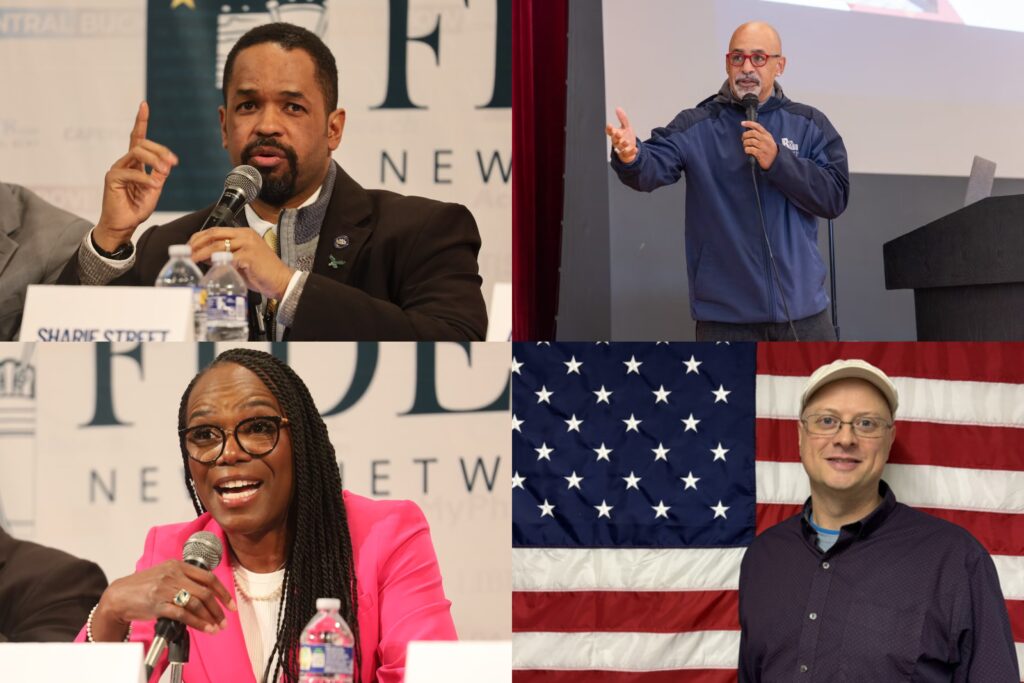
The four remaining candidates agree on more than they don’t, but there are differences on some key issues important to Philly voters.
6 months ago
What’s a progressive?
Progressive is broadly understood as a left-leaning political ideology, though the term lacks a strict policy definition.
“There is a definition of liberal and conservative,” said Carol Jenkins, a retired Temple University political science professor. “How these people that identify themselves as progressive differ from the liberal policies of Lyndon Johnson has never been answered properly for me.”
Jenkins, now ward leader for the Philadelphia 27th Ward Democratic Committee, endorsed Street, citing his experience and ability to articulate a plan for Washington, D.C.
The Congressional Progressive Caucus defines progressivism through policies such as universal health care, environmental justice, a $15+ minimum wage, union-friendly labor laws, affordable housing and a non-interventionist foreign policy — though many of those policies are supported by other Democrats, as well, including Street.
The caucus, local activists and other left-wing Democrats have found their candidate in Rabb, who supports “Medicare for All” and ending aid to Israel over the war in Gaza. His endorsements include U.S. Reps. Alexandria Ocasio-Cortez of New York City, Jamie Raskin of Montgomery County, Ilhan Omar of Minneapolis, Pramila Jayapal of Seattle and Summer Lee of Pittsburgh.
Lee, who served with Rabb in the state House, called him “unapologetically progressive,” but also rejected the idea that progressivism fits neatly on a left-right spectrum.
“I think of this as having a reflective democracy,” she told WHYY News. “We’re always going to litigate which direction the party’s moving in … but, in the meantime, people in individual districts deserve to have representation that actually reflects their values.”
Related Content
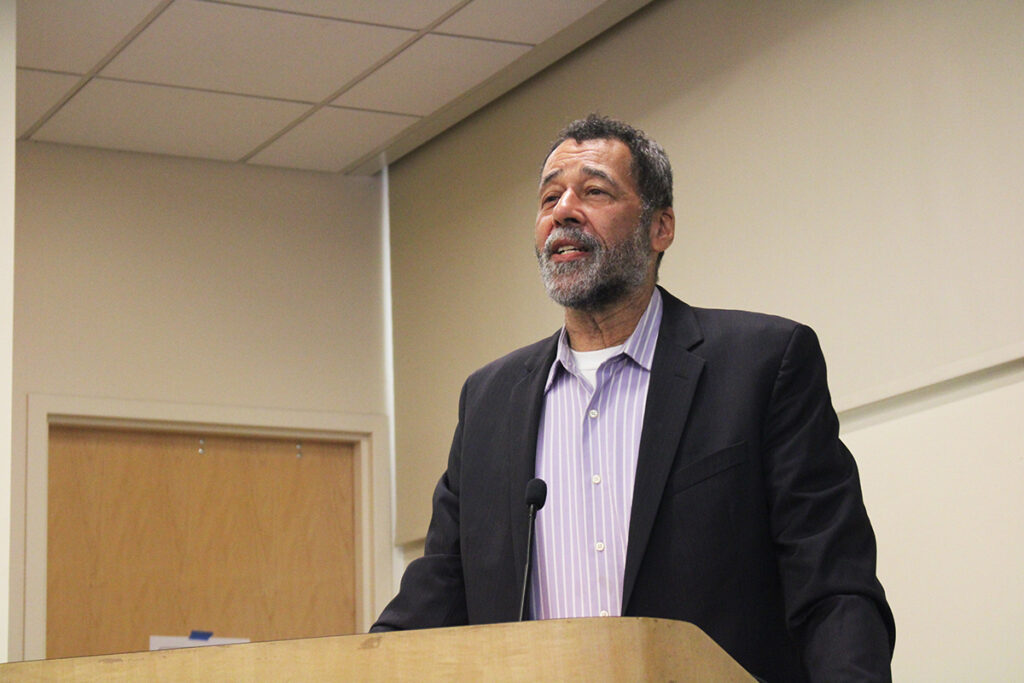
Philadelphia People’s Tribunal finds Israel, U.S. guilty of war crimes and genocide in Gaza
Local jurors said they hope the tribunal’s findings will have an impact in formal international governing bodies.
1 year ago
Listen 1:42The role of Gaza
Gaza has become a flashpoint in the race, especially in a district that includes major universities, much of Philadelphia’s Muslim American population and a sizable progressive community.
Freddie Rose, a spokesperson for the Philadelphia Democratic Socialists of America, who also lives in the district, said Gaza likely played a major role in the group’s endorsement of Rabb.
“We see what’s happening in Gaza and in Palestine as a human rights issue,” she said. “We believe in the right of all people to be safe and free from state violence.”
Rabb has been the race’s most vocal critic of Israel, declaring its attacks on Gaza tantamount to “genocide” and pledging to end U.S. aid to Israel. Street, who would be Pennsylvania’s first Muslim member of Congress, has called Israeli Prime Minister Netenyahu a “war criminal” but supports continuing aid. Stanford has not publicly laid out a detailed position.
The issue has fueled the campaign’s sharpest clashes. Rabb accused Stanford of benefitting from money tied to pro-Israel groups, something Stanford and donor 314 Action deny.
According to their mission, the group works to elect “Democratic scientists.”
The dispute intensified after reports noted that 314 Action had previously received $1 million from United Democracy Project, a pro-Israel super PAC. That group also spent millions of dollars to help defeat progressive members of Congress Jamaal Bowman of New York and Cori Bush of Missouri, both critics of Israel, in their respective primaries. This cycle, 314 Action also received $500,000 from the newly formed Kimbark Foundation, whose only other contribution was to a fund dedicated to electing pro-choice women to Congress, which has also received contributions from United Democracy Project in the past.
The controversy has led to pointed questions about Stanford’s funding at campaign forums. It has also led to her being accosted about her views on the issue.
At a 27th Ward forum, protestors demanded Stanford say the word “genocide.” She declined, saying she had taken an oath as a doctor to “do no harm.”
“For those who have been victims of genocide, and whose families are still suffering, that is painful for them,” she said. “And for Israelis who have been accused of committing it, it is painful for them.”
Jenkins, who led the forum, called the protest “performative.”
Related Content
Procrastinator’s Guide to the May 2026 primary election in Philadelphia
A competitive race for 3rd Congressional District, two ballot questions, state race candidates and more of what to expect for the May 19 primary election.
5 months ago
Gaza’s not at the kitchen table
Although Gaza has generated some of the campaign’s most vitriolic debate, gas prices and other affordability issues matter more to voters.
Rashed said Gaza is a complex issue that “doesn’t lend itself to soundbites” and is distant from the everyday concerns that Philadelphians face.
“It doesn’t mean that they don’t care about Gaza. It doesn’t mean that they don’t care about Palestinians,” he said. “It means that they care more about what’s happening outside their front door because that’s what’s in front of them every day.”
Jenkins agreed.
“The seat does not represent some district in Gaza,” she said. “It represents Philadelphia.”
Rose argued that the issues are linked.
“These are our taxpayer dollars that are being sent to war abroad,” she said. “Meanwhile in Philly, schools are being closed, SEPTA is unfunded, gas continues to skyrocket.”
Related Content
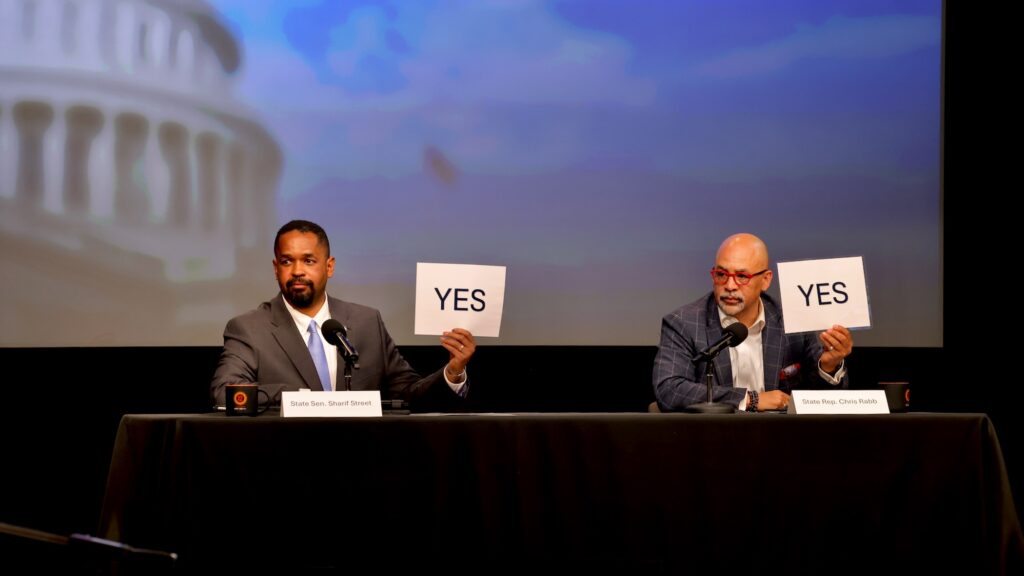
Less than three weeks away, the May 19 primary will likely determine who replaces Dwight Evans in Congress next year.
6 months ago
Listen 1:13Who’s winning?
Although the winner of the May 19 Democratic primary will almost certainly succeed Evans, observers have little to go by when judging whose message is most resonant.
“There’s no independent polling that’s been done,” Rashed said.
Instead, fundraising and endorsements have shaped the perception that Rabb, Stanford and Street are the leading candidates. For example, a fourth candidate, local lawyer Shaun Griffith, was not invited to participate in WHYY’s debate based on his fundraising totals.
“People just assume that these were the front runners just based on a media narrative, fundraising and endorsements and nothing objective,” he said.
That also probably had an impact on the race, he said, noting that other candidates such as Morgan Cephas might not have dropped out if polling showed they had a chance.
Street has significant Democratic institutional support, including endorsements from the city party and the 27th Ward, along with years of legislative experience. However, Rashed thinks that’s not enough to help in the primary election.
“Your average person who’s buying groceries and looking at the cost of gas in North Philadelphia or Southwest Philadelphia doesn’t know why that’s important,” he said.
Stanford has benefited from millions in outside spending that put her on TV weeks before her rivals. However, Rashad said that there are diminishing marginal returns on that strategy.
“Historically, money on the front end has not been enough to win a race on the back end if that money doesn’t translate into a ground game operation on Election Day,” he said.
Rabb has leaned on grassroots organizing, with progressive groups mobilizing volunteers to knock on doors and campaign across the district.
“When we endorse a candidate, it is not just a paper endorsement,” Rose said. “We’ve knocked on many thousands of doors already.”
Rashed points out that the size of a congressional district makes it impossible to canvass a win. Still, the progressive wing of the party might be doing more on the funding front, helping Rabb raise more than $200,000 in April, about twice as much as either Street or Stanford, leaving him with the most in the bank in the final stretch of the race.
By the start of this month, he and Street raised a total of around $1 million each, while Stanford came in just over $750,000.
Still, without reliable polling, the race remains difficult to predict.
“We’re going to find out on Tuesday,” Rashed said.

Get daily updates from WHYY News!
WHYY is your source for fact-based, in-depth journalism and information. As a nonprofit organization, we rely on financial support from readers like you. Please give today.
Part of the series
Delaware election 2026: What to know about the AG race between Kathy Jennings and David Graham
Graham is a Republican who is not an attorney but contends he can run the Department of Justice better than longtime prosecutor Jennings.
9 hours ago

Philadelphia ‘No Kings’ protest 2026: What to know ahead of Oct. 17 early vote rallies
This time around, organizers are mobilizing early voters in November’s high-stakes midterm elections.
1 day ago
Democrat U.S. Rep. McBride and Republican Arminio outline their priorities on the economy, health care, immigration and foreign policy ahead of the Nov. 3 general election.
2 days ago