
A vulnerable Republican, fake ads and a contentious Democratic primary are putting a Lehigh Valley congressional race into the spotlight
The primary could have nationwide implications if Democrats want to flip the U.S. House in November, and has gained national pressure from both parties.

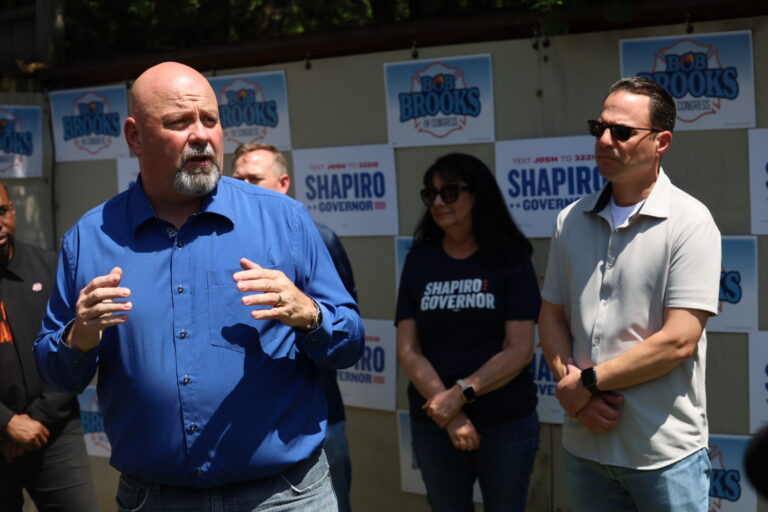
Bob Brooks, a Democratic candidate for U.S. Congress in the Lehigh Valley, speaks to supporters at a home in Emmaus as Gov. Josh Shapiro listens. (Carmen Russell-Sluchansky)
What questions do you have about the 2026 elections? What major issues do you want candidates to address? Let us know.
U.S. Rep. Ryan Mackenzie, R-Lehigh Valley, is among the most vulnerable Republican incumbents in the country. Polling puts him underwater in favorability after narrowly flipping the seat in 2024 from Democrat Susan Wild by just 1% of the vote.
“Congressman Mackenzie is a first-term Republican incumbent in a cycle that is challenging for his party,” said Chris Borick, director of public opinion at Muhlenberg College. “You put all those things together, and this is going to be a clear challenge for him to retain this seat.”
The race for the Democratic nomination to replace him has drawn four candidates. Bob Brooks, president of the Pennsylvania Professional Firefighters Association, and Ryan Crosswell, a former federal prosecutor and Marine veteran, are considered by many to be the frontrunners. Also in the race are Lamont McClure, a former Northampton County executive, and Carol Obando-Derstine, who previously worked for former U.S. Sen. Bob Casey and former Gov. Tom Wolf.
The primary has also received widespread attention and interference from national groups, including a shadowy Republican group that ran advertisements in support of one of the candidates.
Related Content
Pa. election 2026: Primary voter guides, key races and more
Primary elections will take place Tuesday, May 19. Here’s what you should know beforehand, from voter deadlines to who’s on the ballot in Philadelphia and statewide.
6 months ago
The candidates
Brooks has built his campaign around organized labor and working-class appeal and has gained backing from prominent Democrats and labor groups, including support connected to both progressive and establishment wings of the party. His message focuses heavily on wages, public safety and union rights.
“This election is about working-class people,” he told WHYY News. “It’s that simple, and right now, there’s nobody representing us.”
Brooks received endorsements from Gov. Josh Shapiro, state Reps. Peter Schweyer and Mike Schlossberg, the Democratic Congressional Campaign Committee and the Working Families Party.
Political observers have noted that his endorsements and fundraising may have helped move him toward the front of the field, but some were surprised that the party engaged so heavily before voters choose their nominee.
Borick said it’s traditionally uncommon for a party apparatus to “put their thumbs on the scale” in a party primary, but that it’s likely a long-term strategy.
“This seems to be part of the effort of those in party leadership and elected officials to look for a path that they think might be best for them moving forward in the general election,” he said.
Schweyer said that “ultimately, voters will make the final decision” who their nominee is and that many people “overvalue” endorsements.
“As somebody who has endorsed Bob, I just want to make sure that doors are open to him, that people are giving him a look,” he said.
Crosswell said he was “disappointed” that the party intervened on Brooks’ behalf, but that he’s still confident about his campaign.
“I think you’re seeing the outrage here in Lehigh Valley,” he told WHYY News. “People are really mad, and I think it’s actually backfired. There are four credible candidates in this race — not just one of us. And the people of Lehigh Valley don’t think they want a thumb on this scale.”
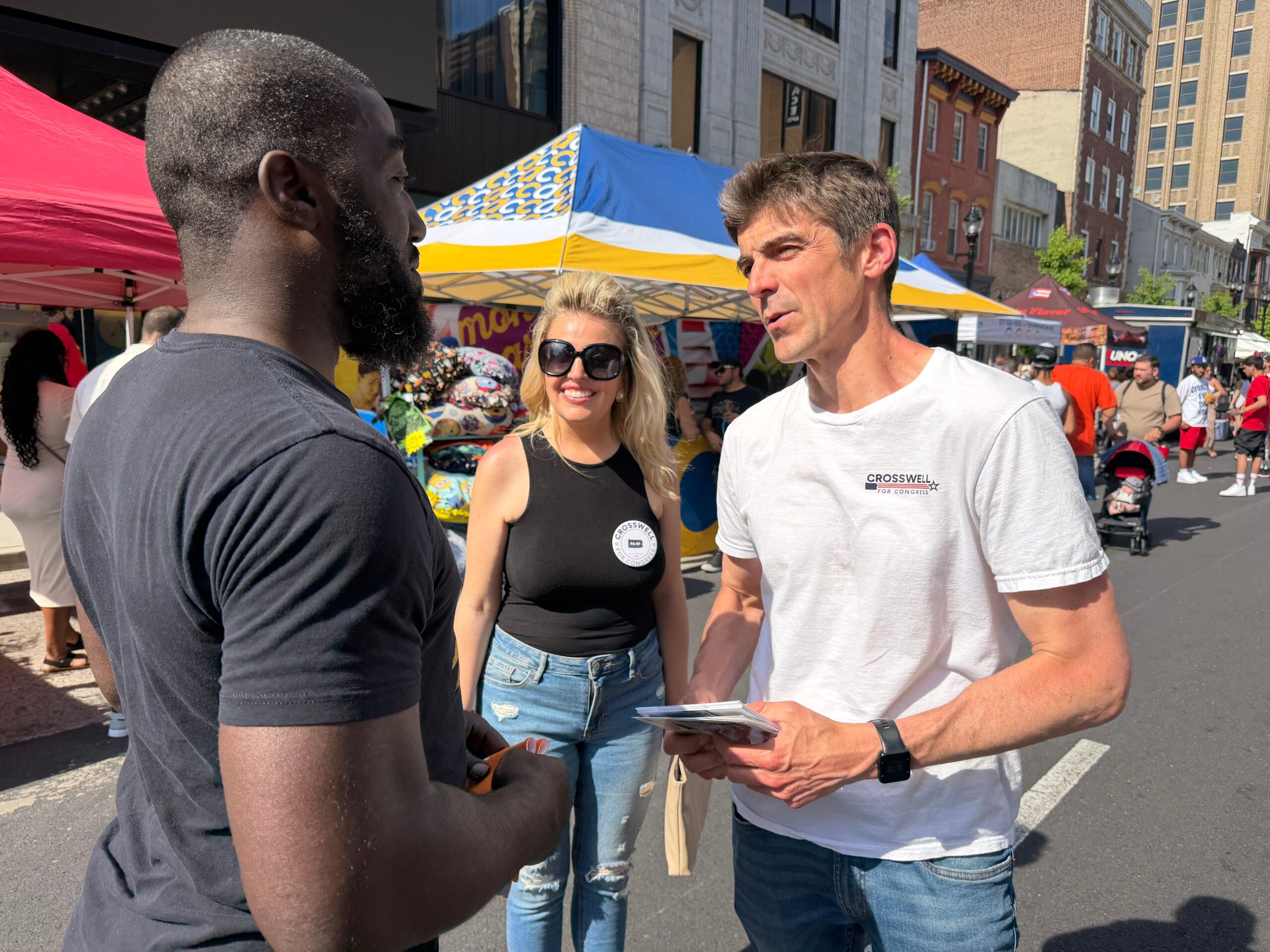
Crosswell, a former federal prosecutor with the Department of Justice’s Public Integrity Section, resigned after the Trump administration demanded the department drop corruption charges against New York City Mayor Eric Adams in an alleged quid pro quo arrangement.
He said that his role at the DOJ makes him the best candidate to take on Mackenzie and Republicans in Congress.
“I think the reason our campaign has gotten so much grassroots support is people are concerned about the affordability of gas, of groceries, of health insurance, but also, they see the most corrupt administration in U.S. history,” Crosswell said. “Administration abuse of power is a kitchen-table issue.”
However, he added that his prior work may also be why he didn’t get early party backing.
“I never expected to be the endorsement candidate,” he said. “When you’re a corruption prosecutor, you don’t get invited to a lot of cocktail parties in Washington and Harrisburg.”
Both Crosswell and Brooks were the targets of negative ads, which appeared to support the candidate McClure. An ad paid for by a newly formed political action committee, Lead Left, accused Brooks of being associated with election deniers and Crosswell of working for “Trump’s Justice Department.”
The same group also ran ads in a Nebraska Democratic primary, attacking one candidate as “MAGA” and accusing him of “betraying Nebraska Democrats” in support of another Democrat. Lead Left’s website says it “stands against MAGA extremists who will infect our country with Donald Trump’s agenda.”
However, Punchbowl News reported that metadata tied to the PAC’s website included links to WinRed, the leading Republican fundraising platform. Little information about Lead Left is publicly available.
Borick said such tactics are becoming common.
“We’ve seen this emerging trend in American politics where opposition parties like to engage more so than ever in their opponent’s primaries and try to leverage outcomes that might benefit them in the general election,” he said.
Both Brooks and Crosswell said that the revelation shows Republicans would prefer a challenge by McClure in November, rather than either of them.
“They’re petrified,” Brooks said. “If they’re going to spend $1.2 million against us, they obviously don’t want to face us.”
McClure did not respond to multiple requests for comment through his campaign. However, an analysis of his fundraising shows he may be a weaker candidate going into the general election. As of the end of April, McClure had raised just over $300,000, which he supplemented with another $200,000 of his own cash. Obando-Derstine, who was handpicked by Wild to run, raised a little short of $600,000.
By contrast, Brooks raised nearly $1.2 million, but Crosswell has shown the most prowess in fundraising, bringing in more than $1.75 million.
That may factor into Crosswell’s confidence.
“We’re going to win,” he said, adding that, if he doesn’t, he would support the nominee “from day one.”
Whether national Democrats’ or Republicans’ attempts to put a thumb on the scale in the primary works, Borick said that given how much the cycle favors Democrats this year, any of the candidates would have a “path to victory.”
“They all have their own challenges as candidates, and they’ll come up against a well-funded incumbent,” he said. “But, if you look at their profiles and you look at what they might bring to the table, you could find advantages they might be able to utilize in a general election against Congressman Mackenzie.”

Never miss a moment with the WHYY Listen App!


WHYY is your source for fact-based, in-depth journalism and information. As a nonprofit organization, we rely on financial support from readers like you. Please give today.
Part of the series
Montgomery County launches voter services chatbot ‘Mo’
The generative AI-powered chatbot uses information from Montgomery County’s voter services website to answer basic election questions.
12 hours ago
Listen 0:48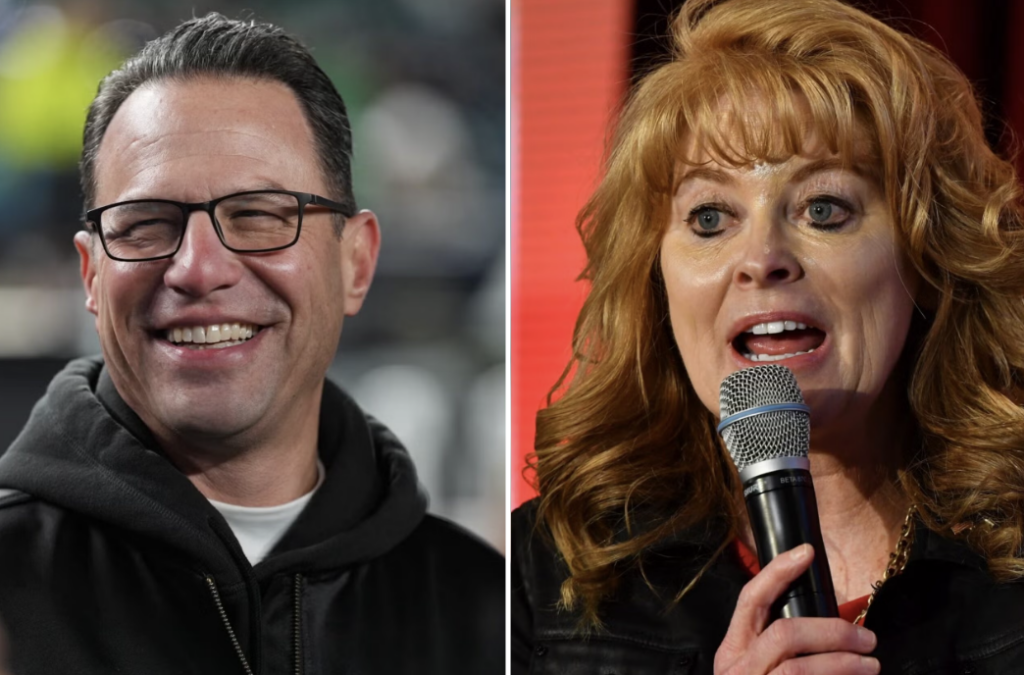
Pa. election 2026: What to know about the governor’s race between Josh Shapiro and Stacy Garrity
Here’s a look at what’s at stake in the midterm race, where Shapiro and Garrity stand on key issues and more.
1 month ago
Listen 1:06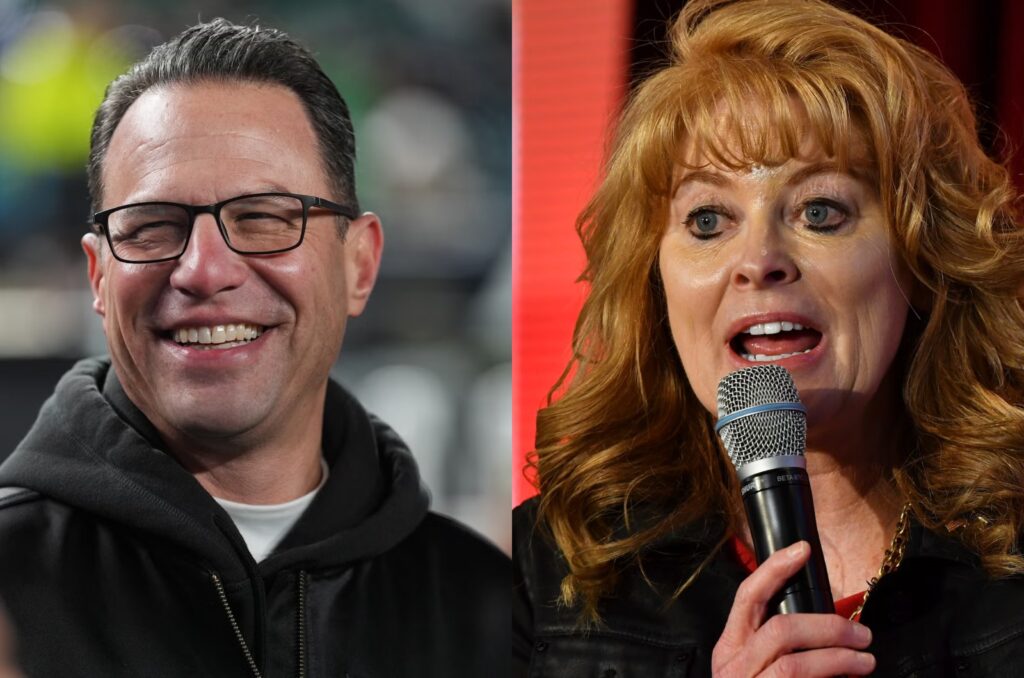
A record quarter adds to the governor's $35 million cash edge over the likely GOP challenger.
6 months ago
Listen 1:05