



Dry January is over — but don’t pour yourself a drink just yet
Dry January has wrapped up, but before you head back to the bar or pour yourself a drink, take a moment to evaluate what was better about your life when you were not drinking.
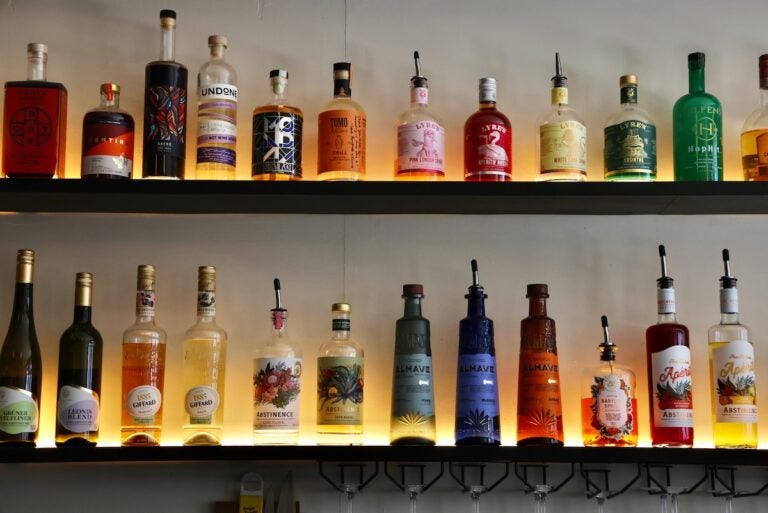
A wide array of nonalcoholic liquors are lined up behind the bar at Bar Palmina in Fishtown. (Emma Lee/WHYY)
This story is from The Pulse, a weekly health and science podcast. Subscribe on Apple Podcasts, Spotify, or wherever you get your podcasts.
Find our full episode on alcohol here.
British physician and surgeon Charles Knowles thinks Dry January is a fantastic idea. The popular movement of abstaining from booze for the first month of the year could be good for people’s health and finances, and balance out the excesses of the holiday season. But, there is a caveat. “Dry January is great,” he said, as long as people don’t treat it as a punishment. “So if we go through Dry January, thinking of it as a punishment, bemoaning the loss of our favorite friend until February 1, then nothing will be achieved by it.”
When it comes to alcohol, Knowles speaks from both medical and personal experience. When he discovered drinking as a young teen, it seemed like the perfect answer to all of his problems. A shy, sensitive and studious kid, he was an easy target for bullies at his boarding school in England. Booze transformed Knowles into a different person. “From the first time I drank, it was the lights being turned on,” he described.
Soon, he became known as the life of the party. He was popular, and making new friends. He was also becoming a regular and heavy drinker. “You learn to drink as we learn to do anything through negative and positive reinforcement.”
Knowles says you can’t unlearn how to drink any more than you can unlearn how to ride a bike.
“But what you can do is to learn to not drink.”
That’s what Knowles had to do as he finally gave up drinking for good during a disastrous, booze-filled family vacation in Florida. He woke up feeling anxious, depressed, and suicidal. “That morning, kneeling on the floor of my friend’s house in Florida, praying to any God that would listen, I just had run out of steam. I just couldn’t do it anymore.”
Knowles writes about his history with alcohol abuse in his new book “Why We Drink Too Much. The Impact of Alcohol on our Bodies and Culture.”
He says learning not to drink could be one of the major benefits of Dry January, whether people have a serious problem with drinking or just want to take a break from it.
Before heading back to the bar, or reaching for the bottle of wine now that February is here, he says some reflection is in order.
Knowles encourages people not to focus on what they were missing while abstaining, but instead, paying attention to what they have gained.
Subscribe to The Pulse
“The key is to notice how much better we feel. You know, that’s positive reinforcement.” Things like having more time and not suffering hangovers. “There’s clarity of thought, increased energy, mood and less anxiety,” he added. This is what he thinks of as the true, lasting potential of Dry January. “And so it is possible to learn to not drink and things like journaling that experience or joining a group to share that journey will help you notice it.”
Creating social spaces without booze
Taking a month off from drinking could be an invitation to change aspects of your life.
“I have a big philosophy about looking at things in your life and asking yourself, is this making my world bigger or smaller,” said Philadelphian Annie Fogarty, who is sober after years of what she described as an addiction to alcohol..
“Sometimes habits of ours that we keep doing, they’re actually keeping us very stuck and stagnant and preventing us from doing new things that could be better for us or helping us to progress in some new way that could be scary, but could be great.”
When Fogarty quit alcohol, she said one thing she did miss was the social aspect of drinking — the way she would sit at a bar, and effortlessly chat with the bartender and other guests while having a few drinks and a meal. She’s now rediscovered that comfortable feeling at Philadelphia’s Bar Palmina, which only serves non-alcoholic drinks.
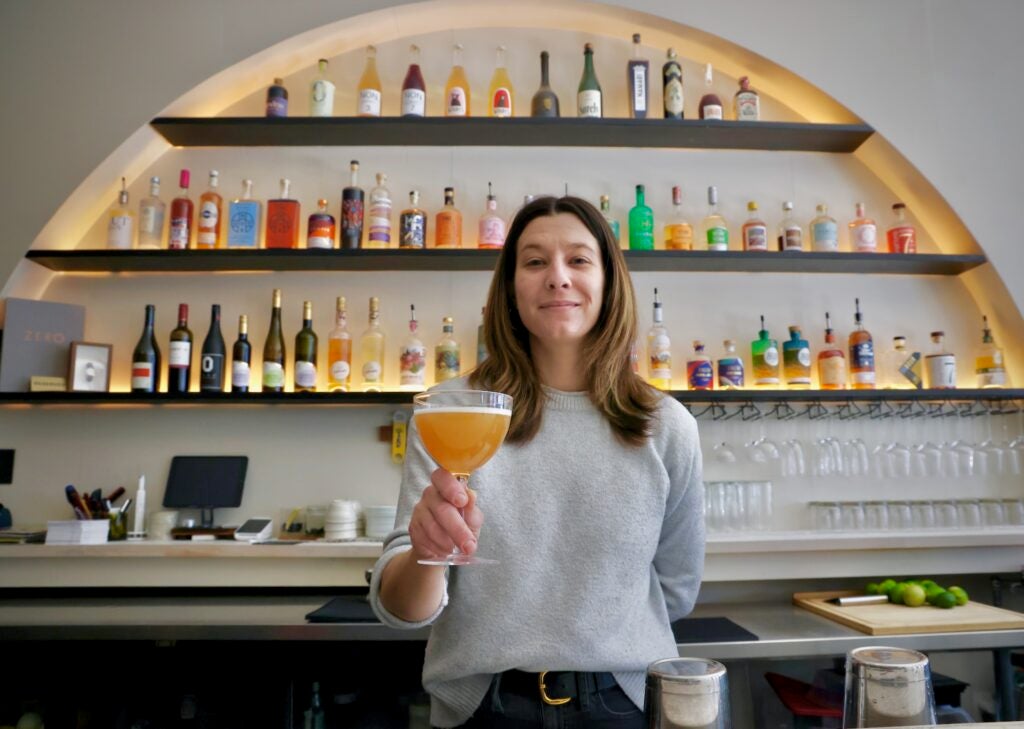
Owner and bartender Nikki Graziano opened it as a social space for people who, for whatever reason, don’t want to consume alcohol. The bar has a cozy atmosphere and offers complex drinks that are zero proof, like a non-alcoholic version of a French Blonde with grapefruit juice, elderflower, non alcoholic gin, non alcoholic wine, and bitters.
Graziano said the bar, its drinks and setting, appeal to a wide variety of people. “We have drinkers, we have people in recovery, we have pregnant women, people training for marathons.” she said. “We have a really big Muslim community that comes in, people just on medication for a few weeks.”
Fogarty said not drinking – even in the absence of dependence or problem drinking, could be an opportunity to ask yourself some important questions: “When was the last time that I just let myself be?” And, “What would it be like if I just tried to be calm and sit with some discomfort for a while and figure out making it comfortable?”
WHYY is your source for fact-based, in-depth journalism and information. As a nonprofit organization, we rely on financial support from readers like you. Please give today.
Brought to you by The Pulse
Unpacking a year of Robert F. Kennedy Jr. at the helm of the Department of Health and Human Services -- vaccines, ultra-processed foods, and the MAHA movement.
Air Date: March 9, 2026 12:00 pm
Listen 51:39
From Buzz to Burnout: How Alcohol Affects the Brain and Body
We explore our relationship with alcohol — why we consume it, how it affects us, and when it’s time to quit.
Air Date: January 30, 2026
Listen 49:34
US Surgeon General Vivek Murthy wants cancer warnings on alcohol labels. Could updated labels, taxes, fewer liquor stores or advertising bans make Americans drink less?
Air Date: January 7, 2025 12:00 pm
Listen 51:41