

Pompeo faces skeptical lawmakers after Trump summits raise concerns
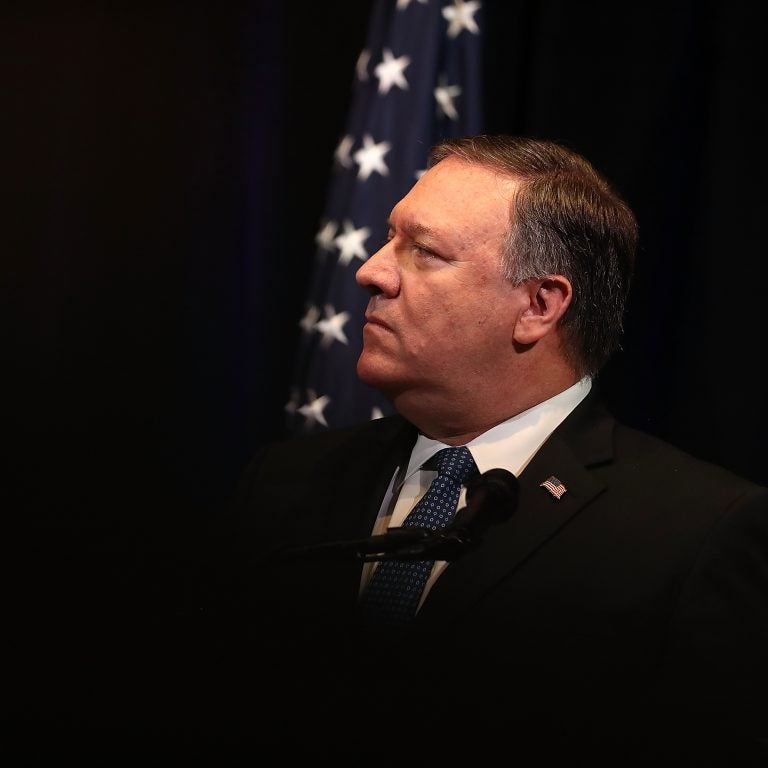
Secretary of State Mike Pompeo looks on during a press conference at the Australia-U.S. Ministerial Consultations (AUSMIN) on the campus of Stanford University on Tuesday in California. (Justin Sullivan/Getty Images)
Updated at 5:00 p.m. ET
Secretary of State Mike Pompeo was met with hostility and skepticism by some members of the Senate Foreign Relations Committee Wednesday in the wake of President Trump’s summit last week with Russian President Vladimir Putin.
Committee Chairman Bob Corker, R-Tenn., was blunt in his opening statement, telling Pompeo that “in the summit’s aftermath, we saw an American president that was submissive and deferential” toward Russia and that senators were concerned the White House was simply “making it up as they go” in regards to U.S. foreign policy.
In his testimony, Pompeo maintained that he, the president and the administration have set a firm tone with Russia, and announced the formalization of U.S. policy that “does not and will not recognize the Kremlin’s purported annexation of Crimea.”
Pompeo said that he had underscored to Russia that there would be “severe consequences” if the country again tried to interfere in U.S. elections, but that overall the summit had been a step toward better diplomatic relations with a major player in world affairs.
“Now is the time for direct communication in our relationship in order to make clear to President Putin that there is the possibility — however remote it might be — to reverse the negative course of our relationship,” Pompeo said.
But Pompeo got especially testy when pressed by the committee’s ranking member, Sen. Bob Menendez, D-N.J., about what happened in Trump’s one-on-one meeting with Putin.
“As of this moment, we find ourselves in an unimaginable situation. The American people, elected officials in this body and members of the president’s own Cabinet have heard more about the meeting in Helsinki from Putin and his associates than from” Trump himself, Menendez said in his opening remarks.
Pompeo maintained it wasn’t improper for presidents to have solo meetings with world leaders and said that he had gotten “a pretty complete understanding of what happened” during “a number of conversations” with Trump, though the secretary of state wouldn’t elaborate on many more specifics and said he hadn’t talked with the interpreter in the room and hasn’t seen any of the interpreter’s notes.
“Presidents are permitted to have conversations with their Cabinet members that aren’t repeated in public,” Pompeo pushed back to Menendez.
Pompeo wouldn’t say whether or not Trump and Putin discussed relaxing sanctions, only that U.S. policy had not changed. Shortly before Pompeo’s testimony began, the White House announced that the administration had postponed a second meeting with Putin here in the U.S. until next year and until “after the Russia witch hunt is over.”
Trump’s sit-down with Putin last week in Helsinki stirred up a firestorm of criticism from Republican and Democratic lawmakers after Trump questioned the assessment of U.S. intelligence agencies that Russia interfered in the 2016 election.
Once he was back in the United States, Trump attempted to correct his statement on Russian interference, saying that he does accept the findings of the U.S. intelligence community.
Pompeo told the committee that he’s confident Trump “has a complete and proper understanding of what happened” with Russian efforts to interfere in U.S. elections — because he briefed the president regularly on it when he was previously the director of the CIA.
Questions remain about what exactly Trump and Putin agreed to during their two-hour sit-down when no other advisers were present. The White House has not released a detailed readout of the meeting.
Pompeo said on Tuesday that “many things” came out of the meeting between the leaders, but he offered few specifics other than mentioning an agreement to set up a business council.
He defended the summit, saying that ultimately the world will benefit from the talks.
“I think one of the things that gets lost is the determination this administration has had in pushing back against Russian malign behavior around the world,” he also said Tuesday.
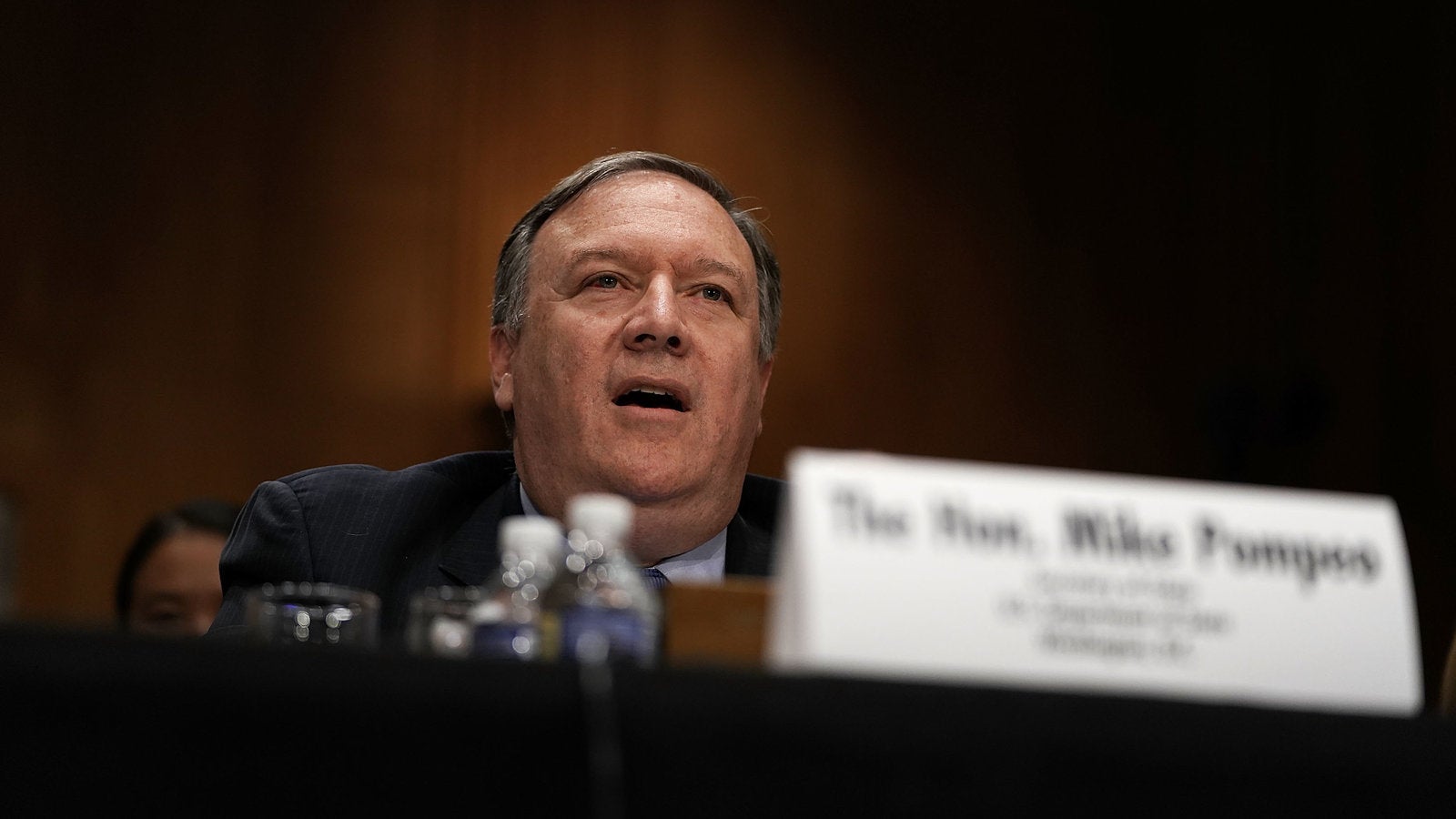
Lawmakers also grilled Pompeo on North Korea after the other historic summit Trump held this year. The secretary of state told the committee that the U.S. is “engaged in patient diplomacy, be we will not let this drag out to no end,” and that he remains “engaged in a complex negotiation with North Korea.”
“I am very confident that the North Koreans understand our definition of denuclearization and have agreed to it,” Pompeo told senators.
Trump has boasted that his meeting with North Korea’s Kim in Singapore in June was a success. He even went so far as to tweet that the country was no longer a nuclear threat.
The news out of North Korea since those talks were held has been mixed, though. After Pompeo held a follow-up meeting with senior North Korean officials in Pyongyang earlier this month, North Korea’s foreign ministry called the discussions with Pompeo “regrettable.”
But, a recent report from a North Korea expert concluded that Pyongyang has begun dismantling key facilities at a satellite launching station.
“It’d be entirely consistent with the commitment that Chairman Kim made to President Trump when the two of them were in Singapore together,” Pompeo told reporters on Tuesday when asked about the finding.
“We’ve been pressing for there to be inspectors on the ground when that engine test facility is dismantled,” Pompeo added Tuesday.
Another topic that will likely be broached at Wednesday’s hearing is Iran. Pompeo gave a speech Sunday that called the country’s leaders corrupt. He made a direct appeal to the Iranian people, saying the U.S. stands with them.
Trump followed Pompeo’s speech with a tweet in all capital letters that warned Iran against threatening the United States.
The White House has said Trump was simply responding to rhetoric from Iran and that the administration will do what is necessary to ensure that Iran does not get nuclear weapons.
Trump pulled the U.S. out the Iran nuclear agreement in May, arguing it was a bad deal that did not do enough to rein in bad behavior from Iran.
9(MDAzMzI1ODY3MDEyMzkzOTE3NjIxNDg3MQ001))
Delaware Sen. Chris Coons says Trump risked much and gained little with threats over Greenland
President Donald Trump backtracked this week from leveling tariffs on European allies in a bid to coerce the acquisition of Greenland to the U.S.
1 week ago
Listen 0:53
Trump’s foreign policy escalation
President Donald Trump has shaken the international order in recent weeks — from Venezuela to Iran to Greenland
Air Date: January 20, 2026 12:00 pm
Listen 51:14
Trump says he’ll charge 8 European countries a 10% tariff for opposing U.S. control of Greenland
Trump says the rate would climb to 25% on June 1 if no deal was in place for “the Complete and Total purchase of Greenland” by the United States.
2 weeks ago