




Triumph, Tragedy and Ennui: Three NASA Missions That Shaped the Future of Space Exploration
We look back at the first spacecraft landing on Mars in 1976, the Challenger tragedy in 1986, and the long-game Pluto mission launched in 2006.
Listen 50:29
This image made available by NASA in March 2017 shows Pluto illuminated from behind by the sun as the New Horizons spacecraft travels away from it at a distance of about 120,000 miles. (NASA/Johns Hopkins University Applied Physics Laboratory/Southwest Research Institute via AP)
Space exploration relies heavily on the interest of the public — the voters, and taxpayers, who are ultimately footing the bill. But that support and excitement can be fickle. When space missions go well, and deliver new insights, the payoff is cheering crowds and increased support. But when they don’t, the result can be reduced funding, canceled missions — and even deaths.
That means, with each mission, the pressure is on to push boundaries, break new ground, and get everything right. Even a small mistake or malfunction could potentially lead to absolute disaster.
On this episode, we look back at three historic NASA missions and how they shaped the course of space exploration. From the awe-inspiring triumph of the first spacecraft landing on Mars in 1976, to a devastating national tragedy in 1986, to the long-game Pluto mission launched in 2006.
SHOW NOTES:
- It was the mission that was supposed to reignite the public’s interest in the work of NASA — the Space Shuttle Challenger, an orbiter that, in January 1986, would carry six astronauts and one civilian, a teacher named Christa McAuliffe, into space. But on the day of lift-off, tragedy struck — the Challenger exploded 73 seconds after launch, killing all seven crew members. We talk with author Adam Higginbotham about what led up to the mission, what went wrong, and the lasting impact it had on both NASA and the public’s perception of space exploration. He’s the author of “Challenger: A True Story of Heroism and Disaster on the Edge of Space.”
- In 2006, NASA launched New Horizons — an interplanetary space probe slated to become the first spacecraft to perform a flyby of Pluto, a journey of roughly 10 years. Pulse reporter Alan Yu tells the story of the mission’s difficult beginnings, what we learned, and the dramatic moment that almost derailed everything.
WHYY is your source for fact-based, in-depth journalism and information. As a nonprofit organization, we rely on financial support from readers like you. Please give today.
Brought to you by The Pulse

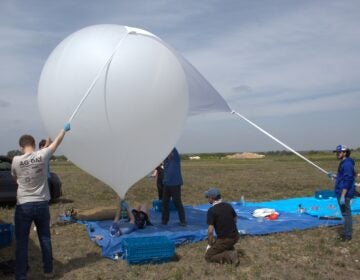
Teams from Drexel and the University of Delaware traveled to the path of totality as part of a nationwide NASA project.
2 years ago
Listen 1:14
The project is part of an initiative from NASA and the National Science Foundation to collect data and give students a chance to learn about scientific ballooning.
2 years ago
Listen 2:28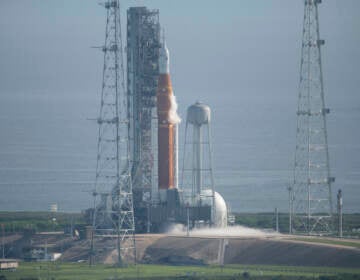
Fuel leak ruins NASA’s 2nd shot at launching moon rocket
NASA has called off its second launch attempt for its new moon rocket because of yet another fuel leak.
4 years ago