



Studio 2 Extra: Penn study finds popular sleep noise may be doing more harm than good
A new study out of the University Of Pennsylvania suggests certain noises promoted to support sleep may be more harmful than we thought.
Listen 19:14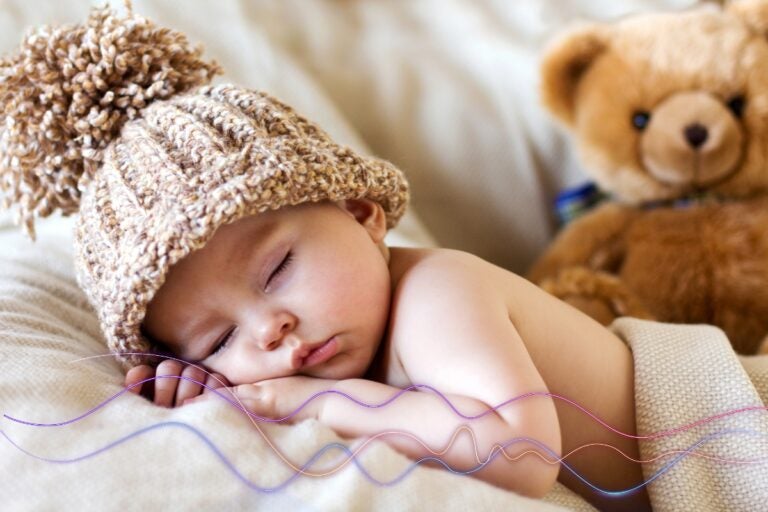
Sound machines feel like a sleep hack for babies, but they might not be as beneficial as they seem.
A new study out of the University Of Pennsylvania suggests certain noises promoted to support sleep may be more harmful than we thought.
Sound machines and apps that play so-called pink noise are widely used to help people fall asleep or mask environmental disturbances like traffic, trains, or aircraft noise. But a controlled sleep lab study of 25 healthy people found that these well-intentioned tools may have unintended consequences.
Dr. Mathias Basner, professor of psychiatry at the University of Pennsylvania, and his team found that pink noise reduces REM sleep. REM stands for Rapid Eye Movement, a deep stage of sleep usually starting 90 minutes after falling asleep. This stage is particularly associated with emotional regulation, learning and neurodevelopment.
Participants slept in a laboratory under several conditions: silence, constant pink noise, intermittent environmental noise (such as jets, cars, helicopters and alarms) and combinations of these. Researchers measured sleep using polysomnography, a method that tracks brain waves, eye movements and muscle tone to distinguish between the different stages of sleep.
Intermittent environmental noise significantly disturbed the early-night stage called deep sleep. This stage is linked to physical restoration and memory consolidation. When pink noise and environmental noise were combined, sleep worsened across the board: participants lost deep and REM sleep. And when pink noise was played on its own? REM sleep decreased.
Although the subjects in this study were adults, these findings could be especially pertinent to children. Infants and young children spend far more of their time in REM sleep than adults. Basner worries about the consequences of parents using sound machines as a sleep aid for their kids.
But if ambient sound can’t improve sleep, what could?
According to Basner, the answer is earplugs. By reducing environmental noise without adding constant background sound, earplugs helped participants recover more than 70% of the deep sleep lost to intermittent noise and did not harm their REM sleep.Basner says this was only one short-term laboratory study. He wants to take the experiment outside the lab and into real-world environments, especially to those habitual users of sound machines.
In the meantime, he advises people to keep sound machines at the lowest possible volume, use timers so noise turns off after sleep’s onset and prioritize classic sleep hygiene, meaning a dark, cool, quiet room and consistent bedtime routines.
WHYY is your source for fact-based, in-depth journalism and information. As a nonprofit organization, we rely on financial support from readers like you. Please give today.
Brought to you by Studio 2
Reproductive medicine and fertility centers are required to meet specific safety standards and apply for state licensure under new rules.
1 month ago
Listen 1:21
Young adults from Tanzania with albinism who’ve survived attacks from “black magic” believers visit the U.S. through Global Medical Relief Fund.
4 months ago
Listen 1:37
Penn researchers find killing dormant, ‘sleeper’ breast cancer cells may prevent recurrence
New results from a clinical trial show that existing drugs can successfully kill dormant breast cancer cells, thereby reducing lifetime risk of recurrence.
7 months ago
Listen 1:32