

Climate shifts may be impacting the wine you drink from New Jersey vineyards
Wineries say there is still wine available now, but growers are working to protect future vintages as climate shifts reshape New Jersey agriculture.
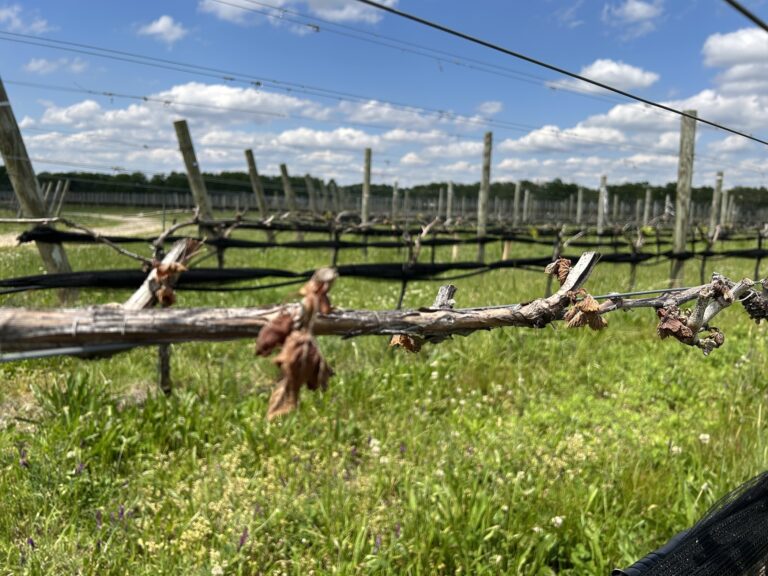
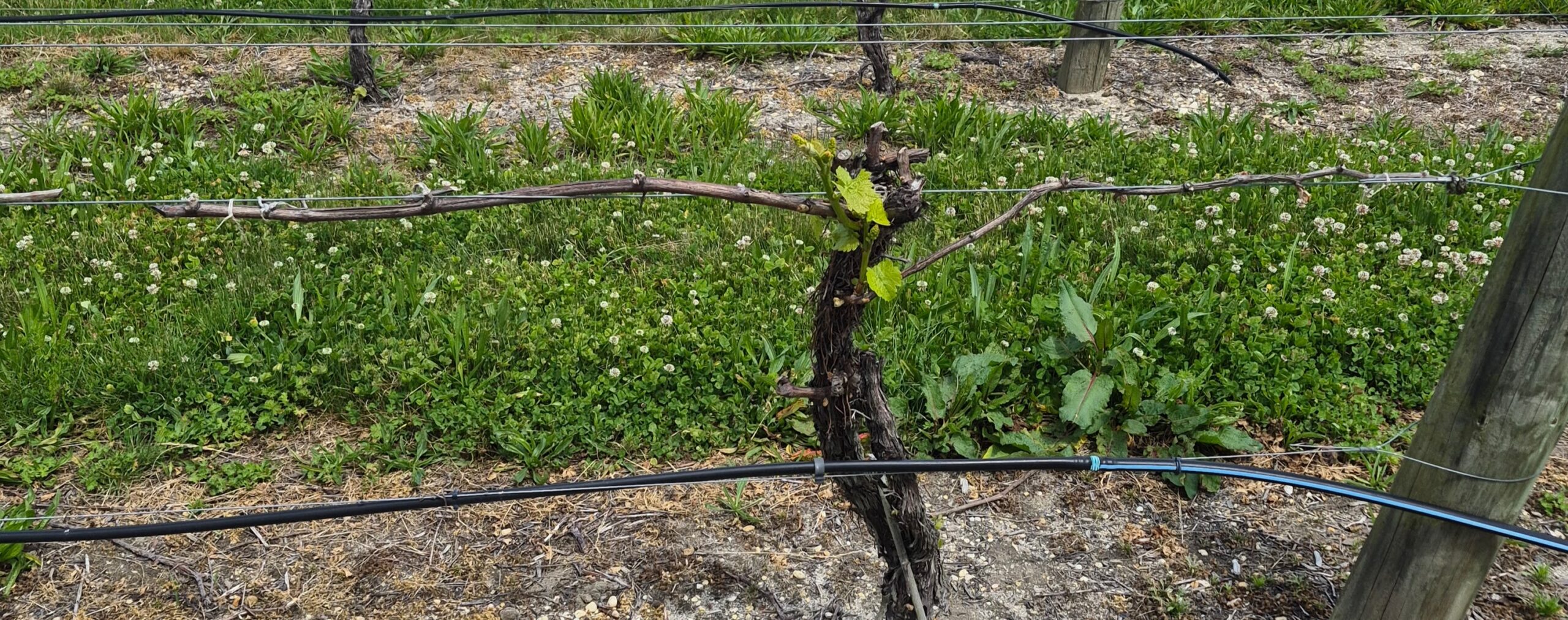
Buds from the vine at Sharrott Winery are damaged by the late spring frost. (Courtesy of Sharrott Winnery)
From Camden and Cherry Hill to Trenton and the Jersey Shore, what about life in New Jersey do you want WHYY News to cover? Let us know.
An unprecedented stretch of summer-like weather followed by days of freezing temperatures in April has left New Jersey vineyards facing what growers and agricultural experts describe as one of the most severe frost events in decades. The temperature swings threaten not only future wine production but the broader network of farms that help drive the Garden State’s agricultural economy.
However, vineyard owners and industry leaders say New Jersey wineries remain open and growers are working to stabilize supply for 2027 and 2028, while seeking long-term solutions for an increasingly unpredictable climate.
“This is unlike anything many growers have experienced in decades,” said Dustin Tarpine, chair of the Garden State Wine Growers Association, in a statement.
The association recently canceled its Sips, Stars & Stripes: A NJ Wine Revolution event because of widespread vineyard damage tied to the freeze. Growers reported extensive damage to primary and secondary grapevine buds, and are concerned about 2027 as well.
Gary Pavlis, an Atlantic County agricultural agent with Rutgers Cooperative Extension, said the conditions align with what researchers around the world have warned about for years.
“Due to climate change, frost is going to be much more likely worldwide for grapes,” Pavlis said, referencing an international conference on climate and viticulture he attended in Bordeaux, France. He also said this is impacting not only New Jersey but many mid-Atlantic states.
“We’ve seen frost before. I’ve never seen it so distributed throughout the state,” he said. “When you go from the north all the way to Atlantic County, everybody’s affected.”
Pavlis said the only areas that appeared largely insulated were vineyards in Cape May County, where coastal conditions helped buffer temperatures.
The freeze followed several days of temperatures in the 80s and 90s that accelerated bud break across vineyards statewide. Once the vines began growing, the sudden return to temperatures in the low 20s became devastating.
“It was one of those perfect storm scenarios,” said Larry Sharrott, owner of Sharrott Winery in Hammonton.
Sharrott said his vineyard had already developed shoots across all 22 acres when temperatures plunged unexpectedly.
“We saw roughly 85% to 90% of the young shoots were killed,” he said.
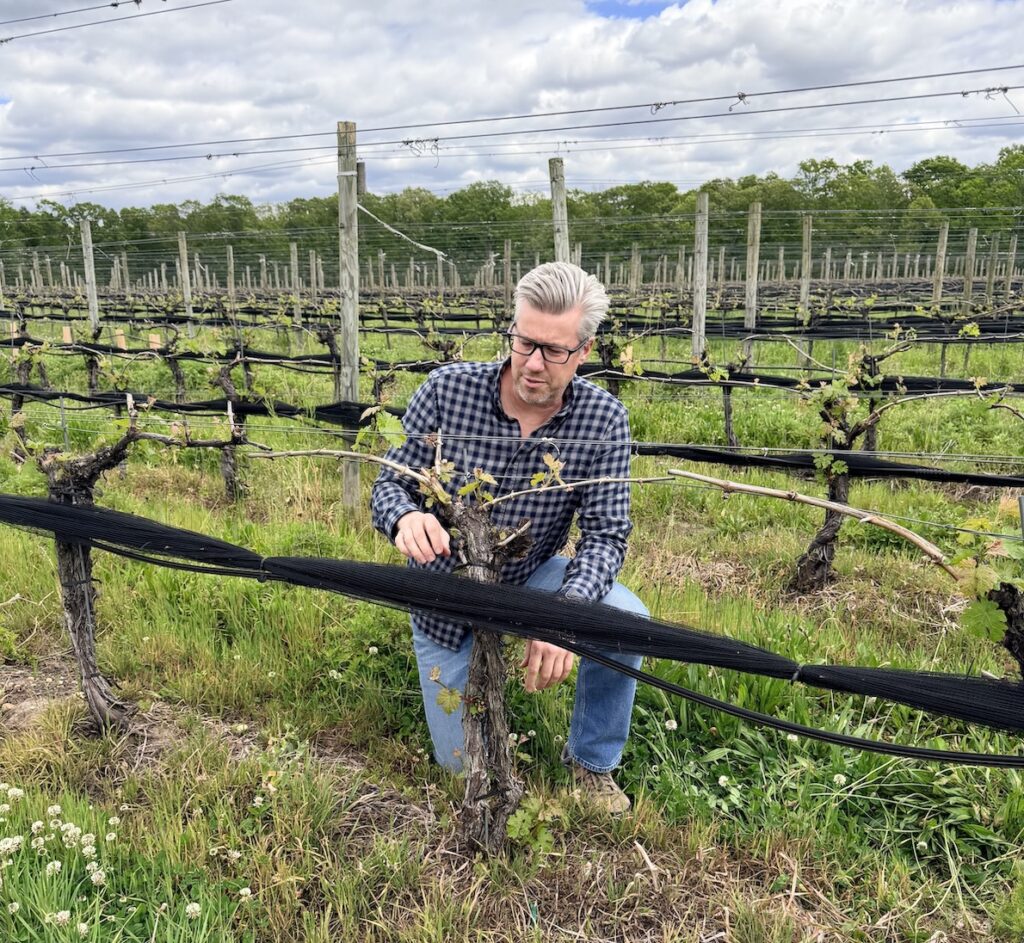
Sharrott said the winery used candles, smudge pots and helicopters in attempts to warm the vineyards, but the cold proved too severe.
“The weather forecast for Monday morning was off by 10 degrees,” he said. “We had no idea we were going to get hit as hard as we did.”
Related Content

An initial assessment by the state Department of Agriculture finds at least $300 million in crop losses reported by farmers.
5 months ago
Bellview Winery’s centurylong farming history faces a new challenge
At Bellview Winery in Buena Vista Township, owner and founder Jim Quarella said farming is woven into his family history.
Quarella is a fourth-generation farmer whose family first began working the land in 1914. Long before Bellview became known for wine, the farm produced vegetables, strawberries and Christmas trees. During the 1990s, the family specialized in wholesale ethnic produce, including Asian crops.
In 2000, Quarella and his wife Nancy decided to transform part of the farm into a winery.
“We’ve been doing this now for 25 years,” Quarella said.
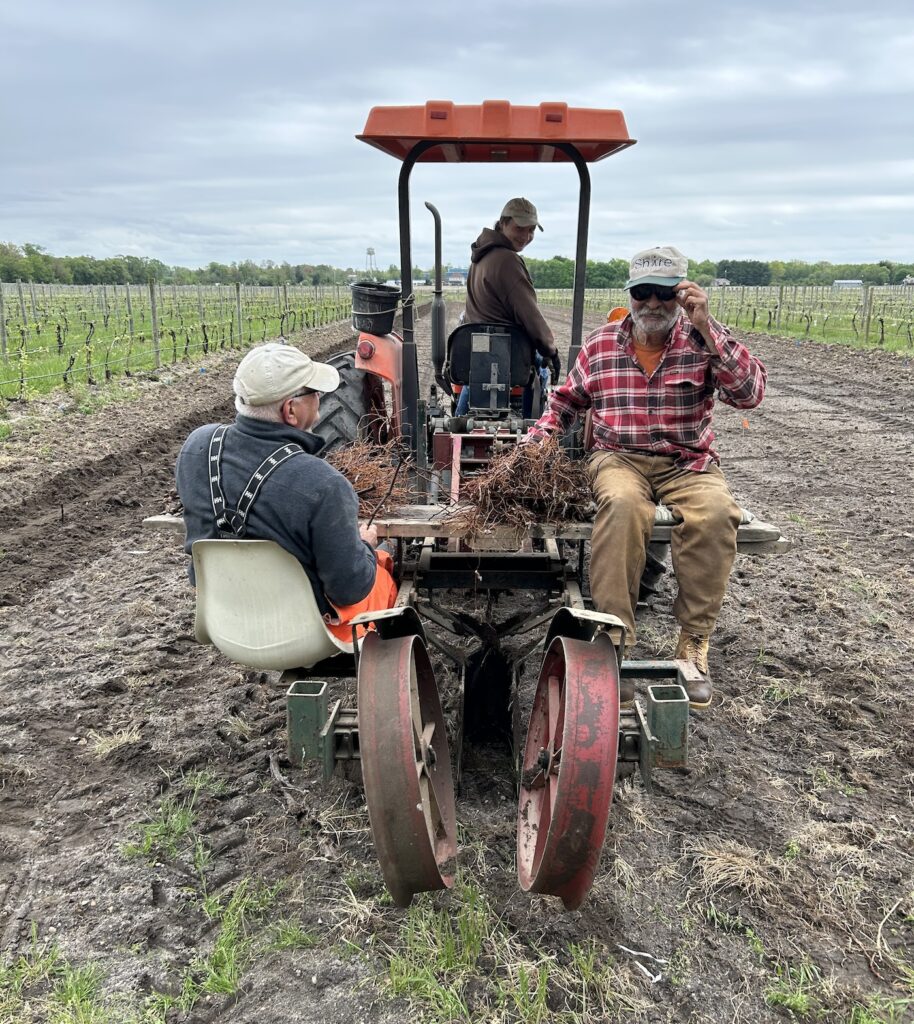
Today, Bellview grows 20 grape varieties across 50 acres and produces just under 10,000 cases of wine annually. The winery is known as an estate winery, meaning it relies exclusively on grapes grown on its own property rather than importing fruit from other states.
“We are a New Jersey winery,” Quarella said. “We use New Jersey grapes to make the wine.”
Quarella estimates the freeze destroyed about 80% of the vineyard’s crop.
“The plants broke dormancy earlier than normal,” he said. “After those 90-degree days, that last freeze really caused a lot of damage.”
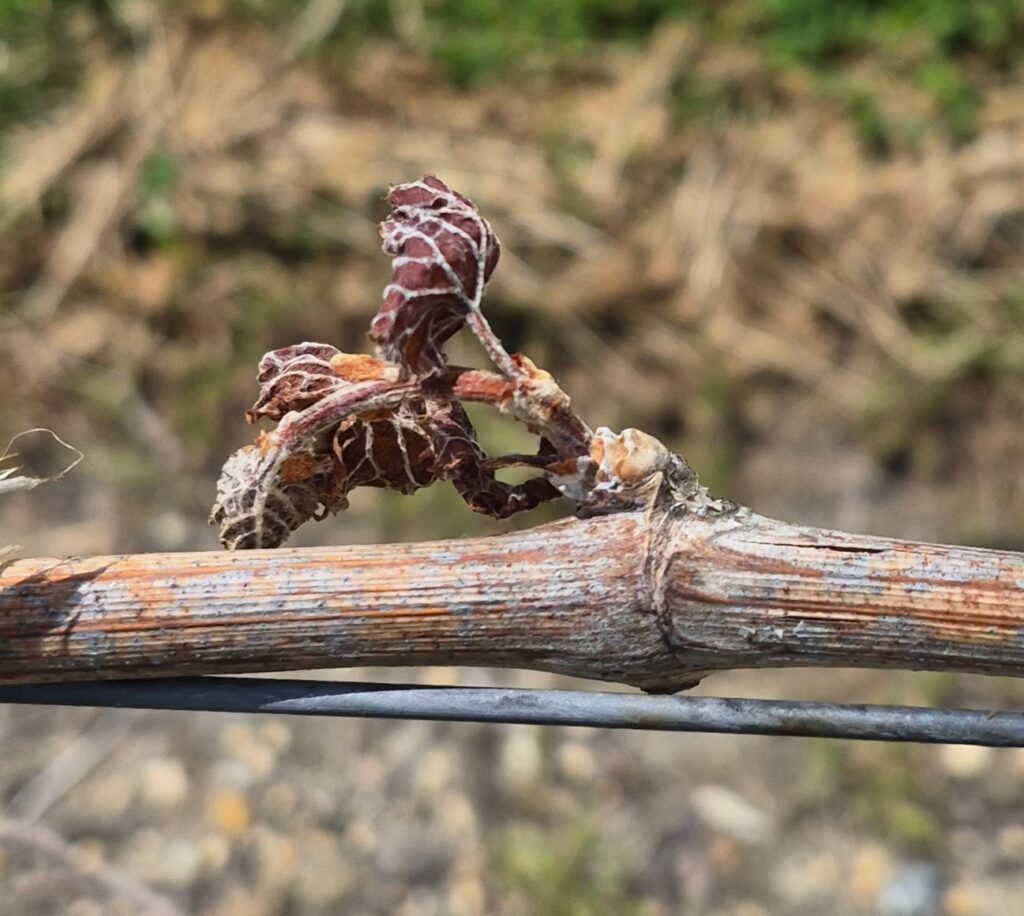
While the vines themselves may survive, the loss of fruit means fewer bottles in future vintages and major financial strain. Quarella said wineries still must maintain vineyards even when crops are lost.
“We still have to put all the inputs into taking care of the crop,” he said. “If we don’t take care of the vines, they’re not going to be good for next year.”
Bellview plans to continue producing wine from the grapes that survived, even if that means some varieties disappear temporarily in the next year or so.
“We might not have any Viognier,” Quarella said. “We might not have some of the other wines, but we’ll make the wine we can.”
Related Content
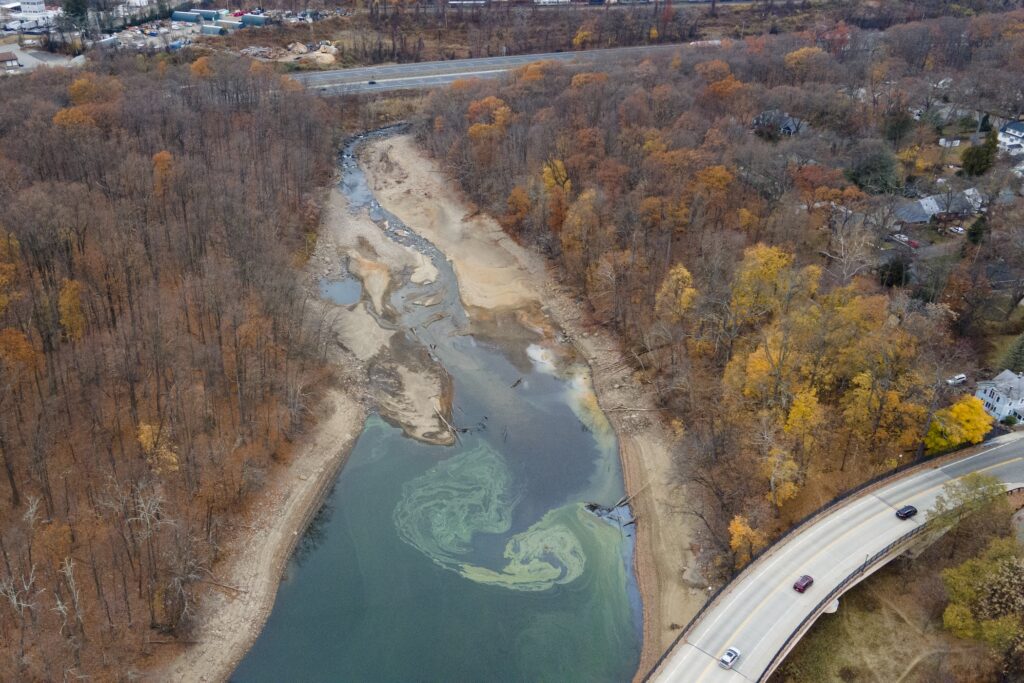
New Jersey drought warning persists into summer months as residents are urged to conserve water
Despite a snowy winter, New Jersey has not seen enough precipitation to bring streams and groundwater sources back to normal levels.
5 months ago
Listen 1:07Sharrott Winery built a destination around South Jersey wine
At Sharrott Winery, the bud damage threatens more than grapes. It threatens a destination built over decades.
Sharrott and his father started the winery in 2003, planting vineyards and preparing the property for years before opening to the public in 2008.
In 2018, the winery expanded with a renovated tasting room, wine bar and kitchen. Today, the winery offers food service, wood-fired pizza, live entertainment, trivia nights and events that have helped turn the winery into a regional attraction.
“We have a lot to offer as well as award-winning, world-class wines,” Sharrott said.
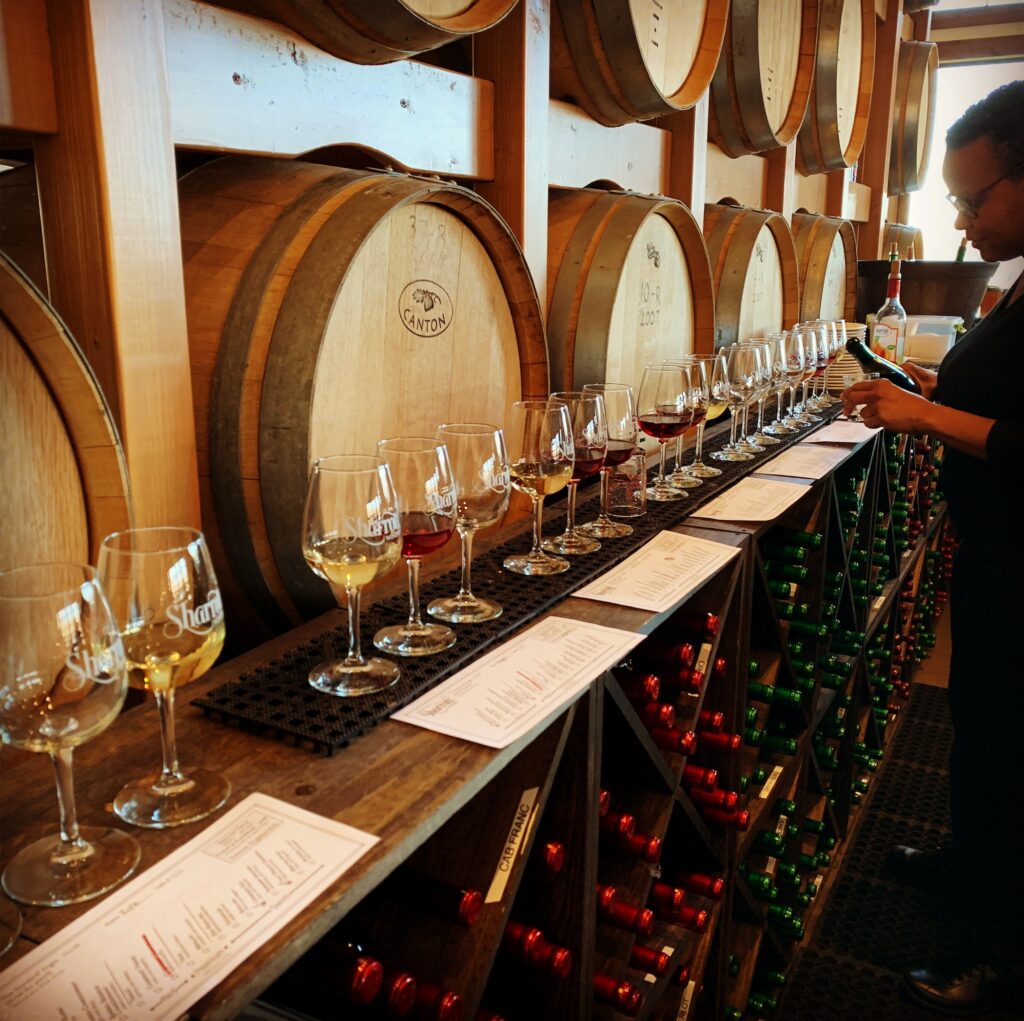
The property spans 34 acres, including 22 acres of vineyards. Sharrott said the winery produces about 10,000 cases annually and sources additional grapes from local growers to support neighboring farms.
Sharrott described South Jersey’s sandy loam soil and coastal climate as ideal for growing grapes, comparing the region’s growing conditions to Bordeaux.
He said the region’s geography has helped New Jersey establish itself as a serious wine-producing state over the last several decades. South Jersey’s sandy loam soil drains well, something grapevines prefer, while the Atlantic Ocean, Delaware Bay and Delaware River help moderate temperatures throughout the growing season.
“Our climate is actually pretty similar to Bordeaux,” Sharrott said.
Sharrott said New Jersey wines often land between the heavier fruit-forward wines associated with warmer regions like California and the lighter, more herbaceous wines commonly found in parts of Europe.
“Our wines are kind of right smack in the middle,” he said.
But Pavlis said climate instability is beginning to threaten wine regions around the world, including New Jersey.
At an international climate and viticulture conference in Bordeaux, researchers and growers from 27 countries discussed the growing risks climate change poses to vineyards globally.
“One thing they said was that due to climate change, frost is going to be much more likely worldwide for grapes,” Pavlis said.
He said warming spring temperatures are causing vines to emerge from dormancy earlier, leaving them vulnerable when cold snaps return.
“The fluctuations are larger, the storms are more significant,” Pavlis said. “All this is tough to deal with from a farming standpoint.”
Local farmers agree.
“We’re seeing the results of climate change,” Sharrott said. “The springs are actually a little warmer than they have been traditionally.”
Still, Sharrott said the winery has enough inventory in its cellar to continue serving customers and supplying wine over the next several years.
“White wines you can get from farm to bottle in four to six months,” he said. “Red wines age for at least 18 months.”
Because of that production cycle, wineries are relying heavily on existing inventory while they determine how much fruit can still be salvaged and what future harvests may look like.
“We’re in pretty good shape,” Sharrott said. “The biggest issue is really just the economic impact of the whole thing.”
Sharrott said the freeze comes as wineries are already navigating decreased wine sales nationally and globally.
“The last couple of years, wine sales globally have been down,” Sharrott said.
He said many wineries had already been adjusting operations and inventory before the freeze hit.
Pavlis said that downturn may help some wineries with immediate stock because many vineyards still have wine from previous vintages in storage.
Related Content
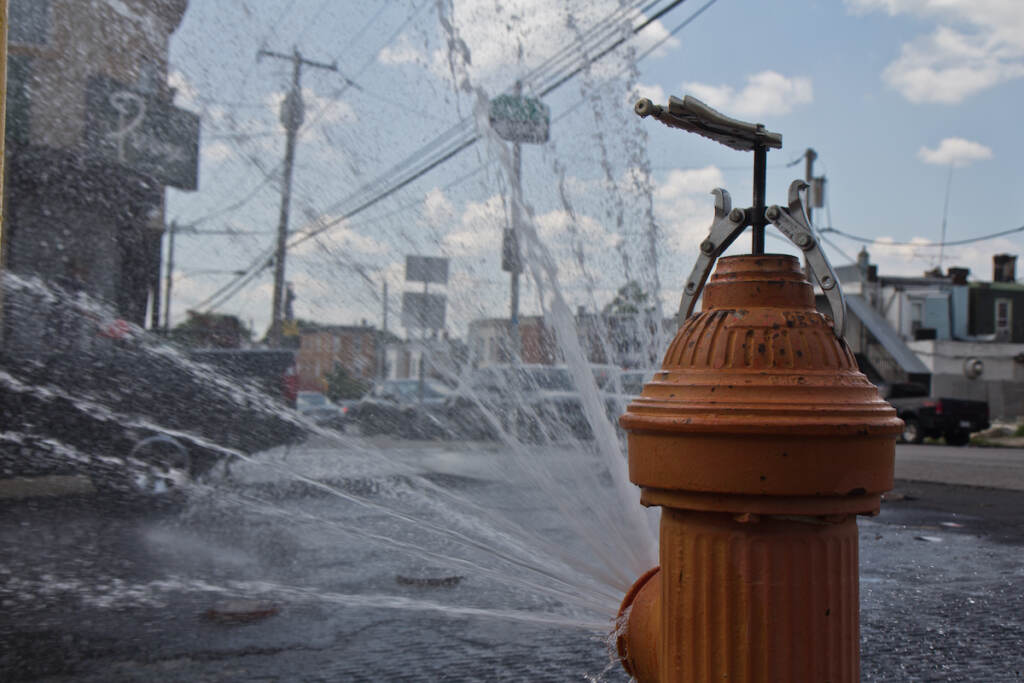
‘Fingerprint of climate change’: April heat wave could break a record in Philadelphia
Climate change makes balmy April temperatures twice as likely, according to a research nonprofit.
6 months ago
Listen 0:48State officials say recovery could take years and may require new investments
The damage extends well beyond vineyards.
Devon Perry, Garden State Wine Growers Association’s executive director, said specialty crops throughout New Jersey have been affected, including peaches, apples, cherries and blueberries.
“This isn’t just a wine problem,” Perry said. “This is peaches and cherries and plums and apples.”
New Jersey Secretary of Agriculture Ed Wengryn said farmers can document losses through federal Farm Service Agency offices as the state evaluates whether the damage meets the threshold for a federal disaster declaration.
“These are our high-value products,” Wengryn said. “Without that, that’s a whole year of economic loss for our producers.”
The cold snap resulted in an estimated $300 million worth of damage to New Jersey crops overall. On May 19, Gov. Mikie Sherrill declared a statewide state of emergency, which would unlock federal funds for Garden State farmers.
“New Jersey’s agricultural sector is a vital engine of our economy; it is the very reason we bear the name the Garden State. The April freeze caused serious damage to our growers, and those losses demand decisive action,” Sherrill said in a statement. “This executive order mobilizes a whole-of-government recovery effort out of Trenton, cutting through bureaucracy and accelerating results for impacted farmers and families.”
State assessments found many farms suffered losses exceeding 30%, while some growers expect to lose entire harvests.
Executive Order No. 18 places all 21 counties under the emergency declaration and directs state agencies to coordinate relief efforts and pursue federal support for impacted farmers.
“With a declaration by the state and acceptance by the feds, emergency loans kick in,” Wengryn said.
Those loans could help growers remove damaged vines and trees, hire labor for recovery work, and begin rehabilitating farms impacted by the freeze.
But Wengryn acknowledged that recovery assistance and insurance payments will likely take time.
Growers say grapevines are somewhat unique because they contain secondary and tertiary buds that can sometimes recover after freeze damage.
Sharrott said secondary growth typically produces significantly less fruit than primary buds, meaning wineries are still expecting major crop reductions even if some vines recover.
Pavlis said the long-term concern is whether tertiary buds, which help vines survive and regrow for future seasons, were also damaged during the freeze.
“If those plants are dead, then you’re talking replanting, and then it’s three years before you ever get a crop again,” Pavlis said.
Wengryn added that existing federal agriculture programs do not always reflect the realities of New Jersey farming, where many operations are diversified businesses that rely on agritourism, retail sales, wine production and farm markets, in addition to crops.
“I don’t think those programs are designed for the diversity of the farming we have here in New Jersey,” Wengryn said.
State officials are also beginning to evaluate strategies to address climate change in the long term as growers face increasingly volatile weather patterns.
Pavlis said the event should also serve as a warning about how climate instability is reshaping agriculture.
“I think it would be naive to think this is never going to happen again,” he said.
The Garden State Wine Growers Association has already conducted multiple industry surveys and shared the findings with the New Jersey Department of Agriculture, elected officials and Rutgers University researchers to help guide future relief efforts.
“Our hope would be by month’s end,” Perry said of potential next steps for relief discussions, while cautioning that no firm timeline has been established.
Pavlis said researchers and growers are also exploring new frost mitigation tools, including heating systems used in European vineyards, expanded wind machines and additional protective covering systems for crops.
Related Content
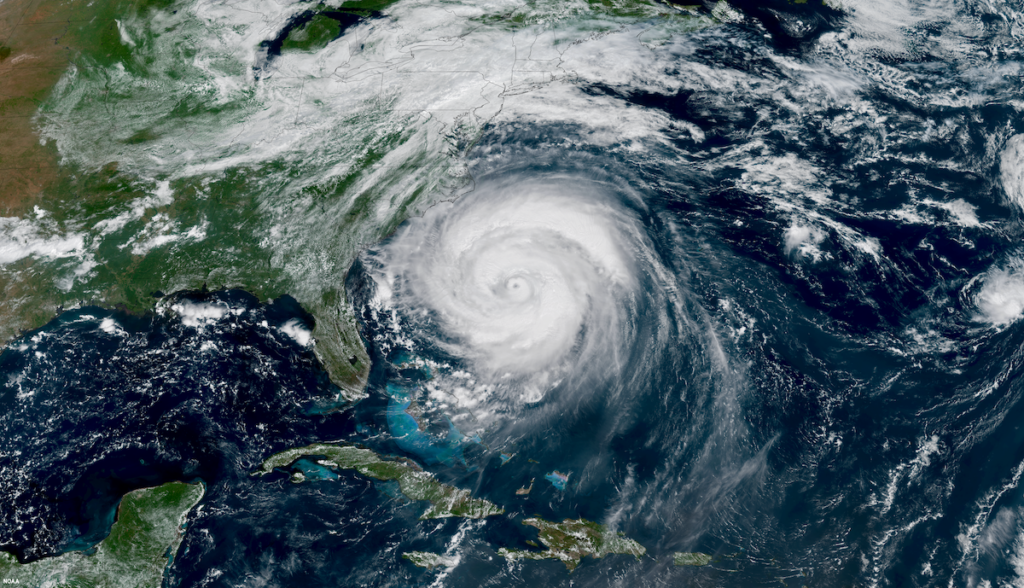
NOAA is rolling out an experimental tool to help emergency planners predict extreme rain events in 60 cities, including Philadelphia and Dover, Delaware.
5 months ago
Listen 1:08Wine remains a major economic engine for New Jersey
According to WineAmerica’s 2025 economic report, New Jersey’s wine industry generates nearly $5.64 billion in economic activity statewide and supports nearly 30,000 jobs.
The industry includes 86 wine producers and more than 1,000 acres of vineyards, and generates about $819 million in combined state, local and federal taxes, according to WineAmerica.

Wine tourism alone generates more than 617,000 visits annually and nearly $118 million in tourism spending, the report states.
Sharrott said wineries also drive traffic to nearby restaurants, hotels and local businesses.
“For every dollar spent at a winery, there’s impact in the surrounding community,” he said.
Related Content
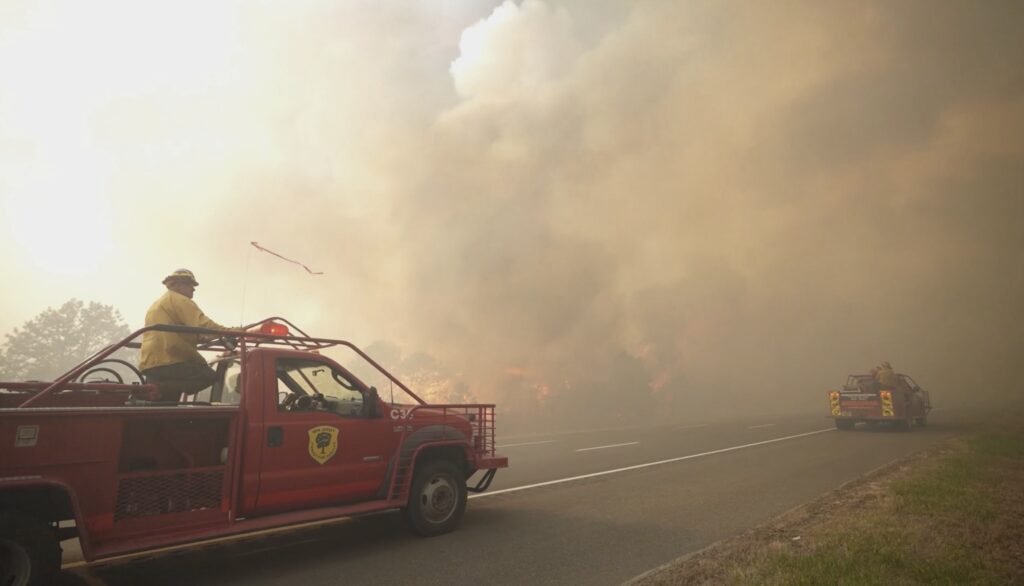
New Jersey’s wildfire season is underway. Here’s what you need to know
New Jersey’s wildfire season, which runs through mid-May, occurs in some of the most fire-prone forests in the country. Climate change is increasing the risk.
7 months ago
Growers say public support could help determine what survives
Despite the damage, growers emphasized that wineries remain open and stocked with wines produced from previous vintages.
The message from growers across the state has been consistent: Visit wineries, buy local wine and continue supporting agritourism businesses.
“The biggest thing that would help the small wineries in the state is for people to come visit them,” Sharrott said.
Quarella said support from local consumers matters now more than ever.
“If people can support your local producers, that means everything,” he said. “That keeps us in business.”
Perry said support goes beyond purchasing a bottle of wine.
“Fall in love with the wine industry,” Perry said. “The New Jersey wine community starts in the field.”
Industry leaders are also encouraging consumers to advocate for agricultural support programs by contacting state and federal lawmakers.
“When you’re talking about a $100 million loss statewide, the public should let the legislature know that this is the Garden State and we need to reach out to the farmers,” Pavlis said.
For growers looking across vineyards still recovering from the freeze, the uncertainty remains immense.
For now, wineries say they are trying to protect their vines and a way of life tied closely to New Jersey’s identity.
“Farmers are the beginning of the wine experience,” Perry said. “While it ends up in your glass from a bottle, it starts with a seed.”
WHYY News is partnering with independent journalists across New Jersey to spotlight the people, communities, cultures and distinctive places that shape the Garden State. This work is made possible with support from the Geraldine R. Dodge Foundation.

Get daily updates from WHYY News!
WHYY is your source for fact-based, in-depth journalism and information. As a nonprofit organization, we rely on financial support from readers like you. Please give today.
Part of the series

New Jersey diaries: From shore towns to small towns
WHYY News is partnering with independent journalists across New Jersey to spotlight the people, communities, cultures and distinctive places that shape the Garden State.
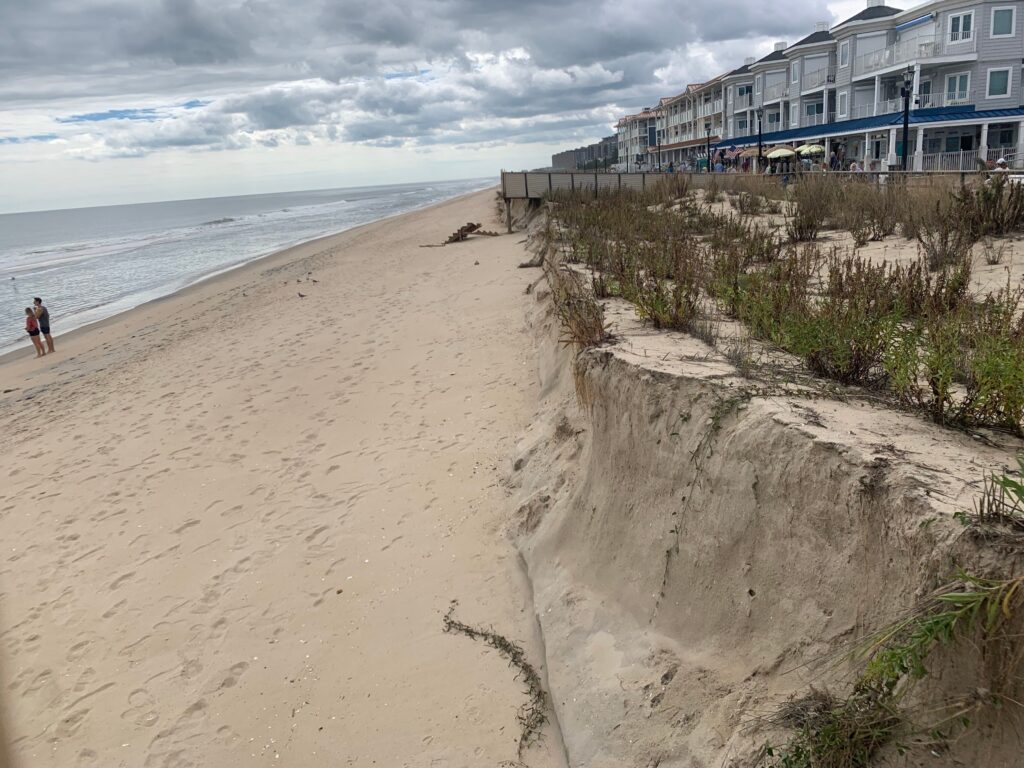
Some beaches saw significant dune loss following the recent nor’easter. However, regular nourishment projects are almost fully federally funded.
9 hours ago
Listen 1:06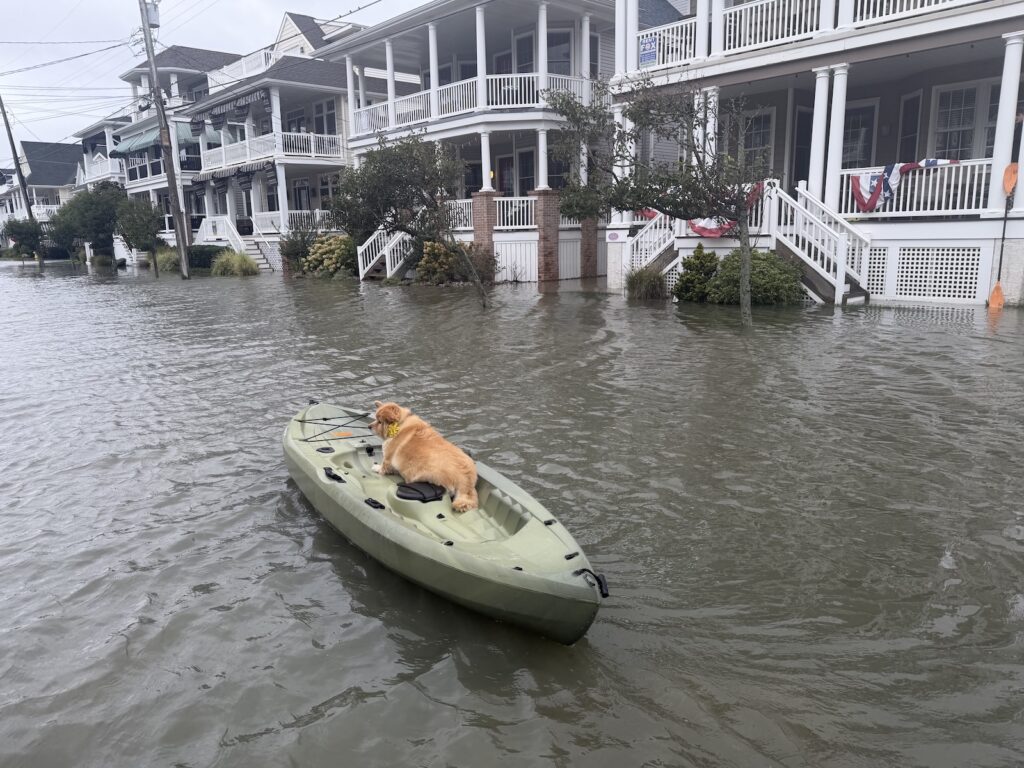
Nor’easter aftermath: Jersey Shore cleanup underway after widespread flooding
In Wildwood, waves breached a beach berm as back bay flooding inundated streets, renewing questions about how to protect the shore.
2 weeks ago
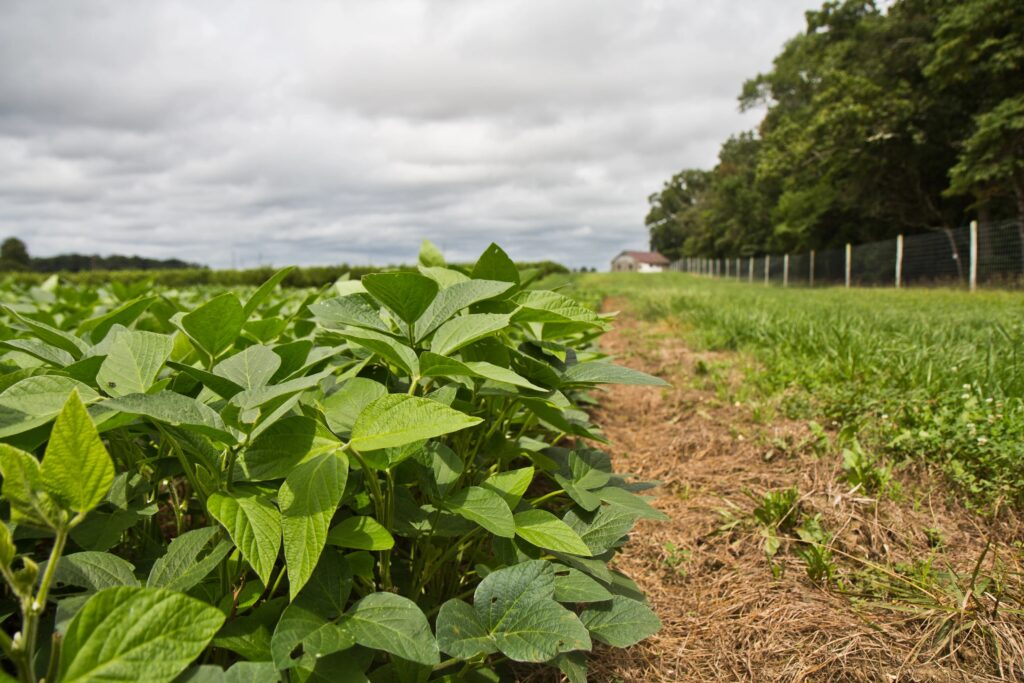
Farmers face challenging drought conditions across the Garden State
New Jersey declared a drought watch last week, asking people to voluntarily conserve water. For those at Duffield's Farm in Sewell, the weather has been challenging.
2 years ago