

In Philly, artists are using ‘Radical Americana’ to challenge patriotic nostalgia
The citywide project asked 45 artists to exhibit new work rooted in craft heritage for America's 250th anniversary.
From Philly and the Pa. suburbs to South Jersey and Delaware, what would you like WHYY News to cover? Let us know!
“Join, or Die” reads one of the most iconic Revolutionary-era political cartoons, published by Benjamin Franklin.
Jennifer Zwilling of Philadelphia’s Clay Studio has her own take on it.
“I like to say: Unify and amplify,” she said.
Zwilling and The Clay Studio have spearheaded “Radical Americana,” rallying 24 arts organizations and historic sites to present 25 exhibitions of work by 45 artists responding to American craft heritage.
The exhibitions, spanning Philadelphia’s downtown to its outer neighborhoods and surrounding counties, have staggered openings running from March through May and continuing through the summer months as the region celebrates the 250th anniversary of the Declaration of Independence.
Two years ago, Zwilling felt an urgency to pull together a wide swath of partners in the semiquincentennial year because she was not seeing significant municipal civic projects taking shape for the celebration, she said.
“We in the art world know how impactful 1976 and the bicentennial were with refurbishing of historic houses and infrastructure projects and so much attention to Philadelphia’s arts and culture,” she said. “We didn’t see that coming from the city government or the federal government, and we didn’t see any way to convene us happening. So we decided to do it ourselves.”
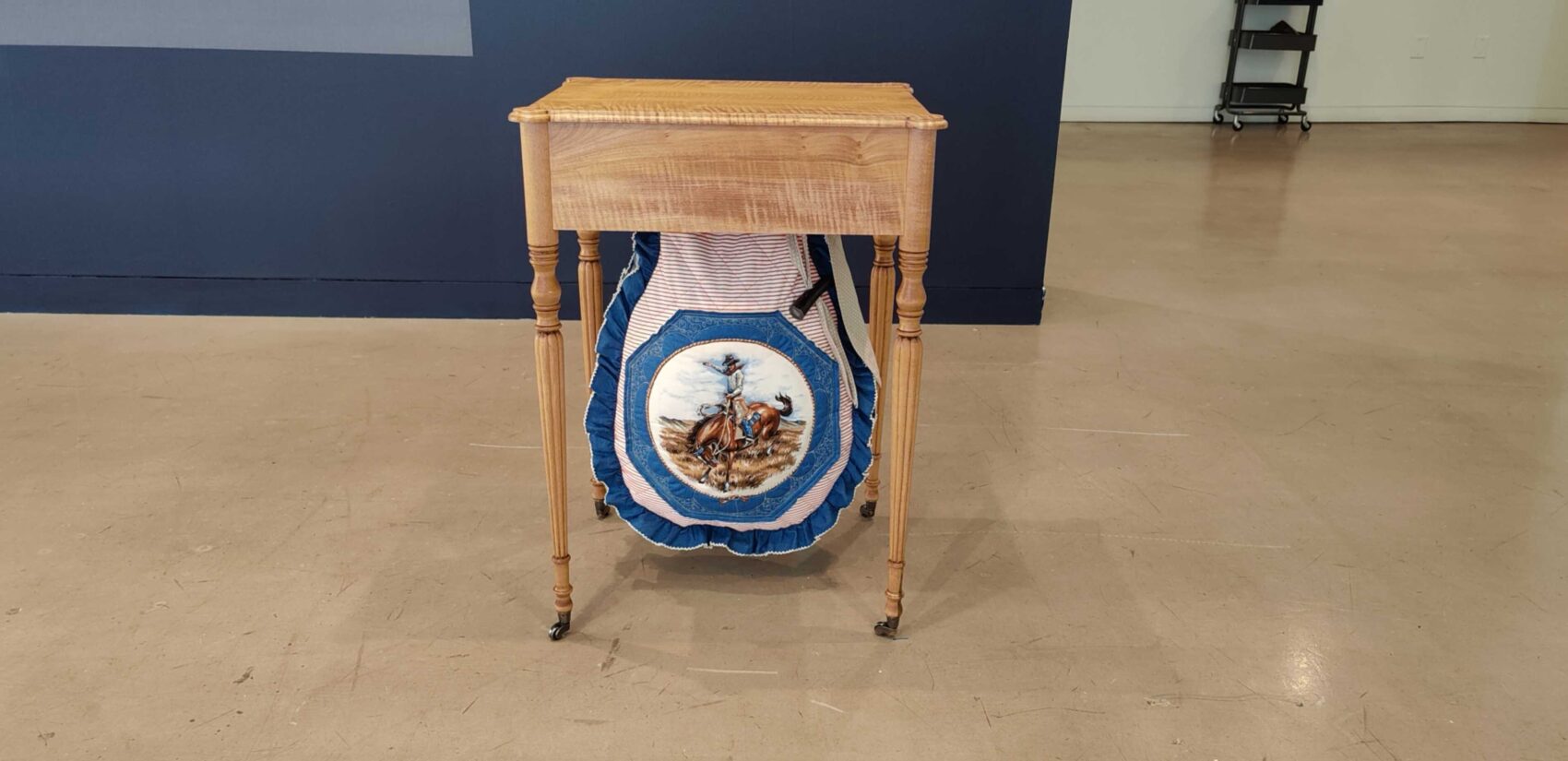
The “Radical Americana” cohort asked artists to research American material culture to inform new work, such as quilts by Jody Graff reflecting the history and horticulture of Andalusia House in Bensalem, ceramic pieces by Katie Strachen featuring devotional messaging from Pennsylvania Dutch fraktur at the Free Library of Philadelphia, and tiny South Philly gallery No. 5 Butchie Alley featuring Charlotte Lindley Martin’s “Oreo Stand,” a modern take on the multitiered pickle dish.
“In the 18th century they would have put these beautiful ceramic pieces on their tables with all kinds of pickles,” Zwilling said. “Today what would we put? We would put Oreos.”
Related Content
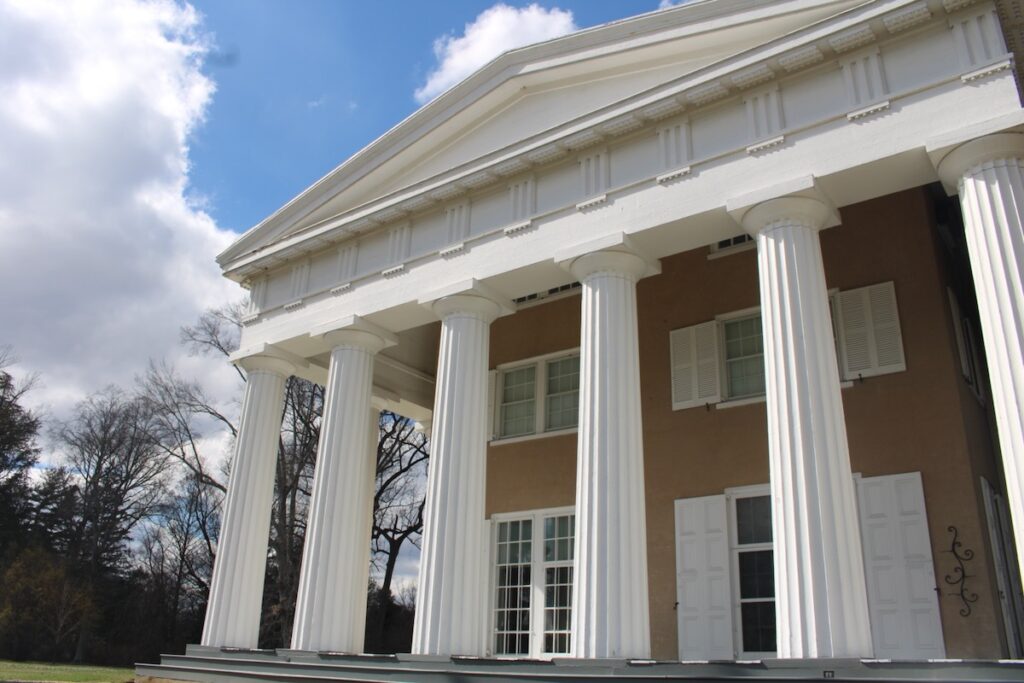
Bucks County house highlights Revolutionary War history
Ahead of the United States’ 250th anniversary, two new exhibitions showcase Revolutionary War history and “Radical Americana.”
6 months ago
Despair over the semiquincentennial
At the Museum for Art in Wood in Old City, furniture artist B.A. Harrington approached the semiquincentennial with trepidation. As an ardent supporter of Kamala Harris for president in 2024, Harrington said she felt despondent when Donald Trump won, a feeling she says has deepened over the last year and a half.
“I don’t know what we’re celebrating here. Is democracy a failed experiment? We’re celebrating the 250th anniversary of this democracy, and it feels like there’s an unravelling of it from within,” Harrington said.
“I was struggling to find a way out of my despair,” she said.
Harrington saw “Radical Americana” as a positive way to engage with the national anniversary.
“The name itself helped shift my perspective on the semiquincentennial,” she said. “It helped me get to a place where I could feel part of something progressive and hopeful in the midst of my despair about the state of the nation.”
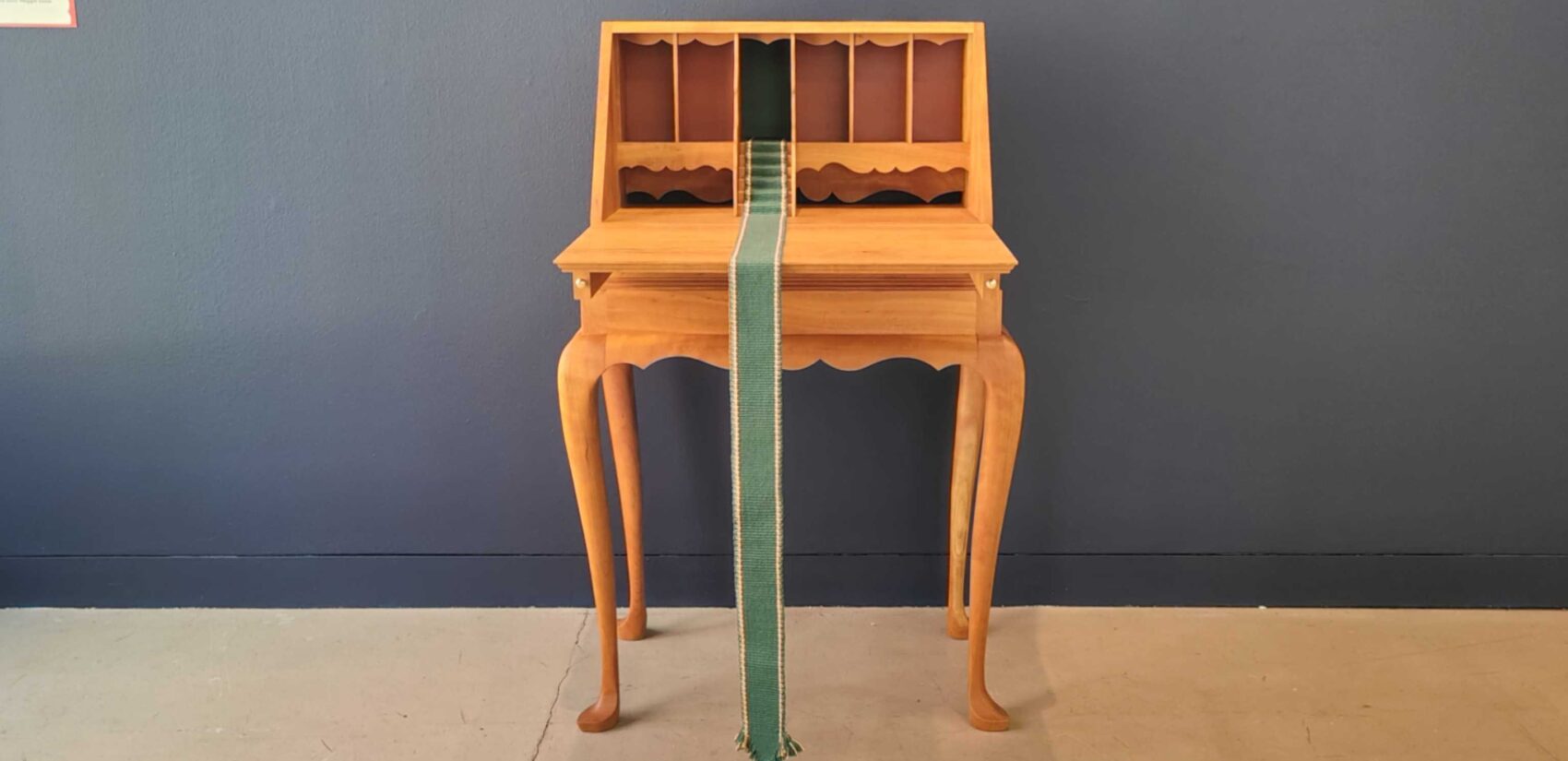
Harrington’s exhibition, “Suite Americaine,” features handmade furniture that reveals the roles of women and their work in history. The Hadley chest, for example, is considered by many to be the first uniquely American furniture design. Typically used for women’s dowries, they were made between 1670 and 1750.
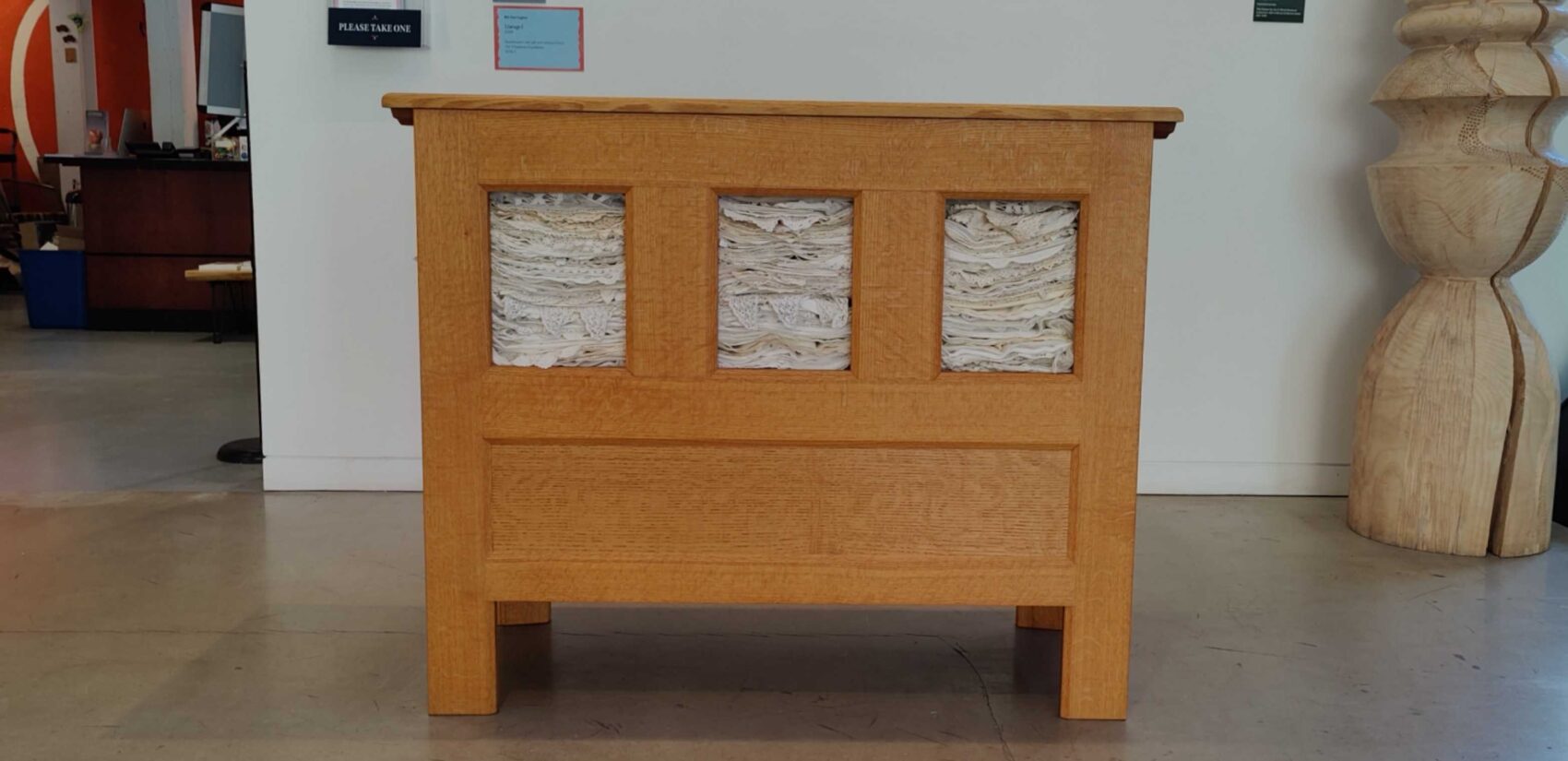
There are about 100 Hadley chests known to still exist. They were invariably built by men and owned by men, but used by women who were not allowed to own property. The names of the women who used them are usually not known.
“I’m reclaiming these forms that were made for women, but traditionally they’ve been researched and thought about in terms of the male production,” Harrington said.
She built recreations of Hadley chests, typically made with three recessed panels on the side, but left the panels are open so that viewers can see stacked linens inside. Making the fabric visible is Harrington’s way of bringing women’s work into the historic record.
“The material culture made by women doesn’t hold up to the elements,” Harrington said. “Textiles, they’re literally worn out, because we wear them or sleep on them or they just disintegrate.”
Related Content
Chief White Eyes toggled between British and American leadership to secure land for the Lenape.
7 months ago
Listen 3:38Americana from Puerto Rico
The Clay Studio in Kensington serves as the hub for “Radical Americana.” Its front gallery has information on all the partnering organizations and sample work from most of the 25 exhibitions.
The Clay Studio’s main exhibition space has been given over to artist Roberto Lugo, who grew up in Kensington and has become known internationally for recreating historic styles of ceramic ware and infusing them with imagery and messaging from hip-hop, graffiti and Black history.
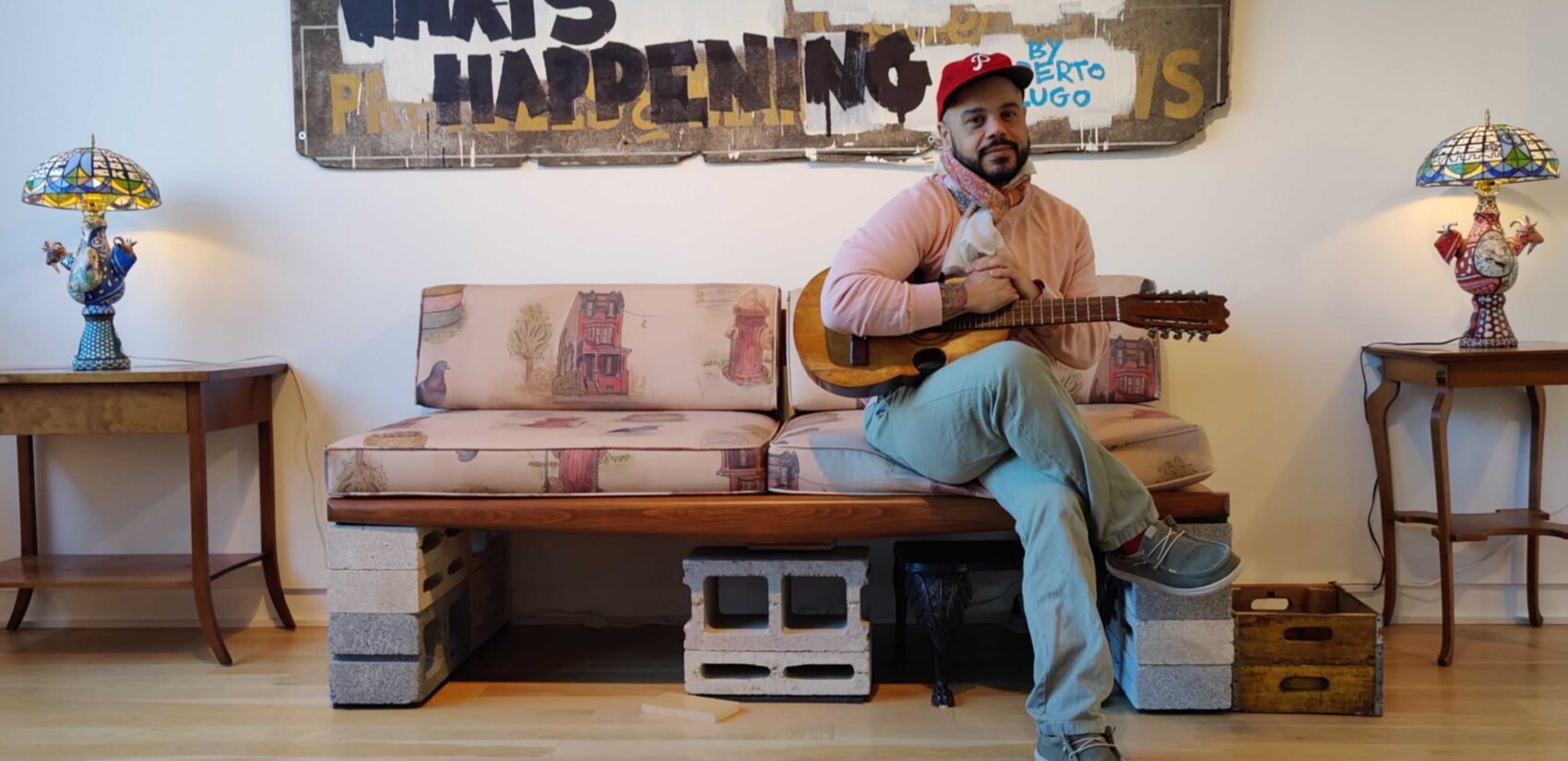
His exhibition “American Crib: What’s Happening” resembles a home with furniture, a fireplace mantlepiece, gaming tables and handmade teacups, all of which people are invited to use. One of the walls has shelves with selections from Lugu’s personal library of books about hip-hop and art, which can be perused.
“The couch we’re sitting on is inspired by those ’80s grandma couches that people will cover in plastic,” Lugo said while sitting on his piece, “Abuela Couch Pattern,” upholstered with a textile he designed. “Upon a closer look, you’ll see there’s row homes and pigeons and tire planters. All this is a custom design.”
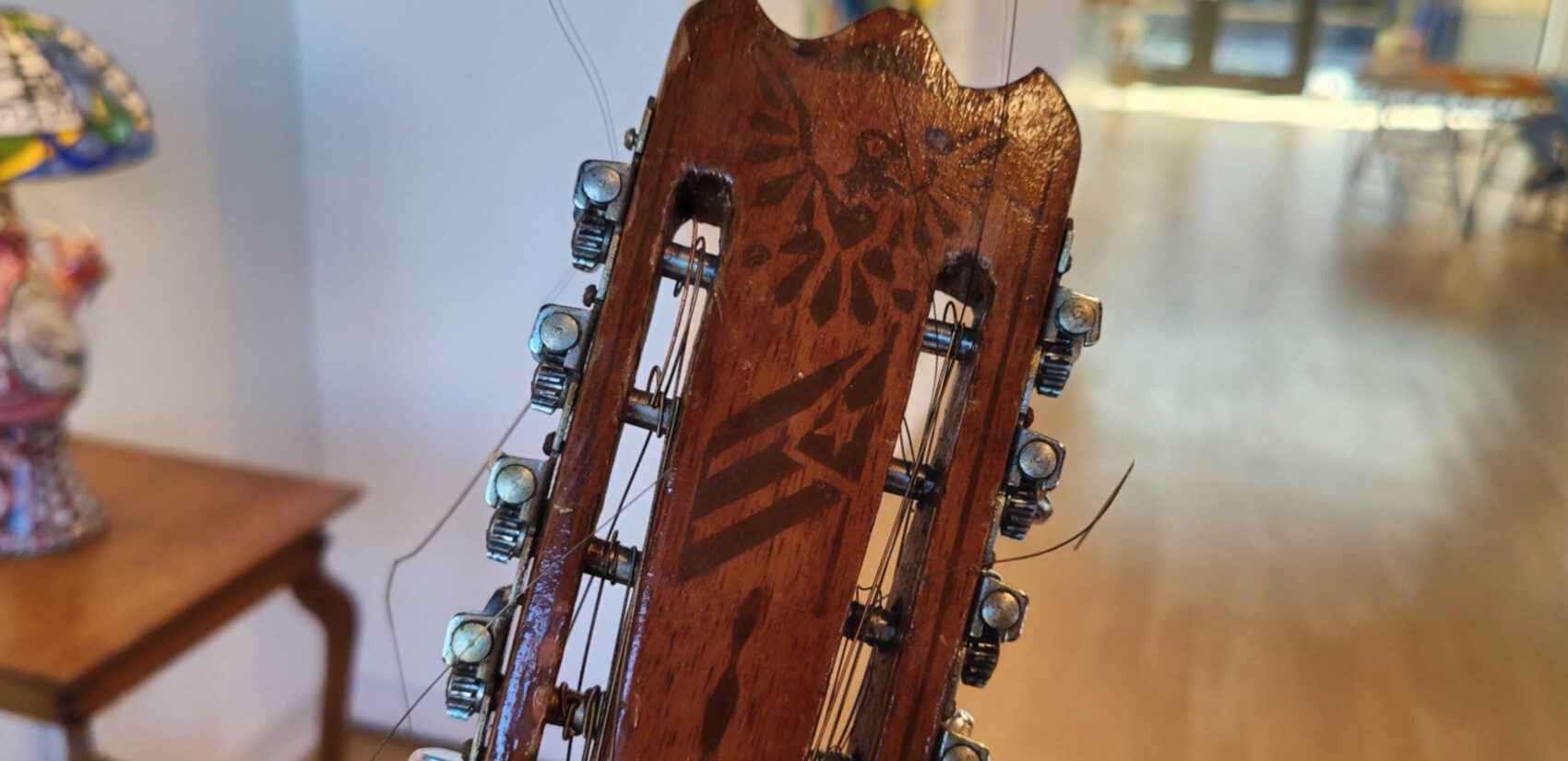
Lugo picked up a small guitar, a cuatro, that his father made. Carved into the headstock of the cuatro is an image of the Puerto Rican flag and an eagle from the seal of the United States.
“Where he grew up it was, like, if you didn’t make something, you didn’t have it,” Lugo said. “This is made up of a bunch of different parts of different cuatros. My grandfather loved the American flag and the Puerto Rican flag, so my dad would always put all those things together for him.”
Lugo wanted to create a relaxed atmosphere that felt like more of a home than a gallery. Visitors are welcome to handle the cuatro. Lugo picked it up and toyed with the strings, which were out of tune, and admitted he does not really play.
“I play a little bit, but honestly the cuatro is played punteo, which is sort of like finger picking. It’s not something you strum,” he said. “I grew up in the ’90s, when I loved Nirvana. When I learned guitar, I was playing Nirvana riffs.”
Several “Radical Americana” exhibits are open now, with more opening through May. Information can be found on the project website.

Get daily updates from WHYY News!
WHYY is your source for fact-based, in-depth journalism and information. As a nonprofit organization, we rely on financial support from readers like you. Please give today.
Part of the series
Philadelphia 250
The United States is marking its semiquincentennial — or its 250th anniversary — in and around the City of Brotherly Love.
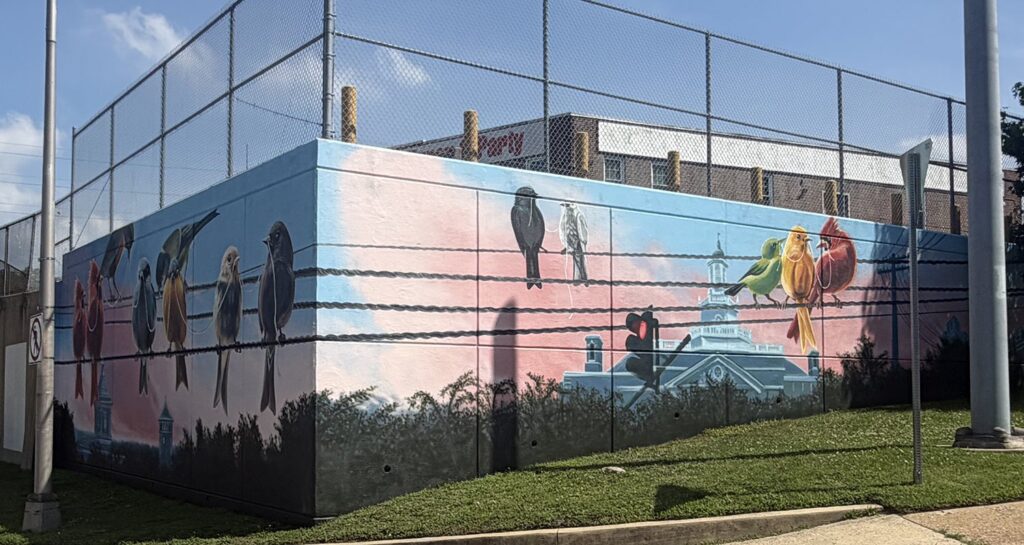
El muralista Christian Kanienberg afirma que le interesa “más crear obras de arte que, simplemente, resultan ser murales capaces de suscitar conversaciones”.
3 months ago
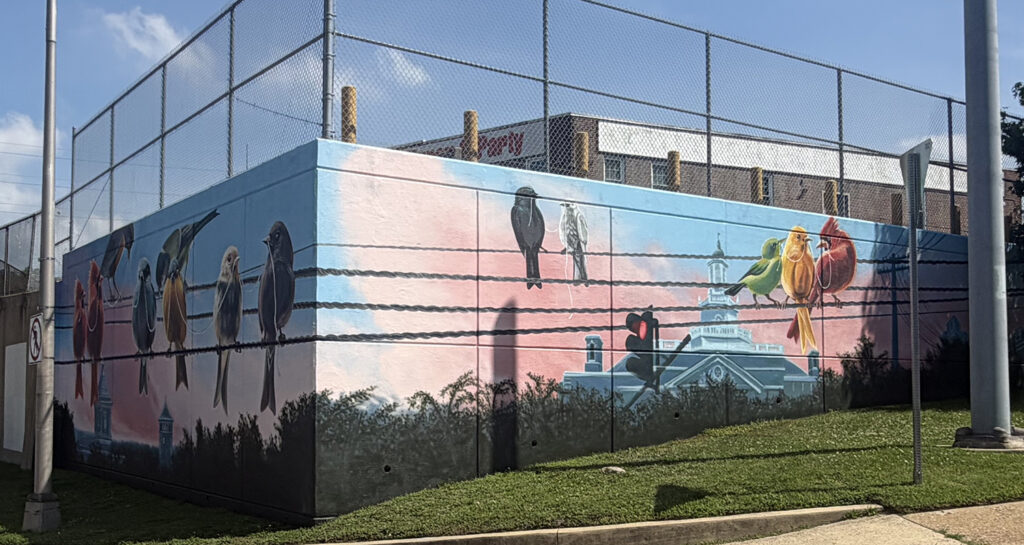
Muralist Christian Kanienberg says he’s “more interested in creating pieces of art that just happen to be murals that are conversation starters.”
3 months ago
Listen 2:11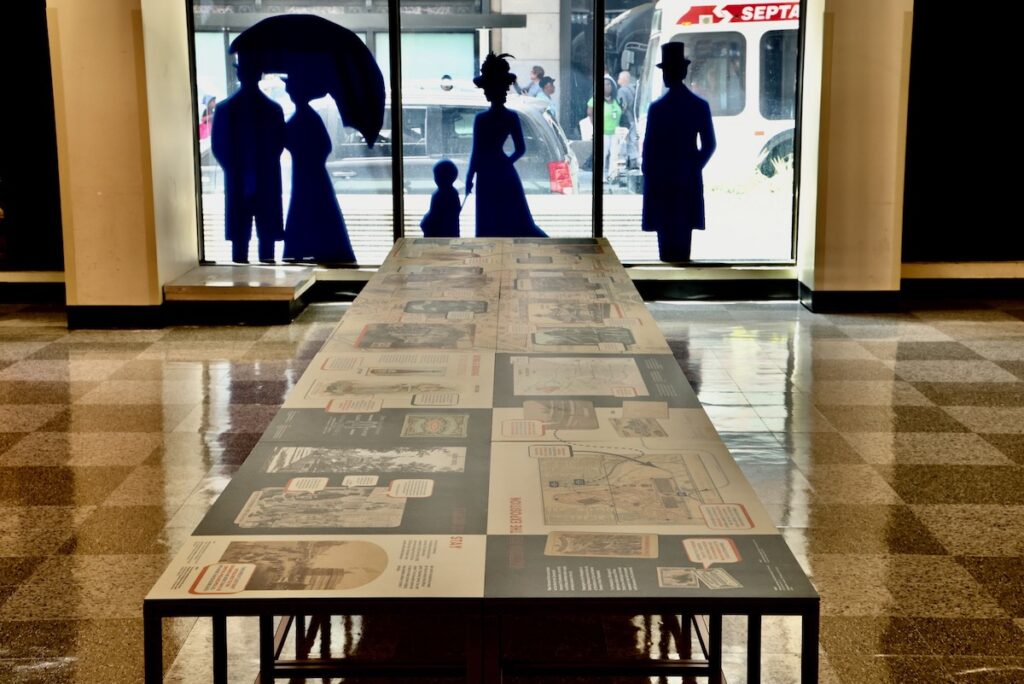
An empty storefront on Market East pops up with the story of Philly’s Centennial Expo
“Revisit 1876” shows the good and the bad of Philadelphia’s shining international moment 150 years ago.
3 months ago
Listen 1:15