
Anna Deavere Smith debuts a play about her ancestor in Philadelphia’s ‘What Now’ festival
Smith’s great-great-grandfather, Basil Biggs, buried the dead after the Battle of Gettysburg.
Listen 1:50
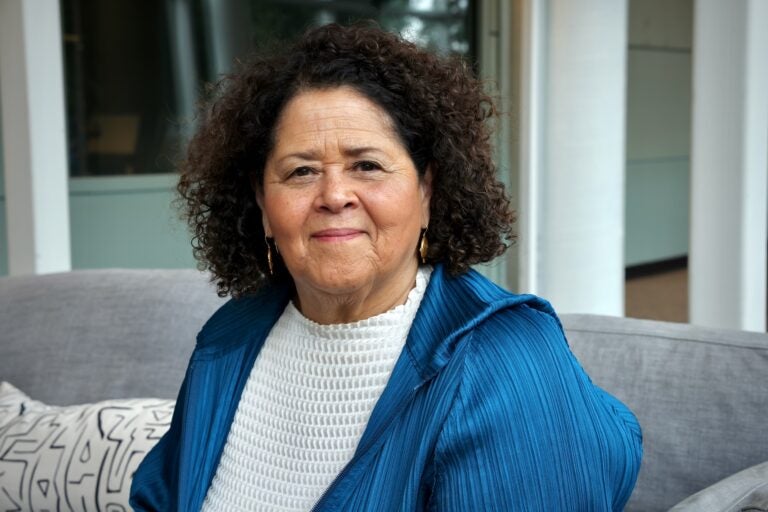
Playwright, actor and educator Anna Deavere Smith created ''The Basil Biggs Project'' for ArtPhilly's ''What Now: 2026 Festival.'' The play is based on her great-great-grandfather, who received a contract to disinter and rebury the Union dead after the Battle of Gettysburg. (Emma Lee/WHYY)
From Philly and the Pa. suburbs to South Jersey and Delaware, what would you like WHYY News to cover? Let us know!
Actress and playwright Anna Deavere Smith will premiere her newest stage work, “The Basil Biggs Project,” at Philadelphia’s Wilma Theater June 26-28 as part of ArtPhilly’s festival “What Now: 2026.”
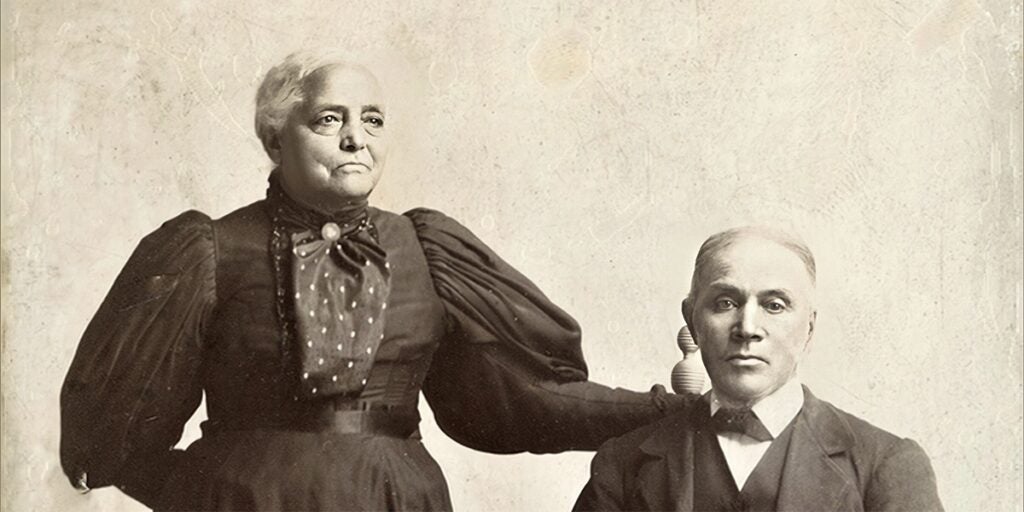
The play is centered on Smith’s ancestor Basil Biggs, who was hired in 1863 to bury thousands of dead soldiers after the Battle of Gettysburg and to prepare the grounds for President Abraham Lincoln’s visit when he delivered his most famous address.
According to newspaper accounts of the time, Biggs was hired to put together a crew of seven to 10 Black men to disinter bodies from their hastily prepared shallow graves, search the corpses for any identifying effects and then rebury the soldiers in an orderly cemetery layout, which later became the Gettysburg National Cemetery.
“There were 7,000 dead bodies,” Smith said. “The Confederates had moved into their house, turned their house into a hospital. Everything was destroyed. I think, because I don’t have any letters or diaries, that the reason he took a rather grueling job is because he’d lost everything.”
Until recently, Smith had never heard of her ancestor, despite having had aunts, uncles and cousins named Biggs. In 2014, she appeared on the PBS television show “Finding Your Roots” with host Henry Louis Gates Jr., who introduced Biggs as part of Smith’s comprehensive genealogical presentation.
Sitting across from Gates, Smith’s first reaction to the revelation was, “That’s a play.”
In addition to Smith’s high-profile acting career in shows like “The West Wing” and “Nurse Jackie,” she is also known for writing documentary-style plays for which she records interviews with many people related to a particular topic and assembles verbatim excerpts into a script.
Plays like “Fires in the Mirror” (1992) and “Twilight: Los Angeles” (1994), about riots in Crown Heights, New York and Los Angeles, respectively, helped Smith win a MacArthur fellowship, often referred to as the “genius grant.”
Smith said the discovery that she was related to someone who was part of a pivotal moment in American nation-building made Biggs’ story urgent.
“Because I’ve chosen to deal in contemporary life with moments of controversy and catastrophe — race riots, kids going to jail … I’m sort of on the fringe,” she said. “But I remember what went through my head was: This is right in the center of American history. And that’s a play. I know how to write it because it’s at the very center of some of our values.”
Unlike in Smith’s previous plays, where extensive research allowed her to precisely depict her interview subjects down to their vocal tics and bodily gestures, very little is known about Basil Biggs, who never learned to write and left behind no personal accounts of his life.
Related Content
Bearded Ladies Cabaret empties its storage units to keep the legacy of Philadelphia’s queer theater
“Priority Hoarding,” coming this fall, will invite audiences to sort through 16 years of cardboard props.
3 months ago
Listen 3:28There are gaping holes in Biggs ’ life: Was he born free or enslaved? Why did he move from Maryland to Gettysburg? Did he abandon the Underground Railroad movement to raise a family? These gave Smith license to invent.
“I made the characters up, but you can’t really get away with making history up,” she said.
It took ArtPhilly’s “What Now: 2026” festival to bring Biggs to the stage. After pronouncing on national television in 2014 that the story of Basil Biggs should be a play, Smith was contacted by the historical society of Adams County, the site of the Gettysburg battlefield, where Biggs is a known figure.
“Andrew Dalton, who’s this extraordinary young man, looks like he’s 15 and he runs the Adams County Historical Society,” Smith said. “He wrote to me between 2014 and 2024. Often. ‘Won’t you come and do that?’ ‘No, I’m sorry. I’m busy.’ I was always doing something.”
Smith said Katherine Sachs, the co-founder of ArtPhilly, contacted her in 2024 with the offer of a commission for a new play related to the nation’s 250th birthday.
“When Kathy Sachs commissioned me, I thought: ‘To write something for the semiquincentennial, it’s in Pennsylvania. Now’s the time to write about Basil Biggs.’”
Smith then wrote to Dalton and said she would be coming to Gettysburg to research her ancestor. Dalton and Jean Green, the director of the Lincoln Cemetery Project, showed her everything they could.
“That is related to my other work,” Smith said. “With the thousands of interviews that I’ve done, people say things like, ‘How did you get those people to tell you this-or-the-other? How did you get them to trust you?’”
“I don’t think anybody trusts me. I just go to where people would be screaming from a mountain top and I happen to be walking by. The mission that I have is to find the people who really want to tell me something,” she said. “These people at the Adams County Historical site really wanted to tell me something about my great-great-grandfather.”
“The Basil Biggs Project” is a workshop performance with rehearsed, costumed actors, but no built set.

Get daily updates from WHYY News!
WHYY is your source for fact-based, in-depth journalism and information. As a nonprofit organization, we rely on financial support from readers like you. Please give today.

Disney’s ‘Beauty and the Beast’ comes to Philadelphia — a tale as old as time, told with a new flair
This reimagined production of the beloved classic comes to Philly, 30 years after the original Broadway show.
7 months ago

Ray Didinger’s hockey drama tells the true story of Brian Spencer on Wilmington stage
The new play recounts the history of when a man took several CBC employees hostage in an effort to force them to broadcast a Toronto Maple Leafs game.
12 months ago
Listen 2:13
Philadelphia’s Quintessence Theatre has produced the only adaptation of James Baldwin’s 1956 novel approved by his estate.
1 year ago
Listen 1:25