

At Philly’s Fabric Workshop, Jesse Krimes turns incarcerated people’s memories into quilts
“Quilt Elegies” includes a prototype of Krimes’ fabric-based mural designed with people recently released from prison.
From Philly and the Pa. suburbs to South Jersey and Delaware, what would you like WHYY News to cover? Let us know!
When Jesse Krimes was incarcerated in 2009 for a five-year sentence for drug possession, he made artwork. He started an ambitious and visionary patchwork mural while in solitary confinement, which was later shown publicly. Once out of solitary, he found other artists inside.
“The thing that was truly powerful that I learned when I was inside and met the guys that I was with — it’s like, we bonded, we shared conversation, talked about family, talked about aspirations, but through the process of making art,” Krimes said. “Each doing our individual thing, but that’s what brought us together.”
Since Krimes was released, his now celebrated art practice remains rooted in the experience of incarceration and the broader criminal justice system. He founded The Center for Art and Advocacy, an organization supporting artists affected by the criminal justice system.
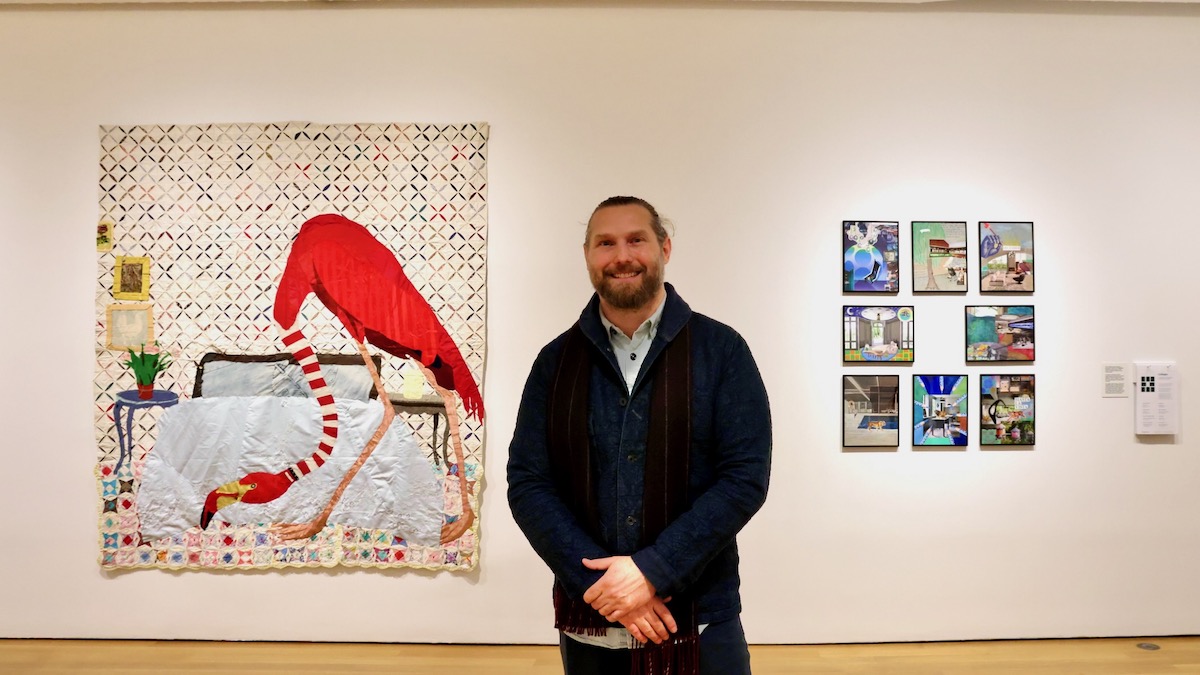
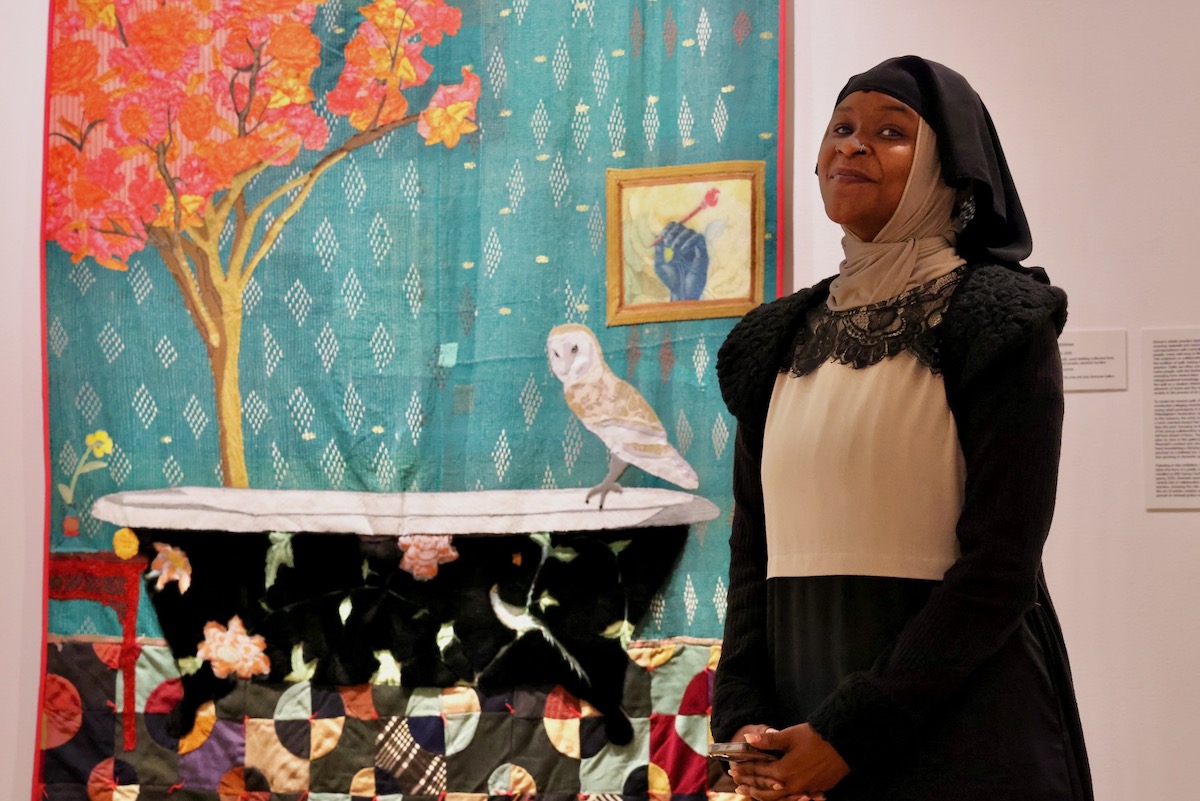
“Elegy Quilts” at the Fabric Workshop and Museum, the first solo exhibition in Philadelphia for the Lancaster native, features a selection of quilts depicting imagined scenes of domesticity as remembered by people serving lengthy or lifetime prison sentences.
Krimes asked his incarcerated collaborators questions about rooms, furniture and décor in the places they lived before entering the prison system. He also asked them what animals they most identify with. The interview process was done through a series of letters and, when possible, phone calls. He did not meet directly with any of his subjects.
“For people who have been touched by the criminal justice system, these are not questions that you get asked a lot,” he said. “Most people approach people who have navigated these systems in a punitive, backward-looking way. In my mind it’s really important to ask people, ‘What are you good at? What do you care about? How do you see yourself?’”
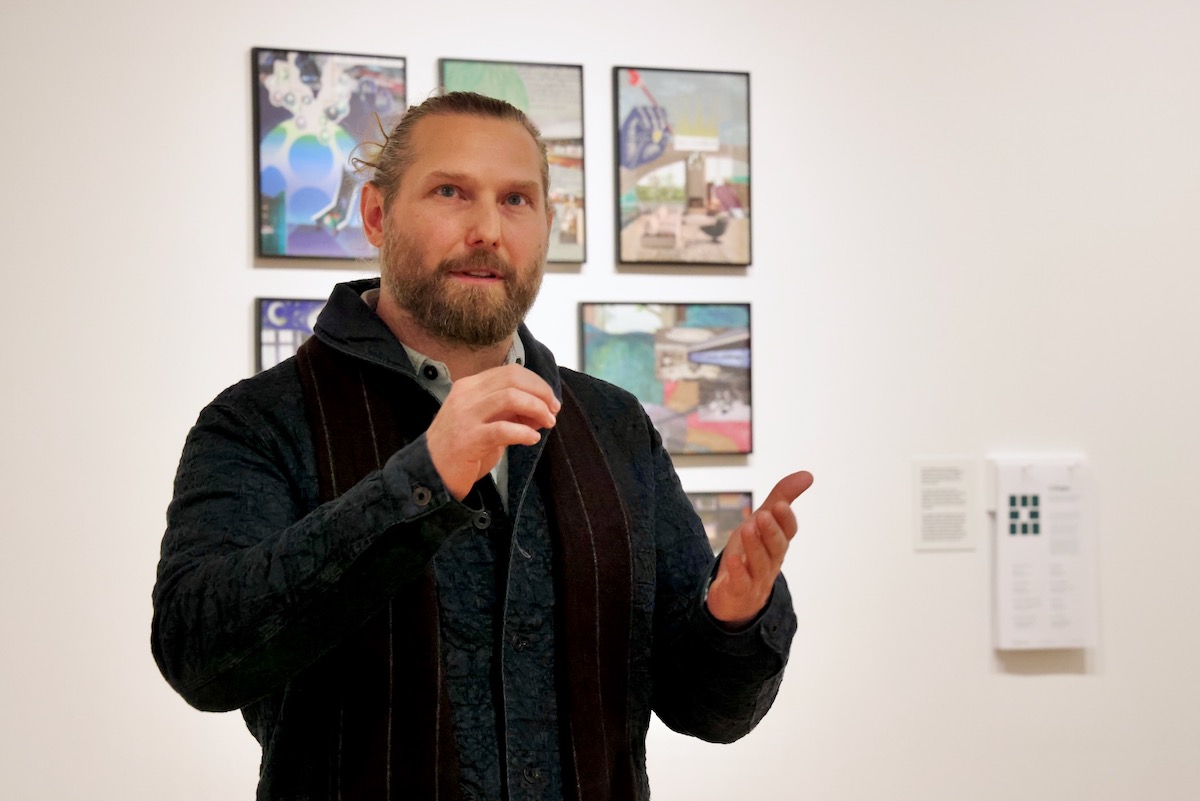
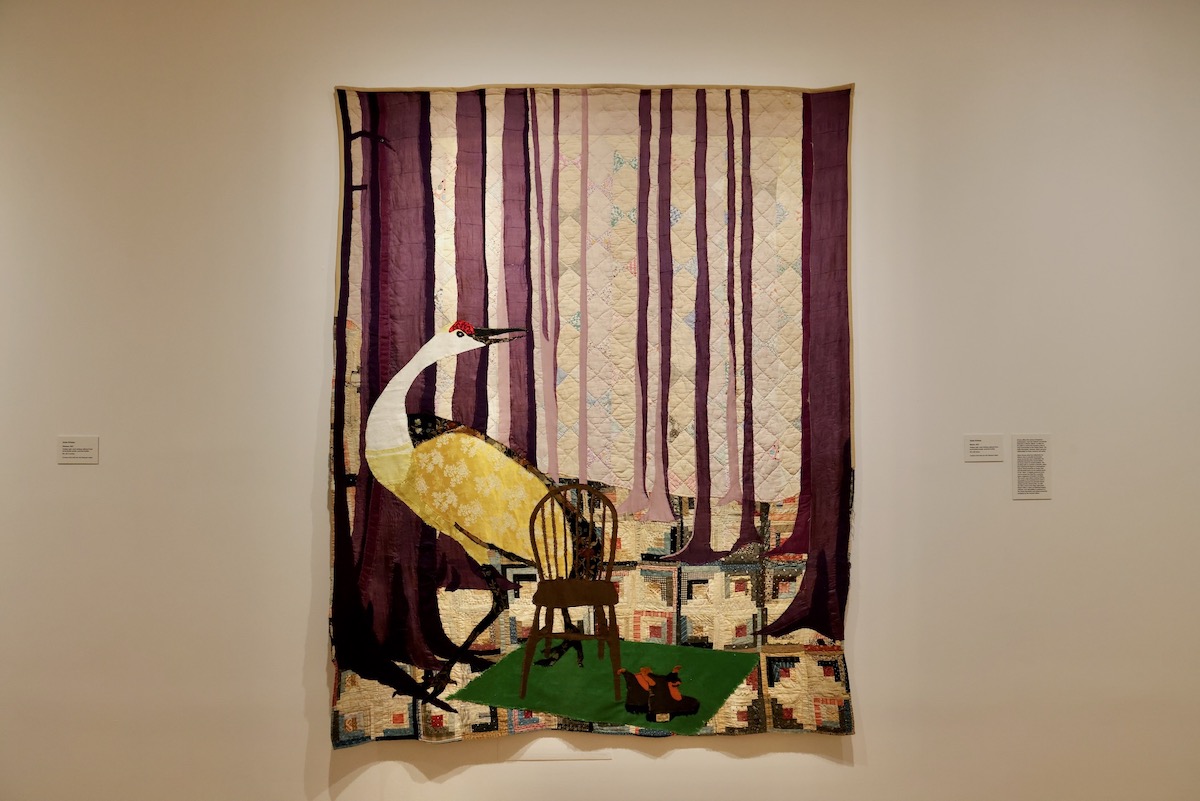
Based on each individual’s feedback, Krimes composed images by piecing together preexisting quilts and fabrics donated by families of incarcerated people. He said he has made between 30 and 40 quilts since beginning the project in 2020.
None of the incarcerated participants are identified in the art or in the exhibition wall text. No information is offered about the subjects of the quilts or the memories they depict.
Krimes said he ultimately wants these quilts to be about the viewer.
“We all have our favorite chair. We all have our favorite bed. We all love being in the bathtub or maybe being in nature,” he said. “Rather than put the onus on the people who are incarcerated, I’m trying to put it on the viewer to think: But for the grace of God it could have been them.”
Related Content
Philly’s Liberty Museum shows what the World Cup and the First Amendment have in common
“In the Arena” demonstrates how sports exemplify the U.S. Constitution’s Freedom of Assembly.
6 months ago
Listen 1:41Each quilt is named after a prison to juxtapose the soft intimacy of personal memory with the wider scope of the prison industrial complex of more than 1,600 state and federal prisons in the U.S. holding about 1.3 million people.
“The works themselves are so personal and so human, and the materials that are used are so tactile and emotional,” Fabric Museum Executive Director Kelly Shindler said. “He’s really moving between the micro and the macro: The micro individual experience and the macro totality of the large system in which one finds oneself.”
-
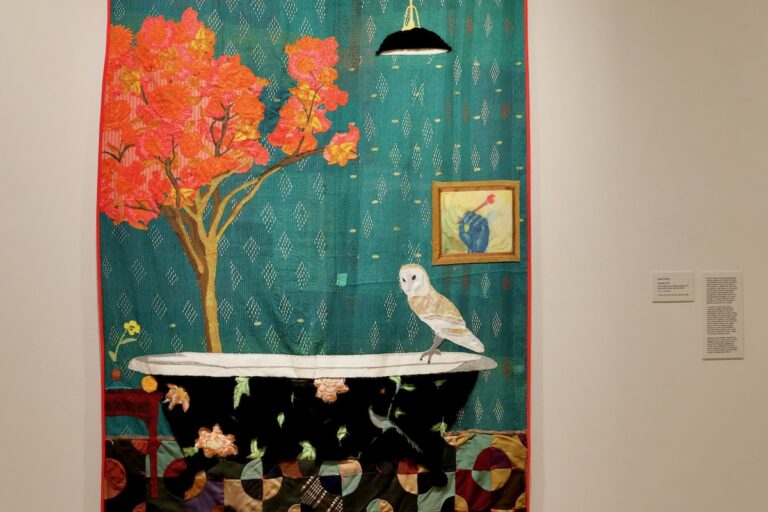
Jesse Krimes' newest quilt, ''Riverside,'' was made in collaboration with Mural Arts Philadelphia with input from eight young people recently released from prison or detention. (Emma Lee/WHYY) -
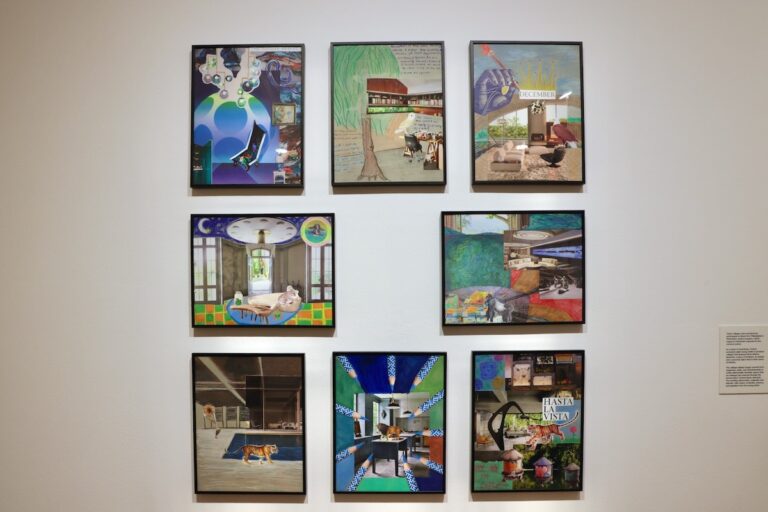
Eight young people recently released from prison or detention created collages as part of a project for Mural Arts Philadelphia led by Jesse Krimes. Krimes took images and ideas from those collages to compose a single quilted image “Riverside,” named after Philadelphia’s Riverside Correctional Facility on the Delaware River. (Emma Lee/WHYY) -
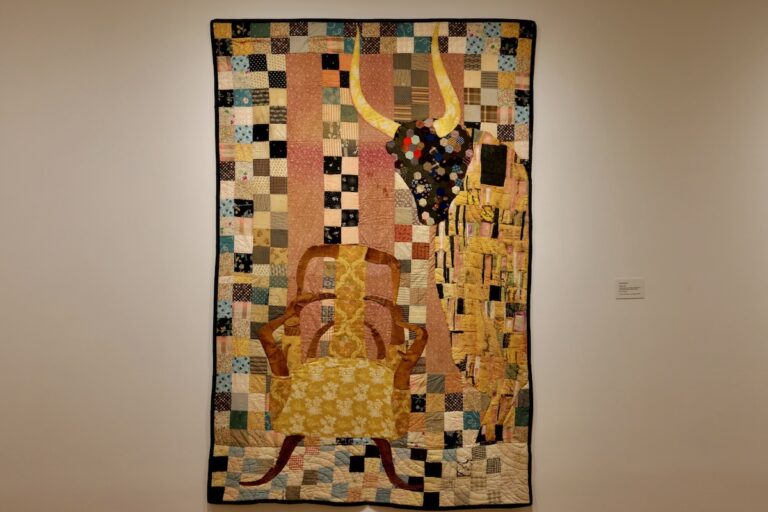
''Aurora,'' by Jesse Krimes, is part of the ''Elegy Quilts'' series on exhibit at the Fabric Workshop and Museum. The works are made using antique quilts and used clothing donated by incarcerated and formerly incarcerated people. (Emma Lee/WHYY)
The newest piece in “Elegy Quilts” is for a future Mural Arts Philadelphia project. The public art organization gave Krimes his first job out of prison. Krimes collaborated with younger people recently released from prison or detention, giving them the same prompts as the older people in prison, from which they made their collages.
Unlike previous quilts in the collection, Krimes asked participants what their future domestic lives might look like, rather than asking them to recall memories of previous homes.
“I really love the introspective approach that he took to bringing this project to us,” participant Hannah Bickert said. “My piece represents structure and nature combined. For me personally, growth is the combination of the two: It takes structure to get to where you want to be, but also the natural feelings, going through your emotions and just allowing yourself to be.”
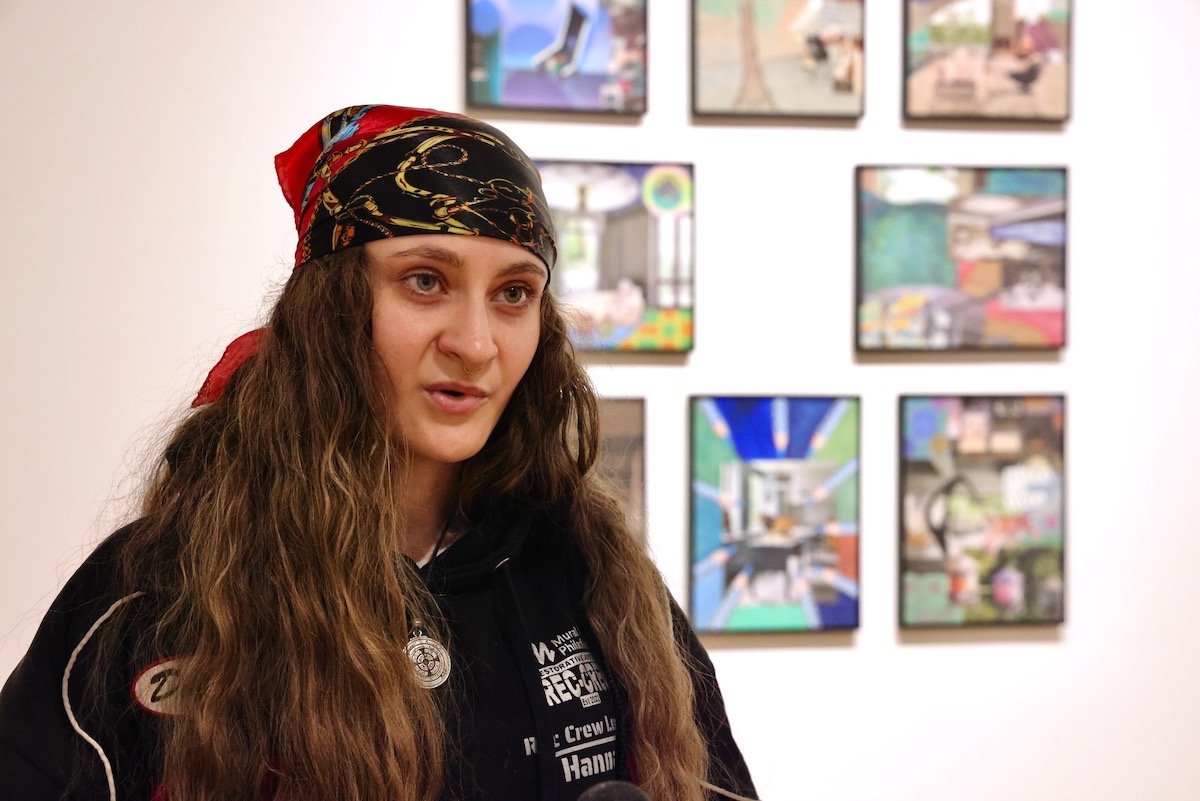
Krimes took images and ideas from those collages to compose the single quilted image “Riverside,” named after Philadelphia’s Riverside Correctional Facility on the Delaware River. It is the prototype for a large public mural at 990 Spring Garden St., expected to be completed in June.
Related Content
Philadelphia budget 2026: Isaiah Thomas, Rue Landau want $6 million allocated for arts
With funding turbulence at the federal and state levels, elected officials are calling for the city to pick up some of the slack.
6 months ago
Listen 1:26Krimes attributes much of his success to his experience at Mural Arts, where as a person re-entering society he said he found “grace and opportunity” in its Restorative Justice program and in the leadership style of Jane Golden, the nonprofit’s founder.
Golden said there are three steps for shaping successful artists from returning citizens.
“Number one: How do you create an environment where people feel respected, heard, seen?” she said. “Number two: Tap into the creativity they have that’s been dormant and unrecognized. And three: How do you connect people to a path out of where they’ve been? Over and over again, we’ve seen people in their darkest moments. Then to see them really flourish is absolutely liberating and inspiring.”
“Elegy Quilts” will be on view at the Fabric Workshop and Museum until Nov. 1.

Get daily updates from WHYY News!
WHYY is your source for fact-based, in-depth journalism and information. As a nonprofit organization, we rely on financial support from readers like you. Please give today.
5 quilts from Cut & Sew PHL in Mt. Airy chosen for QuiltCon national convention in Phoenix
The Philly-based quilt shop and sewing studio will be represented in February at the national quilting event.
2 years ago
Listen 0:48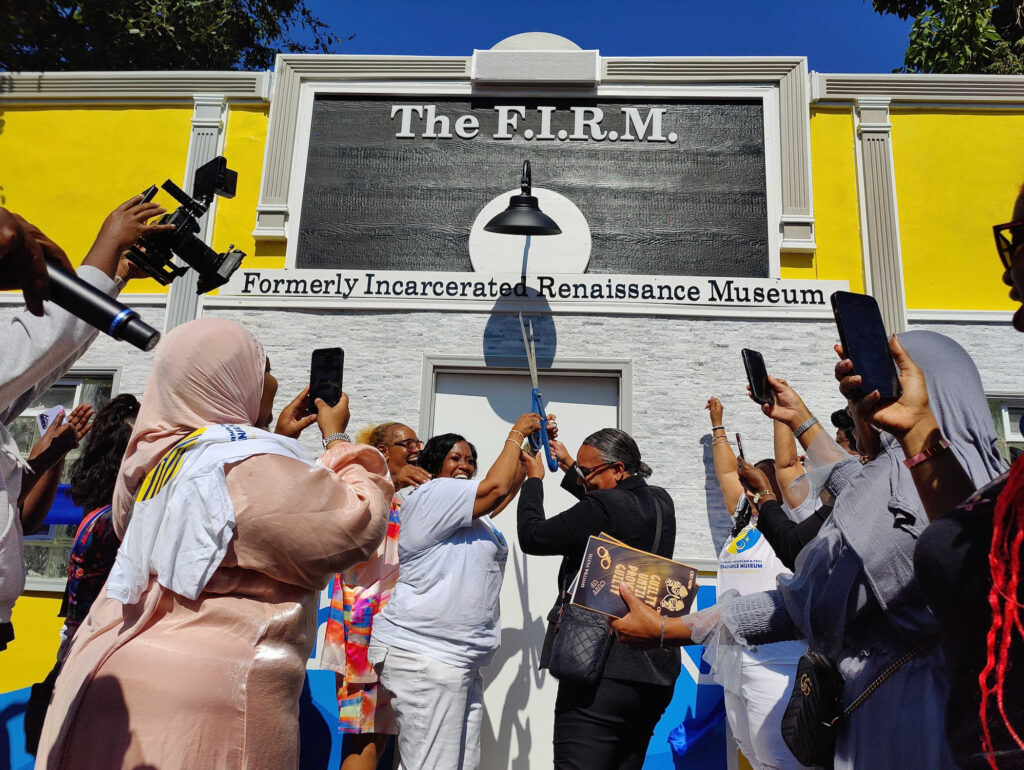
A museum of formerly incarcerated people opens in Germantown
The Formerly Incarcerated Renaissance Museum documents the resilience and creativity of people during and after their prison sentences.
2 years ago
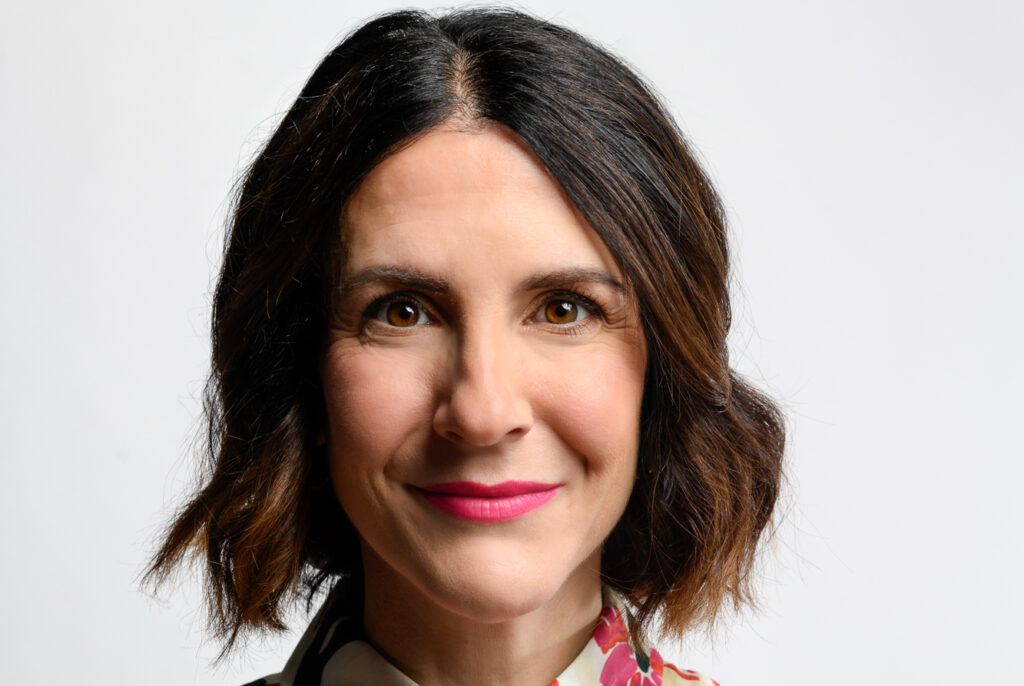
Philly’s Fabric Workshop and Museum names new executive director
With experience in both curating and grant-making, Shindler is tasked with guiding the Fabric Workshop and Museum toward its 50th anniversary.
2 years ago
Listen 1:08