

Environmentalists call Mayor Parker’s data center task force insufficient, demand immediate moratorium
The task force would be required to develop recommendations for data center regulations. Residents say a moratorium is needed in the meantime.
Listen 1:01
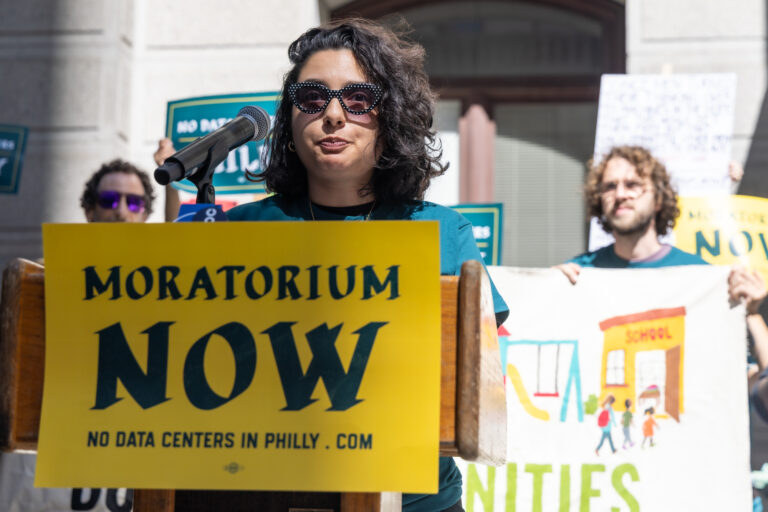
Senia Lopez, a Northeast Philadelphia resident who lives near where a data center could be built, spoke against the project at a rally outside City Hall in Philadelphia on Sept. 14, 2026. (Kimberly Paynter/WHYY)
This story is part of the WHYY News Climate Desk, bringing you news and solutions for our changing region.
From the Poconos to the Jersey Shore to the mouth of the Delaware Bay, what do you want to know about climate change? What would you like us to cover? Get in touch.
Mayor Cherelle Parker signed an executive order Wednesday to create a task force that will help guide data center regulations in the city.
The move comes after residents urged the mayor and City Council to impose a moratorium on the development of data centers, which are needed to power the rapid growth of artificial intelligence.
“Before Philadelphia considers any major data center proposal, we need to understand the facts, identify the right safeguards and fully hear residents’ concerns,” Parker said in a social media announcement. “[The task force’s] work will help ensure Philadelphia is prepared, our neighborhoods are protected and residents have a meaningful voice from the start.”
The city is home to several small data centers that use minimal resources. However, there are no hyperscale AI facilities in the city, nor are there any current proposals to build them, according to city officials.
However, given the rapid rise of data center proposals throughout the region, city residents and environmentalists warn a task force could delay immediate action by City Council. More than 2,600 people have signed a petition calling for a freeze on any future data center development in the city.
“We need to have a moratorium in place now, or we will be waiting while the development will be happening, and we can’t do that because Philadelphians need protections,” said Alex Bomstein, executive director of the Clean Air Council.
Bomstein said that given the timeline, data center regulations would not be introduced until next fall.
Dozens of residents pushed back against the executive order in the comments section of Parker’s Instagram post. Social media users said a task force is out of touch and called for an outright ban on data centers.
Related Content
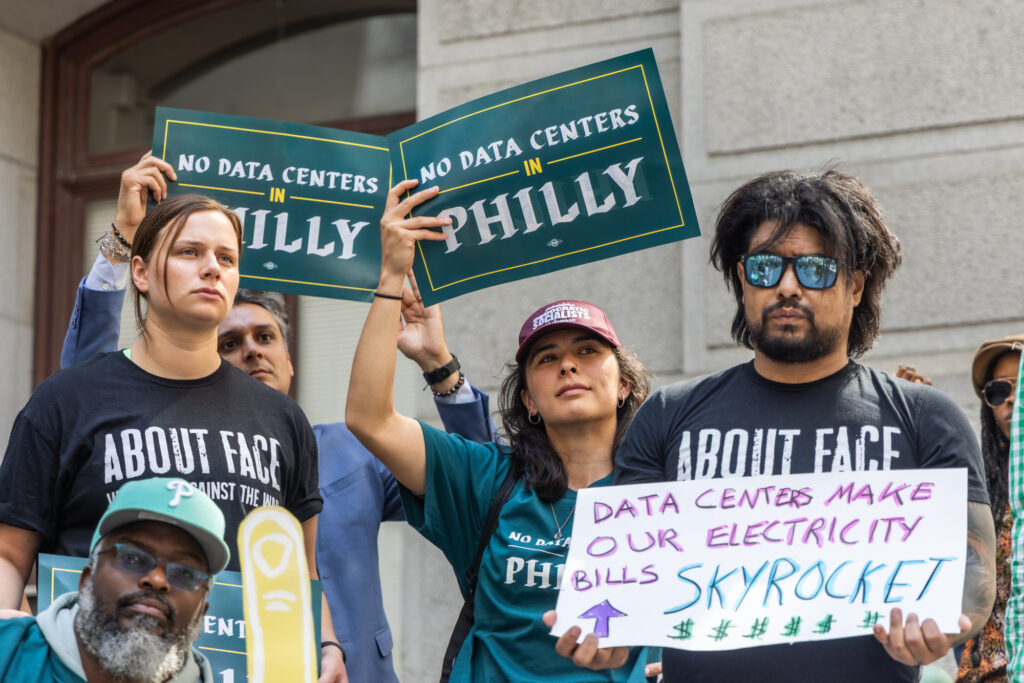
What’s going on with AI data centers in Philly?
Residents protested outside City Hall this week, and Mayor Parker has set up a task force to report on the pros and cons of hyperscale data centers by June.
4 weeks ago
Residents demand urgency
AI data centers have generated millions of dollars in local tax revenue across the U.S. However, their energy demands have jacked up energy bills. Residents who live near data centers have also complained about air pollution from generators, strained water supplies and increased noise.
There are no local zoning laws or regulations in Philadelphia that govern AI data center development.
Philadelphia’s Data Center Task Force will consist of representatives from various city agencies. The group will engage with experts and stakeholders to help create recommendations for the development and operation of data centers in the city, according to Mayor Parker’s executive order.
The task force will be required to research the “potential benefits and harms of data centers,” focusing on potential impacts on the environment, energy use and the economy.
It will be required to release a report of its findings by June 30. The report should provide guidance on building requirements, fiscal impacts and potential regulations that mitigate pollution and noise, according to the executive order.
Small towns in the surrounding suburbs of Philadelphia have been grappling with how to handle an influx of AI data center proposals in their communities.
These surprise proposals have left communities scrambling to develop last-minute regulations that aim to protect residents from issues like noise and air pollution. Attorneys representing developers have made legal challenges against pre-existing zoning laws to argue their right to build. Without zoning laws around data centers, development rights are left to interpretation.
“This is exactly why moratoriums are critical, because we know that there are land use attorneys working hard right now to figure out how to slip through the existing laws in different places, which weren’t designed with AI data centers in mind, because AI data centers didn’t exist,” Bomstein said.
He said the most foolproof measure to protect Philadelphia residents from the impacts of data centers is to implement a moratorium until the regulations are developed.
“If we enact an ordinance or some sort of zoning protection after the fact, it doesn’t apply to the application that’s already in process,” said Bomstein, who is also an attorney.
Pennsylvania Gov. Josh Shapiro last month signed an executive order that aims to mitigate the impacts of data centers. However, his recommendations would require state legislation to be enacted.
Several bills that aim to enact moratoriums or to restrict certain tax breaks have stalled in the Pennsylvania legislature.

Get daily updates from WHYY News!
WHYY is your source for fact-based, in-depth journalism and information. As a nonprofit organization, we rely on financial support from readers like you. Please give today.
Part of the series

A network of air quality monitors grows in a formerly redlined area of West Philadelphia
The network will provide residents of formerly redlined areas of West Philly and Harrisburg real-time info about the air they’re breathing.
3 days ago
Listen 1:07
In Philadelphia’s Eastwick neighborhood, plans for a temporary solution to flooding hit a snag
The issue with temporary HESCO-style flood barriers comes after a plan for a levee in Eastwick was deemed not viable.
4 days ago
Listen 1:07
Anglers warned to not eat PFAS contaminated fish from the Wissahickon watershed
Environmental regulators found high levels of PFAS chemicals in fish tissue sampled from the Wissahickon Creek and its tributaries.
1 week ago
Listen 1:04