

In Philadelphia’s Eastwick neighborhood, plans for a temporary solution to flooding hit a snag
The issue with temporary HESCO-style flood barriers comes after a plan for a levee in Eastwick was deemed not viable.
Listen 1:07
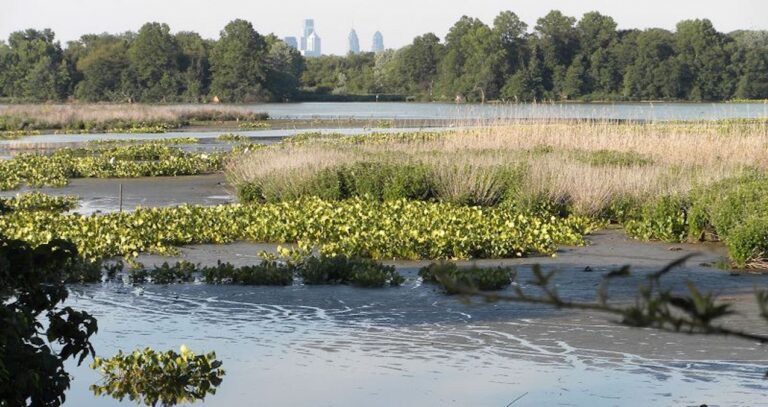
Philadelphia's skyline is visible above the Eastwick tree line. (Eastwick Friends & Neighbors Coalition)
This story is part of the WHYY News Climate Desk, bringing you news and solutions for our changing region.
From the Poconos to the Jersey Shore to the mouth of the Delaware Bay, what do you want to know about climate change? What would you like us to cover? Get in touch.
Residents of Philadelphia’s Eastwick section are facing another setback in the city’s efforts to prevent dangerous flooding in the neighborhood.
City officials announced a plan in 2024 to use federal funding to install HESCO-style flood barriers, giant fabric and wire boxes filled with soil, to prevent rising water in Cobbs Creek from reaching homes in the neighborhood. But modelling revealed that this solution could push floodwaters into neighboring Delaware County, city officials told residents last month.
“I’m just the bearer of bad news today,” Korin Tangtrakul, senior manager for place-based initiatives in the Office of Sustainability, said during a virtual town hall in September. She said the project is delayed because the city has “gotten a little stuck” in the design phase.
“This creek is so tight that anything that we’re putting into place is causing induced flooding elsewhere,” she said.
Eastwick resident Brenda Whitfield traveled to New York City to see HESCO barriers implemented there. She said she hopes Philadelphia builds them in her neighborhood.
Whitfield said it’s unfair to Eastwick residents at risk of devastating floods that a smaller amount of induced flooding in Delaware County would stop the project.
Whitfield’s home has flooded three times in the more than 50 years she’s lived in the neighborhood.
“We need hope in Eastwick,” Whitfield said. “We need those barriers to protect our backdoor.”
Tangtrakul said the city is investigating whether a lower barrier height than originally planned could minimize the induced flooding. But a lower barrier would provide less protection for Eastwick residents.
Related Content
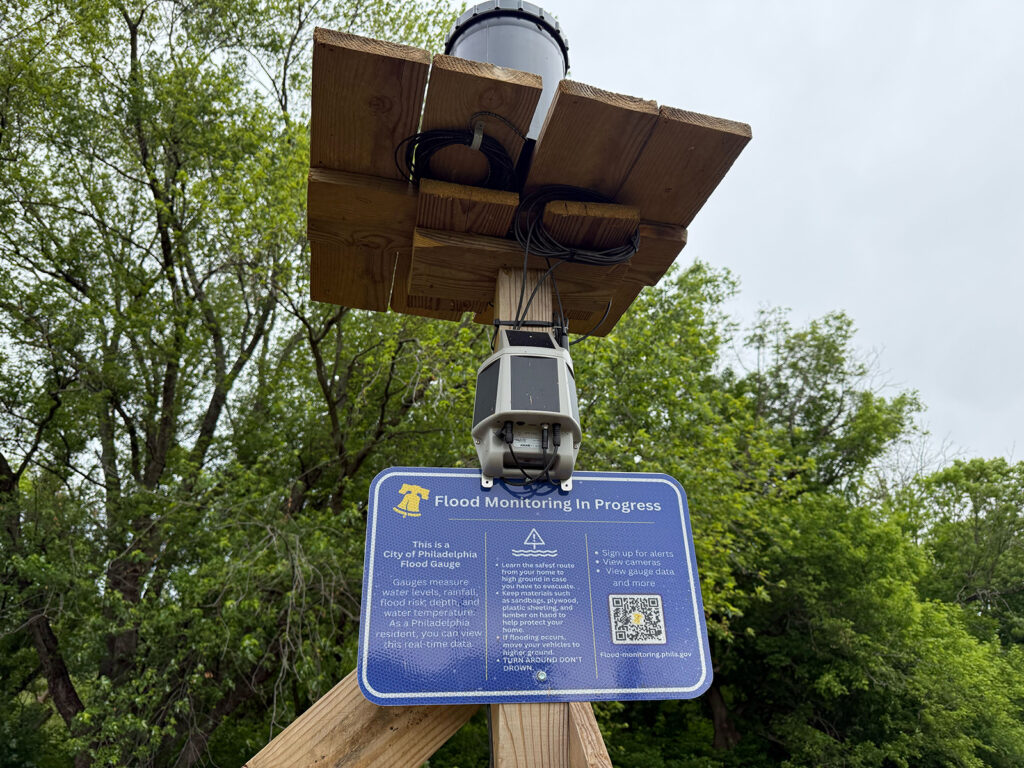
Philadelphia launches real-time flood monitoring to help Eastwick residents prepare for storms
Newly installed flood gauges will detect rainfall and water levels to help inform Eastwick residents of potential risks.
6 months ago
Listen 1:03The plan to install HESCO-style barriers is part of a multipronged flood mitigation strategy the city is pursuing in Eastwick, where the Cobbs and Darby creeks have repeatedly flooded their banks and inundated homes, destroyed cars and forced residents to evacuate. Tropical Storm Isaias in 2020 left households recovering for years. Climate change is expected to worsen flooding in the neighborhood with more extreme rain and rising water levels in the nearby tidal rivers.
City officials had framed the barriers as a temporary solution that could be deployed quickly to mitigate flood risk until a more permanent solution, such as a levee, could be installed.
But plans for a 15-foot-tall earthen levee — then a scaled-back version roughly half this height — fell apart earlier this year after the U.S. Army Corps of Engineers found it could not guarantee that the levee would not cause additional flooding in nearby areas.
In 2023, Tangtrakul told WHYY News the HESCO-style barriers could be installed as early as 2025, if analysis of their impact on flooding turned out positive. By March 2026, city officials had updated their timeline to predict construction would start in 2027.
At September’s public meeting, Tangtrakul told Eastwick residents that modelling and design of the barriers will continue into 2027 and construction of the barriers could start in 2028. Federal funding for the project will begin to expire in 2028 if the city does not use it, she said.
“We are still working hard to try to get this project moving along,” she said.
In an email, Tangtrakul declined to comment on whether the city is confident it can design a flood barrier that does not induce flooding elsewhere, saying the analysis is still underway. She said federal floodplain regulations require that projects like these cause no more than a 1-foot increase during a 100-year flood in areas where they induce additional flooding.
The city is also pursuing other options to mitigate flooding in Eastwick, including voluntary home buyouts and relocations, nature-based solutions that would restore wetlands to store more water, and special low-cost flood insurance options. The city rolled out a network of real-time flood gauge monitors in Eastwick this spring.
“We do want to acknowledge that the delays and updates on these projects have been disappointing to the residents,” Tangtrakul said in an email. “We remain committed to working with the community and partners to explore all available opportunities to address the issue and advancing the projects in the Eastwick Flood Resilience Strategy.”
WHYY News’ Nichole Currie contributed reporting.

Get daily updates from WHYY News!
WHYY is your source for fact-based, in-depth journalism and information. As a nonprofit organization, we rely on financial support from readers like you. Please give today.
Part of the series
Part of the series
Watershed
Preserving Our Water: How we use our Delaware Watershed.
The project is funded by The William Penn Foundation.
State and federal environmental officials say air monitoring has “not detected elevated levels” of toxic pollutants after a pipeline was hit last week.
5 days ago
Listen 1:09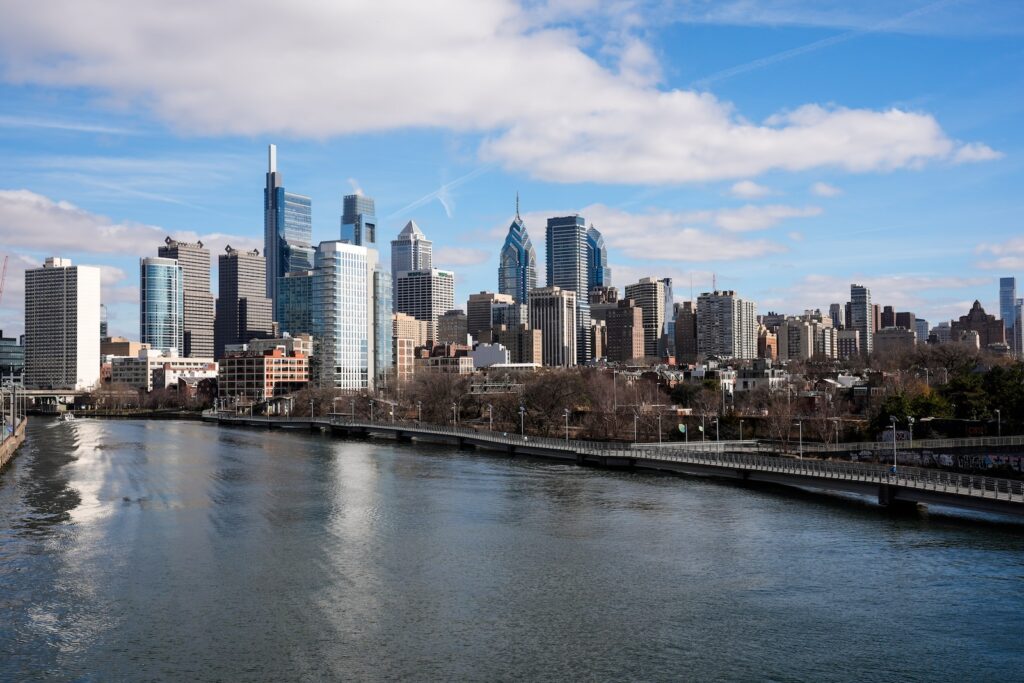
Philadelphia releases toolkit to help neighbors talk about climate change
The digital toolkit is meant to help residents get to know each other and prepare their neighborhoods for extreme heat, flooding and more.
2 weeks ago
Listen 0:58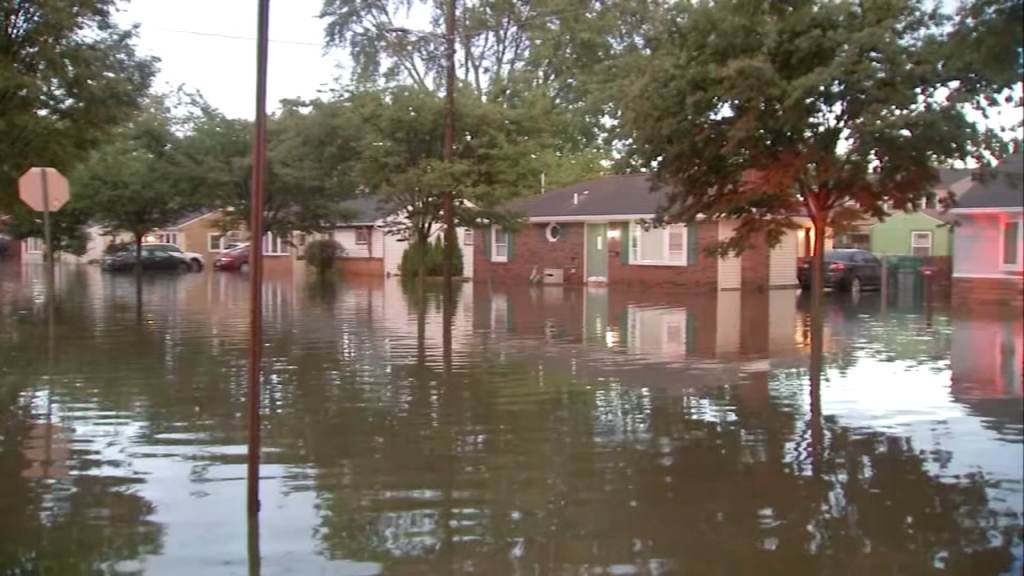
Gov. Shapiro signs law requiring home sellers to disclose more about a home’s flood risk
Sellers will now be required to reveal whether a home has flooded and whether they’ve filed a flood insurance claim.
3 weeks ago
Listen 0:58