

Pa. residents revive colonial-era practice by growing a ‘square yard’ of flax
The PA Flax Project promotes the revitalization of the industry as a climate-friendly crop that could be used to make the sustainable plant-based fiber linen.
Listen 1:01
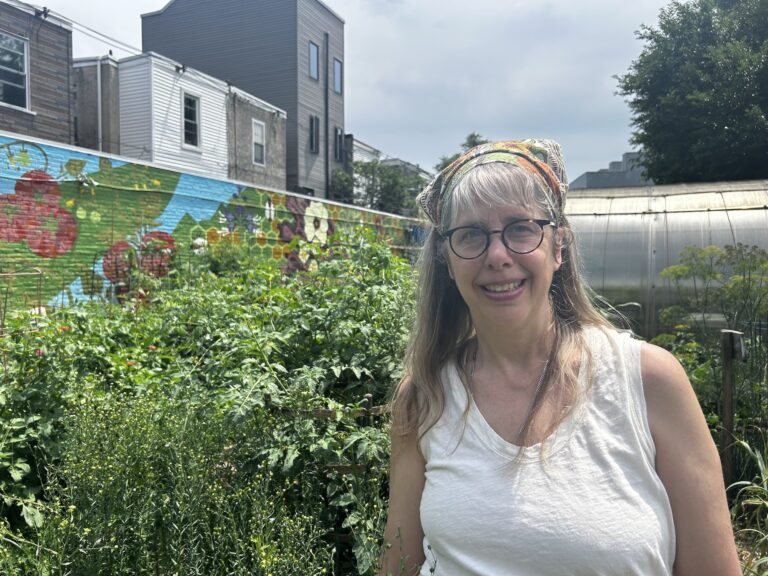
Miranda Mote stands by her square yard of flax at Brewerytown Community Garden in Philadelphia. (Susan Phillips/WHYY)
This story is part of the WHYY News Climate Desk, bringing you news and solutions for our changing region.
From the Poconos to the Jersey Shore to the mouth of the Delaware Bay, what do you want to know about climate change? What would you like us to cover? Get in touch.
Miranda Mote gently strokes the four-foot-tall flax plants that have just bloomed at the top with tiny, pale blue flowers at the Brewerytown Community Garden in Philadelphia.
“It’s not dramatic, but it’s quite lovely and delicate,” Mote said.
Flax grows tall and thin. In a week, the plants will turn golden brown, the flowers will go to seed and Mote will harvest it simply by pulling it straight up from the roots. Peeling away the outer layer of one of the green stalks, Mote shows the thread-like silken fibers that will be turned into linen or used to make paper.
Mote is one of 121 Pennsylvania residents participating in the PA Flax Project’s “square yard project” this year, which encourages gardeners to revive what was once a thriving industry in the state during colonial times. PA Flax Project CEO Heidi Barr said early colonists would have all had some part of their land devoted to growing flax because they used it to make linen, which was one of the main fabrics for clothing at the time.
“Flax has a really deep history in the state of Pennsylvania,” Barr said. “Four of the original 13 colonizing families were in the linen trades.”
Related Content
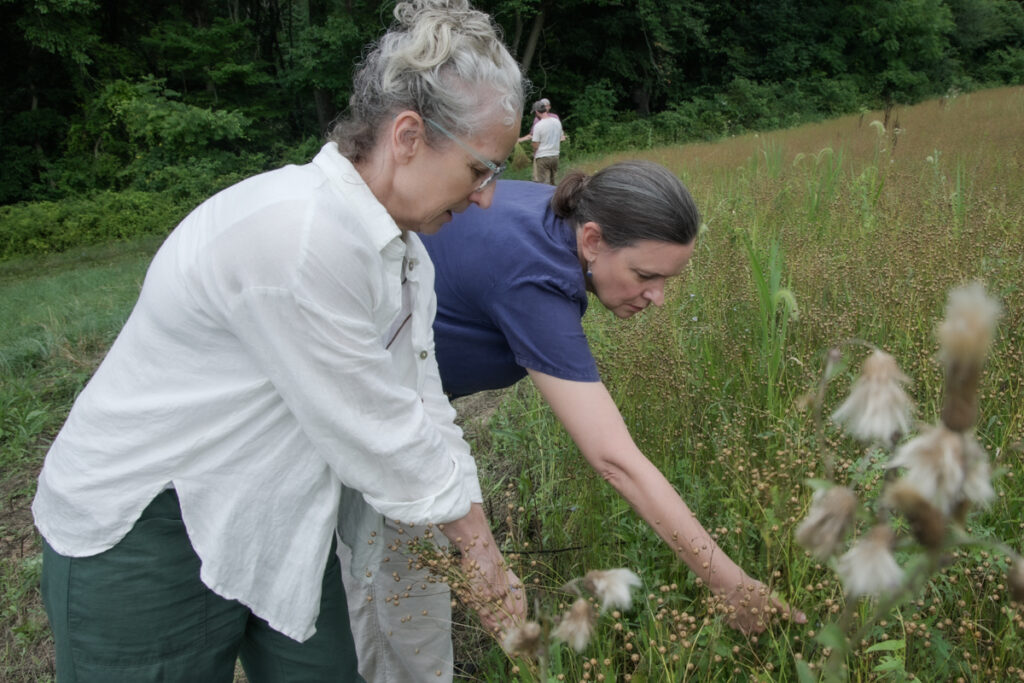
Climate Fixers: Cool solutions for a warming planet
From adapting gardens and slowing down fast fashion to clean alternatives to natural gas, WHYY News profiles some innovative climate solutions in the Philly region.
1 year ago
Each square yard of flax will produce enough material to make a tea towel-size of fabric.
Today, the PA Flax Project holds workshops to train people to grow and harvest flax, which it calls a “climate positive” plant. Linen is a plant-based natural fiber, making it more sustainable than the synthetic fabrics sourced from fossil fuels that are used to make the majority of modern-day clothing.
Flax is also easy to grow because it doesn’t need fertilizer or irrigation.
In an urban community garden devoted to organic methods, however, Mote is learning that flax does need regular weeding. Pointing to a vining bind weed that threatens to strangle the flax, she said pulling out the weeds is difficult because they pull out the shallow roots of the flax as well.
“These are just terrible,” she said. “I need to figure out a strategy so that next year they won’t get weeds. I need to understand the rhythm of the flax.”
Mote, who teaches at Thomas Jefferson University’s College of Architecture & the Built Environment, said she’s fascinated by the plant’s history.
“It is not native to Pennsylvania,” Mote said. “It was brought here by German and Dutch settlers from Northern Europe in the 17th century because they had skills and knowledge about linen production in their native countries. But it is noninvasive, and it’s an excellent low maintenance field crop.”
Flax is not just a plant that produces seeds rich in omega-3. It’s also used to make linseed oil, a natural wood preserver, and paper. And while it’s blooming, flax flowers provide food for pollinators.
“It’s been used since before written history as a fiber. And so it’s just a really interesting plant because we’ve relied on flax for a really long time,” Mote said.
Mote, a plant and garden historian, is also an artist. She is growing the flax to make paper, which she plans to use to make botanical prints with native plants.
The shorter strands of fiber were used to make paper in colonial times. While the signed copy of the Declaration of Independence was written on parchment, made from animal skins, Thomas Jefferson’s drafts were written on paper made from flax.
Created in 2020, the PA Flax Project also works on a larger scale to expand the industry in the state with the goal of jump-starting a sustainable, climate-friendly fiber industry. This year, Barr said the cooperative has 45 acres planted and ready to harvest this year, with 300 acres planned for 2027.
“The crop looks so good,” Barr said.
Although the organization’s federal funding through the U.S. Department of Agriculture was initially cut by the Trump administration in early 2025, Barr said that was restored, allowing them to purchase a mechanical harvester and work toward purchasing a mill that will make processing the flax more efficient.
“We are currently raising a round of funding to continue into our mill development phase. This is a major milestone for the PA Flax Project and for the fiber flax industry in Pennsylvania,” Barr said.

Get daily updates from WHYY News!
WHYY is your source for fact-based, in-depth journalism and information. As a nonprofit organization, we rely on financial support from readers like you. Please give today.
Part of the series
Part of the series
Climate Fixers
In this video series, WHYY’s Senior Climate Reporter Susan Phillips profiles innovative people working locally to cool the earth, heal the planet and help neighbors thrive.
Part of the series

Philadelphia 250
The United States is marking its semiquincentennial — or its 250th anniversary — in and around the City of Brotherly Love.
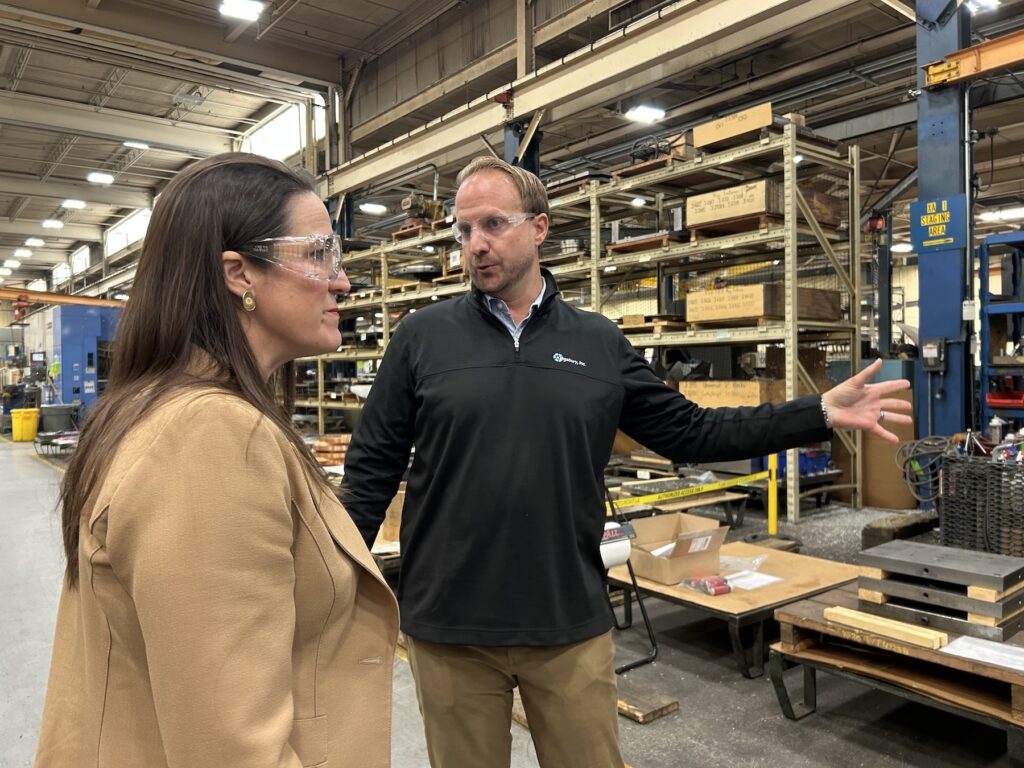
Hydropower parts manufacturer in Northeast Philadelphia lands federal research partnership
Kingsbury plans to test new materials for hydroelectric power equipment that can support the needs of modern-day grids.
1 day ago
Listen 1:09
EPA announces new plan to clean up arsenic contamination at Vineland chemical site
The Vineland Chemical Company produced arsenic-based herbicides and fungicides for 45 years, causing widespread contamination.
2 days ago
Listen 0:53
PennEnvironment and Drexel University researchers found microplastics in more than 20 waterways across the watershed.
7 days ago
Listen 1:14