
PGW is considering 2 paths to lower its carbon footprint: full electrification and a ‘hybrid’ that includes gas
PGW agreed to hold public meetings on reducing its carbon footprint. At the first meeting, there were lots of questions from the public but no answers from the utility.
Listen 1:23
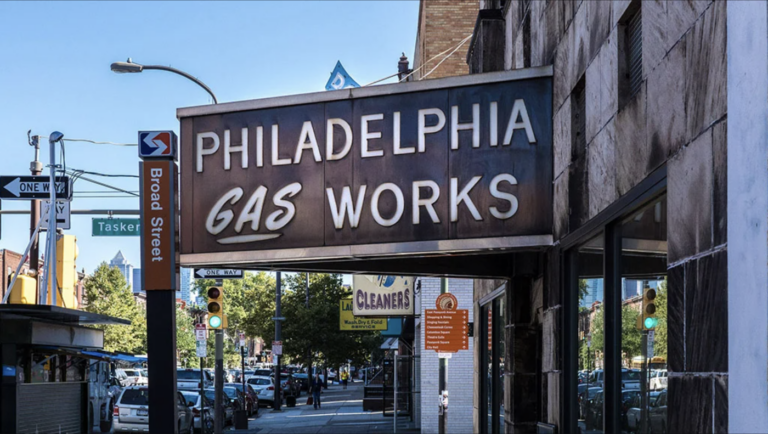
A Philadelphia Gas Works sign is pictured on South Broad Street. (Danya Henninger/Billy Penn)
This story is part of the WHYY News Climate Desk, bringing you news and solutions for our changing region.
From the Poconos to the Jersey Shore to the mouth of the Delaware Bay, what do you want to know about climate change? What would you like us to cover? Get in touch.
Philadelphia Gas Works is considering two ways to further reduce its carbon emissions. One option would seek to electrify the entire system that now runs on natural gas, including heating and cooking. The other would utilize a “hybrid” approach that would continue to provide natural gas along with other lower carbon fuels.
The two options were presented as part of a public engagement session this month on the utility’s “Low Carbon Pathways project.”
“Long-term emissions reductions will require a mix of solutions,” said Janelle Johnson-Grummert, PGW’s director of sustainability, in a prerecorded video presentation played during the online session on June 3.
Johnson-Grummert said the utility “is in support” of the city’s climate goal to zero out its greenhouse gas emissions by 2050.
“No one knows what the future holds between now and 2050, so we need to try a mix of different ideas, knowing that some will work and some will not, while some have better fits for specific emission sources,” she said.
The public engagement meeting was the result of an agreement hashed out in the most recent rate case between PGW and intervenors, who wanted more information on how the utility planned to cut its emissions.
In an email, a PGW spokesperson said the goal of the low carbon study is to “explore a range of viable options as representative examples for comparison and to establish a foundation for future decision making.”
“Our priorities for Philadelphia’s clean energy future include achieving the greatest emission reductions possible, while ensuring no customers are left behind and that all have access to safe, reliable, affordable energy,” said Johnson-Grummert in the video message.
PGW decreased its greenhouse gas emissions by 12,118 metric tons of carbon dioxide equivalent, or CO2e, in 2025, surpassing its goal of 10,000 metric tons of CO2e, according to the utility’s most recent emissions reduction report. The goal for fiscal year 2026 includes a cut of 10,500 metric tons of CO2e. The main target of its reductions include replacing aging gas pipelines and reducing emissions at its facilities. Other actions include weatherization and efficiency programs for its customers. The utility has also conducted a geothermal pilot project at McCloskey Elementary School in Northwest Philadelphia.
At a City Council finance committee hearing June 3, PGW Chief of Staff and Senior Vice President for Corporate Affairs Melanie McCottry testified that the final draft of the geothermal feasibility study is complete and will be released soon.
“It’s our job, with others, to think and look down every potential pathway that’s available while continuing to be able to provide service the way we do because of the fact that 90% of the city relies right now on natural gas to heat their homes,” McCottry said.
Councilmember-at-large Nina Ahmad told McClosky that PGW needed to pursue alternative energy sources “sooner rather than later.”
“You know and I know that you have to change your business model,” Ahmad said. “We have to move from natural gas at some point. The more you do it the faster it will be.”
Related Content
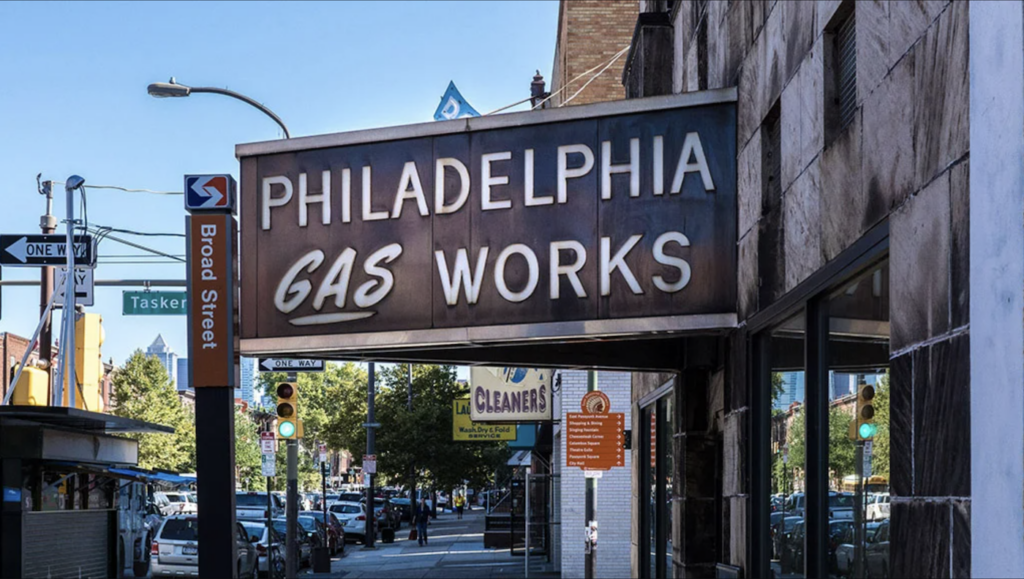
Philadelphia Gas Commission rejects PGW’s expanded Port Richmond LNG plant until further study
The Philadelphia Gas Commission tabled the $182 million proposal but agreed to fund $5 million for engineering and environmental studies.
5 months ago
Listen 1:25PGW is the largest municipally owned gas utility in the country, providing about 500,000 homes and businesses with natural gas for heating and cooking. It contributes 21% of Philadelphia’s total greenhouse gas emissions, according to the city. Of that, 90% are the result of gas used to heat homes and buildings, and the other 10% results from leaks throughout its pipeline system.
The options to lower PGW’s carbon footprint presented at the meeting include weatherization, electric and gas heat pumps, high efficiency appliances, hydrogen fuel, carbon capture, geothermal, and renewable natural gas, also known as biogas, which results from the decomposition of waste.
“The full electrification scenario is really shifting energy demand from natural gas to the electric system, with greater deployment of electric space heating, cooking, clothes drying, and water heating,” said Brian Jones, who leads the study for EMR, the consultant hired to conduct the low carbon pathway project. Jones also spoke in the video presentation.
Jones said the hybrid path would include the use of natural gas as well as other lower carbon fuels.
About 40 people attended the online meeting including employees from PGW, the city’s Office of Sustainability, climate advocates and those that identified themselves simply as ratepayers.
And while the attendees had lots of questions about the presentation and the process, PGW officials gave no answers during or after public comment.
Following the video presentation, the participants were allowed to comment in real time. All of the public commenters pushed PGW to adopt the full electric pathway for climate and public health reasons.
“As a pediatrician and as a healthcare professional, I just want to be totally clear that from the health perspective, gas is really basically a nightmare,” said Dr. Paul Devine Bottone, a ratepayer and a physician at Children’s Hospital of Pennsylvania, who phoned in to the meeting while walking with his baby, Oscar, in a stroller along the Schuylkill River path.
“At every stage of its production, it causes different health risks. We know that gas has a scent because in our homes it can be toxic. We know that it explodes … and in the internal combustion in our houses, it’s drastically increasing the risk of childhood respiratory disease.”
Bottone said he became interested in the operations of PGW when he learned of its plans to spend $182 million to expand its liquefied natural gas plant in the city’s Port Richmond neighborhood, which has been put on hold. He questioned how the consideration of the new plant would square with the city’s climate goals.
“I appreciated the ultimate decision to table that funding for the new gas plant, but … how can we reconcile that type of investment in new gas infrastructure with the 2050 goals, for example, as well as the low carbon pathway overall?” he asked.
“I think that we just need to be very honest about the fact that PGW is, by its nature, very invested in the gas industry and has a lot of connections to the gas industry and so it will really take concerted, very intentional effort to separate from that gas industry in a way that will allow for full electrification.”
Related Content
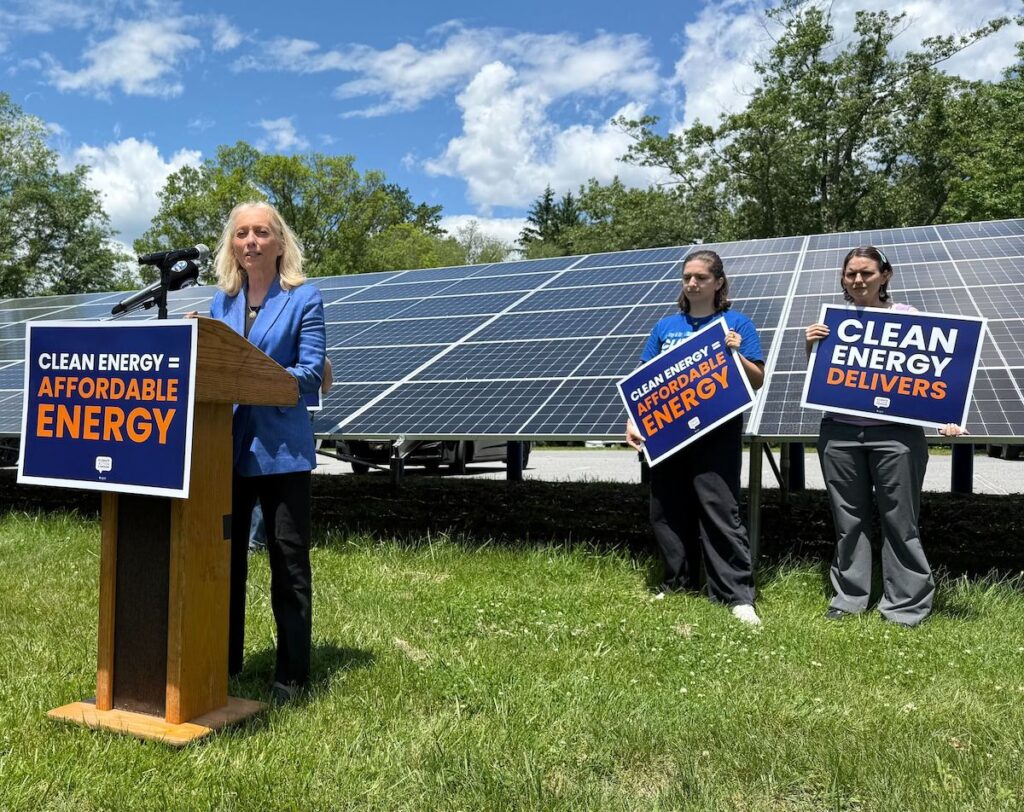
Pennsylvania lawmakers push federal bill to boost clean energy
The Energy Bills Relief Act would reinstate tax incentives and speed the development of new clean energy projects.
5 months ago
Listen 1:12Lots of questions for PGW, no answers so far
Since the public was viewing the presentation for the first time, the commenters had questions about the different options as well as the public engagement process going forward.
“I’m interested if this process includes a commitment to meeting those 2050 climate goals and also what the benchmarks would be along the next 20 years,” asked Emily Abendroth, director of Philly Climate Works, a project of the Sierra Club.
“I was hoping [these sessions] would not only be listening but also responsive, that there would be room for the public to have some of their inquiries answered and replied to,” Abendroth said. “This requires dramatic reductions in your current emissions, much more than we’ve seen on a yearly basis to date. Curious about when we would start to see those.”
Community Legal Services attorney Ben Clark, who helped negotiate the required public engagement meetings in the 2025 rate case settlement, asked PGW to provide the draft version of the next Low Carbon Pathway report ahead of the second public meeting, which is expected to be held in the fall.
“So that attendees can come with more thoughtful, productive, feedback and comments on that plan,” Clark said.
Clark also asked if PGW planned to respond to written questions and comments, which are due June 17.
PGW spokesperson Christina Clark said in an email that the utility “is seeking and will be using this public input (including public comments and questions) to help inform the development of our low carbon pathways study.”
Clark said the comments would “help inform the finalization” of the study.
“It’s our hope to be responsive to feedback as our pathway is developed,” she said.

Get daily updates from WHYY News!
WHYY is your source for fact-based, in-depth journalism and information. As a nonprofit organization, we rely on financial support from readers like you. Please give today.
Part of the series
Philadelphia Gas Commission rejects PGW’s expanded Port Richmond LNG plant until further study
The Philadelphia Gas Commission tabled the $182 million proposal but agreed to fund $5 million for engineering and environmental studies.
5 months ago
Listen 1:25
Philly climate activists celebrate a rare win in their battle to reform PGW
The settlement with PGW lowers the utility’s planned rate hikes, and forces the natural gas provider to hold public hearings over climate impacts.
1 year ago
Listen 1:19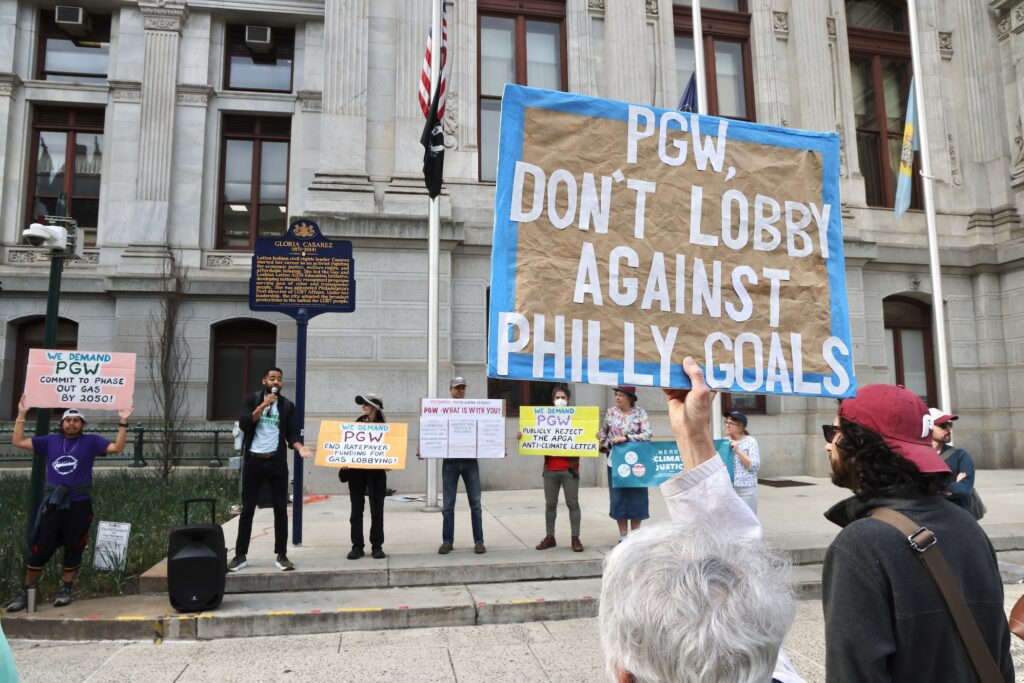
Local climate activists rallied against Philadelphia Gas Works’ financial support to an industry group lobbying against clean energy.
2 years ago
Listen 1:31