Pennsylvania House advances bill to increase minimum wage to $15 by 2029
Democrats previously failed in their efforts to pass similar legislation in 2023, 2024 and last year.
Listen 1:15
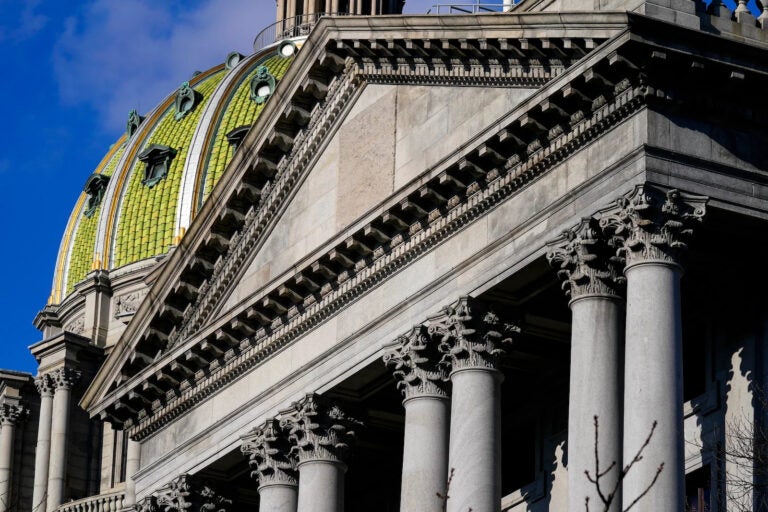
File: Shown is the Pennsylvania Capitol in Harrisburg, Pa., Feb. 8, 2022 (AP Photo/Matt Rourke, File)
From Philly and the Pa. suburbs to South Jersey and Delaware, what would you like WHYY News to cover? Let us know!
The Pennsylvania House of Representatives on Tuesday approved legislation to raise the state’s minimum wage, which has not increased in more than 15 years.
The bill, sponsored by state Rep. Jason Dawkins, D-Philadelphia, would gradually boost the statewide minimum wage from $7.25 an hour to $11 in 2027, $13 in 2028, and reach $15 the following year, with automatic cost-of-living adjustments thereafter.
“It’s been my mission to provide a living wage for all working Pennsylvanians,” Dawkins said in a statement following the vote. “If you work hard, you shouldn’t have to worry about your next meal or having a roof over your head.”
Four Republicans joined Democrats to advance the bill: Rep. Joe Emrick of Northampton, Rep. Natalie Mihalek of Allegheny, and Reps. Joe Hogan and Kathleen Tomlinson of Bucks.
However, the bill faces a bigger challenge in the state Senate, where Republicans make up the majority. Democrats previously failed in their efforts to pass similar legislation in 2023, 2024 and again last year.
Gov. Josh Shapiro has called for a minimum wage increase every year since his election in 2022 and applauded the House’s move on social media Wednesday.
Related Content
Shapiro wants more money for education, minimum wage increase in budget proposal
Gov. Josh Shapiro’s budget includes plans to spend $565 million to close long-standing gaps between wealthy and underfunded school districts.
8 months ago
Listen 1:15Who would benefit?
Pennsylvania’s minimum wage has remained at $7.25 an hour since 2009, when the federal rate was last increased. Nearly 43,000 workers in the commonwealth earned the minimum wage or below last year, according to the Pennsylvania Department of Labor and Industry’s annual report on the minimum wage released earlier this month.
That number has dropped precipitously since the minimum wage — pegged to the national standard — was increased to $7.25, as market-driven wages increased even without legal mandates. However, hundreds of thousands commonwealth residents who make less than $15 per hour would also see their wages increase if Dawkins’ bill were successful.
According to the department’s report, 50% of Pennsylvania’s minimum wage workforce is younger than 25 years of age, 80% are women and a slight majority do not have education beyond high school. A significant majority of those making minimum wage or a little more are hourly workers and 80% of those worked only part-time. Most do not have children.
In addition, Keystone Research Center calculates that 866,000 nontipped Pennsylvania workers — over 15% of Pennsylvania’s workforce — would directly benefit from an increase to $15 and over half of those who would benefit are between 20 and 39 years old and reflect a diverse section of the population.
Related Content
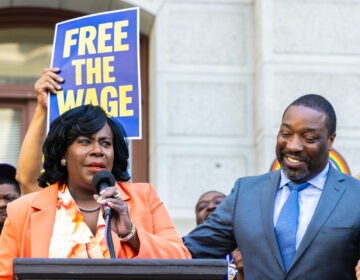
Most legislation to raise the minimum wage in Pennsylvania doesn’t survive a committee vote, but two years ago a bill passed the House but stalled in the Senate.
1 year ago
Listen 0:53Critics argue the increase will lead to job losses, higher prices
Dawkins and other supporters of the bill argue that raising wages will help workers meet basic living costs and stimulate the economy through increased consumer spending. Critics, however, have argued that it would lead to job losses and higher prices for consumers.
Those critiques are supported by some evidence. For example, research from the Congressional Budget Office found that raising the federal minimum wage to $15 nationally could reduce total employment by about 1.4 million workers, even as it lifted wages for many others. However, other studies that looked at localities which instituted high minimum wages, such as by the National Employment Law Project, found little to no impact on employment. A University of Pennsylvania study even found such increases had a positive impact on job numbers.
Some studies have found that increases in minimum wages tend to lead to higher prices in sectors like restaurants and retail, where labor costs make up a large share of total expenses. A study by the University of California at Berkeley, for example, found that a modest increase in restaurant prices in San Jose, California, after that city raised the minimum wage for workers there.
Related Content
GOP leaders criticized Murphy on taxes, spending, energy policy and his COVID-19 response, and expressed hope for Mikie Sherrill's success.
8 months ago
Listen 1:05The neighbors
More telling may be the experiences of all of Pennsylvania’s neighbors, each of which have minimum wages higher than the federal mandate, most of them now over $15 per hour. Delaware and Maryland now boast $15 and New Jersey is up to $15.92. Ohio requires employees to be paid $11 and West Virginia, $8.75.
New York started to phase in a $15-per-hour minimum wage at the end of 2018. A Columbia University study found that it led to a decrease in poverty and, subsequently, a draw on social benefits. They also didn’t find a corresponding loss in employment.

Get daily updates from WHYY News!
WHYY is your source for fact-based, in-depth journalism and information. As a nonprofit organization, we rely on financial support from readers like you. Please give today.
2 Philly-area Democrats voted against the bipartisan ‘compromise’ state budget. Here’s why
The two state senators criticized the budget for failing to address “critical” issues such as public transit, affordable energy and rising energy costs.
2 months ago
Listen 1:11
Pennsylvania Democratic lawmakers push package of bills aiming to reduce energy costs
The legislation aims to reduce strains on the grid while protecting ratepayers from predatory billing.
5 months ago
Listen 1:21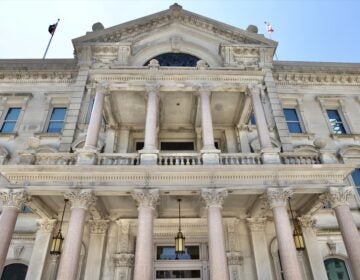
New laws will take effect in New Jersey in January 2026. Here’s what you need to know
Starting Jan. 1, the minimum wage will increase, and Garden State drivers will pay more on toll roads and bridges.
10 months ago
Listen 1:01