Why Gov. Shapiro wants to scrutinize electric utility profits
Gov. Josh Shapiro has a plan to scrutinize utility profits. Investor-owned utilities say it's important to invest in infrastructure that keeps the lights on.
Listen 5:35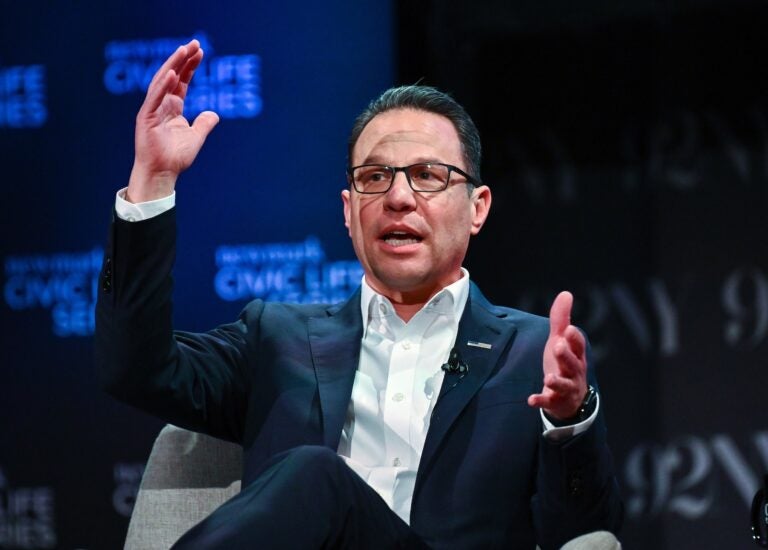
Pennsylvania Gov. Josh Shapiro discusses his new memoir, "Where We Keep the Light: Stories from a Life of Service", at the 92nd Street Y on Tuesday, Jan. 27, 2026, in New York. (Photo by Evan Agostini/Invision/AP)
This story is part of the WHYY News Climate Desk, bringing you news and solutions for our changing region.
From the Poconos to the Jersey Shore to the mouth of the Delaware Bay, what do you want to know about climate change? What would you like us to cover? Get in touch.
Pennsylvania Gov. Josh Shapiro is taking a serious look at the rising cost of electricity. In his state budget address last week, he took aim at both the region’s grid operator, PJM Interconnection, and the state’s investor-owned electric utilities.
“Our utility companies in Pennsylvania, well, they make billions of dollars every year. While at the same time, they’ve increased the cost for consumers with too little public accountability or transparency. That’s going to change,” he said in front of the General Assembly.
WHYY News’ senior climate reporter Susan Phillips joined WHYY’s Morning Edition host Jennifer Lynn to take a deeper dive into Shapiro’s proposal.
Listen to their full conversation above.
Jennifer Lynn: So Susan, you and I have talked about electricity rates before, and you’ve described a big contributor, which is a gap between supply and demand.
Susan Phillips: That’s true. So electricity rates are on the rise in part because of that gap. As older plants shut down, newer facilities have not come online fast enough to make up for the decrease. At the same time, demand from data centers driven by a rise in artificial intelligence has put a strain on the grid.
JL: Now, what are the profits the governor is talking about?
SP: So it’s important to note that for-profit utilities enjoy a monopoly. So as a result, rate hikes are overseen by regulators. In the case of Pennsylvania, it’s the Public Utility Commission.
When utilities want to impose a rate hike, they need to ask the PUC, which delves into their finances. But the details are not always public. Shapiro referred to this as a “black box agreement,” which he said needs to end. So in essence, we don’t really know exactly the kind of profits they make off of these rate hikes. The PUC allows rate hikes for the investors to make money off of infrastructure upgrades. So it’s not the supply of electricity that generates the profit for these electric utilities. It’s actually the distribution and the investments in infrastructure.
JL: And tell me more about what the utilities say.
SP: So they say those investments in things like wires and poles shore up the electrical infrastructure, which is what ensures reliability. PECO pointed to the recent winter storm where this region saw very few outages.
Related Content
Pa. Gov. Josh Shapiro wants more data centers but they need to bring their own power
Gov. Shapiro said his data center proposal includes greater transparency, community outreach and water conservation.
2 months ago
Listen 1:11JL: Susan, the governor is proposing a series of reforms to address this gap and the burden on ratepayers. What does he want to do?
SP: He proposed a couple of things, including a new utility affordability watchdog who will scrutinize company profits against the burden of rate payers. This is theoretically what the PUC is supposed to do. So he’s also asked the PUC to step it up.
Gov. Josh Shapiro: “I want the PUC to examine every single line of every single bill to ensure each customer dollar is being well spent.”
SP: He also wants to eliminate certain fees. So for example, if someone gets their electricity shut off for lack of payment, they often have to pay an extra fee to turn it back on. Now, it’s important to note that Shapiro can’t make all these changes by himself. He needs lawmakers to do their part.
JS: “I’m working with the PUC to prevent excessive utility profits this year, but the General Assembly needs to take action to lower costs for consumers going forward by giving the PUC a set of benchmarks to follow when determining how much profit a utility company can make.”
JL: Now, how is the industry reacting to the governor’s roadmap to rein in high electricity costs?
SP: The industry says it is willing to work with the governor. It also says there needs to be additional power plants built. And here’s an interesting thing, Jennifer. Back in the 90s, Pennsylvania deregulated its electricity market. So that meant that the utilities that had once both generated electricity and distributed it and sold it were no longer allowed to do both things. They want to go back to generating electricity and distributing it. Now, the reason that was broken up was because the government wanted to increase competition, right?
And lower rates for ratepayers. So it’ll be interesting to see if this gets off the ground and if utilities are able to actually go back in time and start generating electricity as well as sell it.
JL: Pennsylvania is not alone. New Jersey and Delaware, and other states are dealing with high electricity prices, too.
SP: Yup, that’s true. Our region is all part of the same electrical grid that I mentioned earlier. It’s operated by PJM Interconnection. Shapiro is very critical of PJM, accusing them of dragging their feet on installing new energy projects, specifically renewables. Now, PJM pushes back on that and says that is simply not true. The grid operator says it has approved a number of projects, but other issues are holding back construction, things like state permits and supply chain issues.
JL: OK, well thank you, Susan. Thank you. From our climate desk, Susan Phillips this morning on WHYY’s Morning Edition.

Get daily updates from WHYY News!
WHYY is your source for fact-based, in-depth journalism and information. As a nonprofit organization, we rely on financial support from readers like you. Please give today.
Part of the series
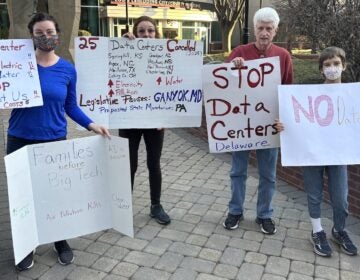
‘A modest start’: New Castle County passes zoning rules for regulating massive data centers
The new requirements don’t apply to data center projects already in the works in New Castle County.
2 weeks ago
Listen 0:49
Shapiro’s plan includes heightened scrutiny of utility profits by state regulators and getting rid of “junk fees.”
2 months ago
Listen 1:06
Pennsylvania lawmakers grapple with how to handle demand for data centers
On Tuesday, Pennsylvania state lawmakers held a hearing with stakeholders to better understand how the state can prepare and manage the growth of data centers.
7 months ago