
Pa. Democrats hold ‘shadow hearing’ to discuss election integrity as legal fight over mail-in ballots wages on
The hearing also focused on Democratic concerns about the administration’s efforts to require proof of citizenship for voting and dispatching ICE to polling locations.
Listen 1:08
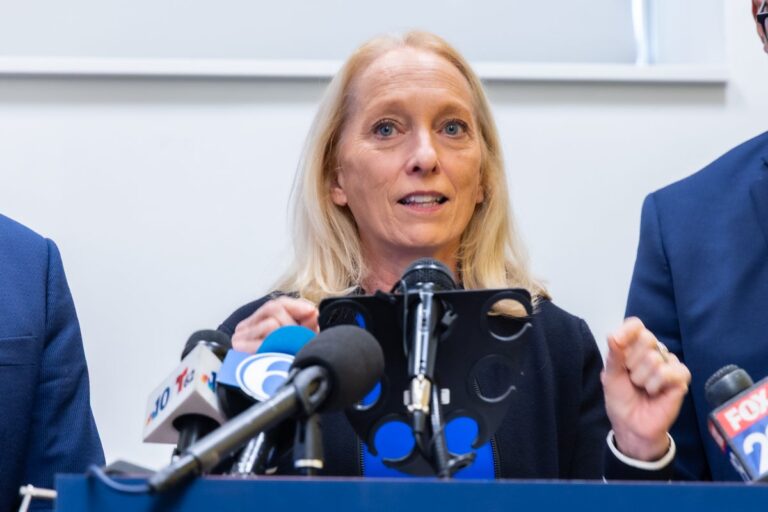
FILE - U.S. Rep. Mary Gay Scanlon speaks at a press conference at Bebashi-Transition to Hope in West Philadelphia, Nov. 3, 2025. (Kimberly Paynter/WHYY)
What questions do you have about the 2026 elections? What major issues do you want candidates to address? Let us know.
Update: After this story was published, the U.S. Supreme Court ruled against the administration’s proposal for new restrictions on mail-in ballots.
Democratic members of Congress gathered at Widener University in Chester on Monday for an unofficial hearing examining election security and efforts by President Donald Trump’s administration and congressional Republicans to change how federal elections are conducted.
U.S. Rep. Mary Gay Scanlon of Delaware County hosted the event with New York Rep. Joe Morelle, the ranking Democrat on the House Administration Committee, which has jurisdiction over federal election legislation and the administration of House elections.
Morelle opened the session saying it was imperative that members of Congress fight back against the “threats that this democracy faces.”
“Every eligible American must have a meaningful opportunity to cast a ballot in our elections and these ballots must be counted fairly and accurately,” he said. “That is vital to our democracy, the will of the American people to choose its leaders. And frankly, there are many people understandably anxious.”
Related Content
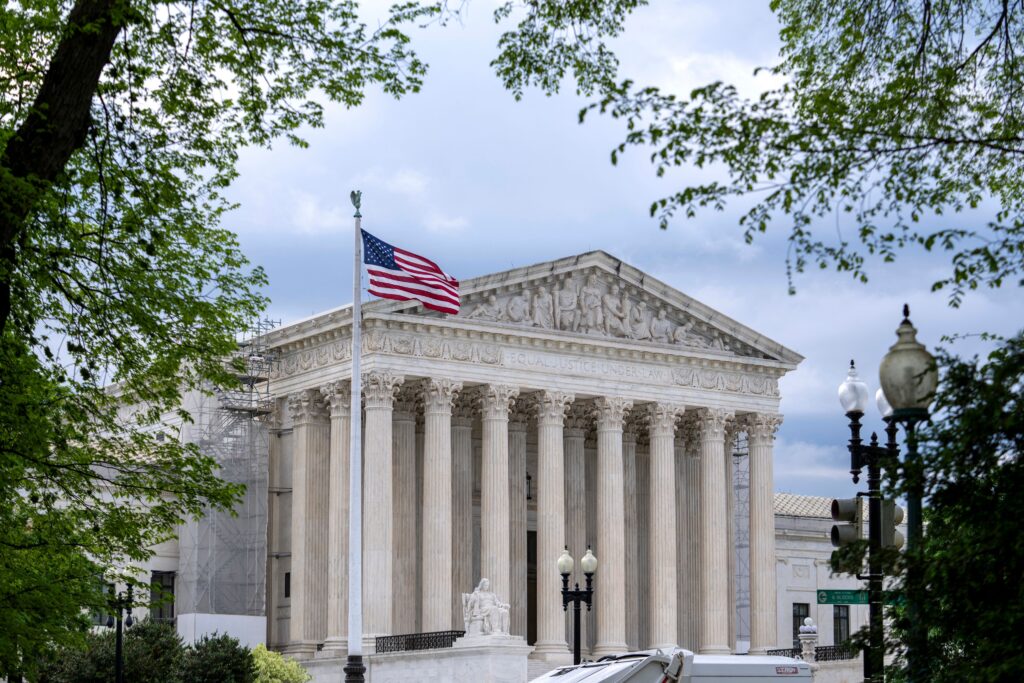
Supreme Court rejects Trump mail ballot restrictions for now ahead of midterms
The decision allows states to continue sending ballots under existing processes used by nearly one-third of voters.
1 month ago
Mail ballot challenges
Scanlon and Morelle were joined by Pennsylvania Democratic Reps. Madeleine Dean and Chrissy Houlahan, as well as California Rep. Norma Torres. The event was described as a “shadow hearing” because it was organized by committee Democrats outside the committee’s formal hearing process. It did not involve votes or official committee action but was intended to help Democratic lawmakers develop proposals involving election security, voting rights, electoral reforms and government ethics.
The lawmakers heard testimony from voting-rights advocates and Pennsylvania election experts.
The session got underway as news broke that a second judge upheld a block to keep the Trump administration from implementing an executive order placing new regulations on mail voting. In his March executive order, Trump directed the federal government to create a list of eligible voters and the U.S. Postal Service to deliver ballots only to those on that list. More than 20 states, including Pennsylvania, sued to stop the new requirements, while another lawsuit was filed by voting rights organizations and other parties.
At the hearing, Omar Noureldin of Common Cause, one of the groups suing the administration, pointed out that the second judge was appointed by Trump.
“That is two judges appointed by presidents of both parties that have found the rule and the executive order unlawful,” he said. “Mail voting is safe and secure. It is a lifeline for seniors, rural voters, veterans and voters with disabilities. This administration wants to decide who gets to use it.
The administration already appealed the first judge’s decision to the U.S. Supreme Court.
In an email to WHYY News, White House spokeswoman Lauren Bis called the administration’s proposals “commonsense measures to protect the security of mail-in ballots and ensure only Americans vote in American elections.”
“These safeguards for mail ballots were proposed months ago giving election officials ample time to prepare for the 2026 election,” she said. “We look forward to the Supreme Court’s ruling.”
Related Content
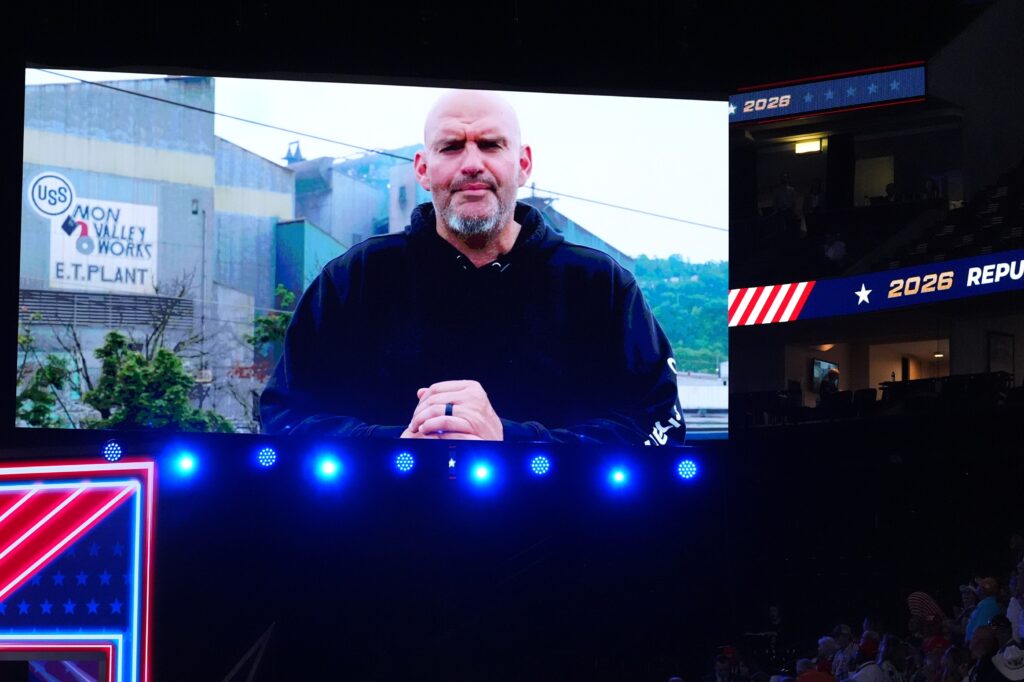
While U.S. Sen. John Fetterman said he was there as a "pragmatic" senator, U.S. Rep. Madeleine Dean joined some Democrats for “counter-programming.”
1 month ago
SAVE Act challenges
The hearing also criticized the Safeguard American Voter Eligibility Act, or SAVE America Act, which requires individuals to provide documentary proof of U.S. citizenship when registering to vote in federal elections. Democrats and others have criticized the effort because strict voter ID requirements would disenfranchise voters and suppress turnout.
Democrats and Republican critics say it would impact married women who legally change their names as well as younger voters who move more often, older voters who may not have access to their birth certificates and rural voters.
“It is a massive disfranchisement effort that would prevent hundreds of thousands of American citizens from being able to vote,” Scanlon told the panel.
Amy Widestrom, executive director of the League of Women Voters of Pennsylvania, said that Pennsylvania’s REAL ID would not be sufficient because it does not specifically identify holders as citizens, a requirement under proposed changes.
“There are also people who can’t locate or afford to replace their documents, survivors of natural disasters who have lost everything, including their paperwork, elderly voters, low-income voters and communities of color who have faced historic barriers to obtaining government documents,” she told the panel. “Non-citizen voting is already illegal and rare.”
The bill is currently stalled in Congress where it lacks enough Republican support to pass.
Law enforcement at polling locations
Morelle further addressed comments by Trump administration officials, including Department of Homeland Security Markwayne Mullin, about possibly sending Immigration and Customs Enforcement agents and other federal officers to polling locations in November.
“It is a federal crime to be armed at a polling place in America,” Morelle said.
“This is an unprecedented and illegal intrusion on our democratic processes, which the Constitution explicitly reserves to the states,” Scanlon added. “This threat has no legitimate purpose.”
When asked about the possibility of federal agents at polling places, Trump did not rule it out, saying that he supports “anything” to ensure “honest elections.” Markwayne Mullin, secretary of the Department of Homeland Security, which oversees ICE, told reporters earlier this month that immigration agents could deploy to polling sites for “threats” not necessarily related to the election.
During a press conference in February, Karoline Leavitt, then the White House press secretary, told reporters that there were no “formal plans to put ICE outside of polling locations.”
“I can’t guarantee that an ICE agent won’t be around a polling location in November,” she said, adding that it was “not something I’ve ever heard the president consider.”
Pa. ‘elections are secure’
Marian Schneider of Villanova University countered that “elections in the U.S. and in Pennsylvania are secure” and computer voting includes paper ballots that provide redundancy.
“The paper ballot which records the voter’s intent can be used to double-check that the computers counted the votes properly,” she said. “In Pennsylvania, counties are required to perform a statistically grounded post-election tabulation audit just for this reason, to make sure the results as reported are accurate.
Members of the panel concluded that the administration’s tactics are designed to sow doubt about the integrity of the elections among voters and, thereby, suppress their faith in the system and the vote.
Lauren Cristella, the Committee of Seventy’s president and CEO, called on voters in Pennsylvania and elsewhere to become poll workers or otherwise witness the election process in person. Her organization hosts “election academies” which allow the public to see “the chain of custody. They see the machine that opens the envelopes. They see the redundancy in the process.”
“They see their neighbors doing this work out in the open,” she said. “You can rarely out-argue a conspiracy theory, but studies show that these efforts work to increase faith in elections even among the most skeptical of voters.”
This story was updated to include a response to a request for comment from the White House.

Get daily updates from WHYY News!
WHYY is your source for fact-based, in-depth journalism and information. As a nonprofit organization, we rely on financial support from readers like you. Please give today.
Part of the series
Pa. election 2026: How to apply to be a poll worker for the midterms
People can apply to be poll workers if they are at least 17 years old and are U.S. citizens.
3 days ago
A curious source for U.S. Rep. Brian Fitzpatrick’s attack ads: A convicted turtle trafficker
The Republican congressman’s campaign has used Patch.com posts that make unsubstantiated claims about Democratic challenger Bob Harvie.
4 days ago
State election officials said they are operating normally and preparing for early voting to start next week.
4 days ago
Listen 0:56