
Delaware invests more than $1.3 million to build health care workforce in Kent, Sussex counties
The funding comes from the Rural Health Transformation Program, and aims to address the two medically underserved counties.
Listen 1:08
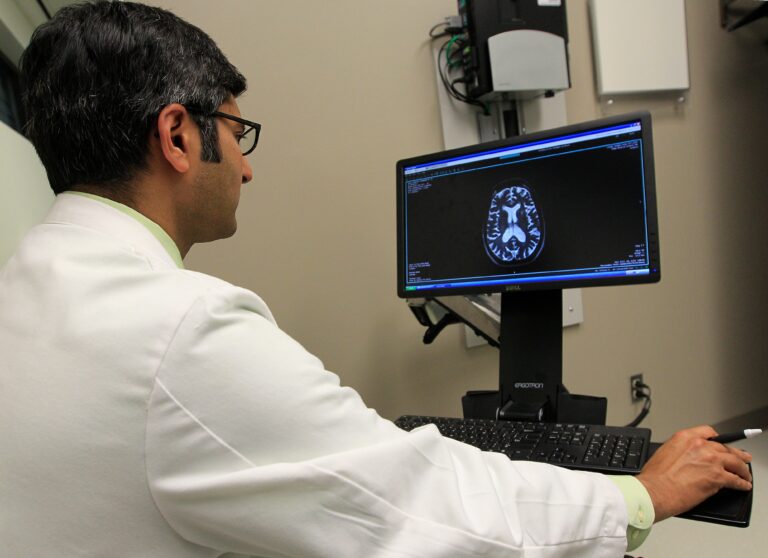
File - A doctor reviews an MRI before an appointment, Dec. 17, 2012, in Columbus, Ohio. (AP Photo/Jay LaPrete)
What are journalists missing from the state of Delaware? What would you most like WHYY News to cover? Let us know.
The Delaware’s Department of Health and Social Services is investing more than $1.3 million into backing recruiting and retainment efforts for doctors in rural communities.
The funding comes from the state’s Rural Health Transformation Program, and the department announced last week that it will be focusing on the workforce in Kent and Sussex counties.
The money will go toward two different programs that support physicians and medical students who commit to practicing for at least five years in either county.
According to DHSS, Delaware ranks last out of all 50 states when it comes to meeting primary care needs, meeting less than 15% of the demand. The Health Resources and Services Administration has designated Kent and Sussex counties as Medically Underserved Areas and Health Professional Shortage Areas for primary care, dental care and mental health services.
The shortage is particularly felt in Sussex County, which saw a nearly 30% population increase between 2010 and 2022. The rapid growth has put a strain on health care infrastructure, with there being only one primary care doctor for every 2,000 residents. In Kent County, that ratio is 1 for every 1,700 residents; and for New Castle County, it’s 1 per 960.
“That means it is challenging to get primary care appointments and to stay connected to health care in our communities,” DHSS Secretary Christen Linke Young told WHYY News. “As a result, people may put off visits to a physician that might catch something early, or they might seek care in ultimately more expensive health care settings for them and for our system as a whole.”
Young said the state is working to create a pipeline to grow the physician workforce and support rural communities. It’s one goal of the Rural Health Transformation Program, which was also designed to increase health care access and lower costs for residents living in rural areas. Additionally, Young said DHSS is investing in nonphysician sectors of the workforce, like nurses, dental hygienists and other health care workers.
“We are really thinking holistically about how we build the health care workforce that the state needs to thrive in the years ahead,” Young said.
The Rural Health Transportation Program is funded by the Centers for Medicare and Medicaid Services through the U.S. Department of Health and Human Services, which awarded the state about $157.4 million in financial assistance. It comes from $50 billion in federal awards that will be allocated to all 50 states over the course of five years. The first round of funding was rewarded in 2026.
Related Content

State election officials said they are operating normally and preparing for early voting to start next week.
3 weeks ago
Listen 0:56Investing in early medical careers
The first of the two recent investments puts $140,000 into an agreement between the Delaware Health Care Commission and Thomas Jefferson University’s Sidney Kimmel Medical College. It will create two $70,000 scholarships for students at the medical college completing clinical rotations in the state’s rural communities. Students can apply for the program through the medical college.
“We know where the students study is where they stay,” said Susan Aldridge, the president of Thomas Jefferson University. “So there’s a reason why we’re introducing these medical students to the rural areas of Delaware.”
With access to health care services being one of the top concerns for rural communities, Aldridge said it’s vital to introduce early career physicians to Kent and Sussex counties.
“It’s extremely important for them to get to know the communities,” Aldridge said. “These counties aren’t all the same. There are a lot of unique areas that they need to learn and study, and understand the impact that they can make as a physician in these communities.”
Thomas Jefferson University and DHSS announced earlier this year that they will be partnering to create the state’s first medical school. The school is expected to open in 2028, and is also supported by the Rural Health Transformation Program. Young said the new medical school will allow students from the state to “practice and to train in communities that they are from.”
“We also want to provide support to young people now, and have them make that commitment to practicing in Kent and Sussex [counties],” Young said.
Students who enroll in the new medical school will spend two years in the classroom, and will spend the following two years in clinical placements throughout Kent and Sussex counties. According to Aldridge, about 40 students will be admitted to the school, which will start accepting applications next May.
The state is also helping to pay housing and relocation costs for doctors in graduate medical education programs through Bayhealth, Beebe Healthcare, ChristianaCare, Nemours and TidalHealth. The funding should award about 60 doctors nearly $20,000 in grants each.
Third- and fourth-year medical students who complete at least one clinical rotation in Delaware, future students of the state’s medical school, and medical residents who complete a clinical rotation in the state are eligible to apply.
Though participants are expected to practice in one of the two counties for five years, up to three years of residency training could apply to that requirement. However, telehealth practice does not count.
Both programs are currently collecting applications. They will be processed by the Delaware Health Care Commission, and will notify recipients before the funds are released.

Get daily updates from WHYY News!
WHYY is your source for fact-based, in-depth journalism and information. As a nonprofit organization, we rely on financial support from readers like you. Please give today.
Bayhealth’s ‘Next Wave’ aims to further expand care in Sussex and Kent counties
Officials with the hospital system say that they are planning for “responsible growth” to prepare for a growing population in central and southern Delaware.
4 weeks ago
Listen 1:02
From 2019 to 2024, 18 rural hospitals in Pennsylvania were part of a health policy program that changed the way insurance providers paid hospitals.
1 month ago
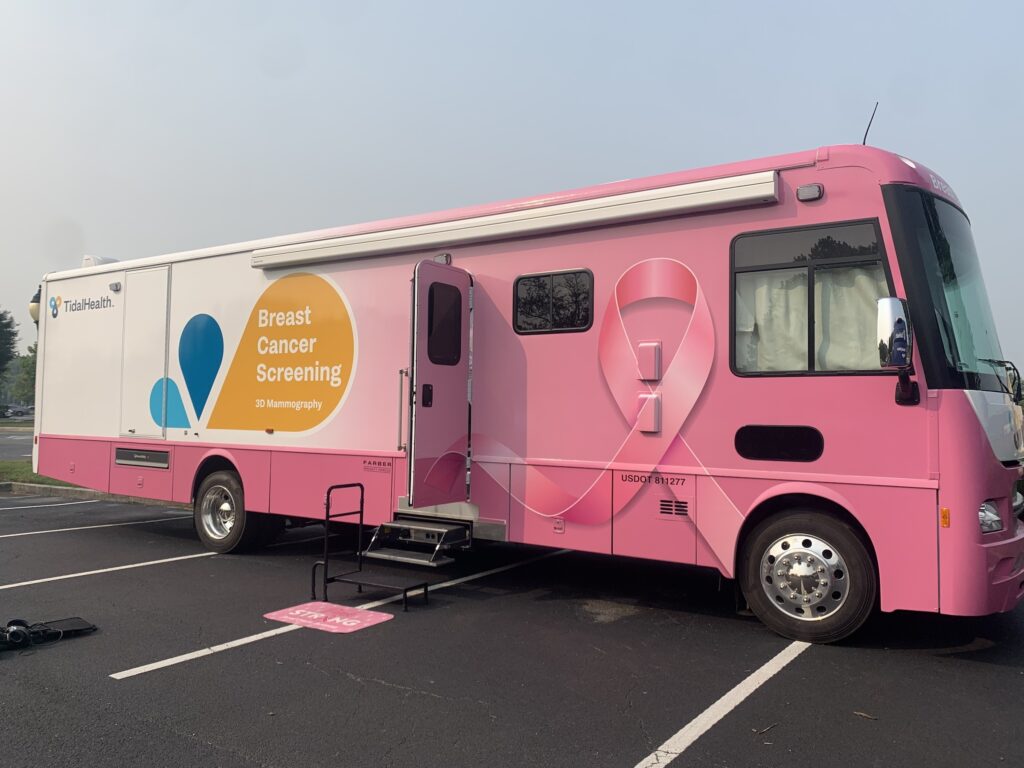
New mobile mammography unit aims to address barriers to receiving care in Sussex County, Delaware
TidalHealth Mobile Mammography launched this month. Its goal is to bring screenings to neighborhoods in Sussex County with limited preventive care.
4 months ago
Listen 0:58