

PECO signs agreements with data centers requiring them to pay for their own grid upgrades
The utility says its transmission security agreements ensure data centers pay their “fair share” of the infrastructure costs required to serve them.
Listen 1:19

In 2025, almost $35 of every $200 spent by PECO customers went straight to the utility's profits. (Emma Lee/WHYY)
From Philly and the Pa. suburbs to South Jersey and Delaware, what would you like WHYY News to cover? Let us know!
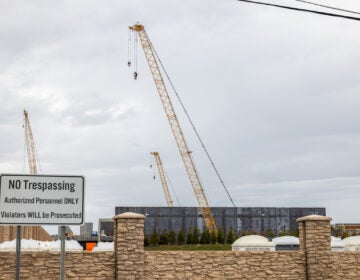
Data centers require lots of electricity, and in some cases, new grid infrastructure.
Pennsylvania state lawmakers and utility regulators want to protect residents from paying for these grid upgrades. PECO, the electric utility serving Philadelphia and the surrounding suburbs, says it has been signing agreements with data centers to do that since late 2025.
“The rest of our customers should not subsidize data centers,” said Tom Bonner, director of policy, advocacy and external affairs at PECO, during a Philadelphia City Council hearing Tuesday on rising electricity bills.
Bonner said connecting large data centers to the grid often requires a “significant” investment in the transmission system, or the high-voltage lines and towers that convey electricity over long distances. Utilities usually recover these investments through rate hikes.
The transmission security agreements PECO is requiring data center developers to sign ensure the utility can recoup these costs from the data centers themselves, even if developers’ plans don’t pan out. Bonner said these agreements require data centers to put up a 10-year letter of credit from which PECO could draw payments if the data centers aren’t built or use less electricity than expected.
“The thing we’re trying to avoid is building it and they don’t come,” Bonner said in the hearing. “Where we would make the investment in the transmission system and that customer never uses anywhere near as much energy as they said they were going to use.”
“It’s basically a take-or-pay contract with the data center to ensure they contribute as much to the system as they said they would,” he added.
PECO has signed at least two data center transmission security agreements so far: one for a data center planned for East Whiteland and another planned for Falls Township.
Related Content
PECO’s transmission security agreements only address the costs of upgrading long-distance transmission infrastructure. The energy company’s existing rate structures for large electricity users already require them to pay for upgrades to local distribution infrastructure, or the lower voltage lines and poles that serve their facilities, spokesperson Candice Womer wrote in an email.
The transmission security agreements do not protect residential customers from increasing electricity supply costs, which make up about half of a PECO customer’s bill. Some supply costs, known as capacity prices, have been rising due to a supply and demand crunch on the regional grid driven in part by the growth of data centers.
“Transmission Security Agreements are designed to help ensure large load customers pay their fair share of the grid costs required to serve them,” Womer said in a statement. “However, rapid growth in data center electricity demand is putting upward pressure on regional energy and capacity prices across the thirteen‑state PJM [Interconnection] region, regardless of where those facilities locate.”
An independent grid monitor criticized PECO’s Falls Township data center agreement last fall, saying it did not adequately address whether the grid has enough electricity supply to serve the data center’s demand without imposing “significant and unacceptable reliability- and capacity-related cost impacts” on all customers in the regional grid.
A precedent-setting electricity rate case settlement submitted to the Pennsylvania Public Utility Commission for approval earlier this spring would shield residential ratepayers in the PPL Electric service territory from the costs of upgrading infrastructure for large data centers by creating a new customer rate class just for them. Large data centers in PPL’s territory would need to commit to operating for 10 years or face penalties and contribute funds to the Customer Assistance Program for low-income customers.
PECO’s agreements apply to data center projects individually, but state utility regulators finalized new guidelines Wednesday that they recommend utilities apply to all data centers and other large customers. These guidelines include requiring large electricity users to pay the infrastructure costs associated with their projects, allowing them to build their own infrastructure upgrades and demanding deposits to protect other ratepayers from stranded costs if data centers aren’t built. The guidelines also recommend utilities complete their studies to allow large users to connect to the grid within six months.
State lawmakers hope to extend some of these requirements to all large data centers built in the state. A bill that passed the state House earlier this spring, and is now pending in the state Senate, would require utility regulators to develop rules that would force data centers to pay for any grid upgrades their operations necessitate and pay deposits to prevent stranded costs.
The bill would also require data centers to cut their power use during emergencies and draw at least 10% of their electricity from new energy sources including nuclear, wind, geothermal and solar — or contribute to a fund that would support clean energy and energy efficiency projects.

Get daily updates from WHYY News!
WHYY is your source for fact-based, in-depth journalism and information. As a nonprofit organization, we rely on financial support from readers like you. Please give today.
PECO announces new leadership following controversial rate hike and stalled union negotiations
David Vahos, PECO president and CEO, will become “special advisor” to parent company Exelon’s CEO.
3 weeks ago
Listen 1:17
Pennsylvania Gov. Josh Shapiro calls PECO rate hike request ‘pure greed’
PECO seeks to raise rates again by 12.5% for Philly and suburban electric customers. The governor's office says Shapiro believes the rate case should be withdrawn immediately.
1 month ago
Listen 1:33