

How nature is fostering kids’ creativity in Philadelphia
Studies suggest nature can help lower stress and boost attention. Researchers and educators say it can also help kids express creativity.

This story is part of the WHYY News Climate Desk, bringing you news and solutions for our changing region.
From the Poconos to the Jersey Shore to the mouth of the Delaware Bay, what do you want to know about climate change? What would you like us to cover? Get in touch.
Four-year-old Alvin Lingat-Santiago loves to watch marbles zoom down a track.
“I love marble runs!” he shouts beneath a canopy of trees in northwest Philadelphia in November. “Because I like rolling stuff.”
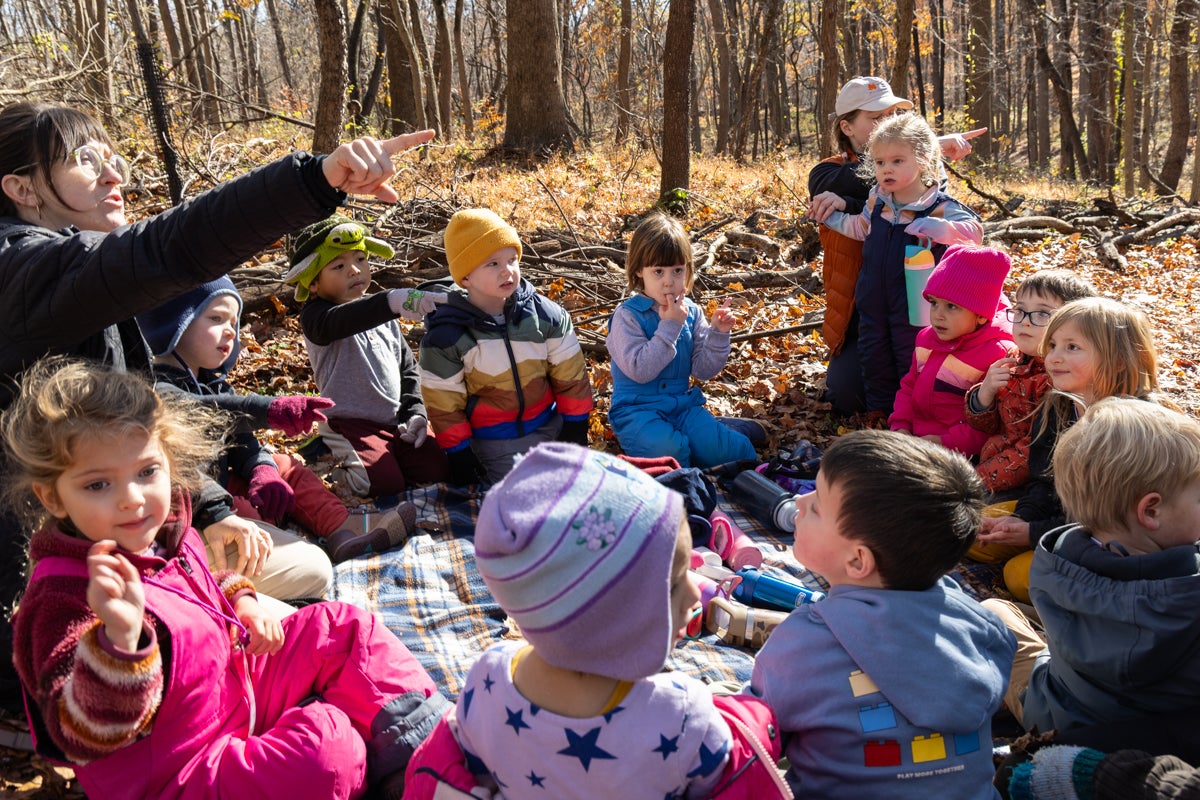
Alvin attends nature preschool at the Schuylkill Center for Environmental Education. His class of about a dozen 3- to 5-year-olds spends most of its time outdoors, in places like a clearing in the woods they call Fallen Log.
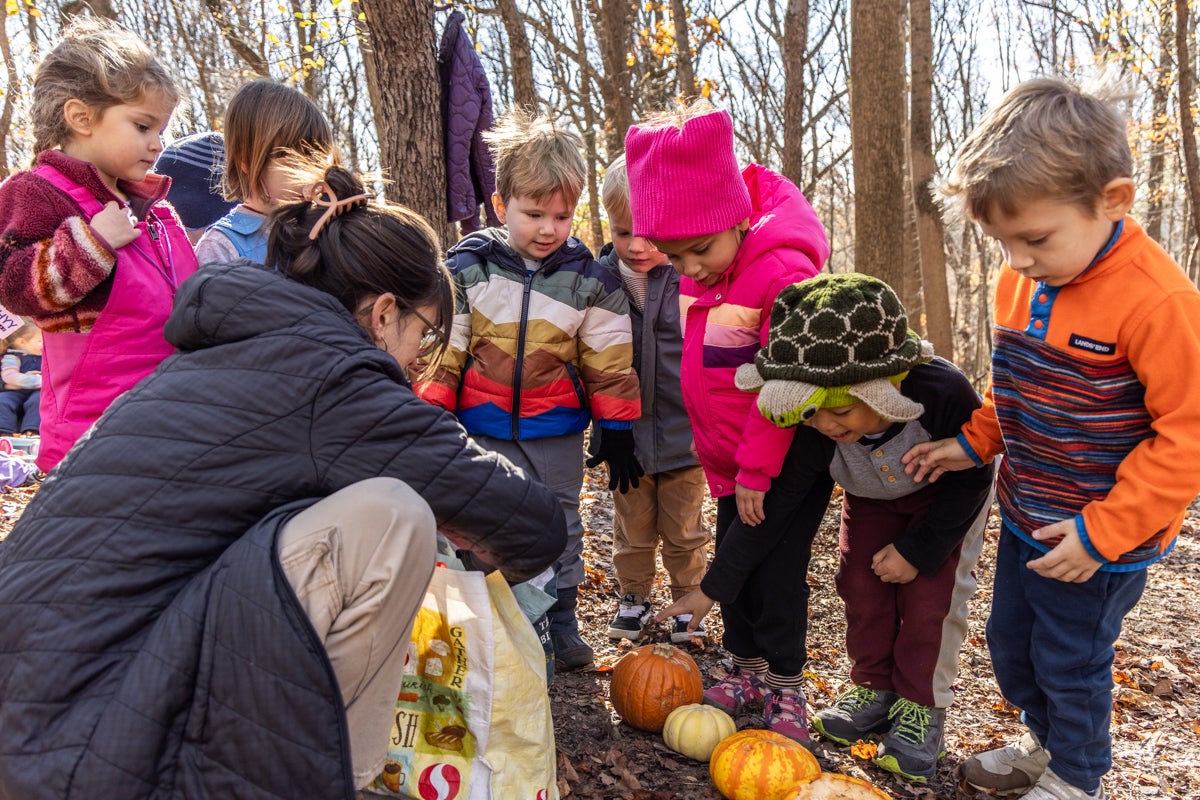
Without any marbles in the clearing, Alvin gets creative. The class has been playing with pumpkins donated by parents after Halloween. Alvin gives one a shove down a hill.
“It’s rolling!” he yells before chasing after it.
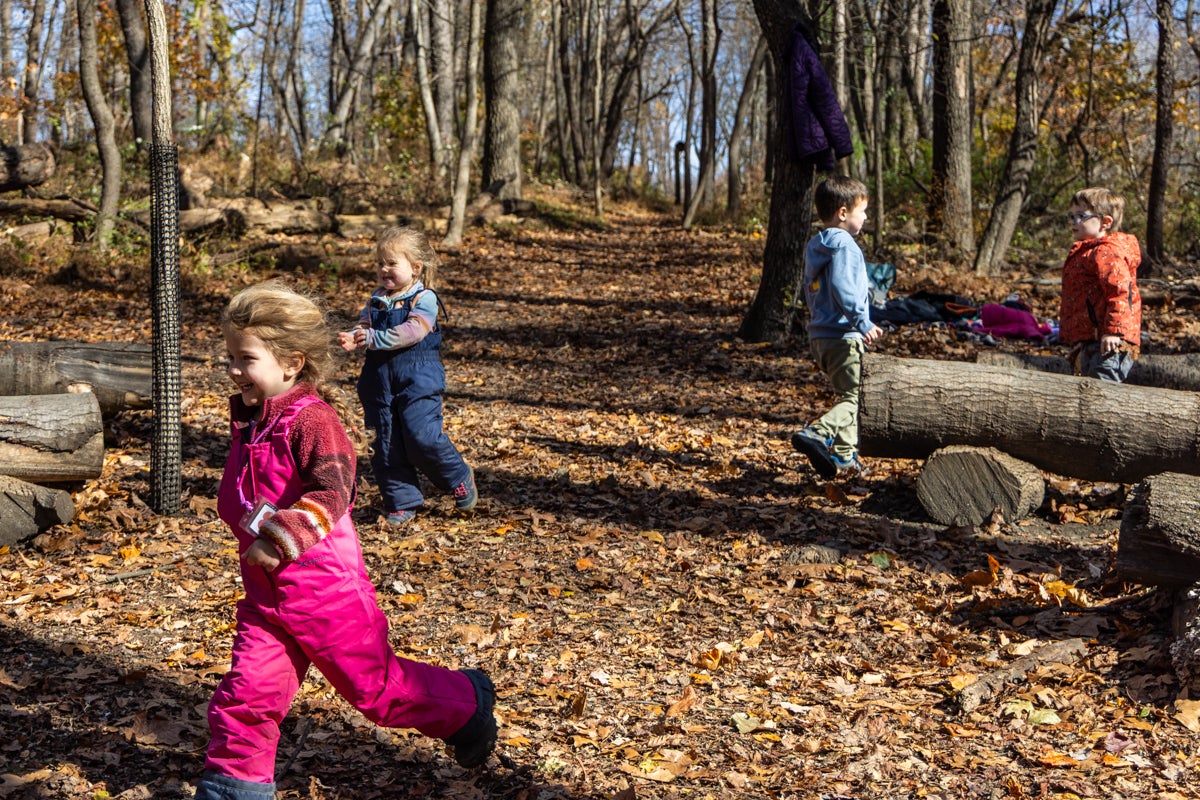
This is what learning looks like at nature preschool.
“If they’re tired and dirty at the end of the day, we’ve done our job,” says Sarah Watrud, director of early childhood education at the Schuylkill Center.
Research suggests exposure to nature can help kids learn in several ways — by lowering stress, boosting attention and improving engagement.
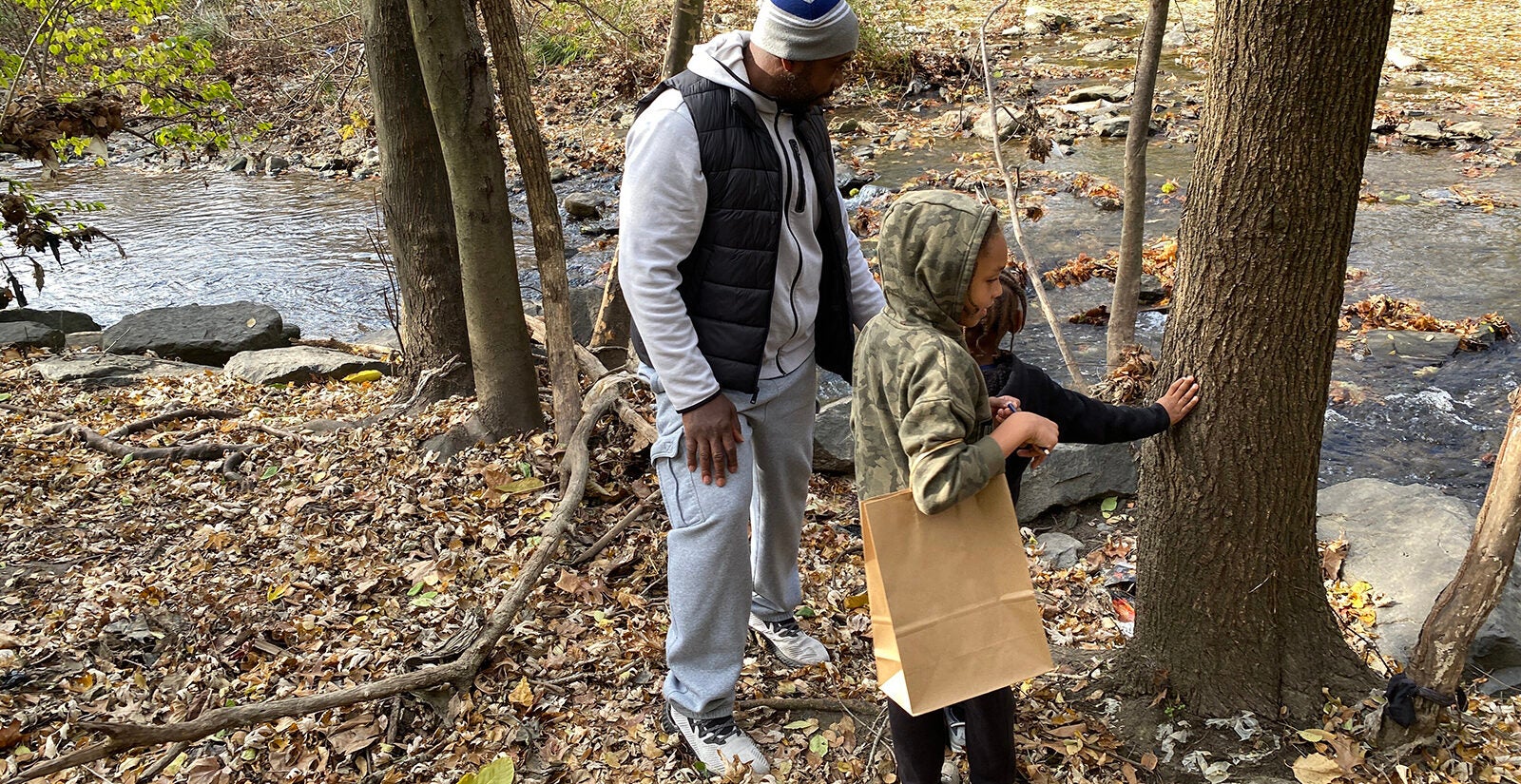
Nature can also help kids exercise their creativity, said Cathy Jordan, a professor of pediatrics at the University of Minnesota who reviews research on how nature affects kids for the nonprofit Children & Nature Network.
“It really does tap kids’ creativity,” Jordan said.
Related Content

At this South Jersey farm, a classroom rooted in the garden helps students grow skills for life
A culinary program uses adaptive tools and small classes to help students with a range of abilities and needs build confidence, connection and independence.
3 months ago
Listen 0:42Keeping the doors of creativity open
On the other side of the Fallen Log clearing, 5-year-old Sloane Dymond pokes sticks into the dirt to form a small, pointed roof.
“I’m building a fairy house,” she says.
Next, Sloane brushes away fallen leaves to clear a long path in the dirt stretching away from the fairy house.
“This is a driveway to go to the vegetable store,” she says.

Creativity is like a room with many doors, Jordan said. When we’re children, all of those doors are open. But as we age and encounter limits set by our environment, culture or ourselves, we narrow our focus, and some of those doors close.
“Nature provides many, many doors, and the child is free to go explore any of those doors,” Jordan said. “The more that we do that throughout childhood, offer those experiences where there are those many options … all those doors remain open and all that creativity is allowed to express itself.”
Jordan said nature helps children express their creativity because it engages all of their senses.
“That really opens up creativity because you’re not stuck in one way of interacting with the world,” she said.
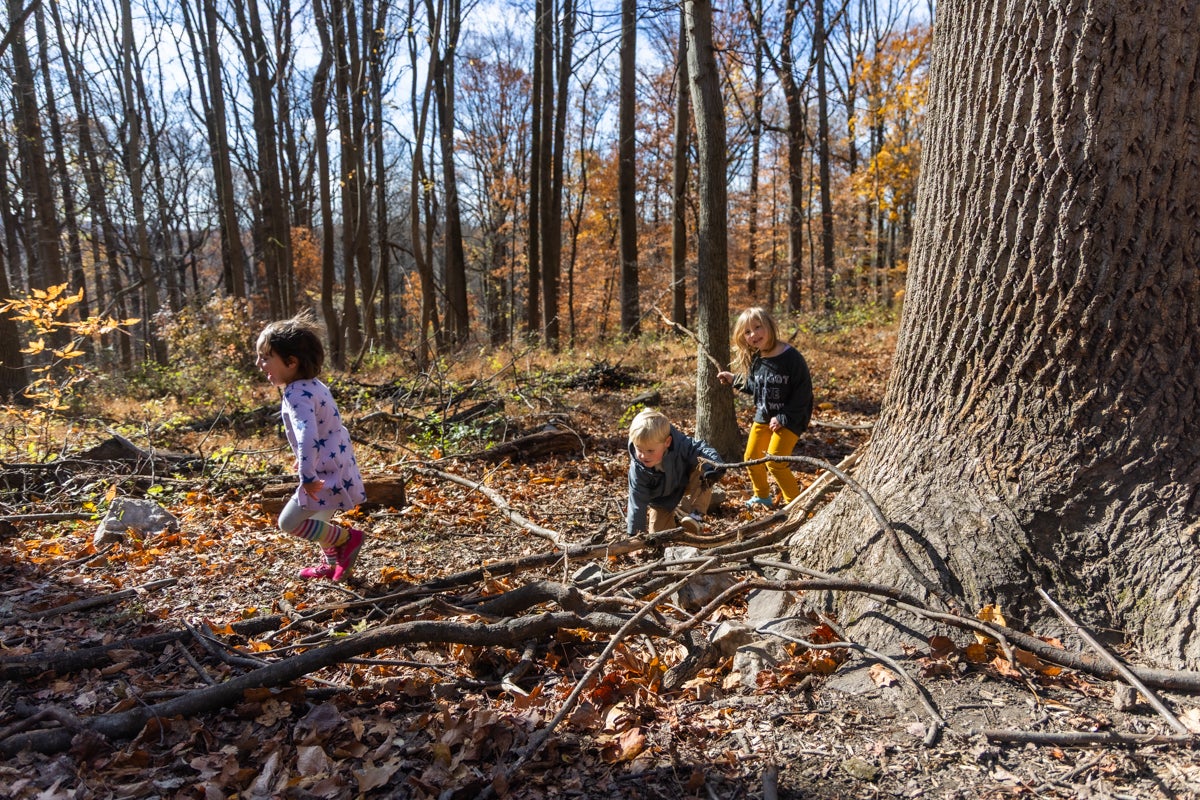
Nature-based play and learning also tend to be open-ended. Indoors, there’s often a set way of playing with toys or games. But outside, kids decide for themselves what to do with nature’s many “loose parts,” like pumpkins, rocks or sticks.
“A stick can be a magic wand,” Jordan said. “It can be part of a fort. It can be a sword. It can be something to draw in the sand with. It can be something to jump over. … The sky’s the limit.”
Getting the most out of nature-based learning
Kids’ curiosity in nature can translate into creativity, but there are also things adults can do to enhance this, said Linda Hestenes, a professor at the University of North Carolina at Greensboro who studies the quality of childcare programs.
Hestenes said good nature-based education involves teachers facilitating children’s investigation and problem-solving by, for example, asking open-ended questions and allowing kids to explore.
“You can have really great indoor curriculum and really great outdoor curriculum — or you can have … what I would say is less ideal in terms of children’s developmental needs, indoors and outdoors,” Hestenes said. “The ways that it gets facilitated is hugely important.”
Related Content
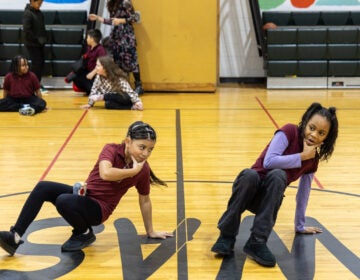
At Washington Avenue Elementary and schools across the region, arts programs are transforming classrooms and young minds through dance, music and visual arts.
4 months ago
Listen 0:49High-quality teaching methods are also important for students to get the full benefits of being in nature when learning academic content, Jordan said. These techniques include hands-on, active and collaborative learning — all styles that teachers can use indoors, but that flourish outside.
“It’s not that those things don’t happen in the classroom,” Jordan said. “It’s just that nature as a setting taps that kind of teaching style very effectively.”
Letting kids drive the agenda to foster a love of learning
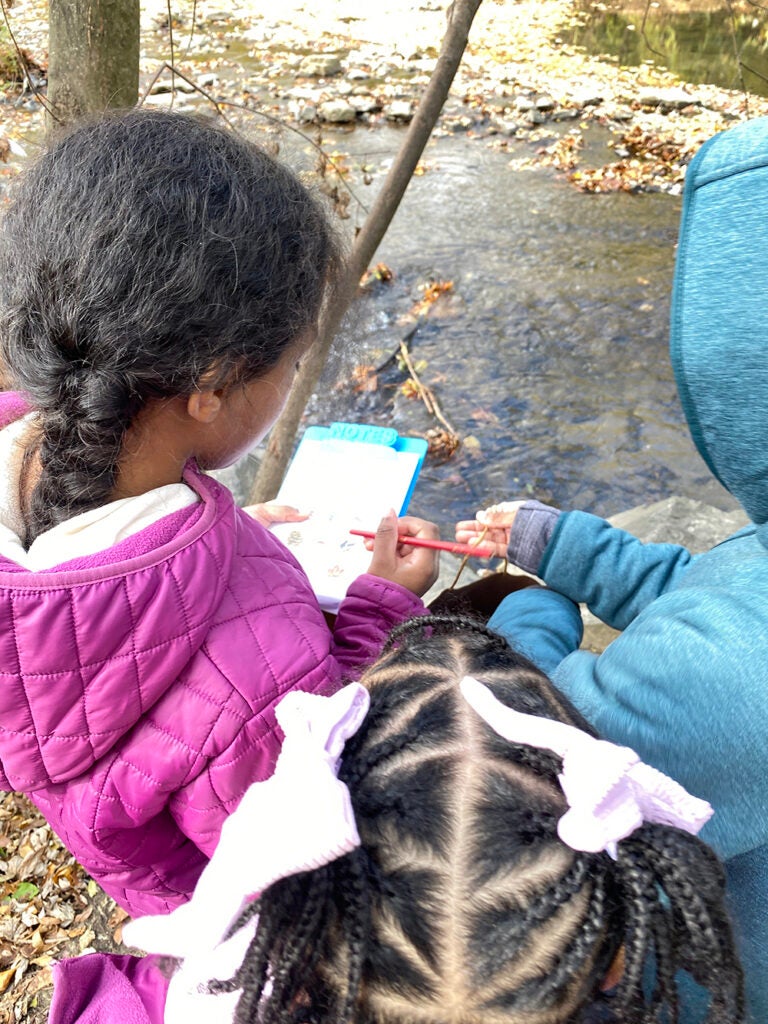
Elaine Wells, a Philadelphia education advocate and founder of the nonprofit Global Thinking Initiatives, facilitates these kinds of learning experiences during the Saturday morning hikes she leads for children. Wells’ program, called Tiny Trekkers, brings kids ages 2 through 9 and their parents to green spaces in the city, where they kayak, explore meadows and forests, and observe wildlife. The program is free and runs April through August.
Children in the program imagine all sorts of adventure scenarios on the trail, Wells said.
“They’re standing on top of rocks and climbing in between tree branches and things like that, as pirates or fishermen or explorers,” she said. “It’s nothing that we prompt them to do. They do it on their own.”

Wells’ Tiny Trekkers program also has a focus on boosting literacy. Each outing includes about a half hour of reading support, with activities such as singing the phonetic alphabet song while hiking. The program offers families free children’s books that depict culturally diverse characters doing the outdoor activities that the Tiny Trekkers experienced. Wells’ goal is to link the “discovery part of nature with the joy of learning to read.”
Ultimately, Wells lets the children drive the agenda.
“I could be talking about the bark on a tree but a kid sees a bug, and they’re like, ‘Oh look,’ and all the other kids rush over to look at this bug,” she said. “Well guess what? We’re gonna transition over to that bug.”
Wells said it’s about allowing kids to be kids and follow their natural curiosity.
“They love to learn when they’re in the moment,” she said.
This positive association with learning was one thing Mae Axelrod sought for her daughter, Ada, when enrolling her in nature preschool at the Schuylkill Center in 2021. Axelrod is now the director of communications at the center.
“I believe that the start of school is vital to … build that idea that school is a good place,” Axelrod said.
Axelrod wanted a safe place for her daughter to make friends during the height of the COVID-19 pandemic. She also wanted Ada to develop social and emotional skills and physical confidence, in a society where, she said, children are often told to “stop” and “be careful.”
At nature preschool, Axelrod said her daughter climbed trees, learned facts about the natural world and built a love of learning. Ada, now 8 years old, is “wildly” creative, Axelroad said, and is writing comic books, dancing, singing and putting on plays with her friends.
“You have to be courageous to be creative,” she said. “You have to be willing to put yourself out there and to show the world something and to share your light. So that takes courage. And I think nature school builds that kind of courage, both physically and emotionally.”
A need for more equity in nature-based learning
Students and teachers at nature-based preschools across the country are disproportionately white, according to a 2022 survey by the Natural Start Alliance, a coalition of environmental education organizations.
“I think it’s also true that nature-based opportunities, particularly in schools, are more prevalent in more well-to-do communities, where they may have some great natural resources around them,” Jordan said.
It’s not just exposure to nature in school that’s unequal. An analysis by the Hispanic Access Foundation and the Center for American Progress found that across the country, people of color are much more likely than white people to live in “nature-deprived” spaces, or places where more natural land has been disturbed by human activities than what is typical for each state.
Wells started Tiny Trekkers as a way to bring Black and Hispanic families into Philadelphia’s natural spaces, where, she said, they are not typically seen.
“Things like kayaking, bird watching, fishing, horseback riding, trail walking,” Wells said. “Just outdoors-y things where either there’s a perceived notion that we’re not welcome in those spaces when they are available, or sometimes cost is a barrier and sometimes just being busy — families being busy surviving.”
Bartram’s Garden, the John Heinz National Wildlife Refuge at Tinicum and the Cobbs Creek Community Environmental Education Center — which Wells calls “some of Philly’s most amazing green spaces” — are located in majority-Black neighborhoods of West and Southwest Philadelphia. Tiny Trekkers visits these sites regularly and travels to green spaces in other parts of the city when donated buses are available, Wells said.
Many schools in Philadelphia work to expose students to nature. The School District of Philadelphia offers students outdoor adventure experiences through a partnership with Outward Bound. Some schools have gardens, hands-on agriculture programs and nature clubs. Others are redesigning and greening asphalt schoolyards. The district encourages schools to plan field trips and extracurricular activities in nature-based environments, said spokesperson Christina Clark.
But overall, students don’t have enough access to nature, Wells said.

Her own journey of advocacy for quality education began more than two decades ago, when she went to enroll her then 5-year-old son in kindergarten at her neighborhood school.
“The building was dilapidated,” she said. “The kindergarten was located in the basement with leaky pipes and very dim lights. It just was not where I saw my son being effective at learning anything.”
Related Content

The Philadelphia Performing Arts Charter School built a musical learning space for kids with autism and other students with a grant from String Theory Schools.
4 months ago
Listen 2:15Wells wants to see more funding for outside-of-school nature programs and to see immersion in nature — “being amongst the trees, putting your feet in some dirt” — integrated into more students’ days.
“If kids were able to spend 30 minutes outdoors during the school day, the rest of the afternoon would be so different for teachers and students alike, just because of the peace that being in nature gives you,” she said.
Jordan agrees that more funding for green spaces is needed, as well as more professional development for teachers around quality nature-based education.
“There’s so much advantage across so many areas of kids’ lives and development through nature play and nature-based learning that this should be universally and equitably distributed and available to kids,” Jordan said.
If you don’t have access to a nature-based school program or a large green space, Jordan said there are still ways to use nature to tap into your child’s creativity.
She recommends gathering small natural objects, such as leaves, sticks, acorns and stones, for your child to play with in an unstructured way — indoors or outdoors — and trying some nature-based art projects, like building a fairy house.
Editor’s Note: This story is part of a series that explores the impact of creativity on student learning and success. WHYY and this series are supported by the Marrazzo Family Foundation, a foundation focused on fostering creativity in Philadelphia youth, which is led by Ellie and Jeffrey Marrazzo. WHYY News produces independent, fact-based news content for audiences in Greater Philadelphia, Delaware and South Jersey.

Never miss a moment with the WHYY Listen App!


WHYY is your source for fact-based, in-depth journalism and information. As a nonprofit organization, we rely on financial support from readers like you. Please give today.
Part of the series
Part of the series
Creativity Sparks Success
WHYY News explores the impact that creativity and arts programming has on the development on school-aged children.
Lankenau students, staff and parents continue to fight proposed school closure
A school district leader told Lankenau students and staff that no final decisions have been made about closures during a press conference Wednesday.
1 month ago
Nearly 1 million New Jersey students take arts classes by law. Advocates say sustaining those gains amid budget pressures is the next fight.
2 months ago
Listen 1:11
While state law mandates districts to make arts classes available, public education funding disparities have meant that some schools are still catching up.
3 months ago
Listen 1:12