


A Mount Airy train station and former chapel will join Philly’s historic register — and be repurposed
Developer Ken Weinstein hopes to turn the Furness station into a mixed-use property and convert Blue Bell Mission into a single-family home.

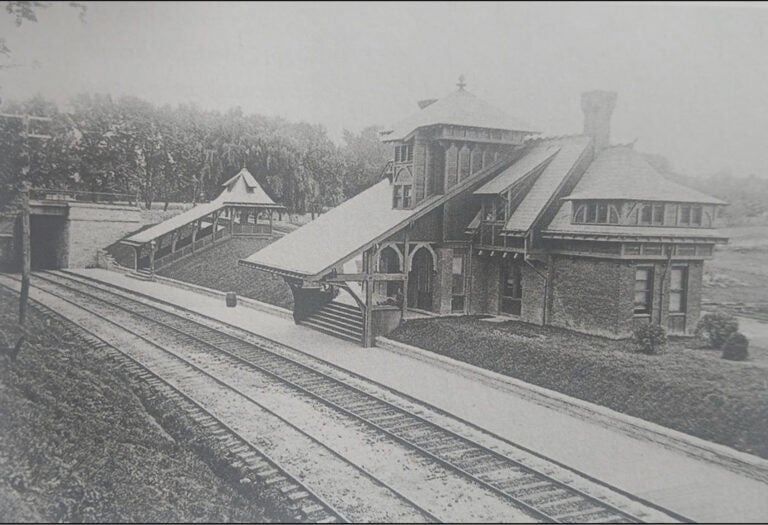
Mount Airy Station, 1883 (Thomas, Frank Furness, Architecture in the Age of the Great Machines)
Have a question about Philly’s neighborhoods or the systems that shape them? PlanPhilly reporters want to hear from you! Ask us a question or send us a story idea you think we should cover.
Two very different properties in Northwest Philadelphia have been designated as historic.
The Philadelphia Historical Commission unanimously approved the nominations on Friday.
The train station and former chapel are now part of the Philadelphia Register of Historic Places, a win for private developer Ken Weinstein, who plans to restore both buildings through adaptive reuse projects.
“Once they’re gone, these gems of our community can never be returned. And historic properties are the fabric of our community. They are what makes Philadelphia so special and unique,” said Weinstein, president of Philly Office Retail.
Mount Airy Station is one of five regional rail stations that Weinstein is redeveloping under a long-term lease with SEPTA. Acclaimed Philadelphia architect Frank Furness designed the two-story Victorian station in the early 1880s, as the area was solidifying its status as a home for commuters.
The station, which now sits along the Chestnut Hill East Line, was part of a broader branding effort that coincided with the expansion of the Reading Railroad.
Weinstein said he hopes to start construction this summer. His plans call for a mixed-use property with a commercial tenant on the bottom and residential units on top. The historic designation enables him to do that without first having to secure a zoning variance — permission to deviate from the law.
“I don’t believe getting a variance on that station would have been difficult or controversial, but it just saves us six to nine months of time,” Weinstein said.
Related Content
Philly historical commission designates ‘flashy’ Frankford movie palace
The Circle Theatre was once home to a 3,000-seat auditorium. The ornate property remains today, but it hasn’t shown movies for decades.
2 months ago
The Philadelphia Historical Commission also designated the Blue Bell Mission, a framed chapel that operated as a Methodist church for more than a century.
Built in 1879, the chapel is situated on West Johnson Street, not far from the Walnut Lane Bridge. At the time, Blue Bell Hill was still fairly undeveloped.
“It’s sort of almost like a country town, but yet still within the boundaries of Philadelphia,” said architectural historian Oscar Beisert, who authored the nomination.
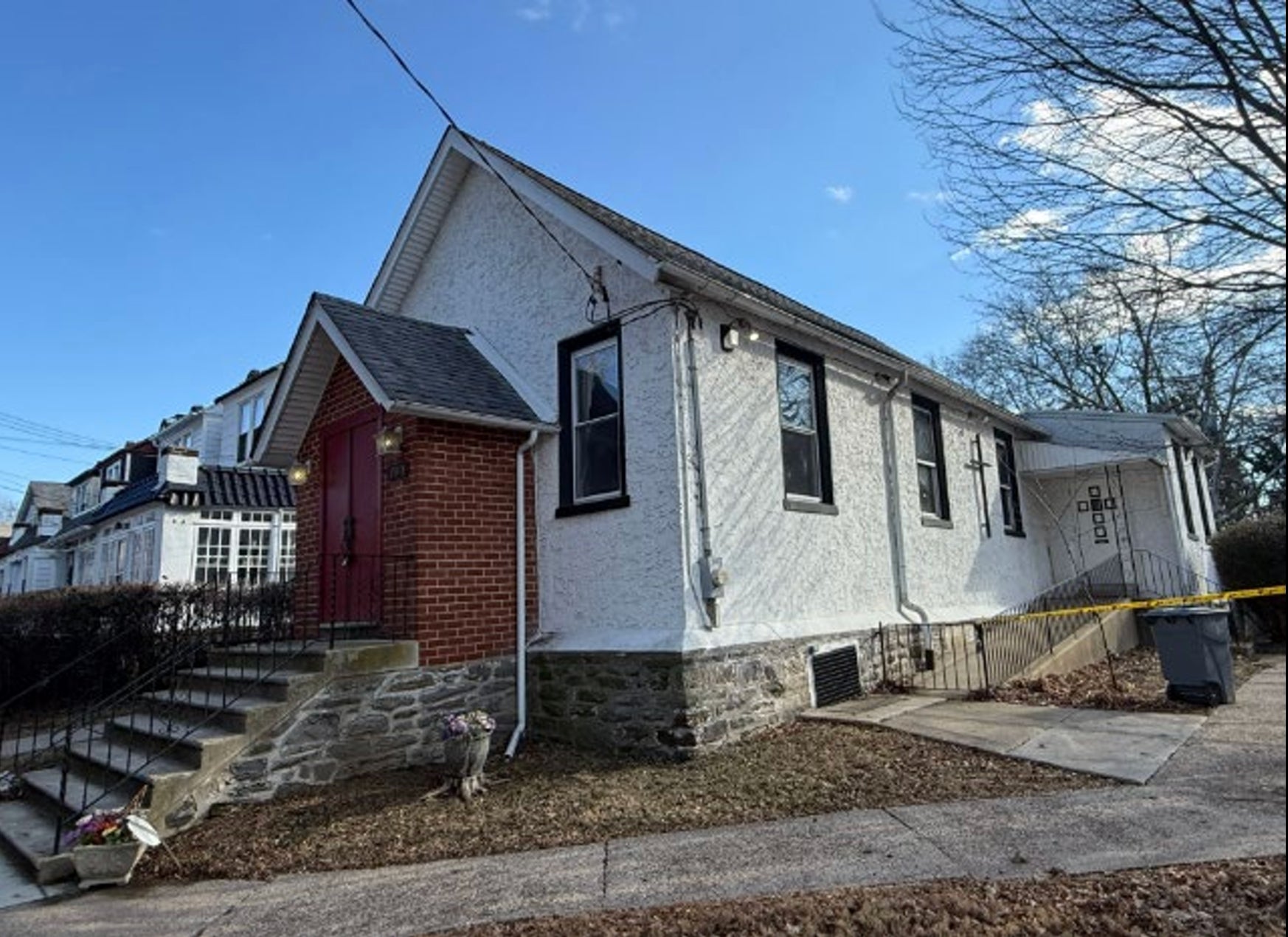
The chapel originally stood on nearby Wissahickon Avenue. It was later lifted onto logs and rolled down Walnut Lane to its current location. Beisert said these smaller churches were often replaced by larger structures after a congregation grew big enough.
That never happened in this case.
“Because it was such a small community and they were in a location that didn’t have much land to grow on, the congregation itself always stayed very small,” Beisert said.
The church has enjoyed some intrigue nonetheless. One of its longtime pastors, Rev. Charles Albany, also worked as a guard in nearby Wissahickon Valley Park, a position he took up after serving in the Civil War. The dual role earned him the moniker “the park guard preacher.”
Rev. Joseph Williams, the chapel’s final pastor, sang with the The Dixie Hummingbirds, one of the country’s most influential and successful gospel groups.
Weinstein, who bought the building about a year ago, plans to convert the Methodist chapel into a single-family home.

Subscribe to PlanPhilly
WHYY is your source for fact-based, in-depth journalism and information. As a nonprofit organization, we rely on financial support from readers like you. Please give today.
Brought to you by PlanPhilly

PlanPhilly
In-depth, original reporting on housing, transportation, and development.
Philly renters just secured new protections from landlord retaliation. A lawsuit could undo them
Fair housing advocates say the City Council measures will make it safer for tenants to speak up about dangerous living conditions. But a federal lawsuit looms.
1 day ago
Listen 1:19
Pope Leo XIV inspires Habitat for Humanity initiative bringing 26 homes to North Philadelphia
An anonymous donor contributed to 20 Habitat affiliates across the country, including Philadelphia, after the pontiff, a Villanova grad, was elected.
1 week ago
Listen 1:03
Philadelphia proactive rental-inspection plan takes shape ahead of Council vote
Department of Licenses and Inspections officials shared new details Wednesday during a budget hearing before City Council.
2 weeks ago
Listen 0:43