

Shapiro calls for $1B investment amid Pennsylvania housing affordability crisis
The request came during the fourth and final budget address of the governor’s first term. He is calling for a total of $53.2 billion in spending.

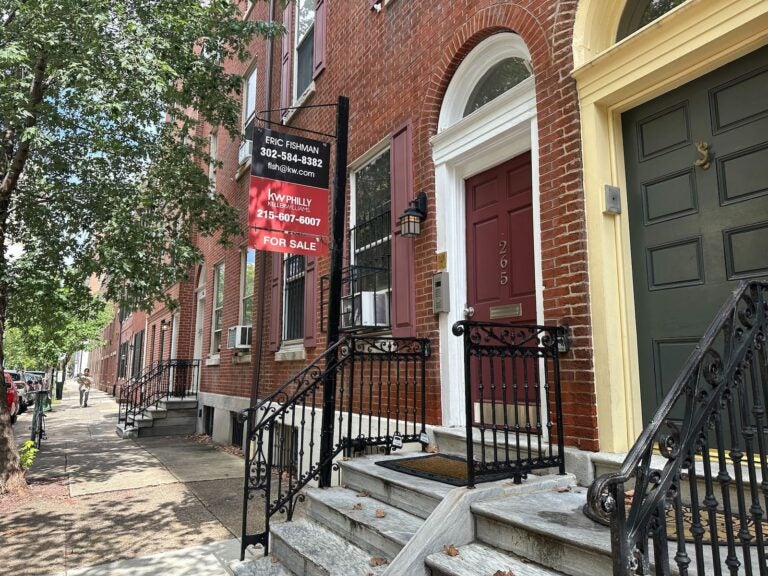
File photo: Condos for sale in the Washington Square West neighborhood of Philadelphia. (Kristen Mosbrucker-Garza/WHYY)
Have a question about Philly’s neighborhoods or the systems that shape them? PlanPhilly reporters want to hear from you! Ask us a question or send us a story idea you think we should cover.
Pennsylvania Gov. Josh Shapiro wants the state to borrow $1 billion in bonds as part of a broad effort to make housing more affordable across the commonwealth.
The proposal, announced Tuesday during his fourth annual budget address, is primarily aimed at preserving and growing the commonwealth’s housing supply.
Similar to many states, Pennsylvania continues to grapple with a housing shortage, including affordable units. As of 2021, the state needed nearly 100,000 more homes to meet the demand, according to a report released by policy research group Up for Growth.
Shapiro told lawmakers it’s time to make a “major investment” in building new homes and protecting existing units to narrow the state’s supply gap. He said not investing in housing preservation could grow the deficit by an additional 185,000 homes by 2035.
In previous budgets, the governor has pushed for new dollars for housing preservation, to no avail.
“Rather than tinker with this, let’s go big and make a real impact,” said Shapiro, whose administration is expected to release a housing action plan in the coming weeks.
Under the plan, Shapiro is also pushing for zoning reform in hopes of cutting “red tape” and making it easier to build new homes. That includes creating new state standards for accessory dwelling units, as well as transit-oriented and mixed-used development “on main streets and commercial corridors,” he said.
Accessory dwelling units are generally apartments built within or alongside an existing home that can be used to generate rental income.
Every municipality in Pennsylvania has its own set of rules dictating which types of housing are permitted by-right and which projects require a variance — that is, permission to deviate from the law — for construction to move forward.
These regulations can essentially bar certain developments from being built. In general, single-family homes are heavily favored over small apartment buildings, including duplexes, triplexes and fourplexes.
During his address, Shapiro called for creating a catalog of all those rules “so that we can help local governments understand what works best to build more affordable housing.” He also wants to modernize the state’s Municipalities Planning Code in hopes of streamlining the approvals process where possible.
The code spells out local zoning and land-use powers for nearly every municipality and county in Pennsylvania. Changing it would require approval from all of those entities, excluding Philadelphia and Pittsburgh.
Shapiro’s push comes as some housing advocates have called for a statewide zoning code to help alleviate the need for more housing in Pennsylvania.
Related Content
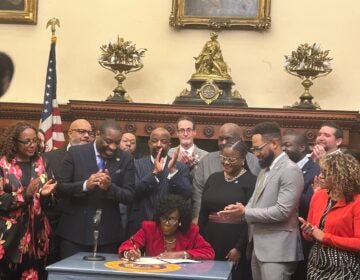
Philly City Council vote unlocks $800M for housing, shifting more aid to lowest-income residents
The legislative hurdle was cleared after intense pressure from Mayor Cherelle Parker opposing the changes to the H.O.M.E initiative's first phase.
2 weeks ago
Listen 1:06The governor also wants lawmakers to create statewide protections for renters. On Tuesday, he proposed sealing eviction records for certain renters, and putting a cap on rental application fees so they would be “limited to the actual cost of the screening.” And he said he wants to stop landlords from charging prospective tenants to view a property.
“Right now, landlords are allowed to charge exorbitantly high fees just to submit a rental application,” Shapiro said. “Those fees are meant to cover the cost of a background check — but too often, landlords are charging two, three or four times the cost.”
In Philadelphia, City Council passed legislation last year barring landlords from charging an application fee unless the money is used to cover the cost of running a background check, a credit check or both. And within a 12-month period, they can’t charge someone more than the cost of completing those checks or $50, whichever is less.
The law took effect two months ago.
Shapiro is additionally urging lawmakers to pass legislation to protect homeowners living in “manufactured home communities.” These are communities where residents own their home but not the land beneath the structure. The company, often a private investor, then charges each homeowner annual rent on that land. There are currently 56,000 households living with this arrangement, Shapiro said.
He wants to see a bill that would limit how much the rent on those lots can increase each year.

Subscribe to PlanPhilly
WHYY is your source for fact-based, in-depth journalism and information. As a nonprofit organization, we rely on financial support from readers like you. Please give today.
Brought to you by PlanPhilly

PlanPhilly
In-depth, original reporting on housing, transportation, and development.
SEPTA gets $220M in state funds to help with capital issues and fixing trains
The money will help the transit agency fix its aging railcars, rent some replacements and return full service for riders.
2 months ago
City Controller’s Office deems thousands of Philadelphia properties as unsafe
Their investigation found that the Department of Licenses and Inspections only has 15 inspectors, and is unable to keep up with demand and oversight of the properties.
2 years ago

Number of new housing units in Center City area hits 5-year high
The benchmark comes as the area continues to see population growth, including an increase in the number of New York transplants.
2 years ago
Listen 1:00