

Philadelphians urged to prevent frozen pipes as temperatures continue to drop
Pipes are at greater risk of freezing and bursting as low temperatures remain for consecutive days.
Listen 0:45
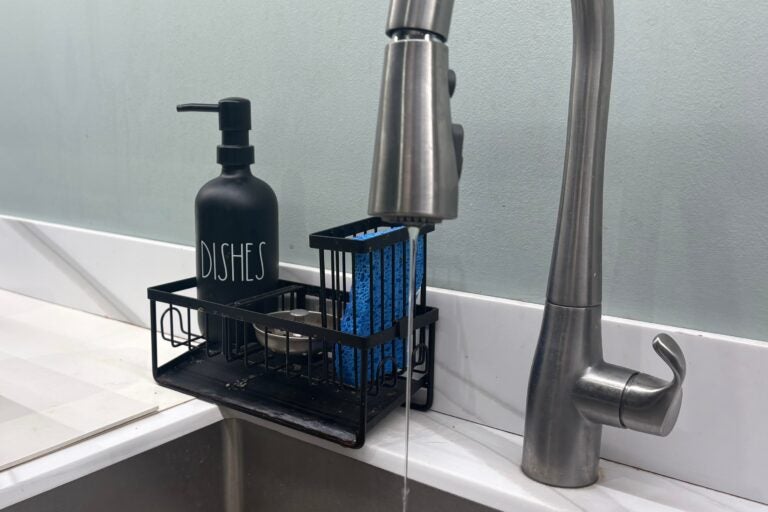
File - Water drips from a faucet at WHYY's Philadelphia office (Abbey Lamb/WHYY)
From Philly and the Pa. suburbs to South Jersey and Delaware, what would you like WHYY News to cover? Let us know!
As freezing temperatures in the Philadelphia region are expected to persist through Sunday, water utilities are bracing for a surge in frozen pipes, leaks and water main breaks.
When temperatures drop below 32 degrees for more than 72 hours, pipes are at greater risk of freezing and bursting, especially when water sits unused overnight. Frozen plumbing can put pressure on pipes and cause a rupture.
“It’s like when you put water in [ice cube trays in] your freezer … you put that water in the freezer and over time it becomes ice. Well, the same thing happens in your plumbing,” said Kinya Kirby, a water customer care manager for the Philadelphia Water Department.
Over the past week, the water department has received 63 phone calls from ratepayers whose water stopped running, 74 reports of leaks and more than 100 notifications about water leaking into cellars.
The last time Philadelphia faced freezing temperatures for more than seven days was in January 2018, when the water department responded to 366 water main breaks.
As temperatures are expected to reach as low as 0 degrees on Saturday, the water department is predicting a spike in leaks and water main breaks and has deployed additional staff.
Sunday’s snowstorm could compound the issue, the water department said, as heaps of snow remain unplowed. The water department is urging ratepayers to clear their curb boxes of snow and ice so workers can respond quickly. They are typically located on the sidewalk and covered with a metal plate.
Related Content
A major winter storm dumped over 9 inches of snow in Philadelphia before turning to sleet and freezing rain. Subfreezing temps are predicted all week.
1 month ago
There are a number of steps residents can take to prevent their pipes from freezing, including letting their tap water drip overnight. People are also encouraged to cover up drafty windows and ensure the area around their water meter remains above 40 degrees.
Homeowners can also turn off their water valve from indoors while opening the outside hose bib. People should check their water flow and pressure before going to bed and when they wake up in the morning.
“There’s still time to take some steps to protect those spots where you have drafts coming in, or where you have exposed plumbing,” said water department spokesperson Brian Rademaekers. “Do a quick little audit around your house when you get the chance and find those cold areas, and think about, ‘Is there plumbing there that I could help keep warm?’”
When there’s no water coming out of the tap, residents should check with their neighbor — if their water is running, chances are it’s a plumbing issue, not a water main break, he said.
Residents who are experiencing frozen pipes should apply heat, such as a hair dryer, to the area around the pipes — not directly on the pipes — to allow the thawing water to drop out. Never apply a direct flame to a pipe.
Homeowners are responsible for their own internal plumbing repairs.
“Anyone who has accidentally left a can of beer in the freezer knows what can happen to that can. It’s the same thing that happens to your pipes — it expands and cracks,” Rademaekers said. “You won’t have water, but you also have a flooded basement or damage to your property and you can end up with thousands of dollars of damage.”
Customers should report leaks in the street to the water department’s 24/7 emergency hotline at 215-685-6300.

Get daily updates from WHYY News!
WHYY is your source for fact-based, in-depth journalism and information. As a nonprofit organization, we rely on financial support from readers like you. Please give today.
Part of the series
Watershed
Preserving Our Water: How we use our Delaware Watershed.
The project is funded by The William Penn Foundation.
As the temperatures remain below zero, the city of Philadelphia has responded to a spike in water main breaks.
1 month ago
Listen 0:57
‘Everything was floating’: Flooding of FDR Park’s boathouse destroys nonprofit’s equipment
The nonprofit Discovery Pathways says equipment, including life jackets, boat paddles, fishing rods, kayak seats and power tools, was damaged.
6 months ago
Listen 1:11
How Philly communities and city government are tackling climate-driven flooding
Three takeaways from a panel moderated by WHYY’s Maiken Scott about flooding in Germantown and beyond.
9 months ago
Listen 1:13