

These older Philadelphia women are returning to their childhoods and jumping double Dutch to stay fit as they age
Members of the 40+ Double Dutch subclub in the West Oak Lane neighborhood celebrate aging, fitness and sisterhood during weekly meetups.
From Philly and the Pa. suburbs to South Jersey and Delaware, what would you like WHYY News to cover? Let us know!
Nearly two dozen women in matching red shirts formed a circle inside Simons Recreation Center in North Philadelphia on a recent Friday night.
They are members of the local 40+ Double Dutch Club, which brings older women together to revisit a favorite childhood pastime to stay fit as they age.
“Alright, partner up. Everybody should have a partner,” Chocolate K. Jordan, 48, told the group.
As the beat of “Rockin’ Robin” filled the room, each woman high-fived her partner to the left, then to the right, before reaching high and squatting.
“Partner, partner, up, down. Partner, partner, up, down. Partner, partner, double, double, down,” Jordan chanted as she led the group through the warmup.
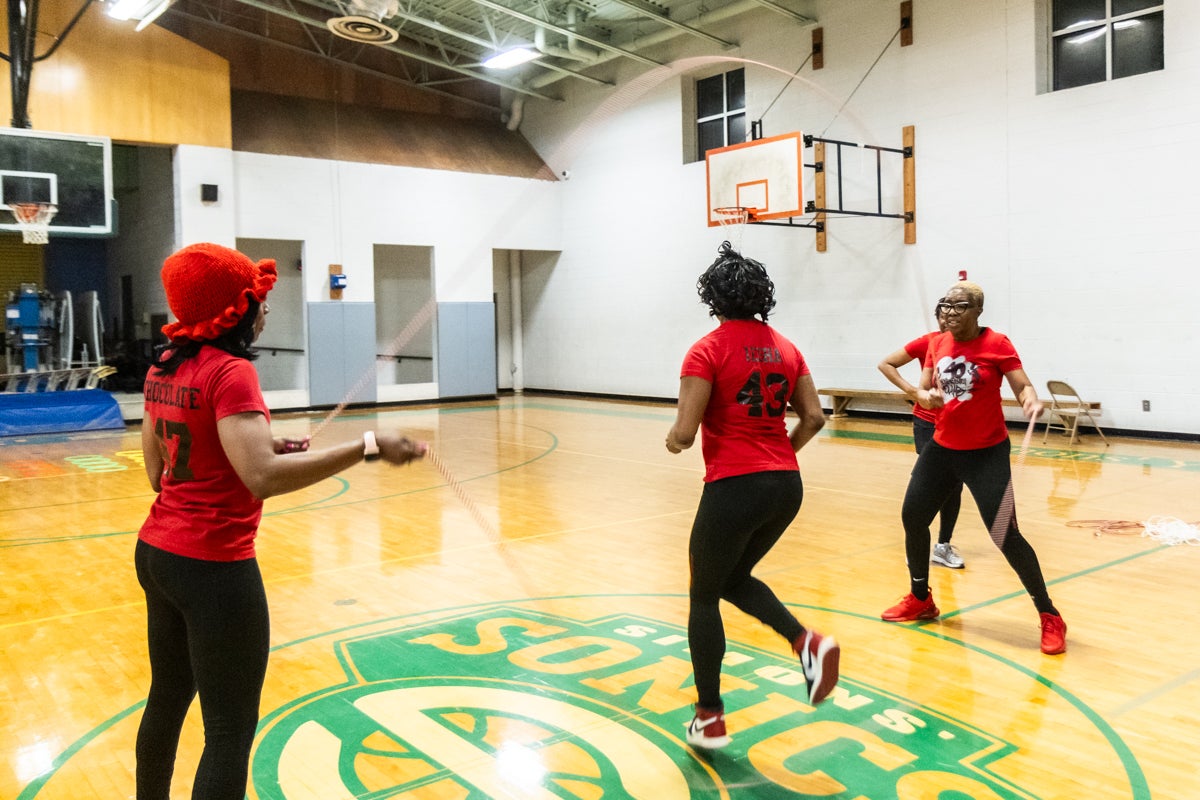
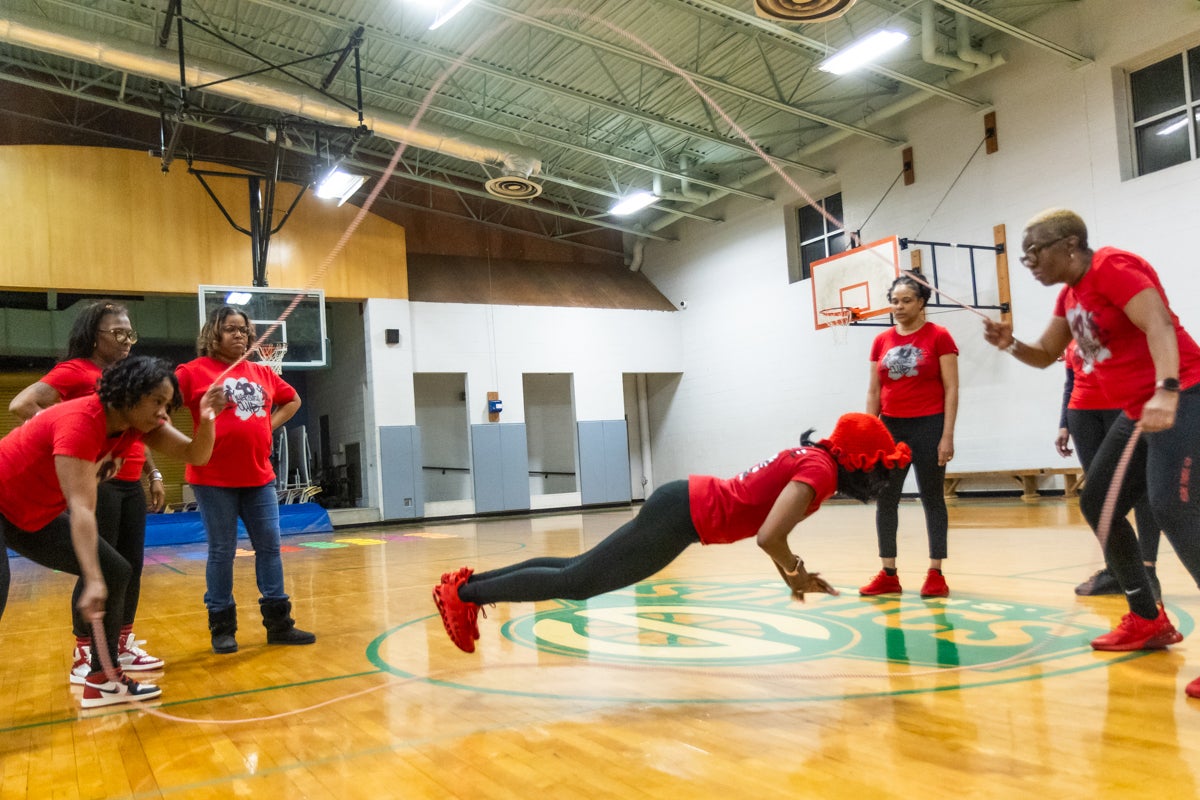
Soon, pairs of women picked up two long white ropes. Standing about 10 feet apart, they swung the ropes over and under in alternating circular motions as a third woman matched their rhythm, hopped into the middle and started jumping.
The click-clack of the ropes as they hit the wood floor was often drowned out by laughter, singing and cheering from other women waiting their turn or walking the perimeter of the gym.
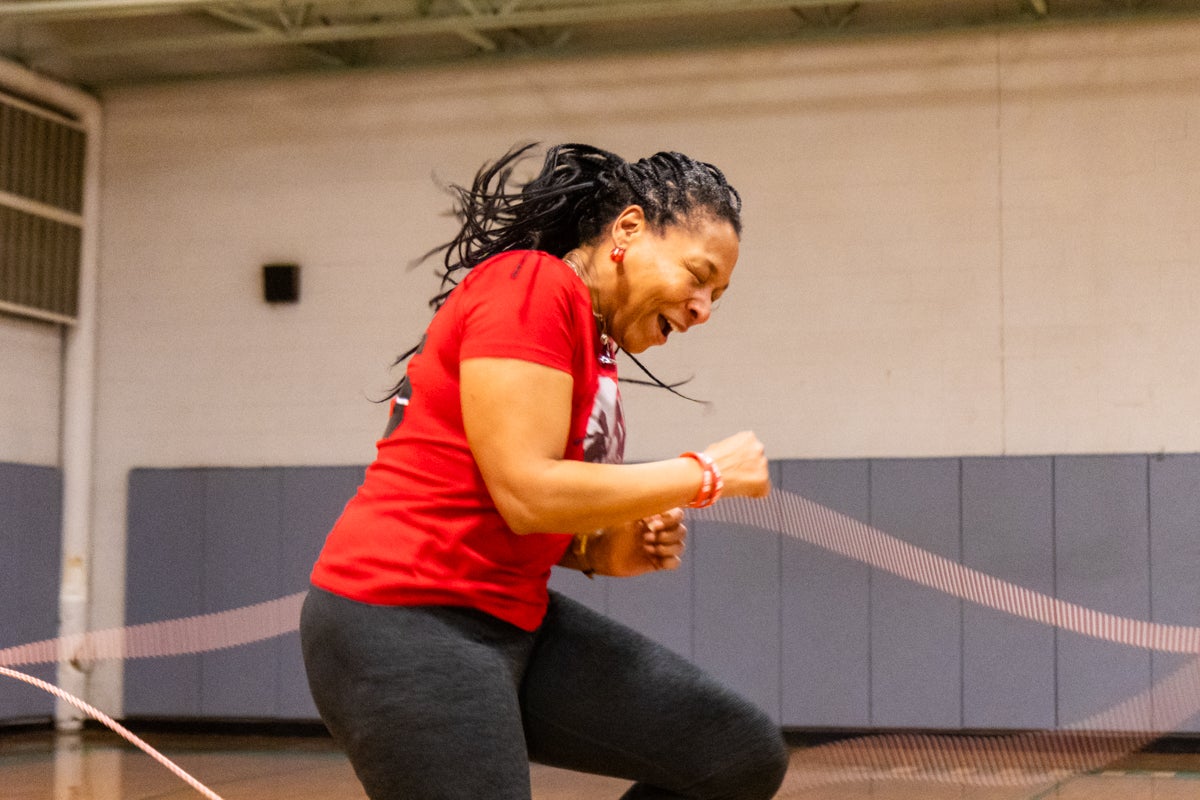
“If they have any kind of mobility problems or whatever, they come and just walk,” said Sharon Hatcher, 64. “Everybody does what they can, when they can, and we just encourage them to come and enjoy the fellowship and the sisterhood.”
The club, which meets weekly in the West Oak Lane neighborhood, has become a safe space for women to talk about menopause, grief, marriage, children and grandchildren, their jobs if they’re still working and other major life changes.
“Most of us work. Some of us are retired,” said Sharon McKnight, 58. “But basically, after a long week, it helps to unwind. And when you’re not here, for me, you miss it.”
A movement takes shape in Chicago
The game of double Dutch jump rope really took off in the 1940s and 1950s, especially in urban communities among young Black and African American girls.
In Chicago, Pamela Robinson, now 55, could often be found jumping with her sister, friends and neighbors when they were kids.
“Anytime the weather was nice, we would be outside jumping double Dutch because it was just a way for us to have fun, and it was just something for us to do with our friends,” Robinson said. “It didn’t cost a lot of money and it just made you happy.”
Robinson founded 40+ Double Dutch Club with her friend, Catrina Dyer-Taylor, nearly 10 years ago to rekindle the feelings of her childhood and to help manage major changes in her life.
At the time, her 20-year marriage was ending, her adult children were away building their own lives, and she struggled to find a job after being out of the workforce for two decades.
The 40+ Double Dutch network is a lifeline for many women seeking support from others with similar lived experiences, she said.
“We are women who have lived and who have persevered and who are survivors,” Robinson said. “So, we’re connecting with women who have been through something. We haven’t all been through the same thing, but we have all been through something, and we’re helping each other get through.”
Related Content
Philadelphia seniors ‘strut’ into aging as they take charge of their health and find community
The Hunting Park We Walk PHL group joined more than 500 older city residents for Philadelphia Corporation for Aging’s 13th Senior Strut health event.
5 months ago
Listen 1:46Finding community in Philly
The 40+ Double Dutch Club network now includes nearly 100 sub-clubs in cities and communities across the country, including in Delaware County and South Jersey.
They’re open to all women 40 and older, whether they have experience jumping double Dutch or are learning for the first time.
The North Philadelphia sub-club has active members ranging in age from 40 to 73. Some members who are even older, but can no longer do most of the physical activities, still come to watch.
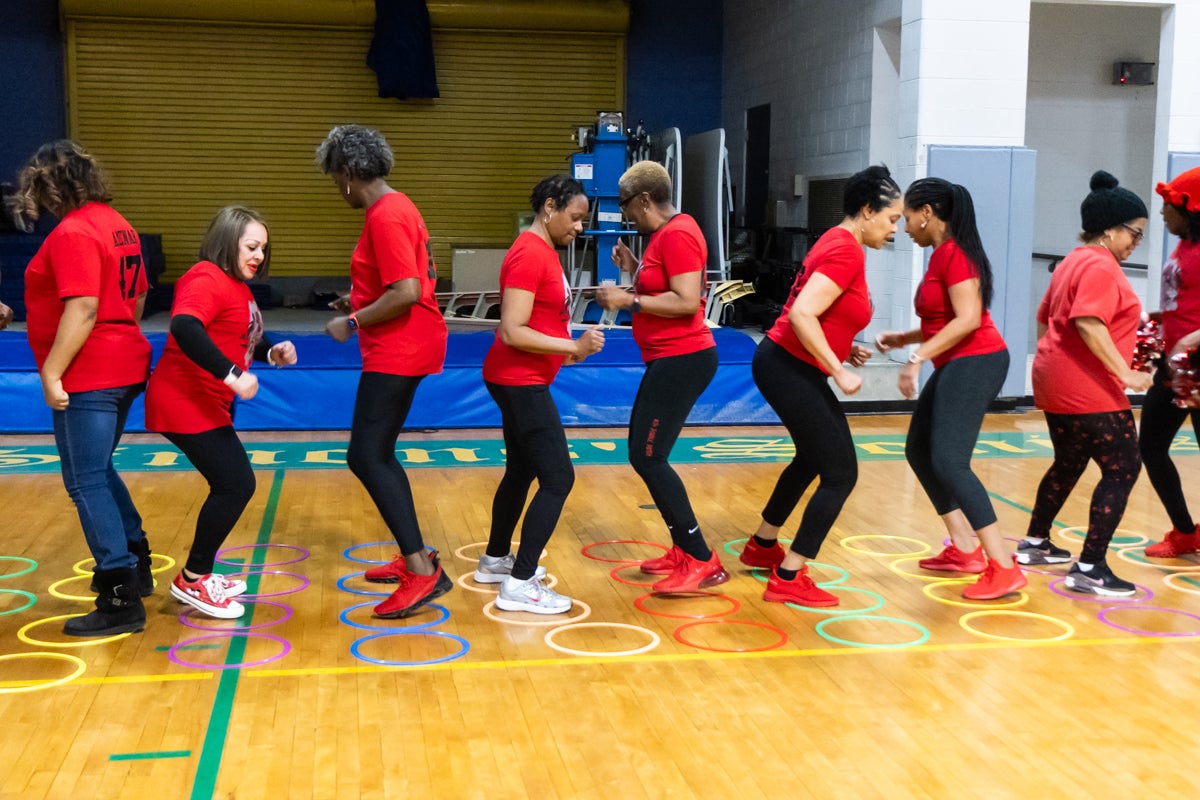
“We do everything that is old school,” Jordan said. “From double Dutch to jacks to hopscotch to some of your line dances to hula-hooping, we do it all. It’s a time for you to go back in time and relax and have childhood fun.”
Sure, the women may not jump as fast or as long as they used to when they were girls, but Jordan said they get a pretty good workout from the two hours they spend at the rec center every Friday.
‘Women who are survivors’
As the ropes whistled in the air at the Simons Rec Center, more women took turns jumping into the middle. Some hopped on alternating feet or twisted in the air as they moved.
Vickie Duncan stood to the side to catch her breath. She wore a red shirt with the number 64 on the back — her age.
“Some people never make it to that age, so I’m proud of my age,” she said. “I’m proud to still be in good health and everything.”
The weekly meetups mean so much to Martha Santiago, 70, that she spent over two hours taking city buses from her home in Bensalem to the rec center Friday night.
She has visual and hearing impairments.
“These are my girls,” Santiago said as she waited for her turn to jump. “I’m legally blind, but I listen to the beat. I’m going to show you what I can do with my disability.”
-
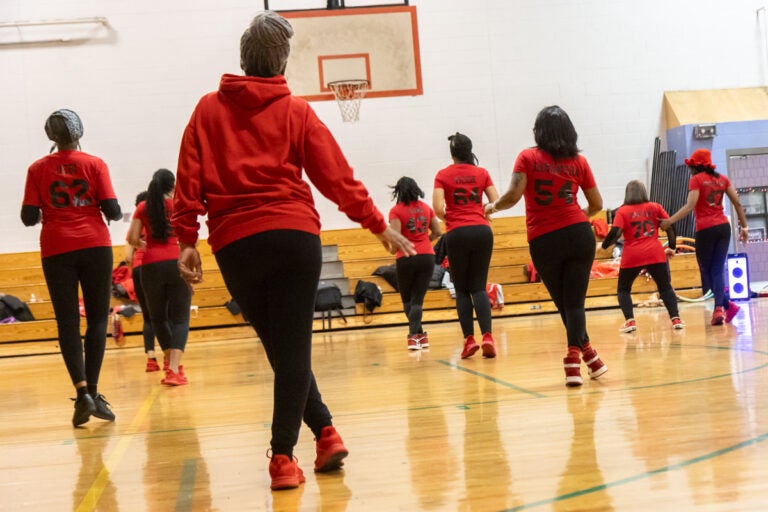
Members of the Philadelphia chapter of the 40+ Double Dutch wear shirts that show off their names and ages. (Kimberly Paynter/WHYY) -
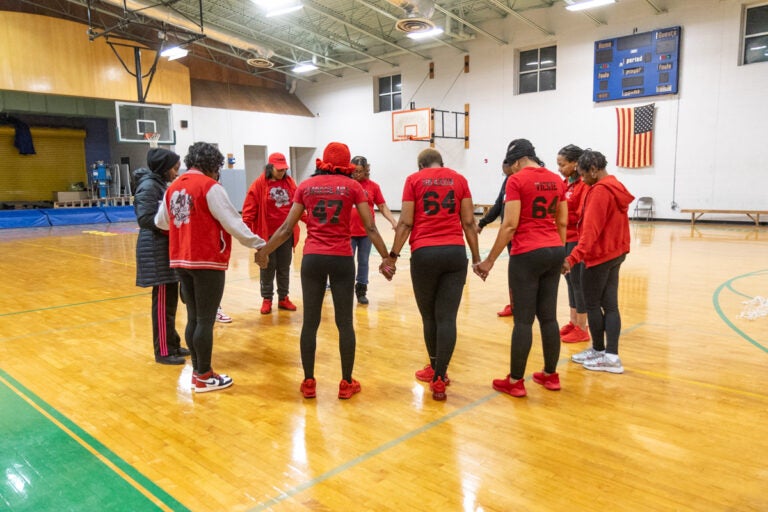
Members of the Philadelphia chapter of the 40+ Double Dutch club kick off their Friday night meeting at Simons Recreation Center with a prayer. (Kimberly Paynter/WHYY)
After jumping, dancing and some agility footwork exercises, the women formed another circle, hand in hand, to close out the night.
“Lord, we pray right now that everyone has a blessed holiday,” Hatcher said. “We know that this is a rough time for some people because there are people missing from their table, but Lord, we ask that you just cover them and give them strength to get through and to be thankful for what we have, Lord.”
One by one, they grabbed their bags from the bleachers and pulled on heavy coats to brave the cold, windy night as they made their way home. Some rushed out to grab something from a store before it closed or went to pick up a grandchild from a rehearsal or dance class.
Others lingered, wishing each other happy holidays, with a promise to meet up again to jump rope at the rec center on another Friday in the new year.

Get daily updates from WHYY News!
WHYY is your source for fact-based, in-depth journalism and information. As a nonprofit organization, we rely on financial support from readers like you. Please give today.
Part of the series

Some older Philadelphians are turning to each other for support in finding affordable housing options as they age.
1 month ago
Listen 1:16
Pennsylvania launches free statewide legal support program for grandparents raising grandchildren
The statewide free legal line, staffed by attorneys at the SeniorLAW Center, will provide advice and resources to help families navigate the court system.
6 months ago
Listen 1:15
As part of the Burlington County Sheriff's Office program, inspectors check door and window locks, smoke and carbon monoxide detectors and exterior home security issues.
6 months ago
Listen 1:05