

Delaware settles lawsuit that alleged ‘systemic failures’ with how state provides special education services for prisoners
The state’s consent decree with the Community Legal Aid Society will be monitored by an independent evaluator and U.S. District Court.


This classroom is at James T. Vaughn Correctional Facility. (WHYY file photo)
What are journalists missing from the state of Delaware? What would you most like WHYY News to cover? Let us know.
For the last half-century, a series of federal laws have guaranteed free public education to everybody with a learning disability up to age 22, including young adults in correctional facilities.
But for years in Delaware, according to a federal lawsuit filed last year by Community Legal Aid Society, educational services for men ages 18 to 22 have been fraught with “systemic failures” at the state’s two biggest prisons — Howard R. Young Correctional Institution in Wilmington and James T. Vaughn Correctional Center near Smyrna.
The lawsuit said the men who have not received the education they are legally entitled to have attention deficit hyperactivity disorder, depression and/or other mental health or behavioral challenges that require intense support, including counseling.
In Delaware, those incarcerated young men have routinely waited months to receive any schooling, had extremely limited instruction time or were not provided individualized instruction of other support services required by law, the suit claims. Such failures, the lawsuit said, have caused them “irreparable harm.”
One plaintiff, for example, accused the state education and correction departments of failing to provide him with “any meaningful education, sometimes providing only 45 minutes of education over the course of a month.”
The lawsuit said he was denied a total of 1,892 hours of educational services while he was in Delaware’s custody. That prevented him from being able to obtain or make progress toward a General Education Development certificate, or GED, which is the equivalent of a high school diploma, the lawsuit charged.
“These students know that they need this diploma to have a brighter future that is not behind bars and they need special education to be able to make that happen,’’ said Marissa Band, project director of the Disability Rights Delaware initiative at Community Legal Aid Society, which brought the case with the help of a private firm in Washington, D.C.
“Federal law says that people who are deemed in need of special education must be afforded the chance to get at least a GED in prison.”

The lawsuit was filed while John Carney was governor, and his administration tried to get the case dismissed from U.S. District Court in Wilmington.
But under Carney’s successor, Matt Meyer, who took office in January, the state decided this month to settle the lawsuit and agreed to make substantial policy revisions and improvements within the prisons to comply with the Individuals with Disabilities Education Act and other relevant federal statutes.
Under the deal, the state must meet certain timetables and increase the requirement for classroom time for eligible people in prison to four hours a day.
The parties also agreed to a consent decree that an independent evaluator and the federal court will monitor for compliance.
“I’m definitely feeling optimistic,” Band said. “Just getting agreements on a consent decree is huge progress. I’m very hopeful that we will be able to collaboratively make real change and improve the lives of a number of students.”
A prisoner, identified only as “E.E” to provide him with anonymity, applauded the settlement in a statement issued by Band’s office.
“I believe that the extra support and access to supports to address my educational needs will help me in many ways, including expanding my strategies and opportunities to continue learning and understanding my curriculum,” he said.
No one from the Department of Education or Department of Correction would agree to an interview about the agreement or the issue of educating younger detainees or sentenced prisoners with disabilities.
But education spokesperson Alison May said in a written statement that under Meyer, her department has worked closely with corrections officials “to strengthen prison-based education and ensure that incarcerated learners receive high-quality, humanizing educational services.”
Related Content
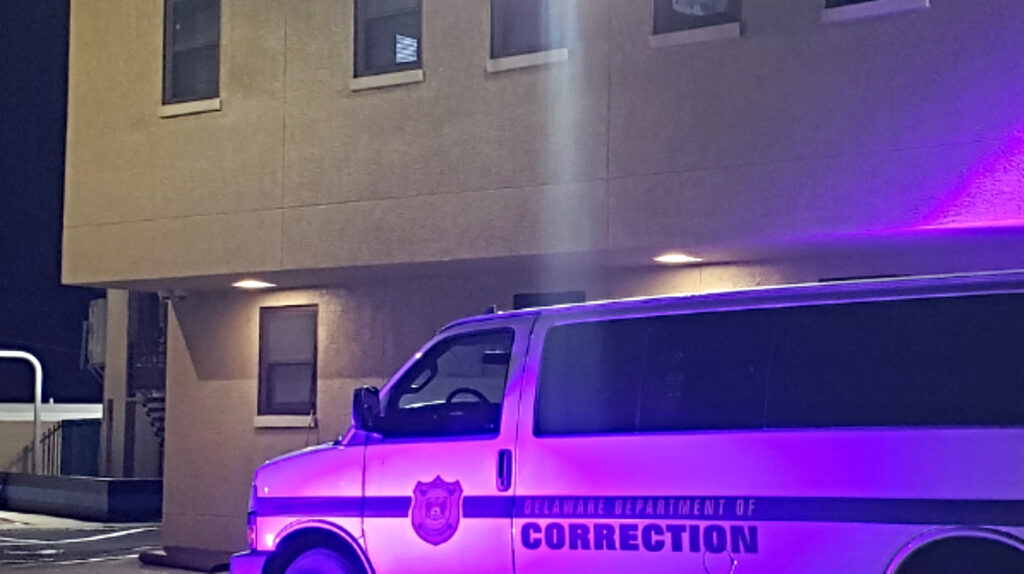
Community advocates say the facility is critical in the transition from incarceration to freedom for Wilmington residents and their families.
11 months ago
Listen 2:07May’s release did not provide details about the improvements she claimed, but she included a statement in support of the consent decree from Education Secretary Cindy Marten, who was not in her post when the lawsuit was filed.
“This resolution reflects our values in action and our responsibility to ensure every learner is educated in ways that best meet their needs,” Marten’s statement said. “It represents a public and moral commitment to create the conditions for stronger learning opportunities, greater dignity, and a constructive and accountable path forward for the individuals we serve through prison education.”
Department of Correction Commissioner Terra Taylor, a defendant in the case, had no comment about the allegations, settlement and consent degree.
Prisons spokesperson Jason Miller said in a statement, however, that the department “values all of the rehabilitative programming, treatment, and education services that are provided across our facilities” and will support education officials “in implementing the provisions of this agreement.”
‘Students were not getting special education or related services’
In any given year, there are about 30 young adults at the Young or Vaughn prisons who have been identified during their K-12 years as being eligible for an Individualized Education Program under federal law, said Todd Gluckman, a Washington attorney who worked on the case.

The educational programs at correctional facilities are administered by Delaware’s Adult and Prison Education Workgroup, a division in the Department of Education.
Community Legal Aid Society, as Delaware’s legally mandated “protection and advocacy” agency, has the right to scrutinize those programs for people in prison with disabilities. To that end, the agency receives federal money to look into suspected violations.
Gluckman said years of investigation into Delaware’s prison education system found numerous deficiencies at Young and Vaughn.
“What they learned is that these students were not getting education, special education, any of the related services like counseling or other things that they need,” Gluckman said. “Essentially, this was students receiving guided self-study.”
Those findings, often substantiated by a state review panel, culminated in the lawsuit.
“A lot of these students really needed a high school diploma, and were working towards their high school diploma,” Gluckman said. “And whether they were charged with certain crimes, and were awaiting a trial or were convicted of certain crimes, it was critical to them to get an education because that could obviously substantially impact their lives going forward.”
The consent decree requires the state to develop and implement policies that follow the law “and provide the students the education and related services that they need,” Gluckman said.
For those who have been incarcerated for a lengthy period and didn’t get the required services, “they’ll get three additional years of education in order to try to achieve their high school diploma,” Gluckman said.
Band said those with disabilities her agency is representing are yearning for the opportunity to earn a degree or make meaningful progress toward one. Once they are released, their schooling will help them avoid unemployment, poverty and future run-ins with the law.
“These students want their education,” she said. “You have a lot of kids in the community that are skipping class or being teenagers, but these guys are begging to learn, which I think is really, really just remarkable and commendable for them to be really advocating for this for themselves.”
Band emphasized that the students will not be the only ones who will profit from the improvements, predicting that their educational achievements will reverberate across the state and beyond.
“It benefits the whole community,” she said, “if we can get these students the services that they need so that they can be productive contributing members of society.”

Get daily updates from WHYY News!
WHYY is your source for fact-based, in-depth journalism and information. As a nonprofit organization, we rely on financial support from readers like you. Please give today.
Part of the series


New Castle County Recorder of Deeds Mike Kozikowski lost the race to David Tackett, who filed a complaint with prosecutors about the gambit.
2 days ago
Listen 1:24
Sens. Coons, Blunt Rochester questioned the time the judge devoted to her late husband’s now-defunct ad firm and its political direction.
2 weeks ago
Listen 1:58
Justin Dynlacht thought his employer and health insurer didn’t provide adequate coverage for Crohn’s disease, but took his complaints way too far.
2 weeks ago
Listen 1:52