
‘Stretched thin’: Medicaid cuts threaten Delawareans’ access to health care in rural areas
Delaware has a plan to transform health care in the state’s rural areas, but is dealing with billions in federal funding cuts.
Listen 1:00
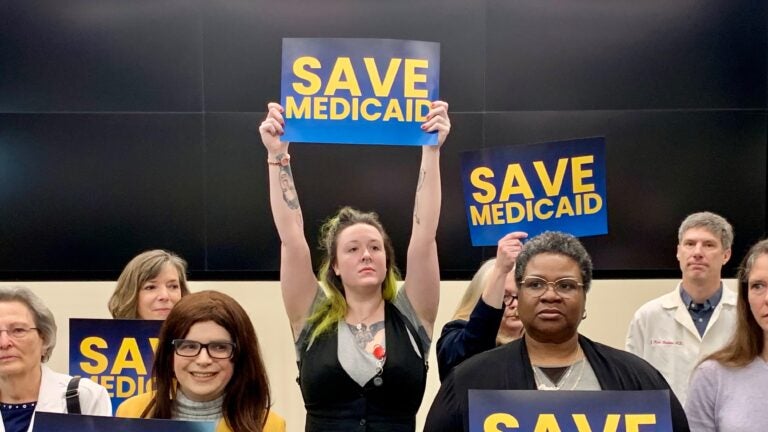
File - Delawareans protest against possible cuts to federal Medicaid funding at a news conference with patients, doctors, members of Congress and health care advocates in Wilmington, Delaware, in March 2025. (Sarah Mueller/WHYY)
What are journalists missing from the state of Delaware? What would you most like WHYY News to cover? Let us know.
Rural hospitals in Delaware offer vital services like cancer screenings and stroke care. They minister to their patients while coping with workforce shortages and narrow profit margins.
But those hospitals and care are under threat due to billions in Medicaid cuts from rural providers. Some Congressional Democrats have warned that some facilities could close. Delaware is moving to fill the hole, but some say the shortfall will lead to more uninsured patients, fewer services and could force hospitals to close.
Hospitals may close, thousands to lose health coverage
The so-called “one, big beautiful bill” Congress approved earlier this year eliminates almost $1 trillion from the Medicaid program over the next 10 years, with rural areas losing $137 billion, a KFF analysis found. The health policy organization said Delaware is expected to lose 14% of federal Medicaid dollars, totaling from $3 billion to $5 billion.
More than 50,000 Delawareans will lose their Medicaid coverage and more than 30,000 will become uninsured due to Medicaid cuts, the Delaware Healthcare Association said this summer.
“If you don’t have insurance, if you’re not insured, if you don’t have Medicaid, then you don’t have the ability to go see a primary care physician,” said Bebe Healthcare President David Tam. “They might not be able to get primary care or preventive care. They might not be able to get their pharmaceuticals, their medications, their immunizations or vaccinations, and as a result, they will get sicker.”
Tam said for someone suffering from a chronic condition like diabetes, losing insurance could mean putting off going to the doctor. Untreated diabetes could lead to serious consequences like kidney, nerve and heart disease.
“They’ll have more issues related to strokes and heart attacks and cancer and they will still show up in our emergency rooms, which, unfortunately, is the most expensive type of care available,” Tam said.
Delaware’s rural hospitals operate on narrow or even negative profit margins. A June letter to Senate Republican leaders and President Donald Trump by four U.S. senators voiced concern that 338 hospitals across the country could close, including Nanticoke Memorial Hospital in Seaford, Delaware.
Brian Frazee, CEO of the Delaware Healthcare Association, said none of the state’s rural hospitals are currently at risk of closing, despite real financial strains.
Related Content
Delaware health care systems struggling to keep pace with a rapidly growing older population
With seniors expected to make up a third of Delaware’s population by 2040, hospitals and clinics are expanding but still struggle with provider shortages and care delays.
11 months ago
Listen 5:04Southern Delaware is the state’s fastest-growing region
Sussex County has seen the largest population increase in the state. It grew 29% from 2010 to 2022, according to research group USAFacts. Census data shows that about 31% of the population is 65 years old or older. Sussex County is also the largest geographic area of the state’s three counties.
Hospital administrators say that makes access challenging for patients. Meghan Walls, Nemours Children’s Health associate vice president of external affairs for Delaware Valley, said transportation is a huge barrier to care.
“We hear a lot that families can’t get to a clinic that’s 10 minutes away from them because they don’t have a car, or they can’t drive there,” she said. “There’s some public transportation, but not much in Sussex and Kent [counties].”
Workforce shortages also exacerbate the problem of access. Tam said there’s a need for more health care professionals, including primary care doctors, lab technicians and nurse practitioners.
Related Content
Medicare open enrollment begins Oct. 15. Here’s what to know about changes in Pa., N.J. and Del.
People 65 and older may see higher or lower Medicare premium costs, different plan options, limited telehealth access and other changes for 2026 coverage.
9 months ago
Listen 1:04Transforming rural health care in Delaware
To pacify some members of Congress concerned about the sweeping Medicaid cuts to rural hospitals, Republicans created a $50 billion funding for states through 2030. Delaware has submitted an application for up to $1 billion from the fund to overhaul the state’s rural health care. Even if the application is approved for the full amount, it would only replace a fraction of the funding cuts. The fund is temporary, but the cuts are not, with most of the spending reductions backloaded and occurring after fiscal year 2030.
Delaware’s application lists 15 initiatives, including establishing a medical school, creating a mobile unit and community hub network, and expanding school-based health centers. Gov. Matt Meyer said the list of projects was the product of conversations with health care providers.
“We heard about patients in western Sussex who drive 50 miles just to see a specialist or wait over six months for a primary care appointment,” Meyer said. “We heard from small hospitals and clinics stretched thin, struggling to recruit doctors and nurses because Delaware is only one of only three states in America without a medical school.”
One way the state could raise additional Medicaid revenue is through the hospital tax legislation sponsored by then-state Sen. Sarah McBride, now a congresswoman, the General Assembly approved in 2024. The law allows Delaware to generate up to $100 million a year through a 3.58% tax on hospitals’ net patient revenues.
Frazee said the status of implementing the tax remains uncertain.
“The state and [the Centers for Medicaid and Medicare Services] are going back and forth as to whether that is going to move forward and in what form,” he said. “We’re confident that it will move forward and we’ll do everything we can to make sure that that happens, because that will be yet another vehicle to addressing the challenges that we’ve been discussing.”

Get daily updates from WHYY News!
WHYY is your source for fact-based, in-depth journalism and information. As a nonprofit organization, we rely on financial support from readers like you. Please give today.
Part of the series


New addiction recovery programs and family support services coming to Sussex County
Pennsylvania nonprofit Be a Part of the Conversation is launching recovery programs and parent partnership services in southern Delaware for families affected by addiction.
4 months ago
Listen 1:11
The overdose death of their son 13 years ago led to the Keisters’ creation of atTAcK Addiction.
5 months ago
Listen 1:46
Blood Bank of Delmarva urges donations amid winter challenges during National Blood Donor Month
As winter challenges reduce blood donations, the Blood Bank of Delmarva highlights lifesaving stories and urges Delawareans to give.
6 months ago
Listen 1:07