

Delaware lawmakers offer competing bills to regulate kratom, an opioid-like herbal supplement
Critics say kratom is dangerous and addictive, but others say it’s effective for withdrawing from opiates and pain relief.
Listen 0:54
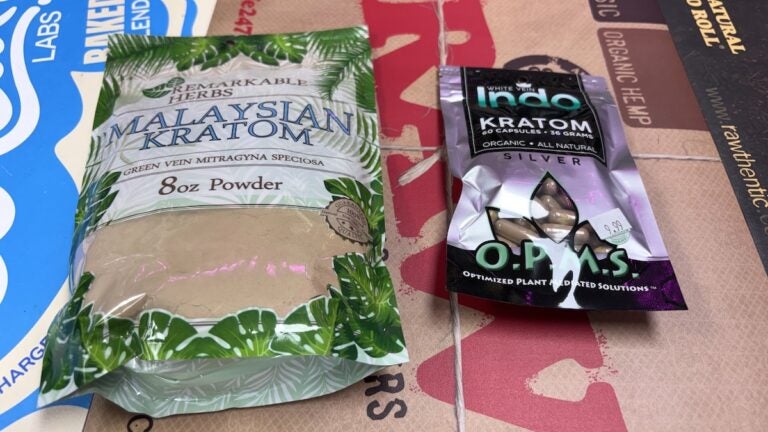
Two bags of Kratom sold at the Murphy Smoke Shop in Wilmington. (Sarah Mueller/WHYY)
From Philly and the Pa. suburbs to South Jersey and Delaware, what would you like WHYY News to cover? Let us know!
An herbal supplement found in smoke shops and gas stations could soon be outlawed in Delaware. But many users say its medicinal qualities help them.
It’s called kratom. Legislation sponsored by state Sen. Kyra Hoffner, D-Leipsic, would ban it.
“They’re sold right next to the 5-hour Energy drinks with no physician involved and no safeguards beyond whatever the retailer decides to put in place,” Hoffner said. “It should not be on in every gas station.”
Separate legislation in the state House would regulate but not outlaw it.
What is kratom?
According to the National Institute on Drug Abuse, kratom is an herbal product derived from the dried leaves of a tree found in Southeast Asia in the coffee family. It’s been used for centuries as folk medicine for complaints such as hypertension, diarrhea, cough and fever.
Kratom has spread in popularity across the U.S. A 2021 national survey of people ages 12 and older found 1.7 million people had used it in the prior year, though a report published in Frontiers in Pharmacology estimates between 10 million and 16 million people use kratom products. Consumers say it can act like a stimulant, giving them more energy and alertness, or produce an opioid-like effect, relieving pain and causing relaxation.
Testifying during a March committee hearing on Hoffner’s bill, Misty Brown told state lawmakers that kratom helped her recover from an addiction to pain medication and street drugs by helping with opioid withdrawal symptoms.
“Kratom quieted my cravings and gave me the space to heal,” Brown said. “I haven’t returned back to pain management [for] over six-and-a-half years. Today, I’m a thriving mother and a proud grandmother.”
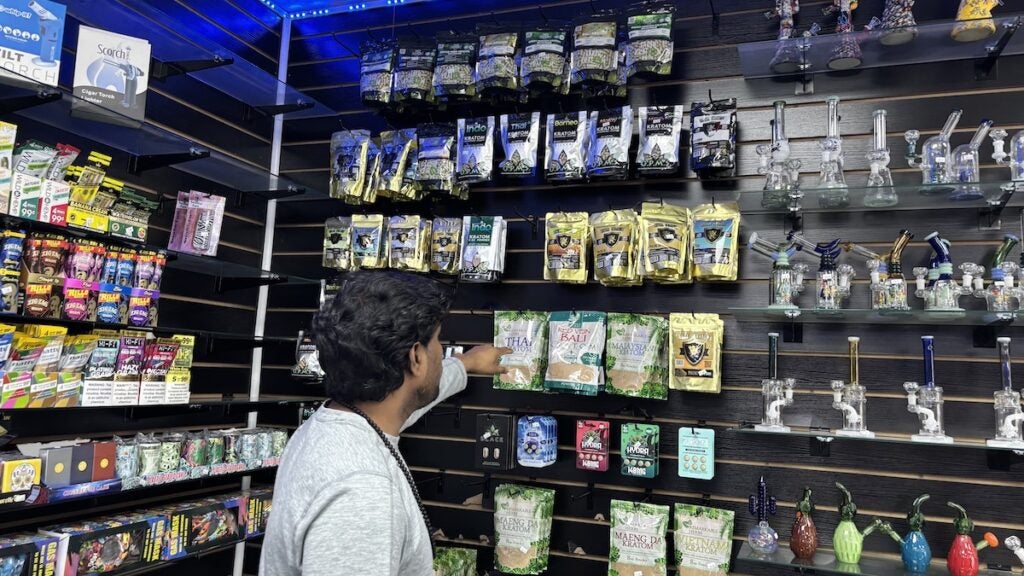
Critics of kratom call it dangerous, even deadly. The synthetic variants have a concentrated amount of 7-hydroxymitragynine, also known as 7-OH, a byproduct of the kratom plant that acts on opioid receptors in the brain. The Food and Drug Administration has received reports of harmful effects of 7-OH products, including addiction, anxiety, depression, gastrointestinal distress, insomnia, seizures and withdrawal symptoms.
Kratom products have also been linked to a small number of deaths, according to the National Institute on Drug Abuse, though it said nearly all cases involved other drugs or contaminants.
Related Content
Chester County overdose deaths drop in 2025: ‘One day we hope to see zero’
Since 2017, the number of accidental overdoses in Chester County has steadily declined.
2 weeks ago
Listen 0:49Supporters argue the natural product is safer than the synthetic one. The FDA is moving to restrict products containing 7-hydroxymitragynine, but the regulatory action is not focused on natural kratom leaf products, which contain low levels of the 7-OH compound. The FDA has not approved kratom as a dietary supplement.
One bill would ban it; another takes a different approach
Hoffner’s bill would make it illegal to manufacture, sell, offer to sell or possess with intent to distribute kratom — in natural and synthetic forms. She said she is planning to amend the legislation to remove the criminal penalties for simple possession.
Hoffner said she doesn’t believe that any kratom product is safe.
However, state Rep. Melanie Ross Levin, D-North Wilmington, is sponsoring her own bill that does take into account the harm-reduction use of some Delaware consumers for mental health and addiction.
Ross Levin’s legislation would ban kratom products that have contaminants added to them, contain more than a certain amount of the natural 7-OH alkaloid or contain a synthetically derived compound. It would also restrict the products being sold to people under 21 years old and also from being sold in packaging intended to attract minors.
“It’s really creating a regulatory structure for kratom, which right now, has little to no oversight in Delaware, and it puts forward commonsense safeguards in place to protect consumers,” she said, “while still acknowledging that there are some people who use kratom for harm reduction when they’re getting off of other drugs and for pain reasons.”
Hoffner’s bill is currently stalled in committee, while Ross Levin’s has yet to get a hearing. The House and Senate are currently in recess. Lawmakers will return to session April 14.

Never miss a moment with the WHYY Listen App!


WHYY is your source for fact-based, in-depth journalism and information. As a nonprofit organization, we rely on financial support from readers like you. Please give today.
Jobs for Delaware Graduates hired Nicole Poore in 2014. Watchdog groups say lawmakers shouldn’t run agencies that get taxpayer money.
4 days ago
Listen 4:36
Delaware legislators approved bills on offshore wind, creating an Inspector General Office and limiting agreements with federal immigration authorities.
9 months ago

Currently, members of the public can only see filings of some 350 politicians and other top officials by filing a Freedom of Information Act request.
9 months ago
Listen 1:40