

Vineland residents are protesting AI data center as concerns mount over noise and emissions
The project in South Jersey, already under construction, is being developed by DataOne for the Nebius Group as part of a $17 billion deal with Microsoft.
Listen 2:18
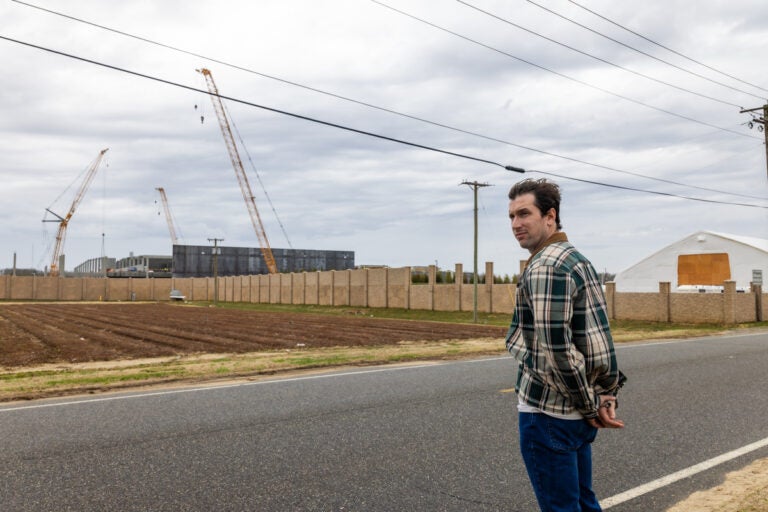
Zac Landicini lives about 3 miles from where the data center is being constructed in Vineland, N.J. He has two young children and worries about asthma and the cost of utilities like power and water. (Kimberly Paynter/WHYY)
This story is part of the WHYY News Climate Desk, bringing you news and solutions for our changing region.
From the Poconos to the Jersey Shore to the mouth of the Delaware Bay, what do you want to know about climate change? What would you like us to cover? Get in touch.
About 100 people gathered at a park in Vineland, New Jersey, on Saturday to voice their opposition to data centers and artificial intelligence. The crowd, some holding protest signs, shouted their disapproval of their local government, which has supported the construction of a hyperscale 350-megawatt AI data center in the community.
The rally was organized by Bayly Winder, a Democratic candidate running for the U.S. House of Representatives against Republican incumbent, Jeff Van Drew. Winder is calling for a national moratorium on building new data centers, which house the computer servers required to run internet services worldwide.
The acceleration of power-hungry artificial intelligence has boosted demand for the sites. President Donald Trump’s administration last year announced plans to accelerate AI development with limited regulatory oversight.
The project in Vineland, already under construction, is being developed by DataOne for the Nebius Group to support AI infrastructure as part of a $17 billion deal with Microsoft. The facility plans to generate 85% of its own energy with natural gas accessed through a pipeline that runs from the facility. It is also seeking approval to house a liquified natural gas, or LNG, tank on site in case access to the natural gas pipeline is interrupted.
Dozens of similar hyperscale data centers are being proposed across the region, and residents increasingly voice concerns about the impact on electricity bills, air quality and water usage, which in some areas of the country have threatened drinking water supplies.
“AI data centers are not essential to life in Vineland,” said Zac Landicini, who lives about 3 miles from the data center and has been opposing its development. “Nobody in Vineland needs an AI data center like they need a water utility or a power utility. It does nothing in terms of its product to directly benefit Vineland residents.”
-
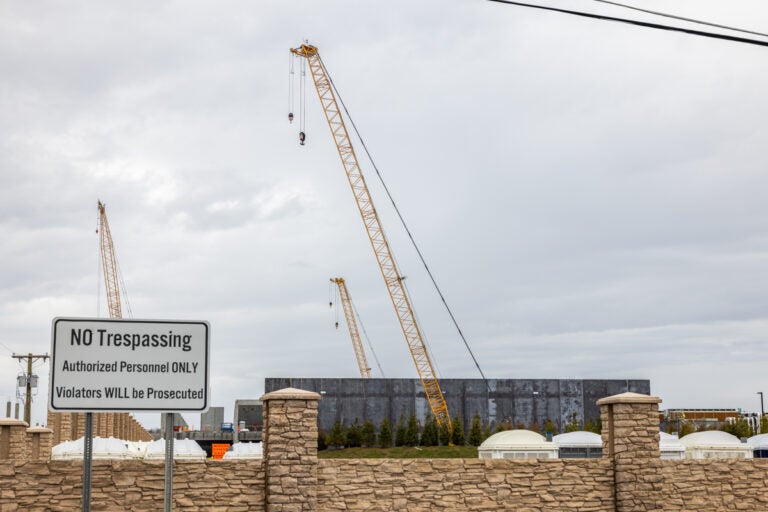
Vineland, N.J.’s data center is under construction in March of 2026. (Kimberly Paynter/WHYY) -
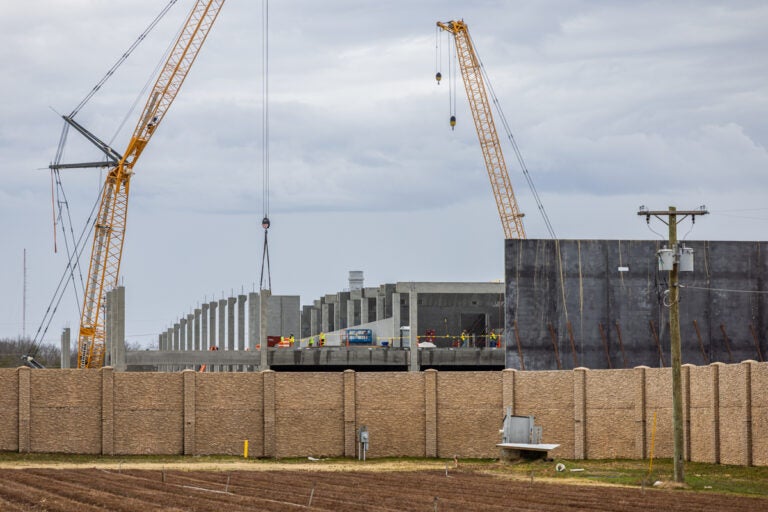
Vineland, N.J.’s data center is under construction in March of 2026. (Kimberly Paynter/WHYY) -
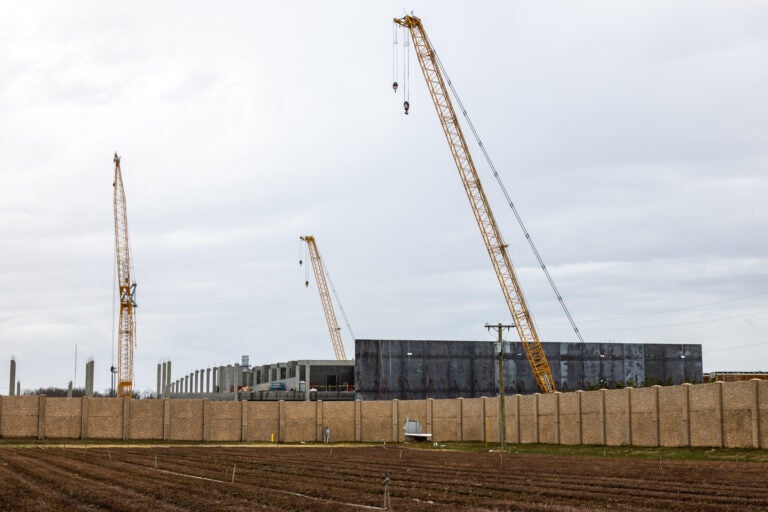
Vineland, N.J.’s data center is under construction in March of 2026. (Kimberly Paynter/WHYY) -
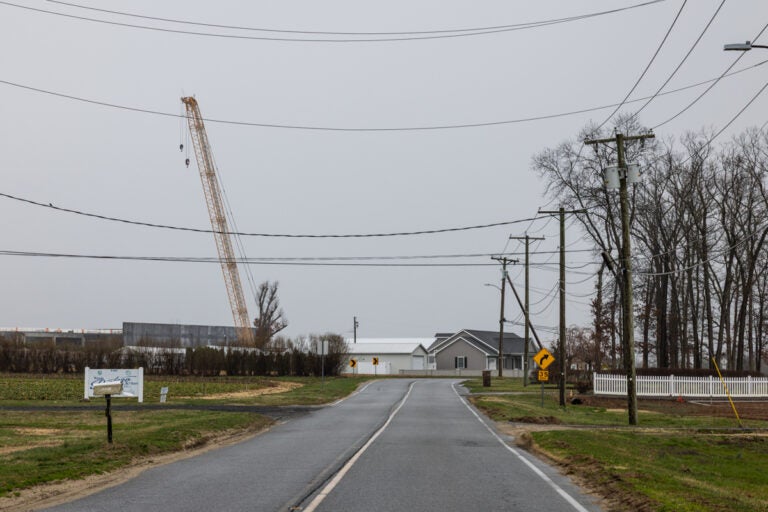
The Vineland, N.J., data center is under construction near homes and farms during March 2026. (Kimberly Paynter/WHYY)
DataOne said its facility will benefit Vineland by hiring more than 200 permanent, full-time workers, and by becoming one of the largest taxpayers in the city. The city’s mayor and City Council president have voiced support for the project, and have approved a tax exemption for the company as part of a five-year plan. Both local officials declined an interview with WHYY News.
DataOne has promised to give back to the community by providing low-income residents with weekly meals sourced from a vertical farm, or “giga-farm,” that will use heat and carbon dioxide waste to grow produce. But residents say that’s not enough.
They’re concerned about potential health impacts from air emissions, water use and decreased property values. Some residents have already begun to complain about what’s described as a whining metallic construction noise.
“The anxiety, just hearing that noise, it’s going to drive people crazy. It’s driving me crazy, my wife crazy. Last night she was up, she couldn’t sleep,” said Michael Gentile, who lives about half a mile from the site. “I don’t want my property values to go down. I don’t want my utilities to go up.”
Related Content

Politicians, energy providers, Big Tech and climate activists are talking about data centers. Here’s what to know.
7 months ago
‘Not creating that much disturbance’
The facility off South Lincoln and Sheridan avenues is situated in a residential area and near commercial farmland. Charles-Antoine Beyney, DataOne’s CEO, told WHYY News that the company has acquired a majority of the homes that sit just a few hundred feet away from the facility. DataOne employees will now occupy those homes.
Beyney said the residents’ concerns are overstated, and asserts data centers cause fewer environmental problems than other types of facilities.
“A data center, I would say, is something that is not creating that much disturbance,” he said. “If I was a big warehouse from Amazon, I would be creating a hundred times more disturbance, because you will have hundreds of trucks all day long coming over, and back and forth, and that will be polluting tremendously more than my facility.”
Originally planned as a 2.4 million-square-foot data center, the latest plan calls for an AI factory that will be fewer than 718,000 square feet.
The 350-megawatt facility will generate 85% of its own power on site, using natural gas that will be transported through an already-existing pipeline. The remaining 15% will come from Vineland Municipal Utilities and Atlantic City Electric. The site would also use 32 high-efficiency natural gas engines, of which five will be utilized for back-up generation, as well as six diesel generators for emergency power.
“I have two young kids, so emissions are concerning to me, especially with research into asthma and chronic health effects,” resident Landicini said.
Beyney said “state-of-the-art” pollution-control technology will reduce emissions by 95%. The system will also remove carbon dioxide through a carbon capture process, which he said is not required by state or federal law.
Referring to the carbon footprint of cattle, which emit methane through their digestion, Beyney insisted his operation will be relatively clean.
“We’re not polluting more than 200 cows,” Beyney said. “Imagine a small logistic center from Amazon with 150 trucks, that’s approximately how much we’re polluting with this data center.”
However, DataOne has a goal of achieving net-zero emissions, he said.
The company is seeking approval for a 1.5-million-gallon LNG storage tank, which will be used if the pipeline service is ever interrupted. The Vineland Planning Commission had scheduled a hearing on the company’s energy plan this week, but Beyney told WHYY News it has been postponed to give the company time to share their plans with the public, who have concerns about the potential for gas leaks or an explosion.
“We are following, obviously, the most stringent regulations to ensure that it’s 100% safe,” he said. “As you can imagine, we are not putting tens of billions of GPUs and data next to a big tank if it was dangerous.”
Related Content
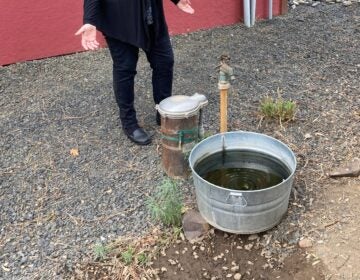
How much water do data centers use? One in Delaware City could use up to 20 million gallons a year
A proposed data center in New Castle County would use tens of millions of gallons of water every year.
7 months ago
Listen 1:03Growing concerns over water supply
Farmer Michael Atkinson grows flowers like tulips and sunflowers on the Vineland farm that has been in his family since 1954. He said he’s concerned about how emissions from the data center might harm his flowers, and how water usage at the facility might impact local wells.
“As a farmer, we get our water allocation every year. Our wells around here are not very deep wells. I’m not a huge farmer. What was it going to do to us?” Atkinson said. “Am I going to have to call my well guy? Am I gonna have to drop a new well? Am I going to have to drill deeper? It’s just a huge question that was never answered.”
-
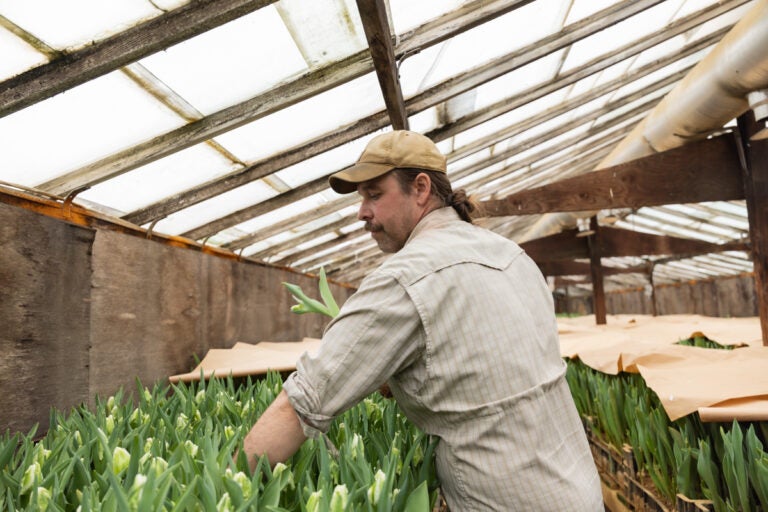
Michael Atkinson and his wife run a farm for cut flowers near the data center in Vineland, N.J. They worry about the contamination of water wells at their farm and other farms in the area. (Kimberly Paynter/WHYY) -
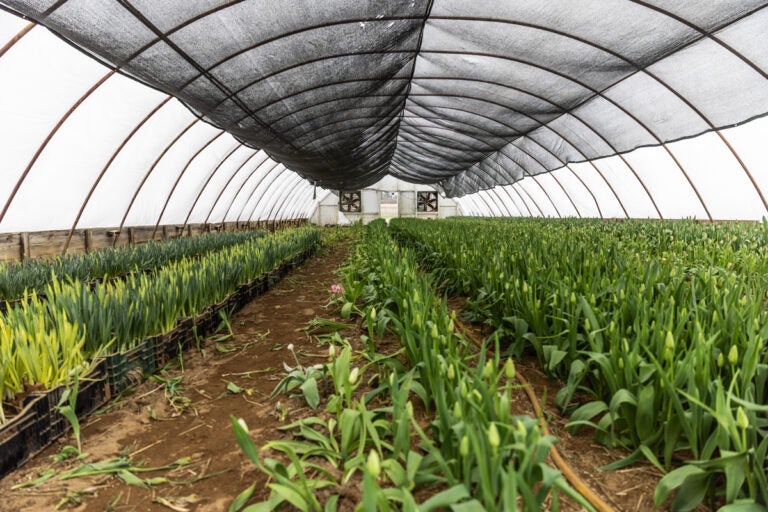
The Atkinson family grows tulips and other cut flowers in Vineland, N.J., and ships them nationwide. (Kimberly Paynter/WHYY) -

The Atkinson family grows tulips and other cut flowers in Vineland, N.J., and ships them nationwide. (Kimberly Paynter/WHYY)
The facility sits near the Kirkwood-Cohansey aquifer in the Pinelands National Reserve, and residents are concerned the data center could impact local water supplies, especially during drought conditions. The site is also located near wetlands, and is in a Wellhead Protected Area, which acts as a protection zone for the aquifer.
Hyperscale data centers can consume up to 5 million gallons of drinking water per day to cool the facilities and their servers to prevent overheating. In some areas, that has drained residents’ well water supplies.
The data center in Vineland will require up to 20 million gallons of water per year, Beyney said. However, he said the facility won’t consume water from the aquifer because it will use byproducts, such as waste heat, to generate its own water supply by utilizing thermal energy to extract moisture from the air.
Still, residents like Jenna and Matt Williams, who live about 4 miles from the site, are not convinced.
“During the summer when it gets really hot, sometimes they tell us to ration our water. We’re not allowed to water the lawn, and take showers every other day,” Jenna Williams said. “But from following data centers across the country, it does seem to be a collective issue that it will affect the water.”
-
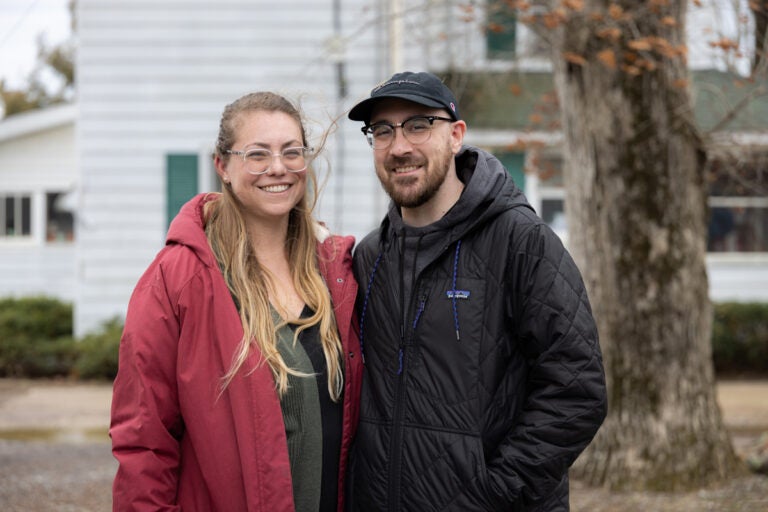
Jenna and Matt Williams worry about how the data center being built on a Wellhead Protected Area near their home in Vineland, N.J. will affect their drinking water, especially for their 3-year-old daughter. (Kimberly Paynter/WHYY) -
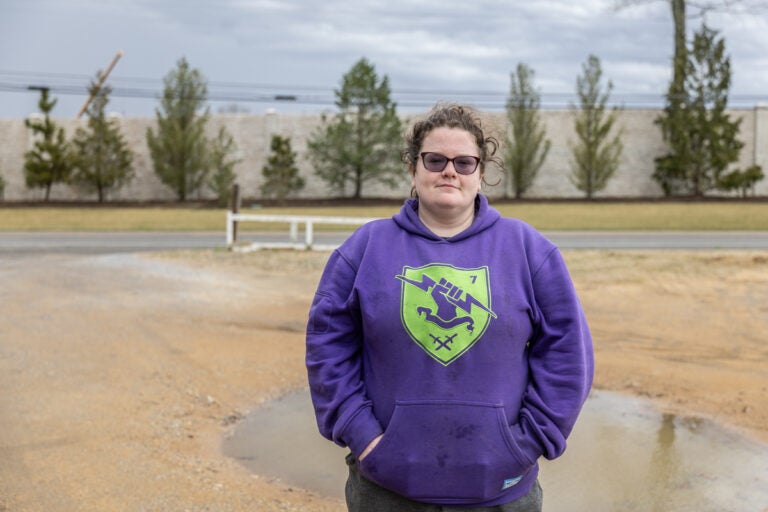
Vineland, N.J. resident Elora Malet worries about how area wildlife will be affected by the AI data center and wants the local government to do a more in-depth impact study. (Kimberly Paynter/WHYY)
Farmer Atkinson, whose farm is less than 2 miles from the data center, said he’s already begun to notice the effects of construction. He said he’s constantly chasing off geese that he believes are migrating away from the site.
“Two seasons ago, the geese came in overnight and mowed off 3 acres of very tiny seedling sunflowers,” Atkinson said. “At the end of the day, that puts me back 30 days. It was probably $50,000 worth of profit for us.”
Other residents have also complained to officials about disturbing noise that they believe is from the construction site. Scott Montgomery lives about half a mile from the construction noise, and has reported a humming and reverberating noise to the county and state.
“When it comes to sleep, obviously, that’s not good. When you’re sitting out back, wanting to enjoy nature, that’s no good,” he said. “I have some acreage and I want to listen to the animals — not that.”
Beyney said the facility is creating large berms, trees and mufflers to isolate any noise. New Jersey requires facilities to keep noise below 50 decibels — comparable to a quiet refrigerator — after 10 p.m.
The Vineland Planning Commission will decide whether to approve DataOne’s energy plan, and the company also has a pending air permit with the state’s Department of Environmental Protection. The data center is expected to be fully operational by the end of the year.
In the meantime, resident Montgomery said he is looking into appealing his property taxes.
“Something that large, something with that many billions of dollars, they should be paying anybody’s property tax within, like, a square mile,” he said.

Never miss a moment with the WHYY Listen App!


WHYY is your source for fact-based, in-depth journalism and information. As a nonprofit organization, we rely on financial support from readers like you. Please give today.
Part of the series
Data center growth could mean blackouts in coming years, Pa. utility regulators say
A report predicts electricity demand on the regional grid will nearly double by 2040, due almost entirely to data centers.
19 hours ago
Listen 1:08
Conservationists to restore wetlands, save habitat for diamondback terrapins in New Jersey
Tidal salt marshes across New Jersey are being drowned out by sea level rise.
2 weeks ago
Listen 1:17
Vineland data center accused of operating natural gas generators without permit
The 300-megawatt AI data center is being developed by DataOne for the Nebius Group.
3 weeks ago
Listen 1:11