

Sussex County’s Georgetown council votes in favor of starting repeal process to cottage housing zoning code
The zoning changes adopted back in December allowed for dense cottage communities to be built in town.
Listen 1:07
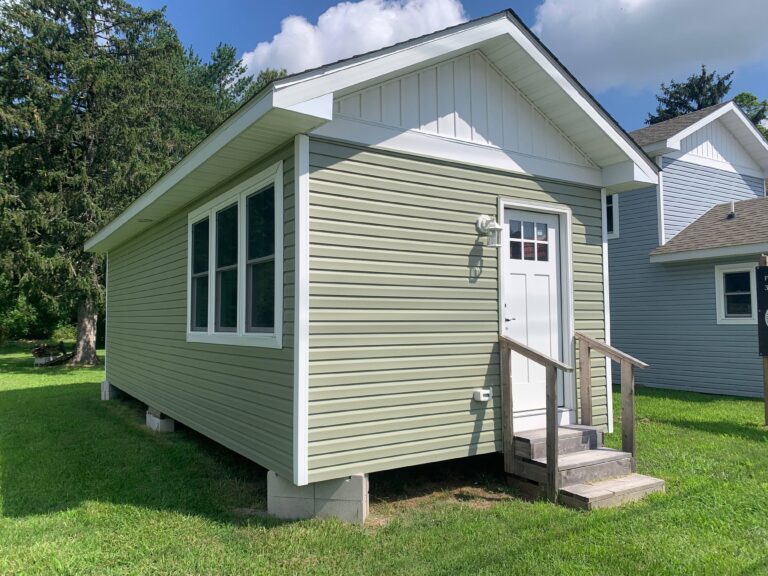
A model cottage home developed by Little Living, a nonprofit organization that will be building a cottage village in Georgetown, Del. The project would not be impacted by the Georgetown Town Council's decision to start the repeal process for the cottage housing ordinance. (Sarina Grossi/WHYY)
What are journalists missing from the state of Delaware? What would you most like WHYY News to cover? Let us know.
More than eight months after a residential zoning amendment was passed, the Georgetown Town Council is going back to the drawing board. The council on Monday voted in favor of starting the repeal process for a cottage housing ordinance.
Under the ordinance, which was adopted in December, the town’s zoning regulations would allow cottage developments to build 12 small cottages on an acre of land. It was initially approved 4 to 1 by the town council under former Mayor Bill West. That was after roughly two hours of public comment and deliberation, with some residents opposing the measure.
One resident who opposed the measure was Angela Townsend, who was later elected mayor in May.
Townsend and fellow Council Member Michael Briggs were endorsed by “Make Georgetown Great Again,” a Facebook group with more than 7,000 members. The group has previously criticized the town for how it handled homelessness and the cottage ordinance.
“The ordinance basically came from other towns and other communities, and that’s not Georgetown,” she said at the meeting on Monday. “We basically gave our opinion, and we were against it. But the council didn’t listen to us and [the] mayor didn’t listen to us, the past mayor.”
The town council voted to pause review of cottage development applications in July, and formed a committee to review the adopted cottage ordinance. This was after Townsend requested an item to potentially modify or repeal the piece of zoning regulation in June.
The committee consisted of Briggs, Council Member Tony Neal, Town Manager Gene Dvornick and Georgetown resident Eddie Wise. Another resident, Lisa Rohlfing, was the chair for the committee. Rohlfing has been a critic of the ordinance in the past, speaking in favor of its repeal at several town council meetings.
“Allowing up to 12 housing units on 1 acre minimum lot size is simply too dense for our existing neighborhoods. These changes do not reflect the character of our community and they place additional pressure on the infrastructure and services that our town already relies on,” Rohlfing said at the July 13 meeting.
At that meeting, Rohlfing also submitted more than 100 signatures in favor of repealing the ordinance.
Wise, who is a part of the committee, also recommended that the ordinance be rewritten to be applied as conditional use. That move would allow cottage developments to be approved by the town council, but not out right.
However, Senate Bill 23, which was signed into law by state legislators last month, requires that municipalities draft affordable housing plans into their comprehensive plans, which govern local jurisdictions’ zoning and land-use decisions.
According to the new law, affordable housing plans should authorize cottage housing without conditional use permits.
“When I was put on the committee, my thought was put in conditional use, so the town can have a little more say on where it can go just rather than anywhere that has 1 acre of land available,” Wise said at this week’s meeting. “As I read the Senate Bill 23, it specifically says that conditional use cannot be put on this. OK, so the state pretty much tied our hands on that. So now we start the repeal process.”
Rohlfing questioned last week whether the ordinance was “the best way to address housing” in light of the passage of Senate Bill 23, as well as House Bill 450, which aims to streamline land use permitting and allow for higher housing density. She said at the meeting that the ordinance was written before either had passed, and that the town should be considering multiple housing types, not just cottages.
“A repeal is a reset, not a rejection. It’s just a reset. The goal is to replace a standalone ordinance, which we have now, with a complete housing approach that addresses all the state laws and works for everyone in the town and Georgetown,” she said.
The committee motioned to recommend the town council send the current ordinance back to Georgetown’s Planning Commission, requesting that the commission consider repealing it. The group also recommended establishing a new working group focused on building new housing and zoning regulations that line up with new laws and address immediate zoning requirements for 2027.
Only three members of the committee voted on the action, as Neal and Dvornick did not attend that meeting.
Related Content
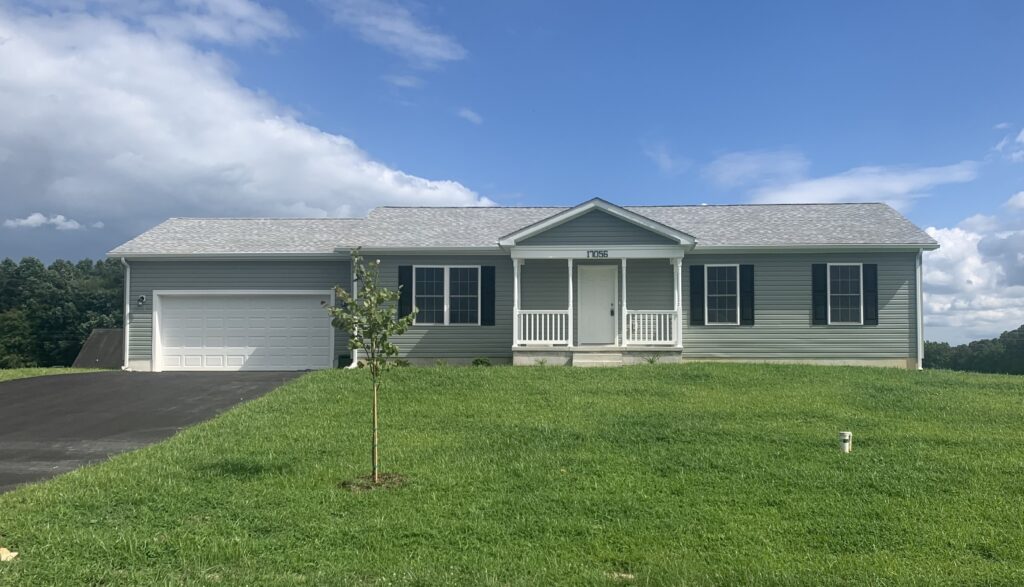
The grant was awarded to Milford Housing Development Corporation, a nonprofit developer that assists low-income families in building their own homes.
3 months ago
Listen 0:59‘A beautiful opportunity to create affordable living in Georgetown’
Springboard Delaware, a nonprofit focused on housing underserved communities, is working to establish a cottage community in the town. At this week’s meeting, Executive Director Judson Malone explained that the nonprofit plans to build about 120 cottage homes on 14 acres of land.
Malone told WHYY News that the group had a predevelopment conference with the town in January, and afterwards started working on a preliminary plan that is currently under review by the Delaware Office of State Planning Coordination. The review is required for the land use decision process. He said he believes the project is far enough along to not be impacted by the repeal.
“We started the process as it was described, in good faith,” Malone said at the meeting. “We have invested money, time and energy into the plan. And we feel that we ought to be allowed to continue.”
He also said that as the ordinance stands, it complies with SB 23 by increasing residential density and encouraging diverse housing types like cottages.
“It would be a shame to throw away the staff’s time and energy and resources that’s been put into developing this code, just to start over to do the same thing, because you’re going to have to meet your requirements anyway,” Malone said. “This is a beautiful opportunity to create affordable living in Georgetown.”
The state’s Affordable Housing Production Task Force’s final report from 2025, recommends encouraging high-density housing, and states that local zoning codes should “establish a minimum density of not less than four units per acre for single family detached/attached zoning districts.”
According to the report, a household making half of the average median income made almost $36,000 in 2023. However, the Delaware State Housing Authority also reported in 2023, the state was short of almost 20,000 affordable homes for renters making less than half the average median income.
According to the U.S. Census Bureau, the average rent in Georgetown from 2020 to 2024 was about $1,400 a month.
Rev. Eddie Jusino of Lewes-Rehoboth Association of Congregations spoke in opposition of repealing the ordinance during public comment, claiming that cottage housing helps fill gaps in affordable housing in the town.
“This is not about selling a home. This is about renting affordable space for [residents] to be safe and clean and accountable, so they can save money and be able then to have a reasonable life like you and I have,” he said.
Sunny Gyani, a landowner in Georgetown, also argued for keeping the ordinance in place, and said the council should consider amending it rather than appealing it.
“Protect the neighborhood without eliminating housing options. We cannot demand affordable housing, while removing the tools that create it,” he said during public comment.
However, Briggs noted that many in favor of keeping the ordinance did not live in the town’s limits. Gyani, for example, owns land in Georgetown, but said he does not personally live within the town limits.
“There were seven town citizens that spoke tonight against this; there was four citizens that spoke for [the ordinance]. Three out of four were not from Georgetown,” Briggs said.
The council voted 3 to 1 in favor of starting the repeal process, with Council Member Tony Neal dissenting. Council Member Christina Diaz-Malone was absent.

Never miss a moment with the WHYY Listen App!


WHYY is your source for fact-based, in-depth journalism and information. As a nonprofit organization, we rely on financial support from readers like you. Please give today.
Part of the series

Dr. Michael Katz said Delawareans needed to take back the Democratically held U.S. Senate seat from an entrenched political establishment.
6 hours ago

John Atkins once resigned from his state House seat after a fight with his wife rather than face censure, and was later charged with felony strangulation of his girlfriend.
3 days ago
Listen 1:59
The Delaware Attorney General’s Office said its FOIA opinions are non-binding and it lacks the resources to enforce violations.
3 days ago
Listen 0:58