

Camden County builds $22 million supportive housing complex with 60 units for unsheltered residents
The McKernan Supportive Housing Community in Blackwood is slated to open by summer 2026.
Listen 1:35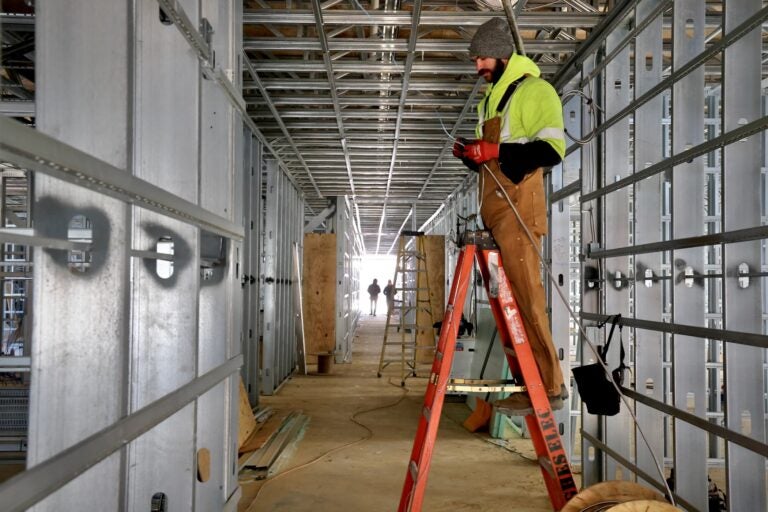
Work continues on the $22 million, 60-unit Martin McKernan Supportive Housing Center, which is expected to open in the spring of 2026. (Emma Lee/WHYY)
From Philly and the Pa. suburbs to South Jersey and Delaware, what would you like WHYY News to cover? Let us know!
Construction crews in Camden County were busy on a recent Friday morning fitting metal studs, installing plumbing, adding drywall and fixing electric wiring at a site that will eventually become a new transitional housing complex in Blackwood.
The $22 million project is slated to open mid-2026 and will include 60 studio apartments for people who are unhoused.
The goal, county leaders said, is to address rising rates of homelessness in the area and get people into housing sooner rather than later.
“That’s our objective, to get to net-zero homelessness in Camden County. We think we can do it in just a couple years,” said Louis Cappelli, the county’s commissioner director.
-
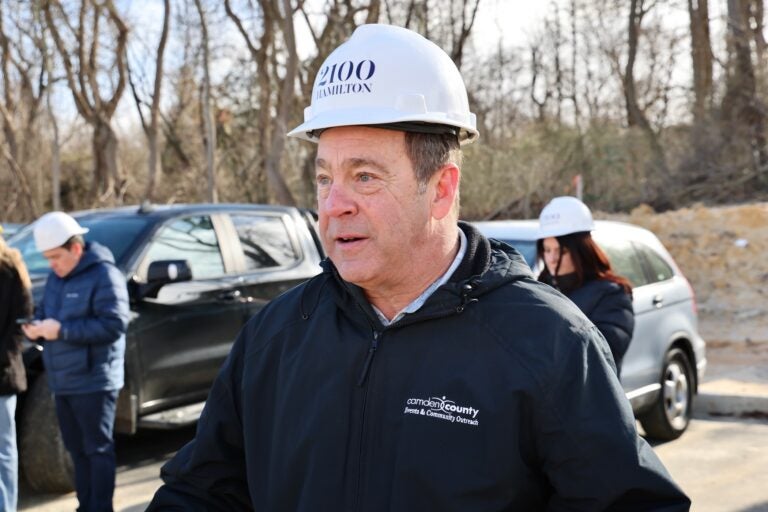
Camden County Board of Commissioners Director Louis Cappelli Jr. visits the site on County House Road in Blackwood, where the county is building a $22 million, 60-unit supportive housing center. (Emma Lee/WHYY) -
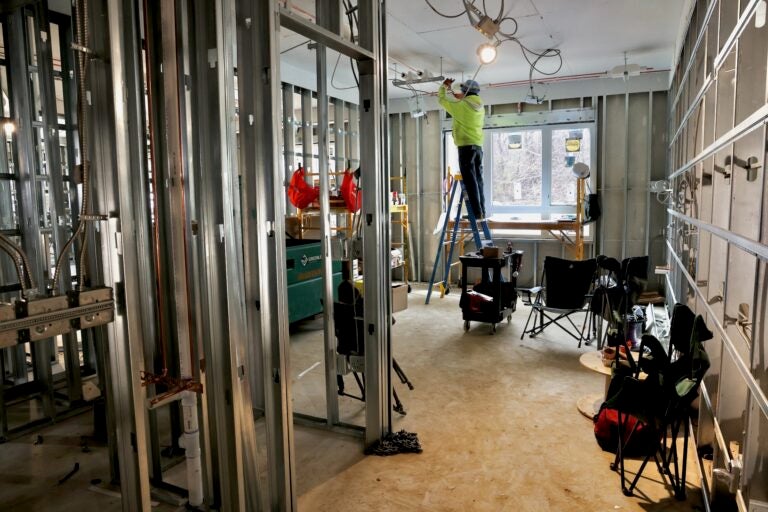
Each of the 60 units in Camden's Martin McKernan Supportive Housing Center will have with large windows, a private entrance, kitchenette, bathroom and closet. (Emma Lee/WHYY) -
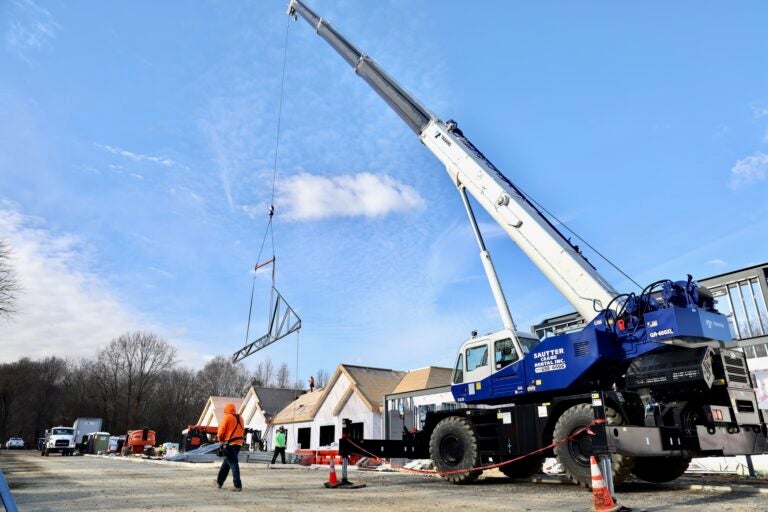
A $22 million supportive housing center is rising in Blackwood, N.J., part of Camden County's effort to fight rising homlessness. Residents will be able to live in the facility's studio apartments for up to two years while receiving services like addiction counseling employment help and assistance finding permanent housing. (Emma Lee/WHYY)
But at the same time, local communities and states are losing federal funding for some existing housing programs and initiatives.
“The current administration is making this a tremendous challenge,” Cappelli said. “We need real change in Washington to help get these folks off the streets.”
Related Content
In Camden and Atlantic City, health care systems are treating housing as a public health issue
Housing instability is driving ER visits and chronic illness. South Jersey health systems are stepping in with housing support and policy partnerships.
7 months ago
A growing unhoused population and lack of affordable housing
Camden County identified at least 759 people who were experiencing homelessness during the single night point-in-time census count this past January, according to a Monarch Housing Associates report.
About 7% were unsheltered, meaning they were not staying or sleeping in spaces meant for overnight stay.
Cappelli estimates that the numbers have grown significantly just in the last 11 months based on demand at emergency shelters and outreach programs.
While many people who are unhoused struggle with substance use or mental illness, Cappelli said families and even working people are becoming increasingly at risk of homelessness after job loss, illness, disability or an inability to keep up with New Jersey’s expensive rental market.
Related Content
Enduring extreme cold: What resources are available in Philly, South Jersey and Delaware?
Severe winter weather often triggers special measures to help protect people who are unhoused. Here’s what you need to know.
2 years ago
Building a housing support system in South Jersey
The new complex, named the McKernan Supportive Housing Community, will dedicate 50 transitional units for people who need housing for up to two years as they get connected to health care benefits and other social services, which includes obtaining new licenses and other identification documents.
Residents will also get support with finding employment and permanent housing.
The length of stay will vary from person to person, said Rob Jakubowski, Camden County director of homelessness and community development.
“After a few days, we’re going to focus on where you’re going to live permanently. Because if we can get you out of here in a year, in six months, we can get someone else off the street,” he said.
The units are all identical. At approximately 500 square feet, each studio will include a bathroom and closet, room for a bed, an entertainment section, and a kitchenette.
The remaining 10 units at the complex are for emergency housing for vulnerable people who need immediate shelter.
-
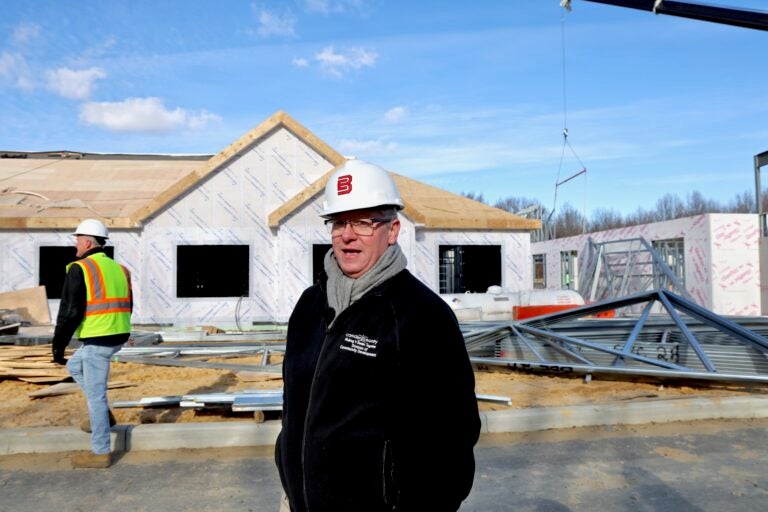
Camden County Division of Community Development Director Rob Jakubowski leads a tour of the county's new supportive housing development on County House Road in Blackwood. (Emma Lee/WHYY) -
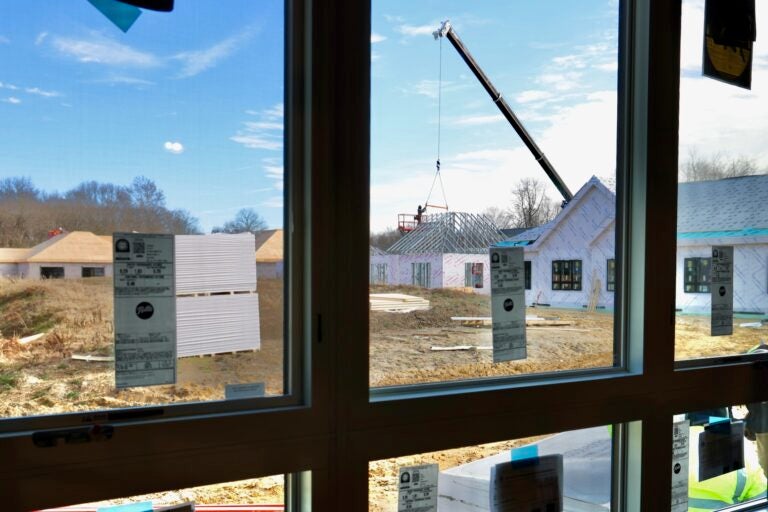
Each of the 60 units in Camden's Martin McKernan Supportive Housing Center will have with large windows, a private entrance, kitchenette, bathroom and closet. (Emma Lee/WHYY) -
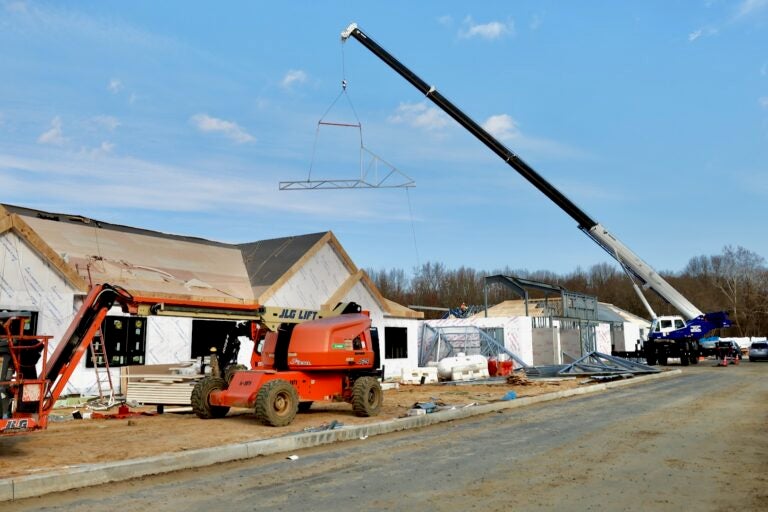
A $22 million supportive housing center is rising in Blackwood, N.J., part of Camden County's effort to fight rising homelessness. (Emma Lee/WHYY) -
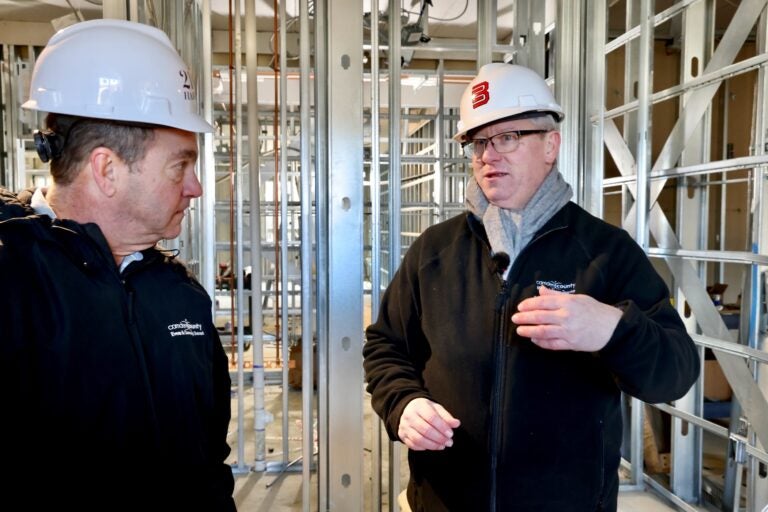
Louis Cappelli Jr. (left) and Rob Jakubowski, the county's director of homelessness and community development, tour the supportive housing center in Blackwood, which is expected to be completed in the spring of 2026. (Emma Lee/WHYY)
Transportation will be provided for visits to medical and behavioral health treatment centers as well as other programs, Jakubowski said, and food will also be provided at certain times or on certain days of the week.
The complex, which sits on about 200 acres owned by the county, is being built in the shape of a horseshoe, leaving room for additional housing to be added in the future if and when there is a need, he said.
The project will be a “housing first” initiative, meaning people won’t be disqualified from getting into a unit if they are currently struggling with substance use, which can be a major barrier in accessing other kinds of shelters or housing programs.
“It means focus on housing first. All the other issues can be solved easier, better, when you have housing first,” Jakubowski said.
“It’s nearly impossible to become clean and sober without housing,” Cappelli added. “You just have to put the housing in front of the treatment and then wrap the services around the individuals.”

Get daily updates from WHYY News!
WHYY is your source for fact-based, in-depth journalism and information. As a nonprofit organization, we rely on financial support from readers like you. Please give today.
Part of the series
The 40-unit property, on the border with the Belmont section of West Philadelphia, is expected to open in a couple months.
4 weeks ago
Listen 0:48
Philly City Council vote unlocks $800M for housing, shifting more aid to lowest-income residents
The legislative hurdle was cleared after intense pressure from Mayor Cherelle Parker opposing the changes to the H.O.M.E initiative's first phase.
2 months ago
Listen 1:06
New Pennsylvania loan program seeks to expand affordable rentals for at-risk populations
The $35 million initiative comes courtesy of the American Rescue Plan. The funding will be distributed by the Pennsylvania Housing Finance Agency.
2 months ago
Listen 1:07