
Philly education summit marks 20 years of Black history in public schools
The two-day gathering emphasized sustaining Black history education throughout the school year and beyond the classroom.
Listen 0:48
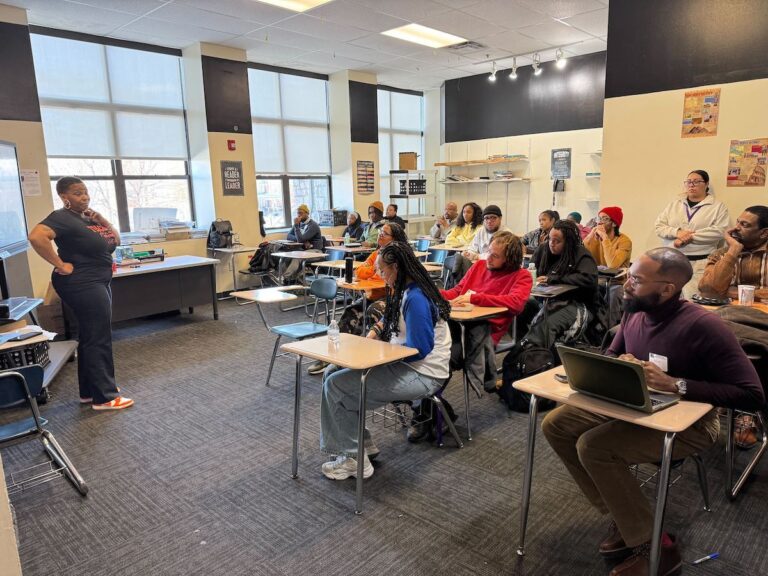
Full classroom for one of the many lectures that took place at the BlackPrint 20 summit (Eric Nixon/WHYY)
From Philly and the Pa. suburbs to South Jersey and Delaware, what would you like WHYY News to cover? Let us know!
Educators, students and community leaders gathered at Boys’ Latin High School earlier this month for part two of a two-day summit focused on sustaining Black history education in Philadelphia classrooms beyond Black History Month.
Hosted by Blackprint 20 and the Center for Black Educator Development, the Blackprint 20 Summit marked two milestones: the 20th anniversary of the School District of Philadelphia’s mandate that public high school students study African American history, and the 100th anniversary of Black History Month. The event honored that legacy while equipping educators to teach Black history year-round in a community-rooted way, organizers said.
Black History Month began in 1926 as “Negro History Week”, launched by historian Carter G. Woodson, who wanted to see a greater impact from the rigorous study of Black history. In 2005, the district’s School Reform Commission voted unanimously to make African American history a high school graduation requirement after the community pushed to make the curriculum mandatory.
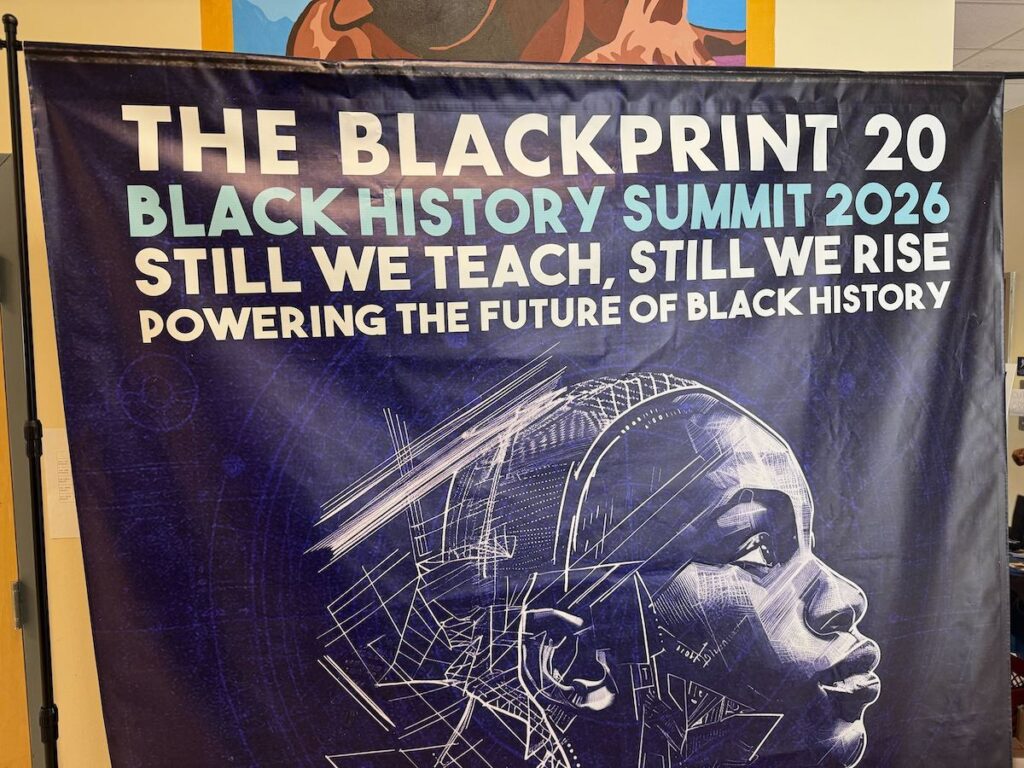
The summit paired celebration with practice. Day 1 featured the “Still We Teach. Still We Rise” awards banquet, honoring educators who make a difference in their communities and uphold an ideal of freedom through education. Day 2, at Boy’s Latin in West Philadelphia, focused on workshops and sessions led by Black educators on subjects including genealogy and pedagogy.
Samuel Reed, host of a workshop session titled “Raised by Philly: Youth Storymapping Black History Through Art, Poetry, and Place,” spoke about how Black history is not confinable to a single month. He said it was important to bring his students there to “let their stories and experiences be heard.”
Sharif El-Mekki, CEO of the Center for Black Educator Development, said the summit is part of a “learning arc” that will continue for students and educators well into the future. “To see the next generation, which is our responsibility, to train our replacements, support our replacements of those people who will be leading classrooms, schools and districts in the future,” El-Mekki said.
Related Content
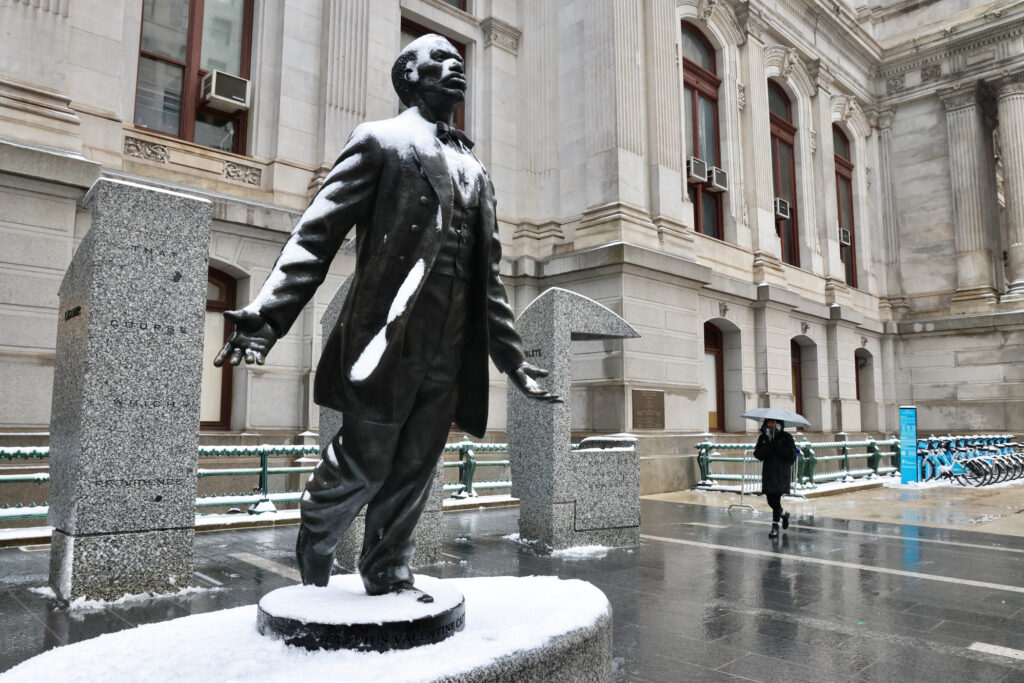
In Philly, ‘every day is Black History Month.’ Here’s how the city is celebrating in 2026
As the semiquincentennial nears, Philadelphia’s cultural institutions are examining the country’s founding through the lens of local Black history.
7 months ago
Edwin Perez and Amber Austin, teachers from the Baltimore County area, said they found out about the event on social media. They attended the summit to contribute to the conversation on community-centered education and to take what they learned back to their colleagues, students and community.
“It has to be something that continues throughout the year — talking about Black identity, Black culture, support for our Black students or support for our Black community,” Perez said.
Understanding the fullness of Black history is foundational to that goal, Austin added. “I think it’s important for us to ensure that we are not only having a continuity of legacy but a continuity of correct and accurate legacy, and in these conversations we are not gatekeeping information, we’re sharing stories, especially from our elders,” she said.
Attendees and speakers were also invited to contribute to a time capsule of educational messages, notes and pictures commemorating 20 years of Philadelphia’s Black education leadership.
Organizers said sustaining Black history education within local communities has taken on new urgency, against a political backdrop that includes growing efforts nationwide to limit race-based curricula, financial aid and student services, and the recent removal of a set of exhibits about enslaved people from the President’s House Site in Philadelphia.
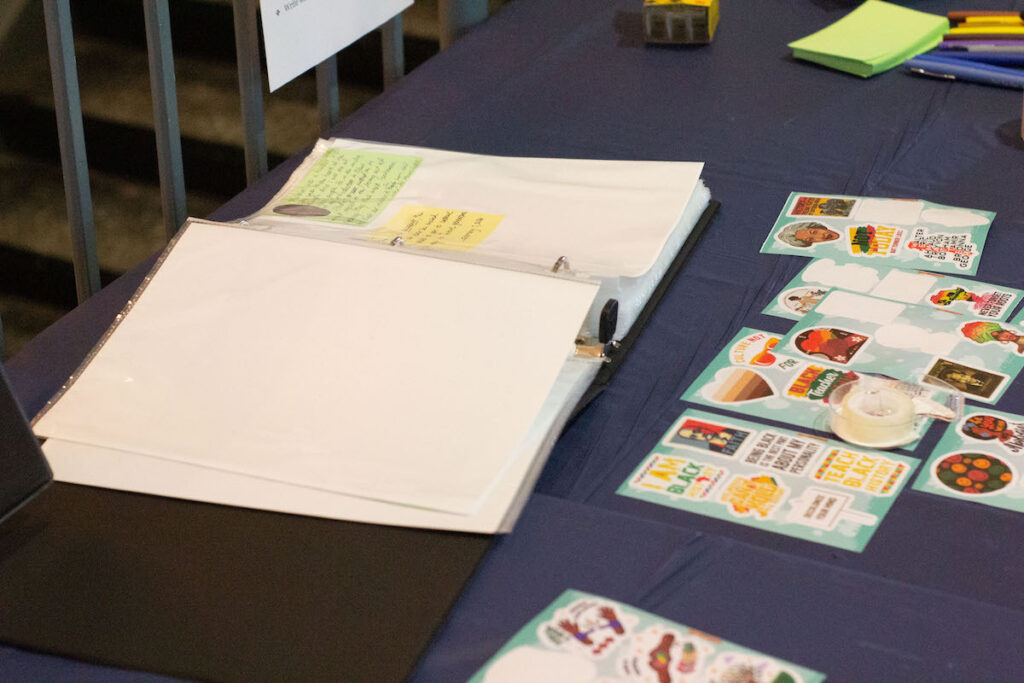
“In today’s anti-Black world when we see Black histories being erased from museums, classrooms — literally from the streets of Philadelphia — events like this are more important than ever,” Blackprint 20 committee member Abigail Henry said.
Chris Rogers, coordinator of the Henry Oswood Tanner House in North Philadelphia, spoke about how classrooms are not just rooms in a school. He said the classroom can extend to any space where members of a community can share history and educate one another. “We create classrooms all over the place,” Rogers said. “Like, even when I’m waiting for the 21 in West Philadelphia. So, opportunity there to talk about the history and the connections.”
-
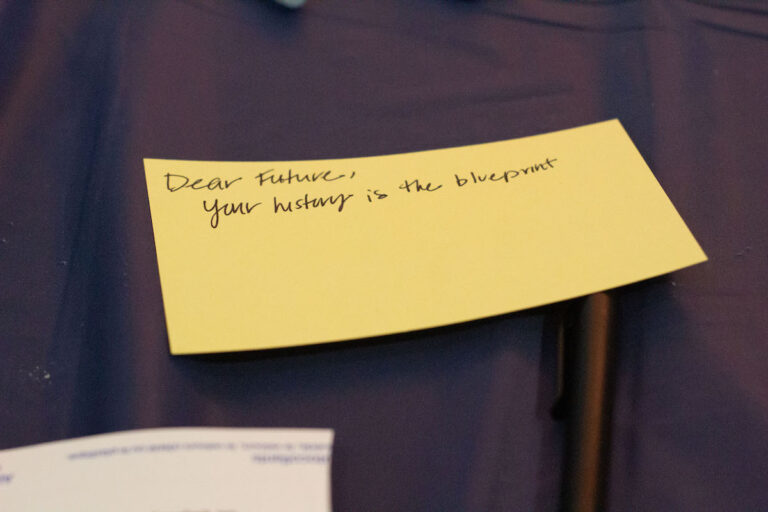
Note/prompt on time capsule activity table (Eric Nixon/WHYY) -
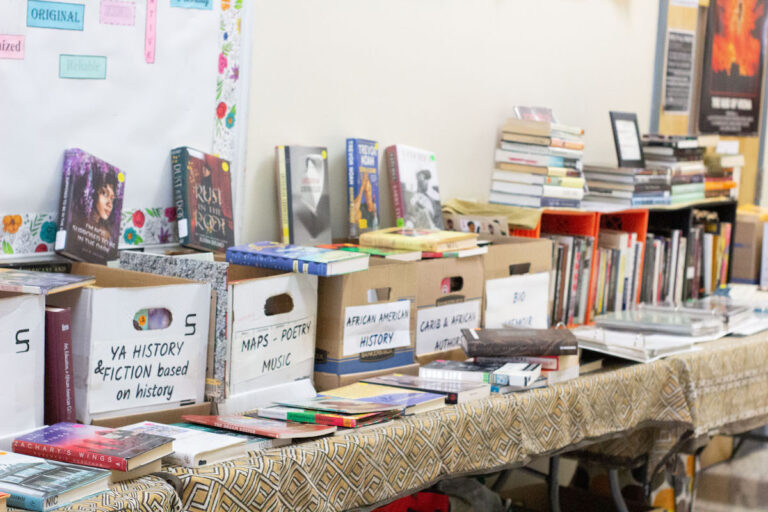
Various categories of literature by African American writers and artists on display at the summit. (Eric Nixon/WHYY) -
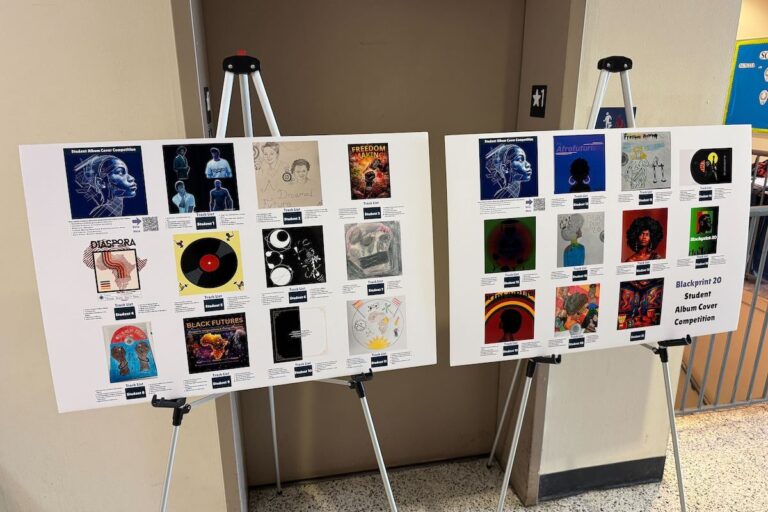
Result of student album cover competition for BlackPrint 20. (Eric Nixon/WHYY)

Get daily updates from WHYY News!
WHYY is your source for fact-based, in-depth journalism and information. As a nonprofit organization, we rely on financial support from readers like you. Please give today.
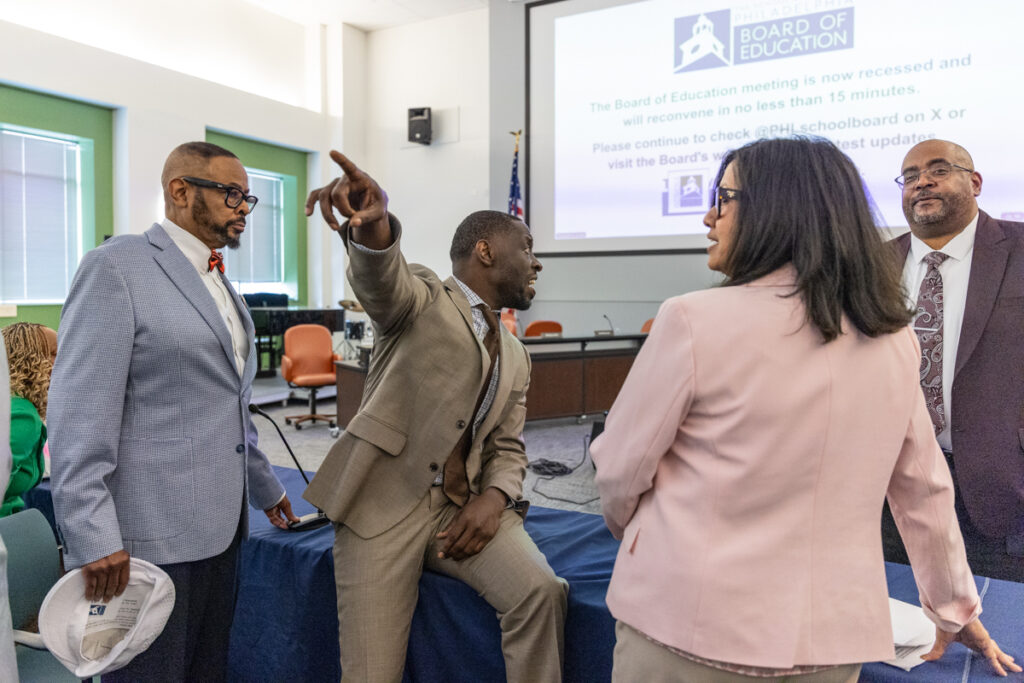
Philadelphia school board approves facility plan, district to close 17 schools
The facilities plan had gone through multiple revisions after backlash from the community.
5 months ago
Listen 1:22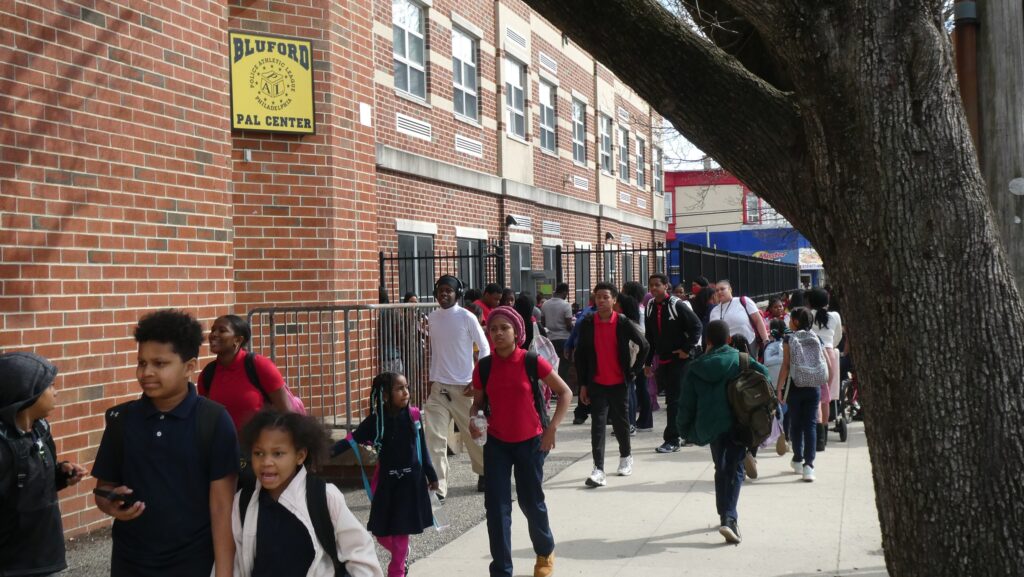
The new policy guarantees an end to silent lunches and prohibits the collective punishment of students.
7 months ago
Listen 0:55
Los líderes universitarios dicen que eliminar la investigación antirracista durante meses fue un error. Estudiantes e investigadores afirman que esto erosionó la libertad.
7 months ago