

Philadelphia supported a pioneering Indian American woman doctor. Now her story is getting memorialized in songs
Anandibai Joshee came to Philly in 1883 to study medicine. Her tragic life is the grit of a South Asian American Digital Archive songwriting project.
Listen 3:39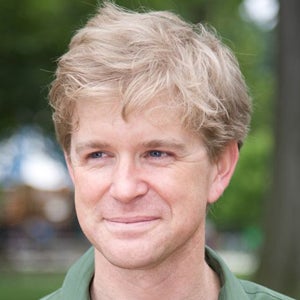
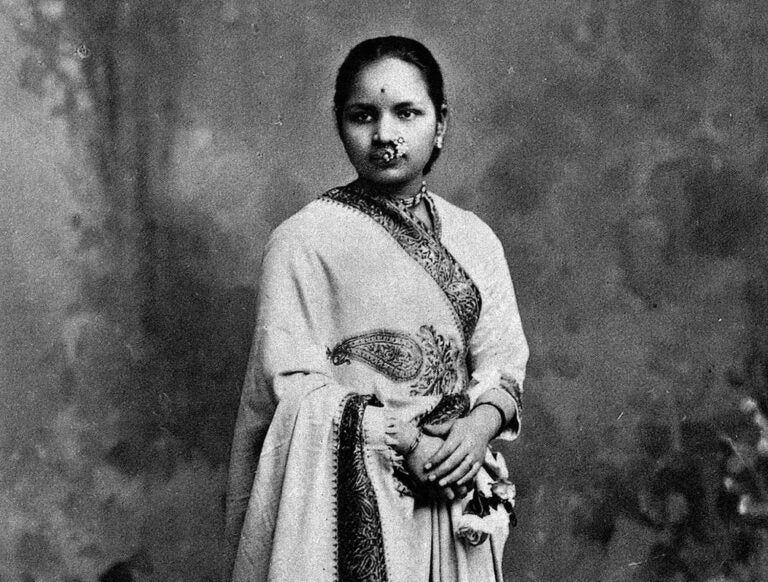
Anandibai Joshee was known to have maintained a traditional Indian lifestyle while attending medical school in Philadelphia, including wearing a sari daily and keeping a vegetarian diet. (Courtesy of the Drexel University Legacy Center Archives & Special Collections)
From Philly and the Pa. suburbs to South Jersey and Delaware, what would you like WHYY News to cover? Let us know!
Five musicians are debuting music written in memory of Anandibai Joshee, the first Indian woman to earn a medical degree in Philadelphia.
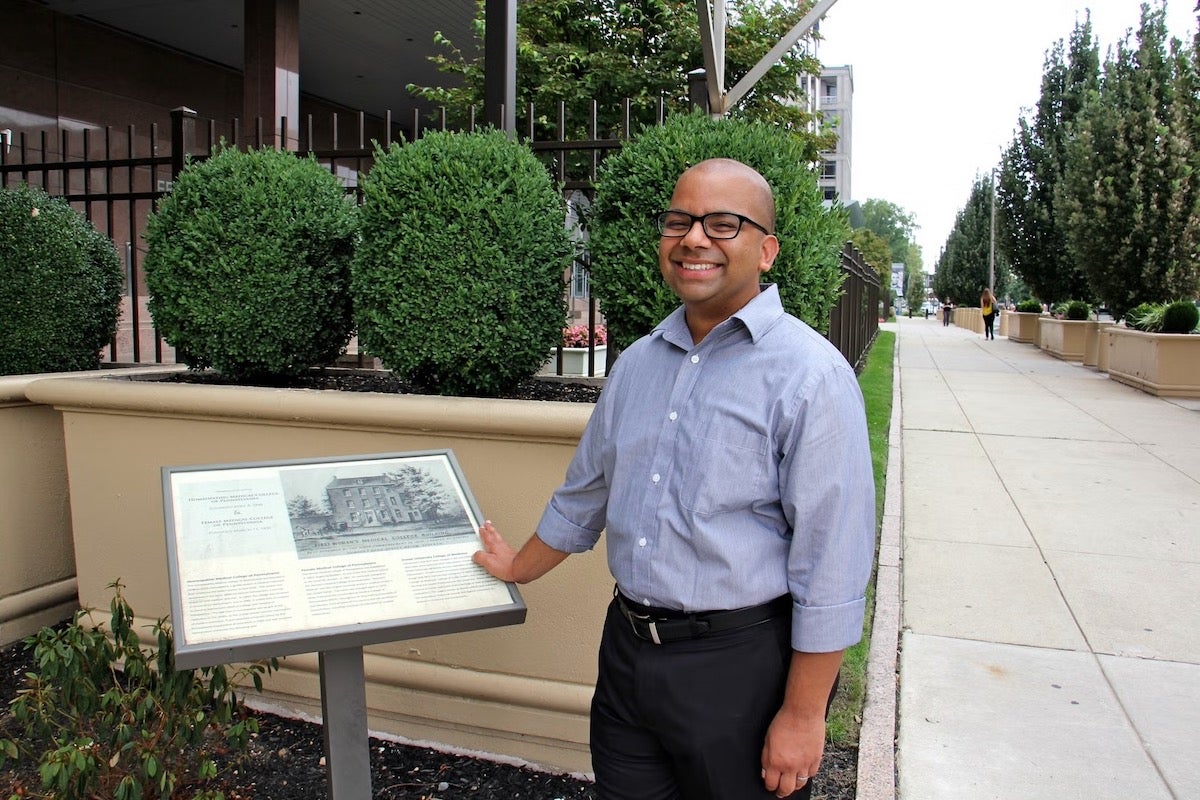
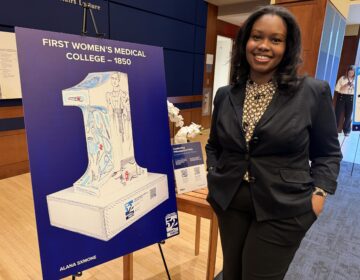
Joshee came to the city in 1883 and attended the Woman’s Medical College of Pennsylvania, formerly at Sixth and Arch streets, the world’s first medical school for women.
“Her life is a mashup, coming from this really traditional background and going into a completely new place with totally different values and culture,” said Devi Majeske, a sitar player and pop songwriter. “I’m always looking for that way of bringing things together in a way that both parts can shine, but it doesn’t become muddled.”
Majeske, a Philly native now in Brooklyn, New York, who sometimes performs as Air Devi, was among the cohort of musicians commissioned by the Philadelphia-based South Asian American Digital Archive to compose songs for the “Anandibai Mixtape.” The other musicians include Pan V, Maya Keren, Anju and Dwight Dunston, aka Duns.
They all read the 2019 biography “A Fragmented Feminism: The Life and Letters of Anandibai Joshee” to inform their work.
“We asked each artist to learn Anadibai’s story, but then to use that story to reflect on themes in their own life. Themes of resilience, of determination, of approaching the unknown,” said Samip Mallick, the archive’s executive director. “Our hope was for the story of this woman, who accomplished this incredible thing 140 years ago, to become relevant and living today.”
The life of Anandibai Joshee
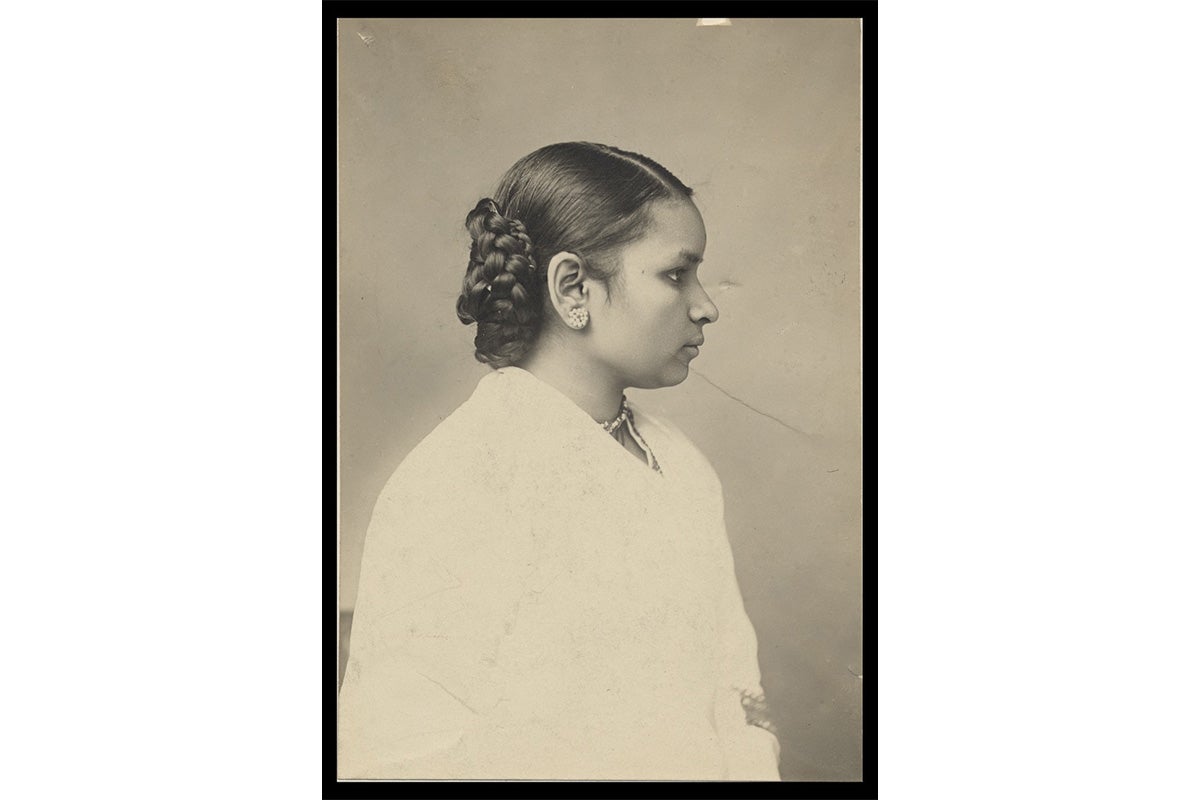
Born in 1865 in Kalyan, India, to a wealthy, upper-caste family, Joshee entered into an arranged marriage at 9 years old to a widower 20 years older. At 14, she gave birth to a boy who died just 10 days later.
Joshee believed her son would have survived if she had access to proper medical care, and that more Indian women would have better medical care if women administered it. Barely a teenager, she decided to become a doctor.
“Her resilience and determination is such a consistent theme in her story,” Mallick said. “She set her mind on the way that she was going to live her life and she wasn’t willing to let anyone else stand in her way of that.”
In 19th-century India, educating women was highly controversial. Joshee’s husband, a postal clerk, had progressive ideas and encouraged her education, but was thwarted by the Indian society, which largely opposed educating female doctors. He sought out a foreign Christian ministry to support his wife’s education. He found a willing sponsor in Theodocia Carpenter, of Roselle, New Jersey, who supported Joshee’s studies at the Woman’s Medical College.
In 1883, Joshee explained in a letter to Alfred Jones, a member of the executive committee at the Woman’s Medical College of Pennsylvania, her motivation to become a doctor:
“To render to my poor suffering country women the true medical aid they so sadly stand in need of, and which they would rather die for than accept at the hands of a male physician,” Joshee wrote. “The voice of humanity is with me and I must not fail.”
Even before her journey to America, Joshee had become a polarizing figure in India, attracting criticism for challenging the traditional role of women. Many Indians feared she would embrace American culture over her own and convert to Christianity while under the tutelage of a Christian ministry.
“She faced a lot of opposition when it was time for her to come to the United States, from her community, from extended family and from others,” Mallick said. “One of the things that’s so remarkable about her is that she determined that when she came to the United States that she would live in exactly the same way that she did in India. She would continue to wear her sari. She would continue to eat a vegetarian diet. As you can imagine in Philadelphia in the 1880s that wasn’t that easy to do.”
Related Content
The world’s first-ever women’s medical college opened in Philly 176 years ago
A “Firstival” event at Drexel University on Saturday honors the pioneering school, doctors, and successor institutions.
3 weeks ago
Anandibai inspires cross-cultural music
Devi’s song “Devil’s Pool” exemplifies the culture clash Joshee experienced. The song toggles between sections of sitar and tabla playing a classical Indian polyrhythm with Hindi lyrics, and sections of an indie pop arrangement with the repeated refrain in English, “At the Devil’s Pool, you know there’s nothing left to lose.”
Devi said the song is rooted in both Philadelphia’s well-known swimming hole in the Wissahickon Creek, and passages from Joshee’s letters sung in her native language.
“One of the Hindi lines is basically telling herself not to cry. She felt that she had to act braver than she felt on the inside,” she said. “It’s saying to get out of fear and look at the world with love.”
A trained sitar player trying to make her way in the world of American pop music, Devi has been trying to blend the two sides of her musical life. She said “Devil’s Pool” is pushing her ongoing creative experiment to bring them together seamlessly.
“I really like our traditional music, and I think it can be more than just a sitar solo in a Beatles song,” she said. “It can shine within the context of American songwriting.”
Related Content
Pennsylvania Hospital, founded in 1751, treated patients in the Pine Building. The museum will feature the original surgical theater and other exhibits.
1 month ago
Listen 1:16A tragic end
The story of Anandibai Joshee is ultimately a tragedy. Her graduation from medical school made headlines in Philadelphia and abroad, even attracting recognition from Queen Victoria. Joshee landed a position at the Albert Edward Hospital, where she would be heralded as a champion of Indian feminism and known as the “Lady Doctor of Kohlapur.”
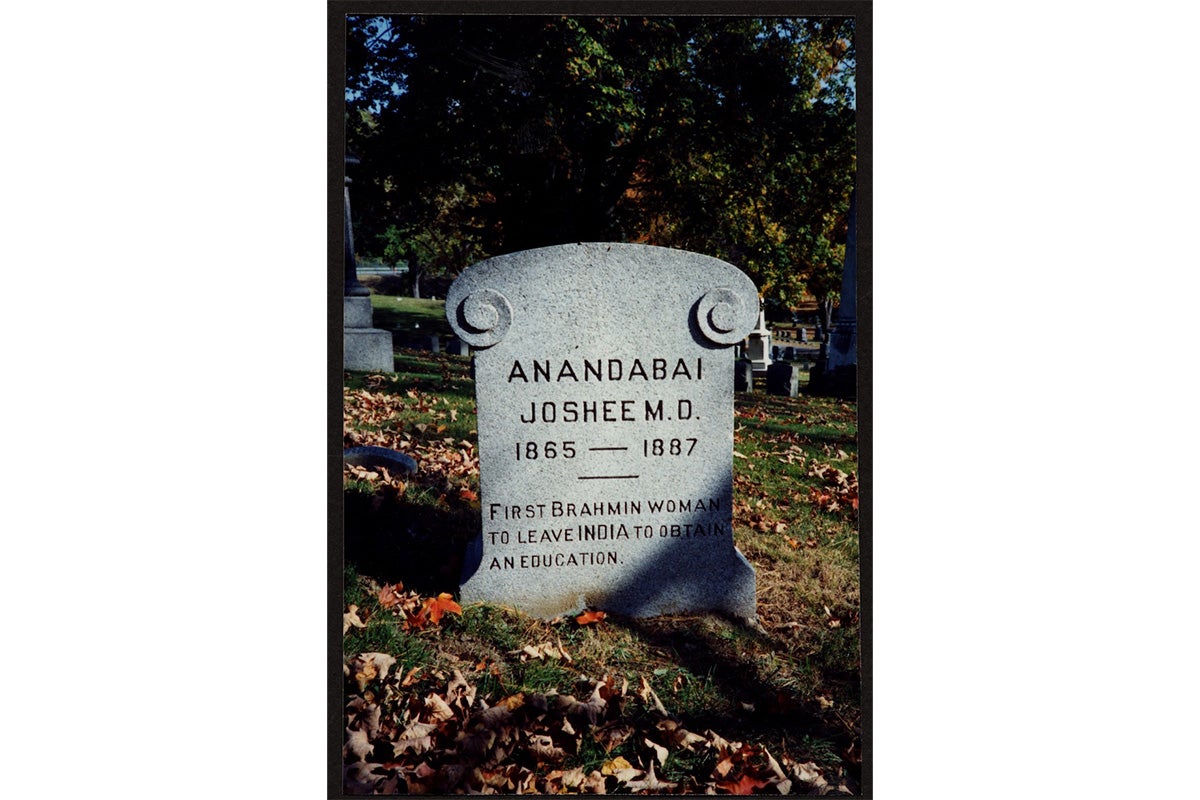
But when she returned to India in November 1886, she arrived seriously ill. Joshee died a few months later, in February 1887, of tuberculosis, having never worked as a doctor.
Joshee’s ashes were shipped back to America and buried at New York’s Poughkeepsie Rural Cemetery, in the family plot of her American friend and sponsor, Theodocia Carpenter, whom she used to call “aunt.”
SAADA has previously tried to tell Joshee’s story. In 2024, the organization declared March 31 to be Anandibai Joshee Day, in honor of her birthday. Mallick said this musical commission is the most ambitious effort yet to memorialize the doctor.
“It really comes out of our celebration of America 250 and realizing that stories like that of Anandibai are so central to Philadelphia’s history,” he said. “We have a real responsibility to uplift those stories at this moment.”
Majeske admitted she had never heard of Joshee before being commissioned for the songwriting project. Her mother, Dr. Mira Gohel, also a woman from India who came to Philadelphia to become a doctor, had never heard of her either. Gohel is a family physician at Thomas Jefferson University Hospital.
Majeske said her mother and Joshee traveled similar paths over a century apart.
“My mom worked in public health in Philadelphia for over 30 years helping mainly underserved communities, immigrants, people who didn’t have health care or health insurance,” she said. “When she heard Anandibai’s story she really felt a kindred spirit.”
All five composers will premiere their new songs at “Anandibai: A Night of Music for a Philadelphia Icon” at Christ Church Neighborhood House on Saturday, March 28. The songs will also be released on music streaming platforms as part of the album “Anandibai Mixtape.”

Get daily updates from WHYY News!
WHYY is your source for fact-based, in-depth journalism and information. As a nonprofit organization, we rely on financial support from readers like you. Please give today.

In hip-hop’s storied history, Philly has a legacy all its own — one that’s still being forged.
3 years ago
Listen 1:25
‘The performance of thoughtful melancholy’: Glen Foerd estate presents its resident garden hermit
In their performance piece “Gnome Core,” artist Alex Tatarsky plays a cranky hermit with one of the worst jobs in history.
3 years ago

Pictures from Philadelphia’s former history museum emerge at PAFA
“Seeing Philadelphia” is the first public exhibition of the city’s historical archive since the collection was acquired by Drexel University.
3 years ago