

Philadelphia museums revisit how America was built on botany
The Academy of Natural Sciences and the Mütter Museum have exhibitions about the role of plants in nation building.
From Philly and the Pa. suburbs to South Jersey and Delaware, what would you like WHYY News to cover? Let us know!
When Founding Father Thomas Jefferson arrived in Philadelphia to draft the Declaration of Independence, he was not impressed by the city. Jefferson, a Virginian farmer, rented a room far from the urban bustle, on what is now Seventh Street.
“I view great cities as pestilential to the morals, the health and the liberties of man,” Jefferson wrote to Benjamin Rush in 1800. “True, they nourish some of the elegant arts; but the useful ones can thrive elsewhere.”
Jefferson saw North America’s flora and fauna as its greatest asset.
“The greatest service which can be rendered any country is to add a useful plant to its culture,” Jefferson wrote in “Summary of Public Service” in 1800.
As Philadelphia celebrates the country’s 250th birthday, exhibitions at the Academy of Natural Sciences and the Mütter Museum, and an academic symposium at the University of Pennsylvania make the case for Philadelphia’s central role in establishing American botany as a pillar of nation-building.
“Botany of Nations,” at The Academy of Natural Sciences of Drexel University, explores how plants helped shape the nation and explains why Jefferson sent Meriwether Lewis and William Clark on the 1803 Corps of Discovery expedition through the Louisiana Purchase. To build a great nation, Jefferson needed to know what grew here.
“The object of the Corps of Discovery, the aims of it, were complicated,” said curator Marina McDougall. “He asked Lewis and Clark, in meeting with Native Americans, to explore trade. There was diplomatic interest. And, of course, the native nations came to it with their complex trade histories and their own interests.”
Why ‘Botany of Nations’?
The title reflects Lewis and Clark’s exploration of lands occupied by 50 distinct native nations, each with thousands of years of botanical knowledge.
“Many Americans look to the Lewis and Clark Corps of Discovery as a way to think about national identity. Our identities as Americans come from that,” McDougall said. “But it was much more complex than the story of these two heroic figures.”
American natural sciences were largely concerned with identifying and categorizing plant and animal types. Before heading west in 1804, Lewis learned botany in Philadelphia from Benjamin Smith Barton, a member of the College of Physicians of Philadelphia.
Barton argued in 1798 for the creation of an American encyclopedia of medicinal plants, i.e. a pharmacopeia, so the United States would not be solely reliant on European knowledge.
“They brought a pharmacopeia over with them on the Mayflower,” said Meredith Sellers, a curator at the Mütter Museum at the College of Physicians of Philadelphia. “This is like WebMD in the colonial era.”
-
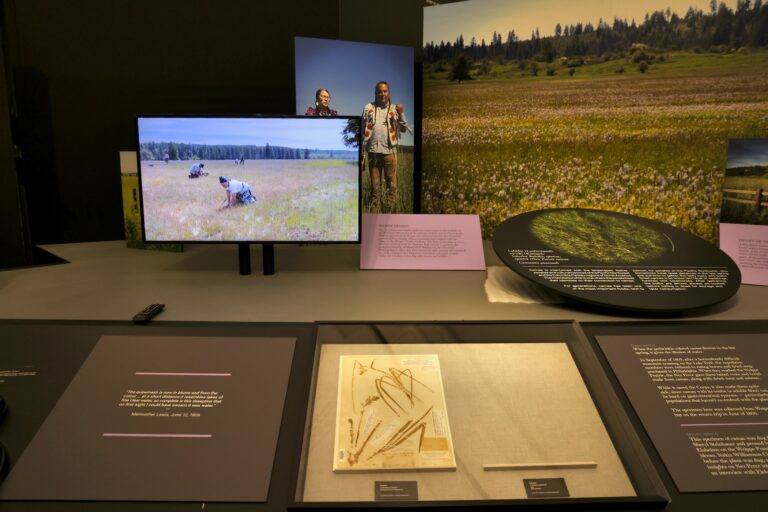
''Botany of Nations'' zooms in on seven plants collected by the Lewis and Clark expedition and the Native American Nations that used them. Camas root was a staple food of the Nez Perce of the Pacific Northwest. (Emma Lee/WHYY) -
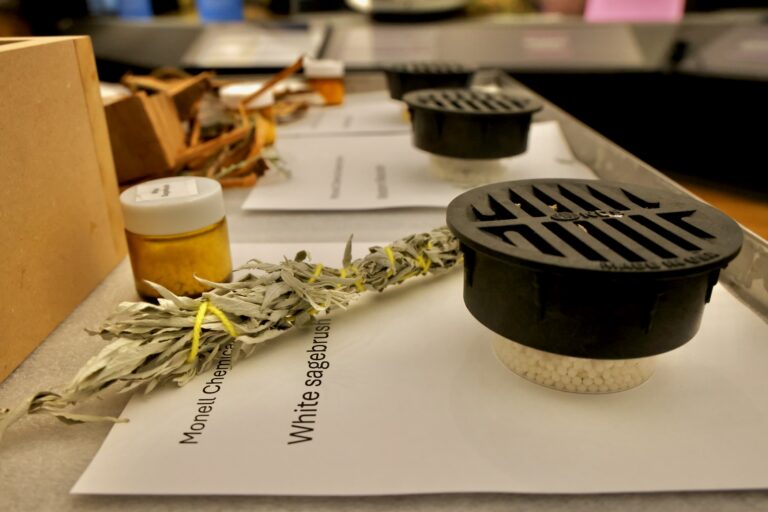
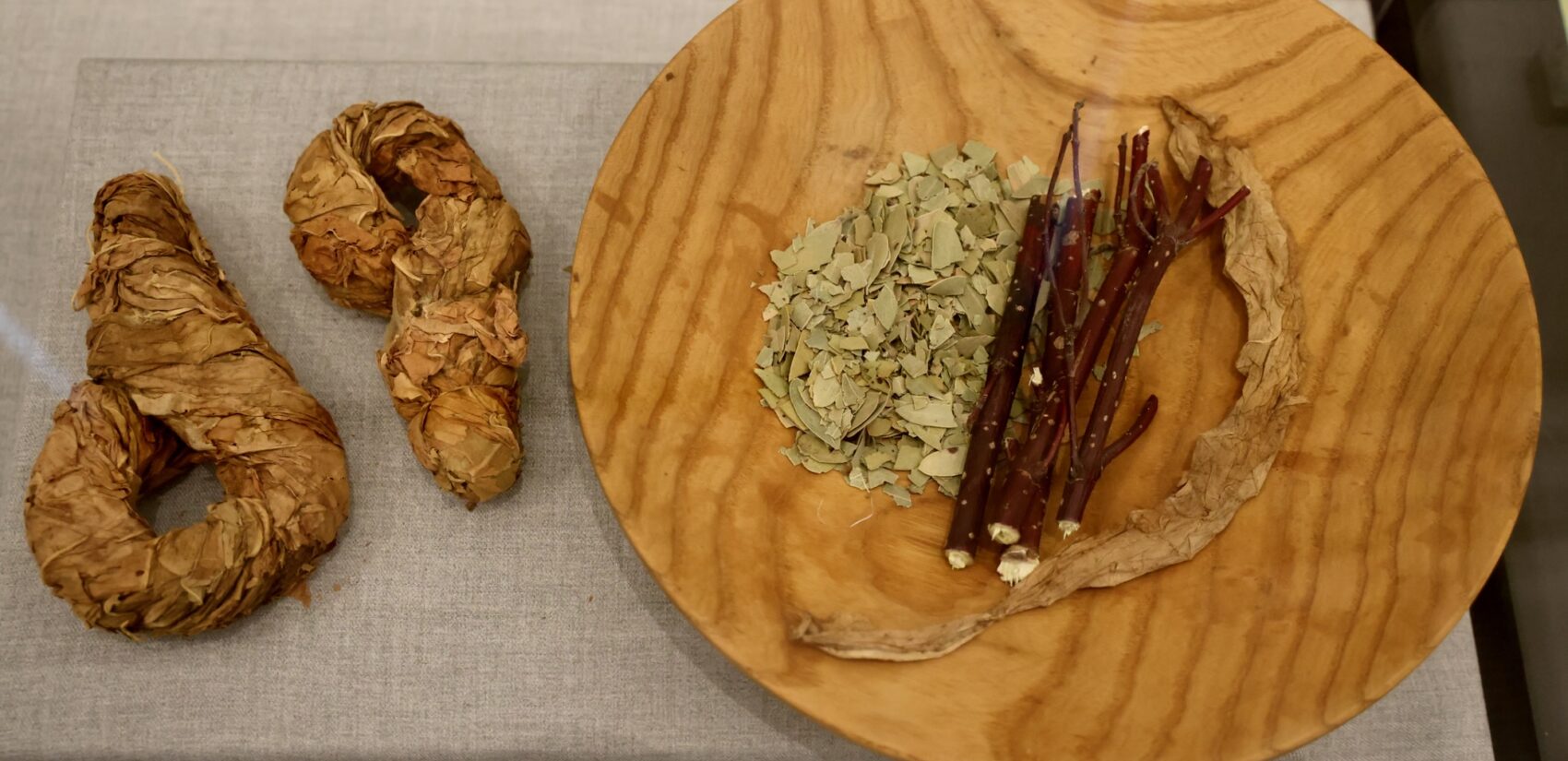
Visitors to ''Botany of Nations'' at the Academy of Natural Sciences will be able to smell some of the native plants displayed there, including white sagebrush, Arikara tobacco and western red cedar (Emma Lee/WHYY) -
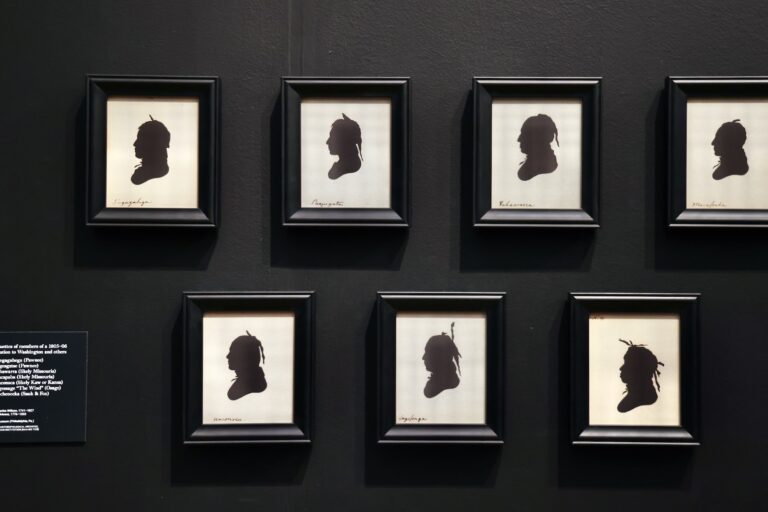
Lewis and Clark invited chiefs of tribal nations to visit eastern cities. In 1806 a group visited Philadelphia where Moses Williams, an enslaved assistant to Charles Wilson Peale, made silhouettes of the delegates using a device called a physiognotrace. (Emma Lee/WHYY) -
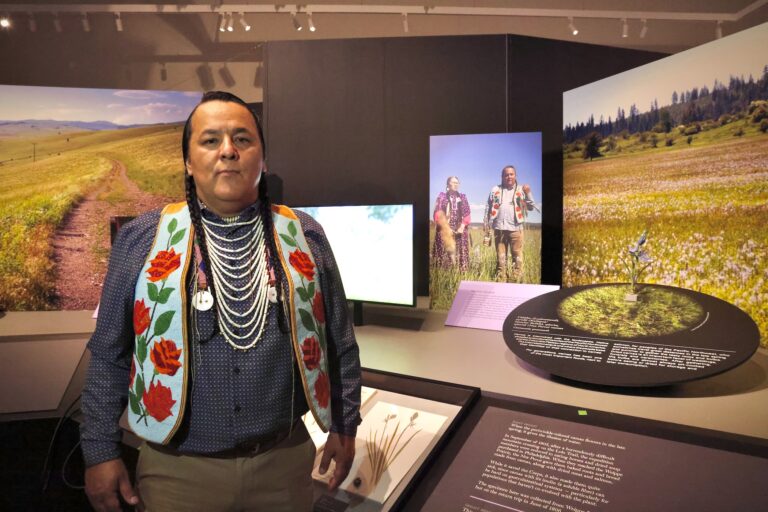
Nakia Williamson-Cloud, a member of the Nez Perce Nation, provided insights and artifacts for the exhibit ''Botany of Nations'' at the Academy of Natural Sciences. (Emma Lee/WHYY) -
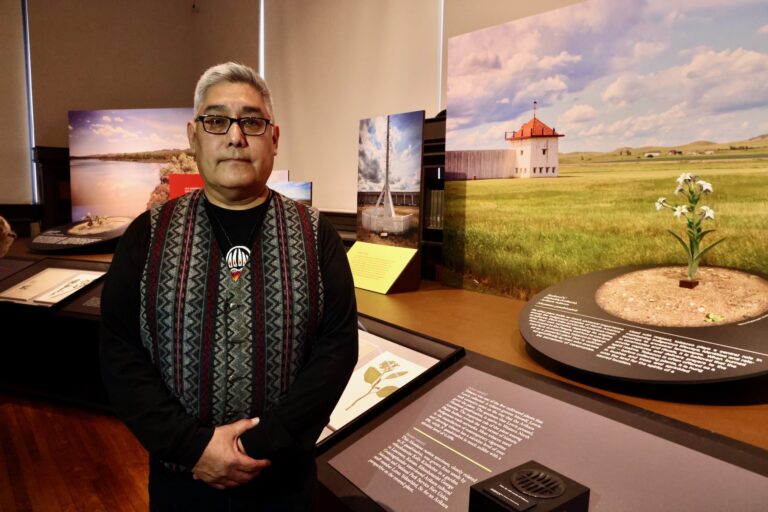
Loren Yellow Bird is an Arikara cultural historian. The Academy of Natural Sciences consulted with him on the cultivation and traditional uses of tobacco by Native American peoples. (Emma Lee/WHYY) -
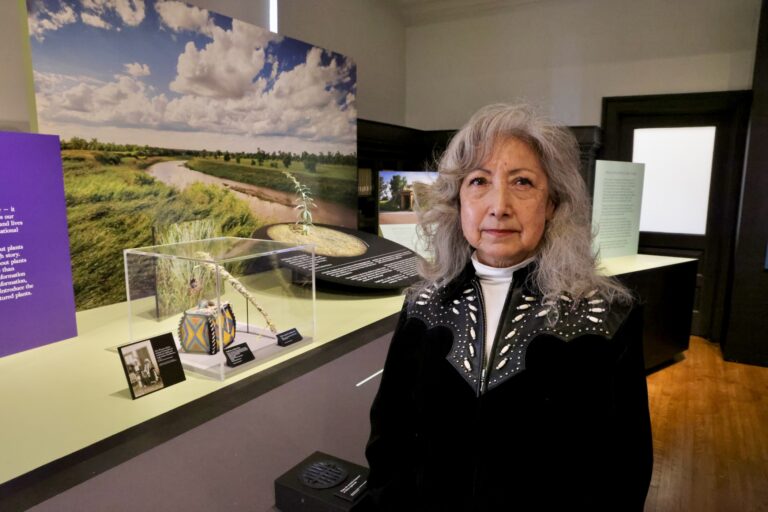
Amy Mossett, an educator with the Mandan, Hidatsa and Arikara Nation, provided the Academy of Natural Sciences with a reproduction of the carried by her great grandmother, Iron Woman. (Emma Lee/WHYY) -
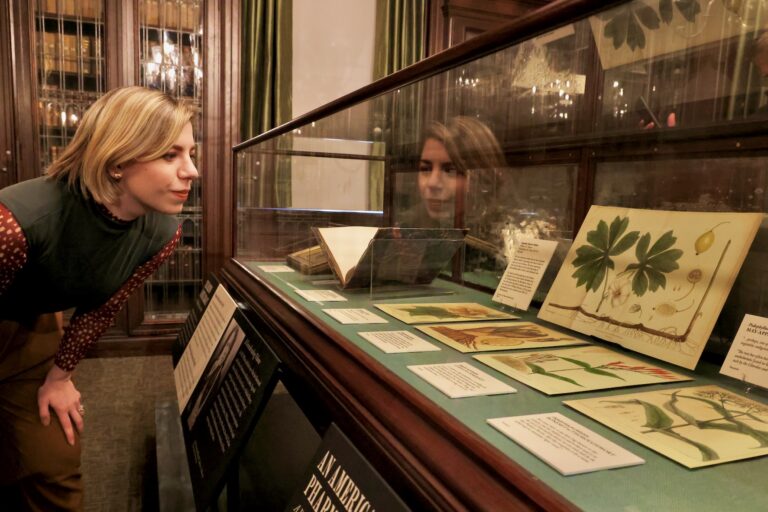
Coordinating curator Meredith Sellers of the College of Physicians helped bring ''Revolutionary Botany'' to the Mütter Museum. (Emma Lee/WHYY)
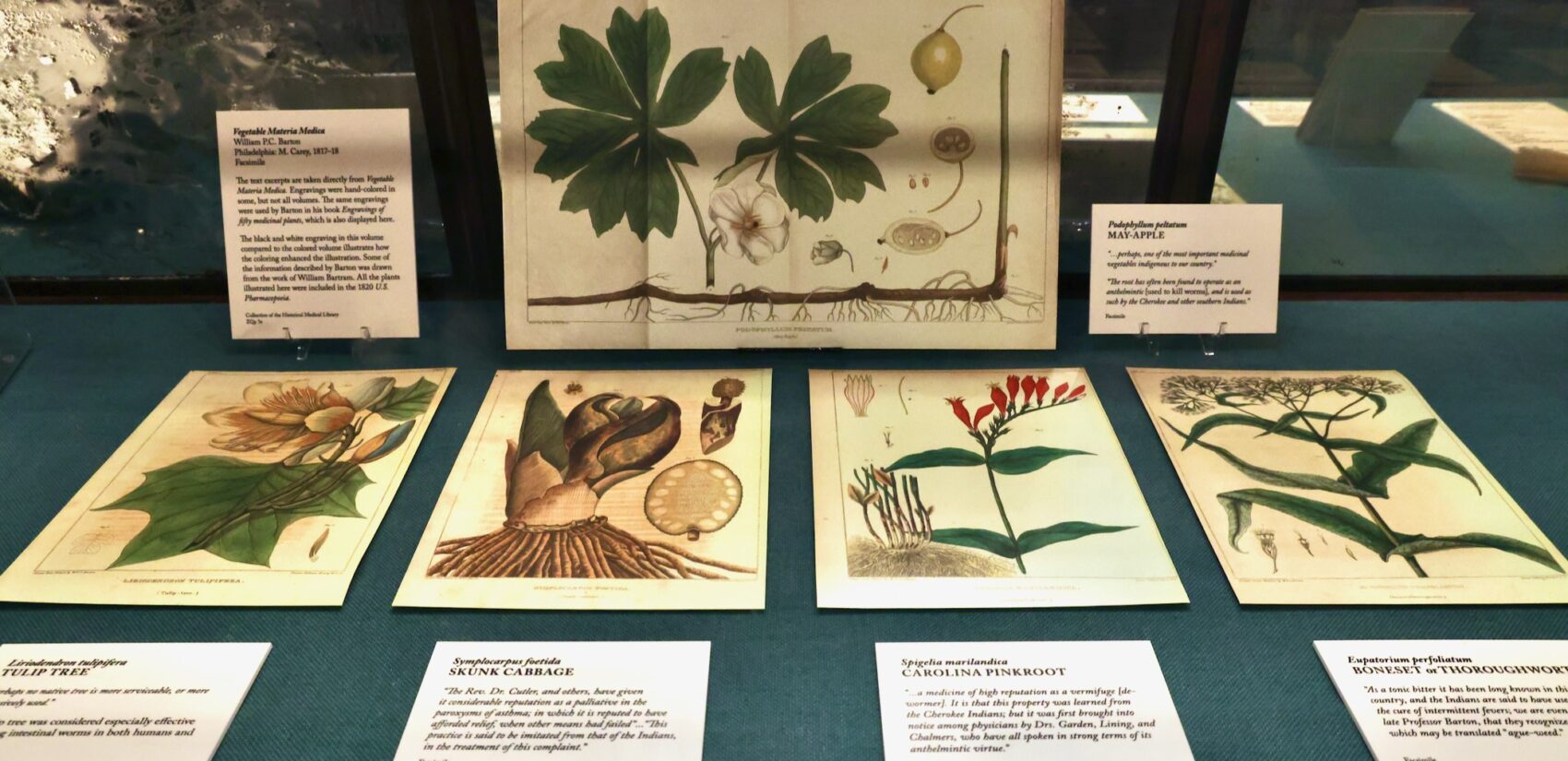
The Mütter Museum currently has a small exhibition, “Revolutionary Botany,” featuring manuscripts and artifacts tracing the origins of modern medicine to Philadelphia botanists.
“Revolutionary Botany” features figures such as Barton, who consulted with area indigenous people for their knowledge of native plants, John Bartram of Bartram’s Garden and the creation of America’s first pharmacy school, the Philadelphia College of Apothecaries — later the Philadelphia College of Pharmacy, now part of St. Joseph’s University.
The first American pharmacopeia was created in 1820 to establish the validity of American medicine.
“That’s really what the American pharmacopeia reflects,” Sellers said. “It’s a compendium of both the European known curatives and then adding to it these new American plants within a European understanding of what’s new.”
The European understanding of botany collided with an indigenous perspective of plants. Nakia Williamson-Cloud of the Nez Perce nation said naming species and categorizing them into taxonomic groups is antithetical to indigenous practice.
“We don’t go to discover a place. We go to a place and seek connection with it,” he said. “They are what gives us identity. We don’t give it identity.”
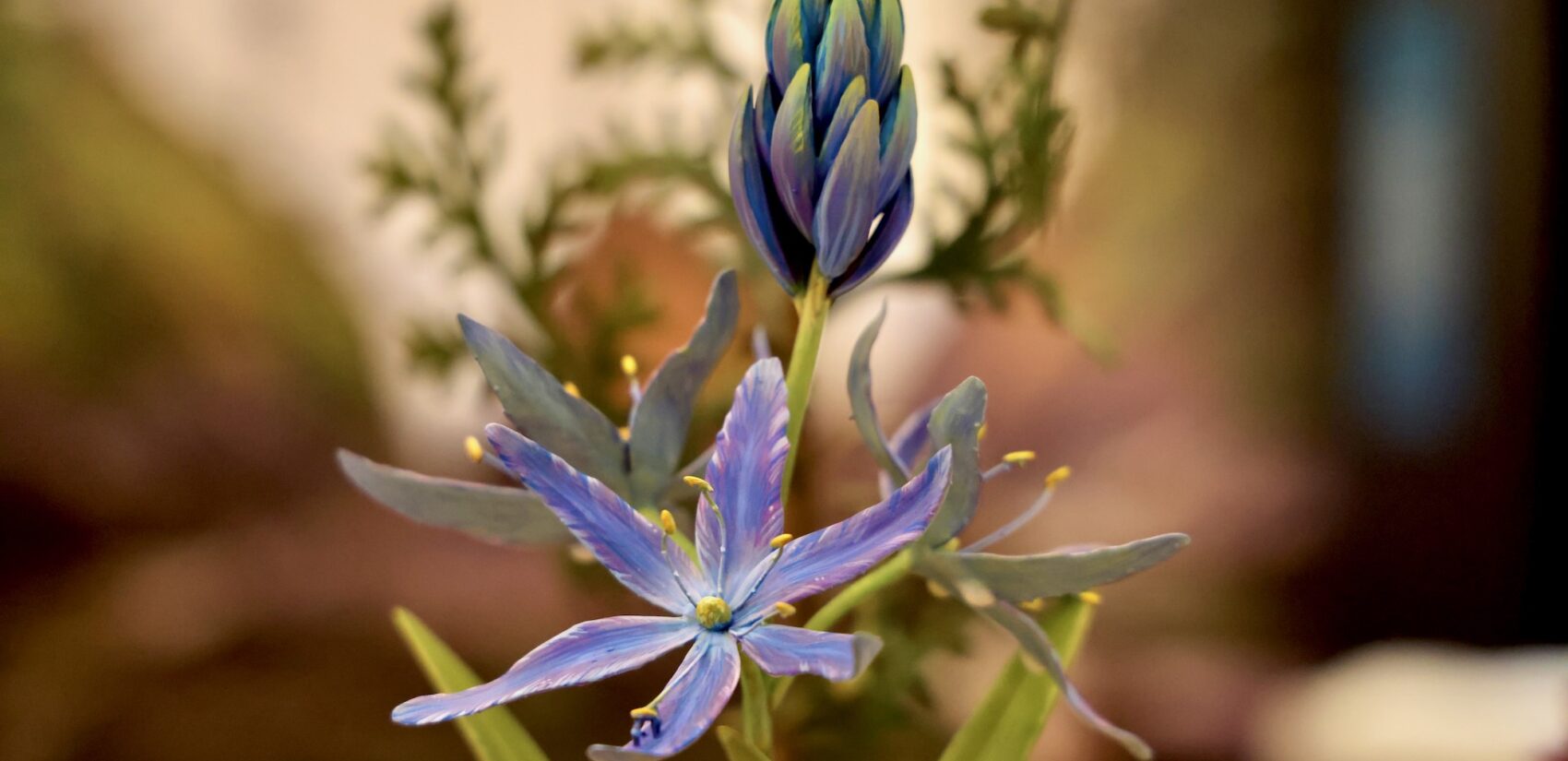
The story of the humble camas root
Williamson-Cloud is one of several ethnobotanists consulted for “Botany of Nations.” He appears in a section about the camas plant, a grass with a thick root bulb that grows in Western North America.
“It was one of the main food staples, probably contributed to almost 50% of our diet,” he said. “It was a root that was very important to our life and our subsistence, but it’s also intertwined within our spirituality.”
The camas, often called “Grandmother” by the Nez Perce, is part of native creation myths: The plant was born from the tears of a grandmother who cried herself to death over her children’s hunger. Camas also appeared in the wake of the coyote figure who battled a great monster to death.
Lewis and Clark observed Nez Perce women picking camas in the wild and likely assumed they were foraging. But the Nez Perce were farmers cultivating plants for harvest. Like many indigenous farming practices, it did not look like European farming with rows of monoculture crops; plants were carefully sown and later gathered without disturbing surrounding plant life.
“As travelers on a schedule, [Lewis and Clark] may have missed important elements of the Nez Perce system for producing annual crops of big camas bulbs,” said Sarah Walker, a Forest Service botanist featured in “Botany of Nations. “This was a system planned and carried out by women, whose horticultural skills were not investigated by Lewis and Clark.”
Williamson-Cloud contributed to the exhibition a traditional tú·kes digging stick, a long, thin hardwood branch hardened by fire with a bone crosspiece on top. Women who harvested camas would plunge the stick several inches into the ground and lever up the camas bulb, cleanly uprooting it without damaging surrounding grasses.
“Lewis and Clark probably didn’t realize the degree to which the lands of North America were being gardened,” McDougall said. “Through cultural fire, through the practices of weeding things out as you dug the camus using the digging sticks that don’t disturb things around it, these were cultivated landscapes that were entering into.”
The myth of the American wilderness
The idea that Lewis and Clark entered and discovered untouched wilderness is an American myth, according to Rosalyn LaPier, professor of History at the University of Illinois Urbana-Champaign, who spoke at a recent Penn symposium, Adventive America, about the role of plants in American nationhood.
“We have this longstanding philosophy that this was a place untouched by humans, a place that was a Garden of Eden touched by god and untouched by humans,” she said in her presentation. “We have carried that philosophy forward to this day.”
LaPier, who is a member of the Blackfeet tribe, pointed to the 1964 U.S. Wilderness Act, which codifies in federal law the definition of wilderness as an area “untrammeled by man, where man himself is a visitor who does not remain.”
“The idea of the wilderness is so embedded in U.S. culture, we need to have I-don’t-know-what kind of surgery to pull that apart,” she said.
In 1805, Lewis and Clark encountered the indigenous Salish people of what is now Western Montana. The meeting is the subject of a large painted mural by Charles Russell, “Lewis and Clark Meeting Indians at Ross’ Hole” (1912), that now hangs in the Montana House of Representatives building.
In 2019, the Salish people published their own account of the historic meeting of the Salish and the Lewis and Clark expedition, describing it as “less an innocent Corps of Discovery than a reconnaissance for invasion.”
“They did not understand that what they saw in western Montana in 1805 was not the product of human absence, but more the product of human presence,” the Salish wrote in “The Salish People and the Lewis and Clark Expedition,” “Or more precisely, a particular kind of human presence.”
Updating the historic record
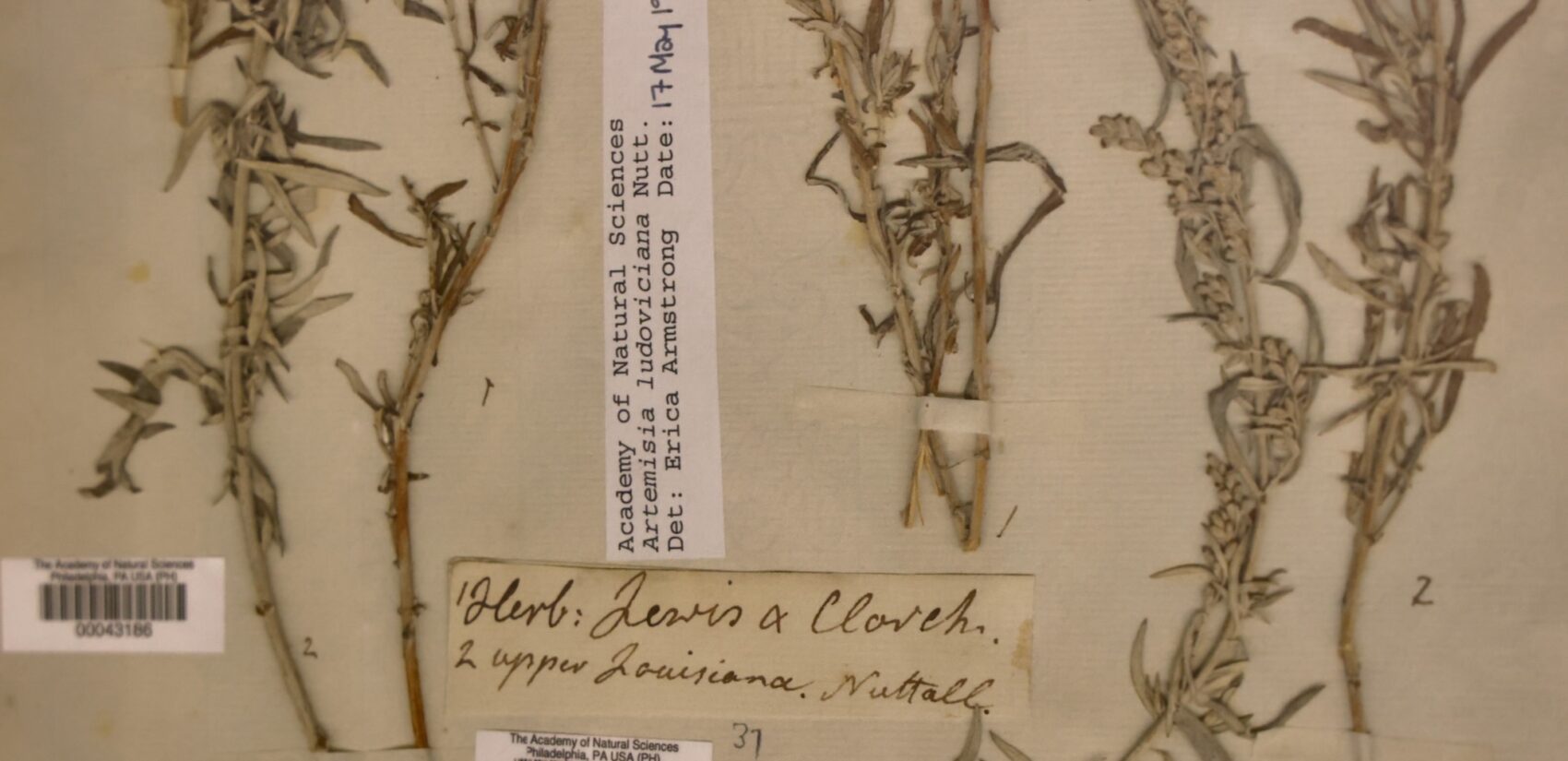
Lewis and Clark shipped 222 plant samples back to Philadelphia, pressed and annotated on paper sheets, which remain at the Academy of Natural Sciences as the Lewis and Clark Herbarium. Several sheets are on view in “Botany of Nations,” alongside updated sheets that include additional information about the plants, provided by indigenous ethnobotanists. When the exhibition wraps up next year, the new sheets will be permanently included in the historic herbarium collection.
“The academy’s been around for 200-plus years. What are researchers going to want in 50, 100, 200 years beyond that?” said Kaitlyn O’Brian, the Academy’s director of development. “They’re going to want the full view of what a plant can tell us. How can we weave indigenous science and indigenous knowledge into our collections so that future researchers and generations can really understand the full history of a plant?”
“Botany of Nations” will be on view at the Academy of Natural Science at Drexel University until February 14, 2027. “Revolutionary Botany” at the Mütter Museum will be on view through 2026. The “Adventive America” symposium at the University of Pennsylvania occurred in March 2026.
-
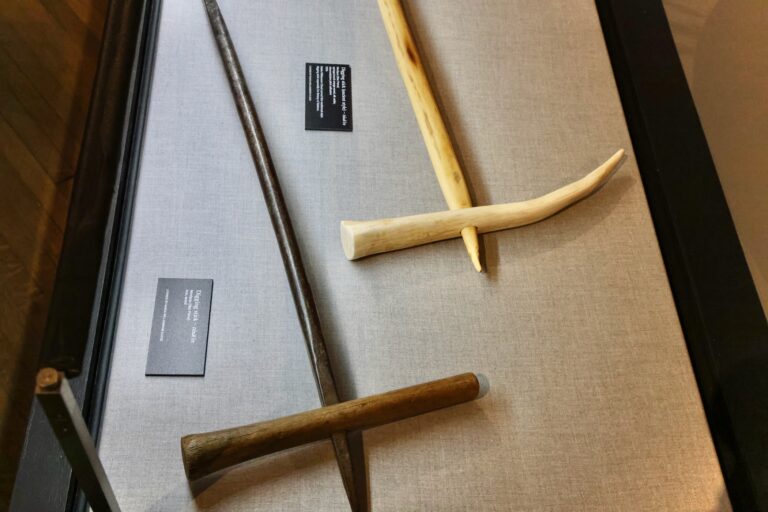
Nakia Williamson-Cloud provided camas digging tools used by the Nez Perce to harvest the roots, one made using traditional materials of wood and bone (right) and a more modern version made with metal. (Emma Lee/WHYY) -
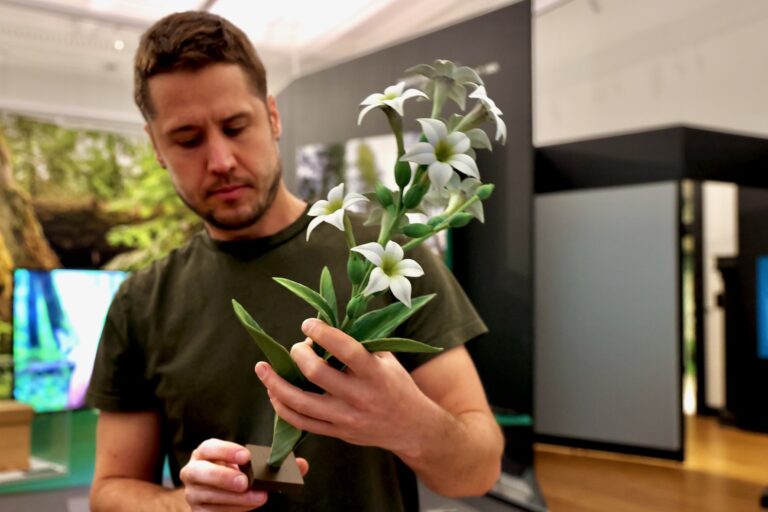
Tim Rusterholz prepares a 3-D printed model of a tobacco plant for placement in the ''Botany of Nations'' exhibit at the Academy of Natural Sciences. (Emma Lee/WHYY) -
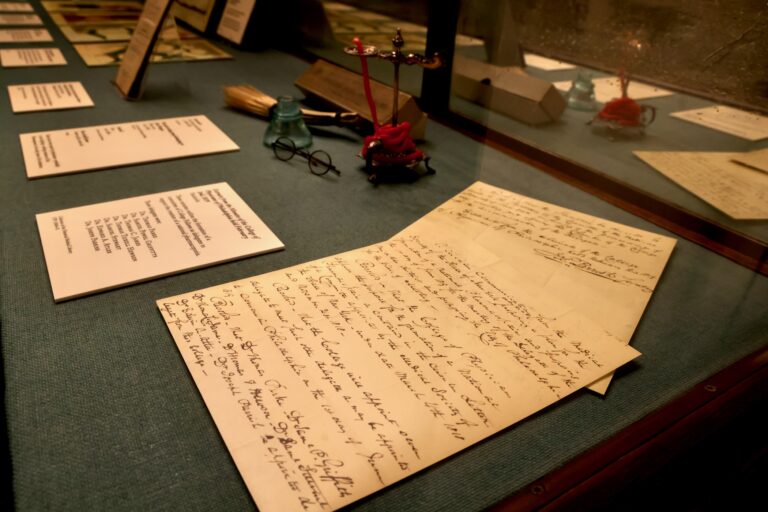
Handwritten minutes from a meeting of the College of Physicians in 1819 detail plans to create a national pharmacopoeia. (Emma Lee/WHYY) -
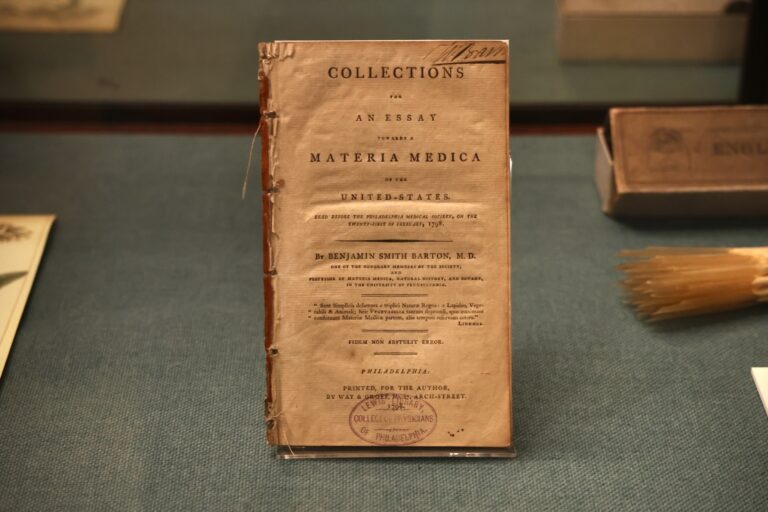
A precursor for ''Materia Medica'' was published by Benjamin Smith Barton in 1798. (Emma Lee/WHYY) -
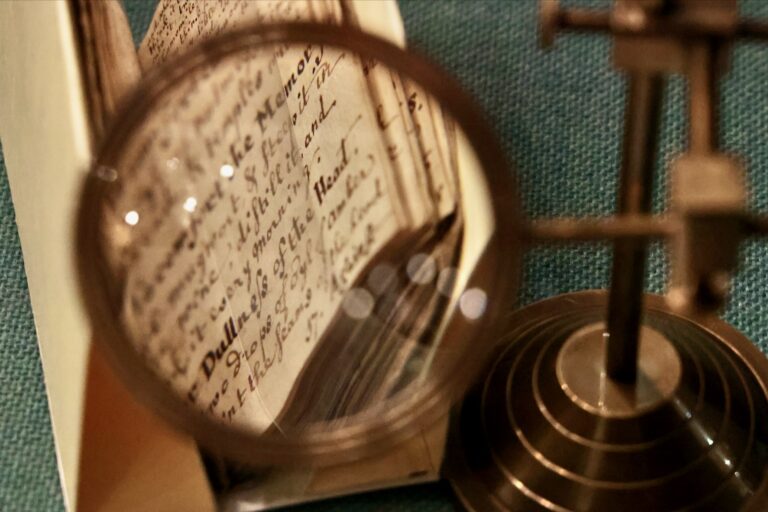
A handwritten commonplace book (circa 1730), small enough to fit in a pocket, contains a recipe for the treatment of ''dullness of the head.'' (Emma Lee/WHYY) -
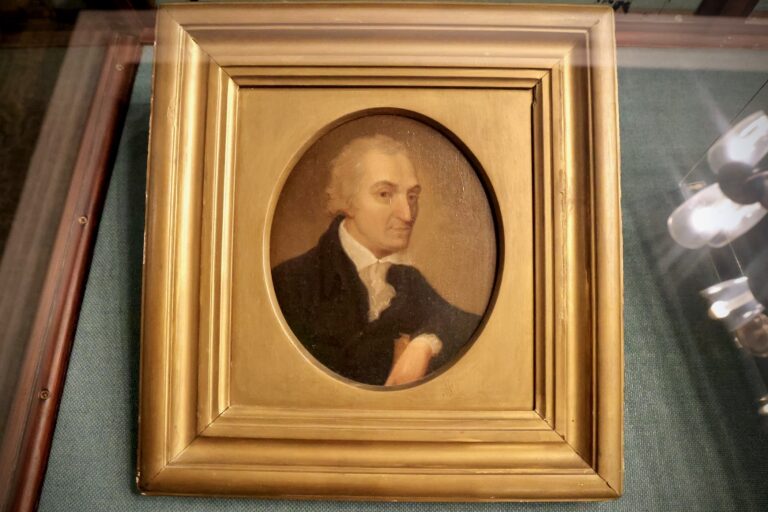
A portrait of Benjamin Smith Barton from the early 19th century is on display at the Mütter Museum. He is remembered for sharing knowledge of the use of plants as medicine by indigenous American healers. (Emma Lee/WHYY)

Get daily updates from WHYY News!
WHYY is your source for fact-based, in-depth journalism and information. As a nonprofit organization, we rely on financial support from readers like you. Please give today.
Part of the series
Philadelphia 250
The United States is marking its semiquincentennial — or its 250th anniversary — in and around the City of Brotherly Love.
Philadelphia’s Academy of Natural Sciences museum is closing
The Academy will continue scientific research and public education, but its museum will go the way of the dinosaur.
2 months ago
Listen 1:00
El muralista Christian Kanienberg afirma que le interesa “más crear obras de arte que, simplemente, resultan ser murales capaces de suscitar conversaciones”.
3 months ago
Muralist Christian Kanienberg says he’s “more interested in creating pieces of art that just happen to be murals that are conversation starters.”
4 months ago
Listen 2:11