




Our political divides and social identities
Social psychologist Keith Payne on political polarization and why it's so hard to bridge the divide.
Listen 50:13
Supporters of President Donald Trump rally at the U.S. Capitol on Jan. 6, 2021, in Washington. As a winter storm bore down on the nation's capital four years later, lawmakers would again gather at the U.S. Capitol, this time without protests, challenges or violence — but behind layers of black security fencing serving — to certify Trump's 2024 win over Vice President Kamala Harris. (AP Photo/Jose Luis Magana)
Political polarization is tearing the country apart with partisans viewing the other side in increasing personal terms, as immoral or evil. There have always been deep disagreements and conflicts in America but as we get ready to celebrate the country’s 250th anniversary it feels as if democracy itself is on the line.
Psychologist Keith Payne argues that few of us hold a fully coherent or consistent political ideology. Instead, its our social identities — our sense of belonging to particular groups — that often shape our belief system.
In his book Good Reasonable People, Payne explores why today’s divide is so hard to understand and to bridge: nearly everyone believes they are a good, reasonable person acting in good faith.
Keith Payne joins us to examine the roots of political polarization and the steps it might take to find common ground.
WHYY is your source for fact-based, in-depth journalism and information. As a nonprofit organization, we rely on financial support from readers like you. Please give today.
Brought to you by The Connection with Marty Moss-Coane
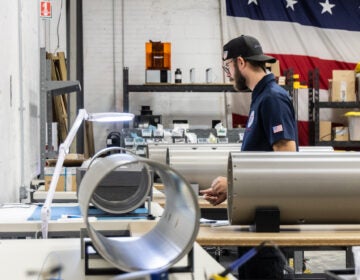
Less than two years after a Wharton dropout co-founded it, Albacore has $10 million in investments and a contract to supply the U.S. Navy.
6 hours ago
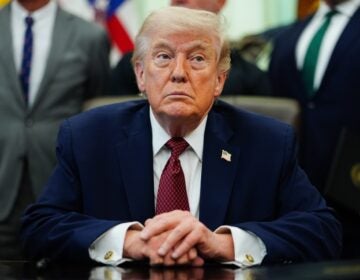
The ruling creates uncertainty weeks ahead of the 2026 midterms. Here’s what that means for Pennsylvania voters.
11 hours ago
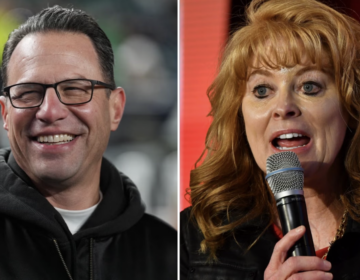
Pa. election 2026: What to know about the governor’s race between Josh Shapiro and Stacy Garrity
Here’s a look at what’s at stake in the midterm race, where Shapiro and Garrity stand on key issues and more.
18 hours ago
Listen 1:06