



How Chatbots Make Us Feel
An exploration of how AI is changing the way we feel — about ourselves and everything else.
Listen 49:34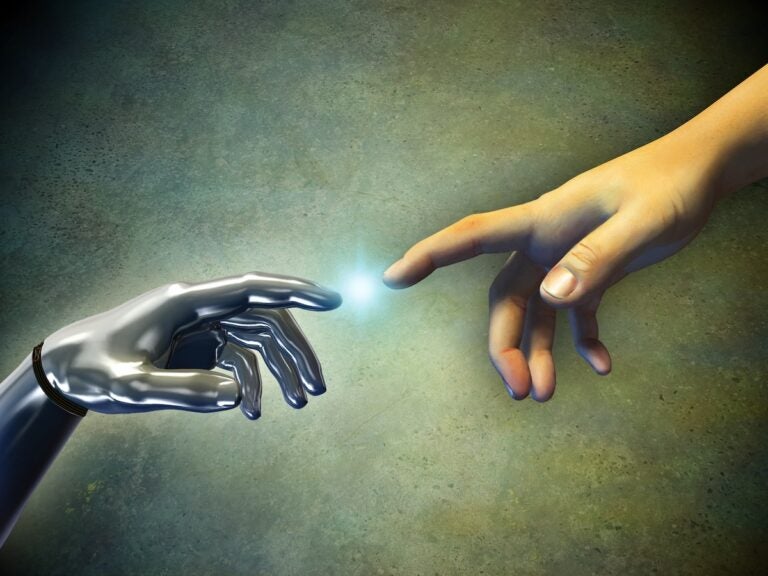
Human hand touching an android hand. (Thufir/Bigstock)
Chatbots don’t have feelings, but they sure elicit feelings in us! Bots can alternately comfort us and enrage us, inform us and lie to us, encourage us and, in some cases, even provoke self-harm. As more people turn to chatbots for their emotional needs, to find support, friendship, and even romance, we explore how AI is making us feel, and what those feelings say about us. How could these interactions change our relationships with ourselves and others?
We hear about why one man says ChatGPT has done more for his anxiety than years of therapy, what kinds of personalities we prefer in our chatbots, and how both the market and online culture is responding to the spike in AI-generated content.
ALSO HEARD:
- Humorist and educator Lodge McCammon has always struggled with anxiety, and for years, he used talk therapy to cope. But recently, he tried out a new strategy that seems to work even better — using ChatGPT. He explains how it’s helped and why, he feels that in some ways, it’s better than talking to a human.
- Inyoung Choeng, a postdoctoral researcher at the Center for Information Technology Policy at Princeton University who studies AI ethics, explains why we like talking to chatbots so much, the emotional and relational dangers of these interactions, and what safeguards are needed to protect users.
- A lot of people enjoy the validation they get from chatbots — but on April 1, OpenAI surprised ChatGPT users with an experiment: a sassy chatbot named Monday. Pulse producer Nichole Currie explores whether we prefer sycophantic or snarky chatbots, and why.
- As large language models have advanced, so has the backlash against them — and that’s led to a growing online obsession with calling out suspected AI content. But are humans really capable of telling the difference between writing produced by humans, and writing produced by AI? Pulse reporter Liz Tung investigates what researchers have found about our ability to distinguish between the two, and what’s fueling this growing anger against AI.
- We talk with Sam Goldberg, an assistant professor of marketing at Stanford’s Graduate School of Business, about how AI-generated images are affecting the stock image business, and why AI art appeals to us.
WHYY is your source for fact-based, in-depth journalism and information. As a nonprofit organization, we rely on financial support from readers like you. Please give today.
Brought to you by The Pulse

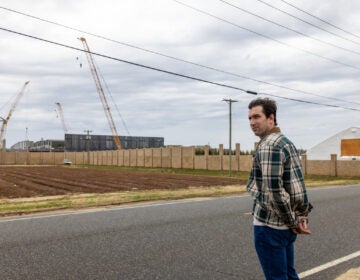
Vineland residents are protesting AI data center as concerns mount over noise and emissions
The project in South Jersey, already under construction, is being developed by DataOne for the Nebius Group as part of a $17 billion deal with Microsoft.
3 weeks ago
Listen 2:18
How does AI affect child development? CHOP researchers say safeguards are needed
Researchers found AI could help with creativity and education, but that it can confuse young children and generate harmful misinformation.
3 weeks ago
Listen 1:21
Thomas Jefferson University opens $1.8 million market research lab
The lab is funded by alum John Thackrah and allows students access to live data for market research.
4 months ago