
4 key takeaways from the WHYY Civic News Summit
Journalism and community engagement have the power to bridge divides and generate meaningful conversations, panelists said.

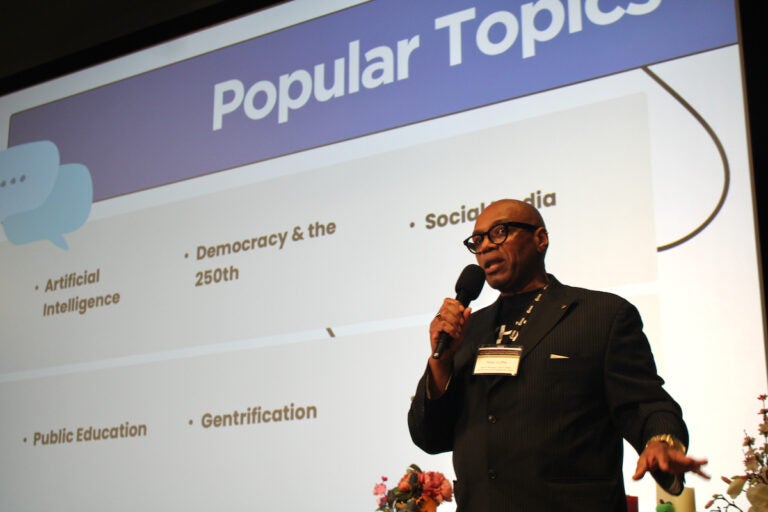
Tony Cuffie, senior manager, WHYY News Community and Engagement Team, speaks at the WHYY Civic News Summit on Saturday, April 4, 2026. (Emily Neil/WHYY)
From Philly and the Pa. suburbs to South Jersey and Delaware, what would you like WHYY News to cover? Let us know!
Journalists, students, content creators, news consumers and media experts gathered at WHYY headquarters Saturday for the second day of the WHYY Civic News Summit.
Panels explored a myriad of topics, including how to develop meaningful community engagement journalism initiatives, the importance of journalism programs in schools, tips for creating podcasts and the role of collaborative journalism and content creators in the news and media ecosystems.
Here are four key takeaways.
Every school should have a journalism program
At the “Student Journalism Pitch Jam” panel, moderated by Lisa Wilk, director of school partnerships at WHYY, two student journalists shared why learning about journalism is so important for all young people.
Learning the process of reporting can help young people with news literacy and critical thinking skills, said Amelia Candeub, a senior at Lower Merion High School and current WHYY News intern who also participated in WHYY’s summer journalism program.
“I think once they have that skill and know what it’s like to go behind the camera, behind the microphone, and talking to people and understanding how media works, they’ll be less inclined to fall for misinformation,” Candeub said.
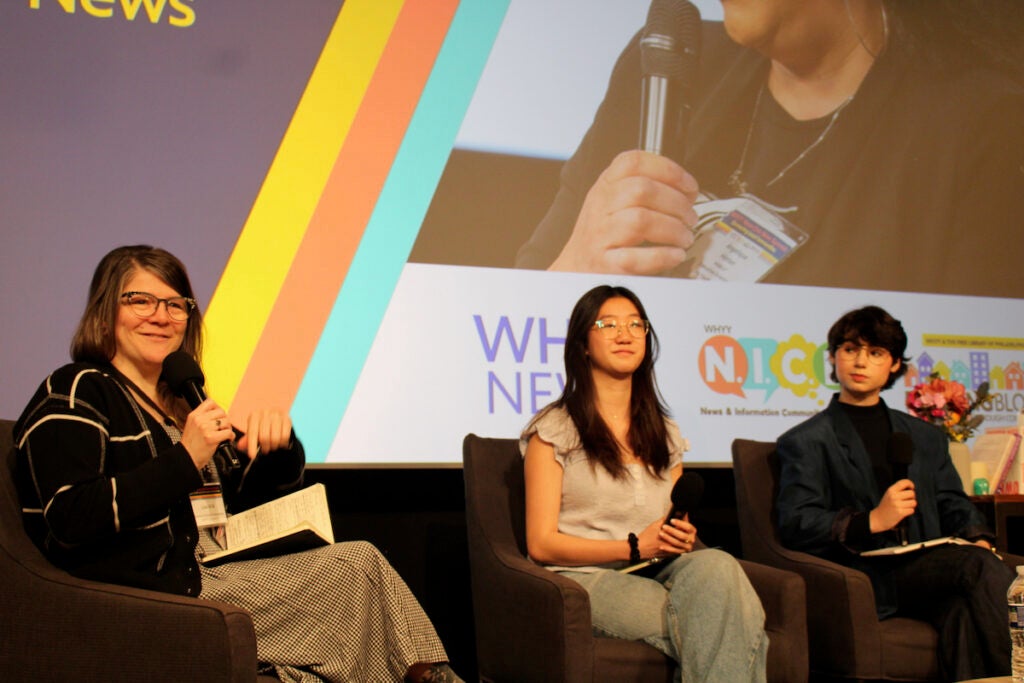
Student journalism helps connect young people with local news, said Kaitlyn Ho, a senior at Strath Haven High School and co-editor-in-chief of “The Panther Press” who participated in WHYY’s youth summer journalism program.
“The reason why people … feel so alienated from news is because they’re reading national news instead of local news, local news where you see yourself in your community,” Ho, who was awarded the 2026 Pennsylvania Student Journalist of the Year by the Pennsylvania School Press Association, said.
Journalism can break down barriers and bridge identities
Several panelists spoke to the importance of journalism in strengthening local communities and civic engagement.
Tony Cuffie, senior manager for community and engagement at WHYY News, and Brisa Luzzi Castro, community convener on the WHYY News community and engagement team, explained WHYY’s Bridging Blocks’ process in facilitating meaningful conversations on divisive issues.
“The point is that we don’t show up with an agenda,” Cuffie said. “We don’t try to push any beliefs on anybody. Our only motivation is that people talk to each other.”
Luzzi Castro explained that facilitators with Bridging Blocks aim to read participants’ body language, practice active listening and ask more questions to encourage respectful, engaged dialogue.
“We’ve talked about immigration in the past, we’ve talked about free speech and what people think about politics and houselessness,” she said. “So a lot of these things come with some heaviness and some depth, and so being really sensitive to how people are speaking and the personal stories and making sure that they feel like they are heard, that I’m not just disregarding what they’re saying, that I’m not moving on too quickly, and that we’re kind of sitting with those emotions and sort of reflecting on how we feel.”
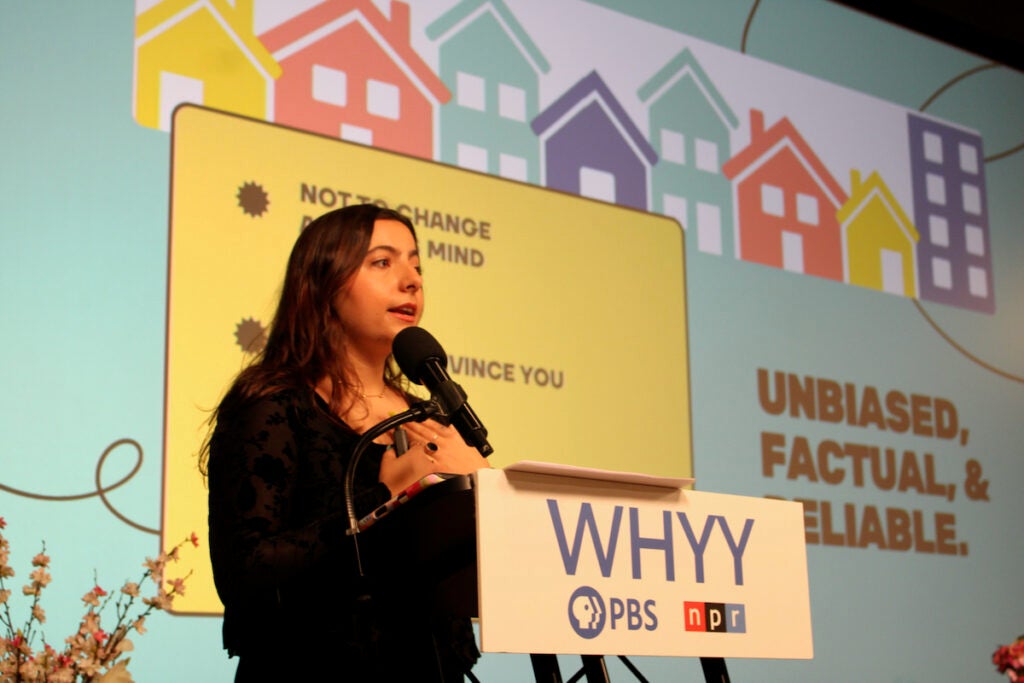
The group facilitated an example of Bridging Blocks, inviting participants to share their thoughts on whether or not the voting age should be lowered to 16.
Related Content
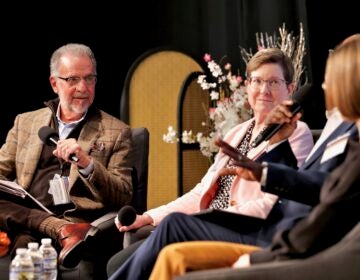
Panels explored youth media, community connection, AI risks, misinformation and the future of public media.
2 days ago
Explore new formats and platforms
Trenae Nuri, host of the City Cast Philly podcast, described how she first got into podcasting and how anyone can get started creating their own podcast.
Nuri said she started podcasting at her own kitchen table, crowdfunding for a microphone and other equipment from family and friends.
“It was my bathroom, my closet, wherever my children weren’t making noise, and I would edit this thing at my kitchen table,” she said. “That was my podcast studio. I kept putting this content out every week, but I was wondering, is anybody listening to this thing?”
As it turns out, someone was, and that work led her to produce podcasts for The Wall Street Journal.
Nuri encouraged journalists and media makers to explore new media formats and platforms.
“Put it together, and you never know who’s watching you,” she said. “And that’s one of the biggest lessons out of this whole thing … I didn’t think anyone was watching me.”
Online creators also offered their perspectives on how news organizations can collaborate and learn from them in another panel, titled “The Hybrid Future of Journalism: Exploring Creator Influence on Media.” Stephanie Humphrey, content creator and host of “Life and Tech with TechLifeSteph,” moderated the discussion.
Alex Pearlman, the content creator behind Pearlmania500, said most people get their news by opening a social media app and scrolling through their news feed.
He said newsrooms need to treat each platform as its own venue.
“At one point, I had more TikTok followers than CNN,” he said. “The reason for that was not because I was making better content. It was because I was making the content inside the TikTok app for a TikTok audience. CNN was clipping their daily shows and putting them horizontally into a vertical feed. That’s just a baseline there.”
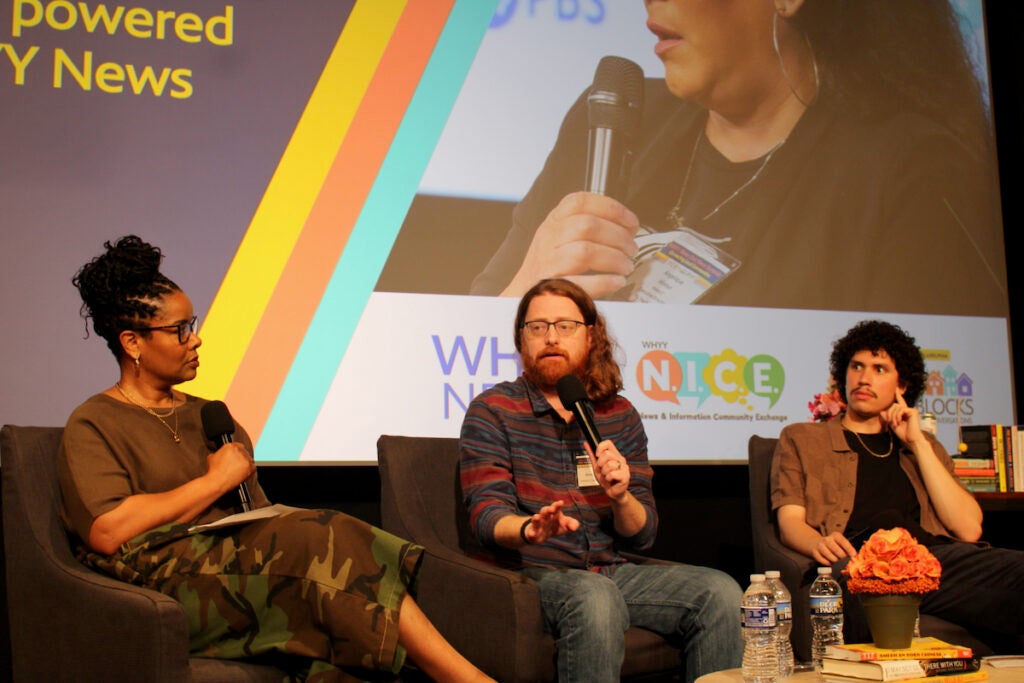
He said the key is to think about how the platform works and how information can be packaged.
“I think the big thing is just figuring out which audiences you’re communicating to, how you’re communicating to them, how you’re speaking to them and picturing where they are when they’re consuming the news,” Pearlman said.
Santiago Ortiz, content creator at No Shorts Media, said he often relies on local journalism as a source for his content and holds himself to standards of credibility and the veracity of information.
“Any time people are like, ‘Oh, well, the news doesn’t talk about this,’ ‘Well, where do you think I’m getting my sources?’” he said. “I’m making a video and I’m quoting Billy Penn, I’m quoting Inquirer, I’m quoting Spotlight PA, whatever it is …. We have all these newsrooms that are doing incredible journalism, and then we have people create video that are much more accustomed to the packaging of media.”
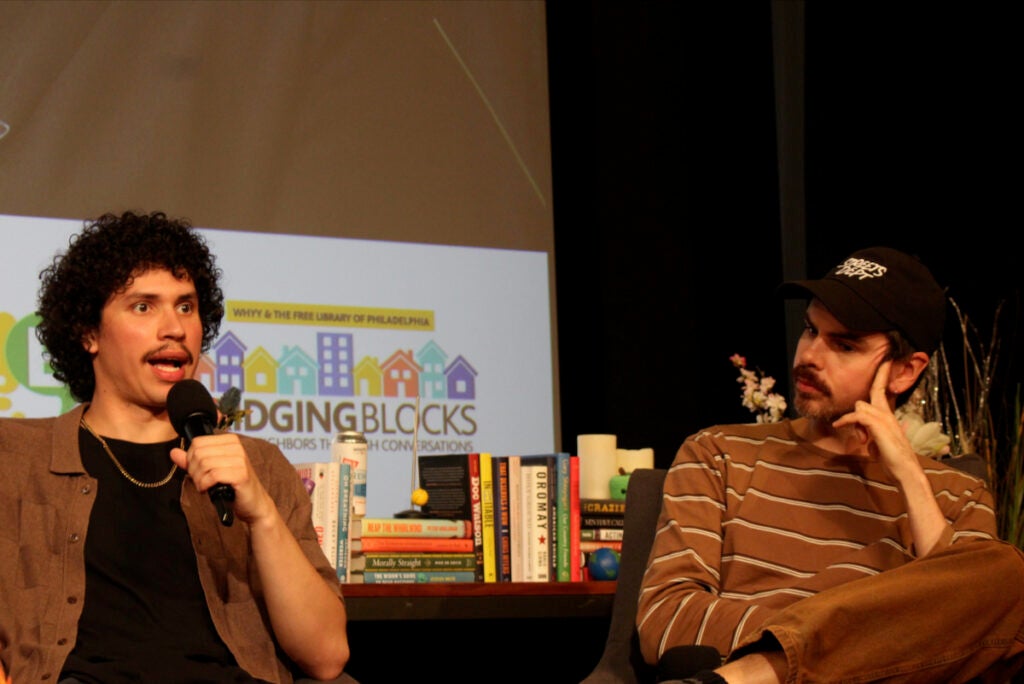
He recommended keeping the text to a maximum of seven or eight words in the first five seconds of any online video.
For Conrad Benner, founder of Streets Dept., connecting with the audience and getting out into the community are also key to finding and telling impactful stories.
“I’m a citizen who’s creating acts of journalism for the community that I’m from as well,” he said. “So I felt like part of the reason I started Streets Dept. was because the outlets that existed at the time weren’t talking about Philly arts enough. So I thought, well, that’s something I can do. And so partnerships that have come from that now lean into that.”
Related Content
Federal judge finds Trump violated First Amendment by ordering NPR, PBS defunded
The decision leaves the future of federal funding for public media “unresolved,” WHYY’s CEO said Tuesday, but it’s a positive sign.
5 days ago
Listen 1:15Collaboration and resources for community-informed journalism
Fostering collaboration between newsrooms and supporting journalists to do work rooted in the communities they serve is key, said Letrell Crittenden, director of the Lew Klein College of Media and Communication Center for Community-Engaged Media at Temple University.
The center seeks to understand how journalists and media publications can serve the information needs of communities.
A recent addition to the center is the Philadelphia Journalism Collaborative, which started 10 years ago as The Reentry Project and then Broke in Philly. The partnership brings together newsrooms across the city to report on specific topics and engage local communities.
“The idea is to use the strengths of different newsrooms to cover different stories,” Crittenden said. “This is important because, for instance, a lot of newsrooms don’t have a lot of Spanish speakers in their midst. If they are working with a Spanish-speaking newsroom, that allows them to better communicate with a community. Meanwhile, if it’s a larger newsroom that has resources, they can help the smaller newsrooms. And there are all different ways of trying to make sure that these combinations are leading to better stories.”
He said newsrooms and journalists need to strategize on how to address coverage gaps and build relationships with communities.
“If you are not connecting with the entirety of your actual community, you’re losing potential readers, consumers, and if you are making them upset for whatever reason, because you’re not covering their stories, or you’re covering their stories only when things negative happen – that’s why we have a lowering of trust,” Crittenden said. “This is why it is imperative for newsrooms to adopt practices where they’re getting out and simply talking to community members.”
Newsrooms and journalists can start with the straightforward questions, he said: “How are you doing? Who are some people in your community that we should know about? How do you think our coverage has been?”
Get daily updates from WHYY News!
WHYY is your source for fact-based, in-depth journalism and information. As a nonprofit organization, we rely on financial support from readers like you. Please give today.
Part of the series
Bridging Blocks
Bridging Blocks is a WHYY and Free Library partnership fostering civil dialogue and understanding between diverse households.
Panels explored youth media, community connection, AI risks, misinformation and the future of public media.
2 days ago
Bridging Blocks event sparks heated discussion on the use of artificial intelligence in art
Artists, playwrights, teachers and more gathered to ask “Can art save us?” and converse on the effect art has on everyday life.
9 months ago
WHYY’s Bridging Blocks tackles ableism and accessibility in latest community conversation
During the community conversation, the group talked about people in power and those meant to help them didn't listen to their needs.
10 months ago