

‘Seeking profit and power’: Seaport Museum exhibit traces the first U.S.-China trade
A newly independent America needed international trading partners. China was the big fish.

From Philly and the Pa. suburbs to South Jersey and Delaware, what would you like WHYY News to cover? Let us know!
When the American colonies declared independence in 1776, they lost their only offshore trading partner: England. The 1651 Navigation Act stipulated that any cargo going in or out of the colonies must be on a British vessel.
“That’s a really critical moment,” said Peter Seibert, president and CEO of the Independence Seaport Museum in Philadelphia. “Pretty soon after that we’ve got to start looking to the outside, because we can’t exist alone.”
The museum’s latest exhibit, “Seeking Profit and Power: Philadelphia, China Trade, and the Making of America,” features artifacts and manuscripts that track the United States’ first forays into China.
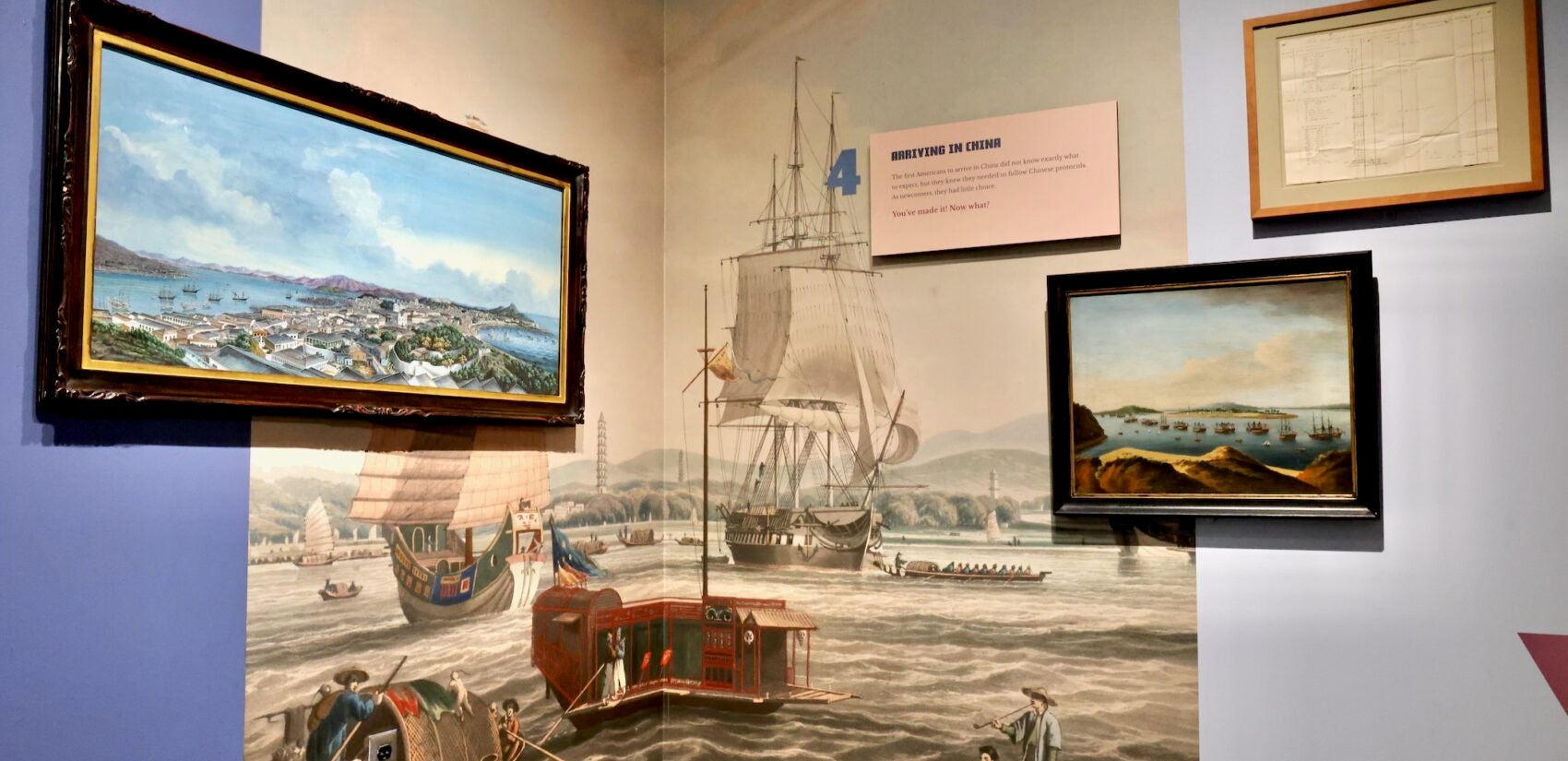
“As we think about the 250th, what we continually forget about is risk,” Seibert said. “Whether it was the risk of going against the British and what would have happened if the war had gone the wrong way, or sending a ship to China loaded with goods and good intentions, and get sunk in a storm, hijacked by pirates, the British stop it, the French stop it. It gets all the way over there and they can’t establish relations with the Chinese. The risk is breathtaking.”
Breaking the ice
The exhibition starts with the first American expedition to China in 1784 aboard the “Empress of China,” a three-masted, square-rigged ship helmed by Captain John Green, formerly of the Continental Navy, sailing out of New York City for the city of Canton, now Guangzhou.
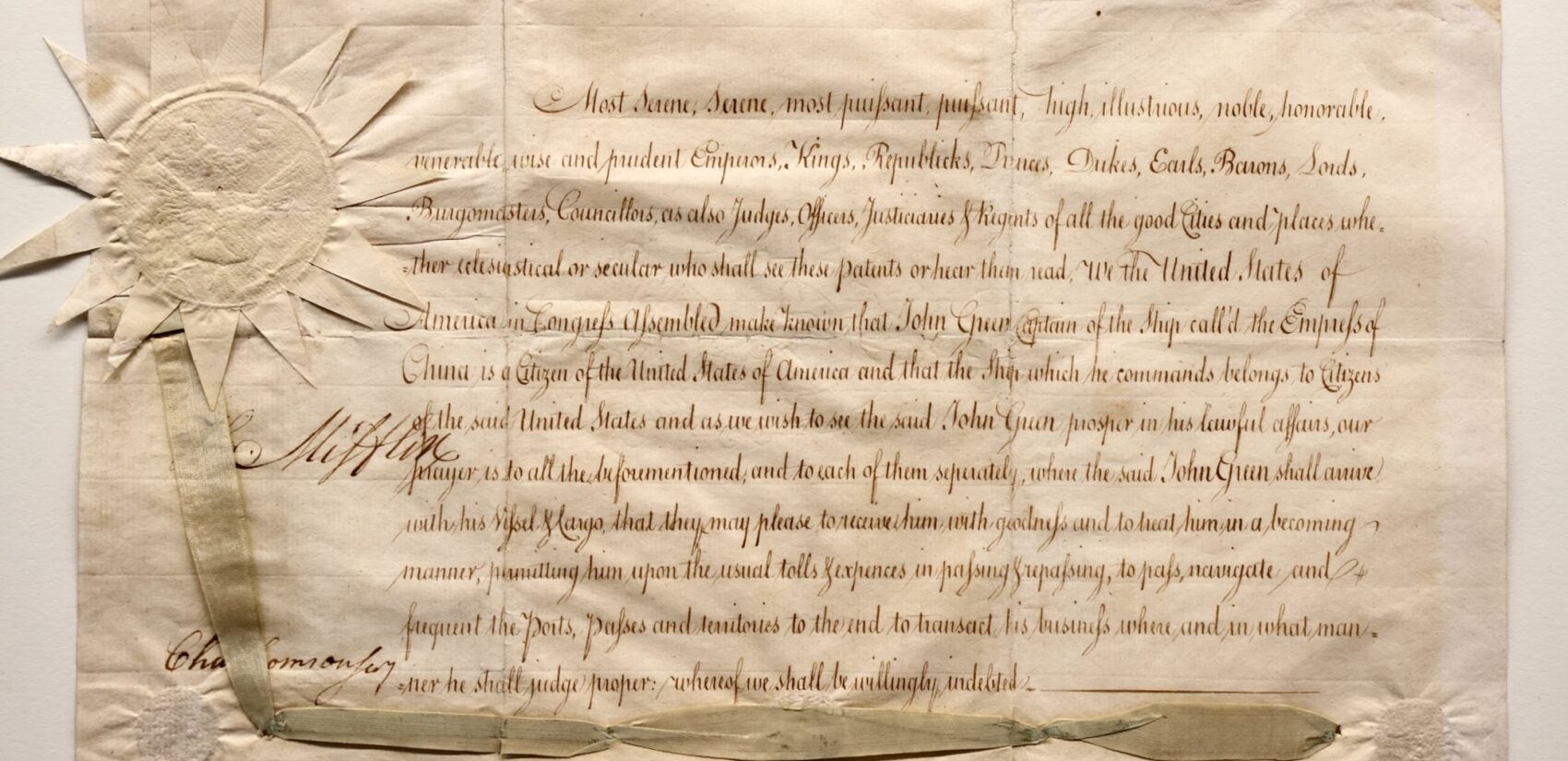
American merchants had no direct connection to anyone in China at that time. Armed with official letters from Congress and the governor of New York, a copy of the Declaration of Independence and a map of North America, Green served as an ad hoc diplomat into an entirely unknown commerce.
The letter from Congress opens with an all-encompassing salutation: “Most serene, serene, puissant, puissant, high illustrious, noble, honorable, venerable, wise and prudent Emperors, Kings, Republicks, Princes, Dukes, Earls, Barons, Lords, Burgomeisters, Councillors, as also Judges, Officers, Justicaries & Regents of all the good Cities and places whether ecclesiastical or secular who shall see these patents or hear them read …”
“This letter is so funny because they are just like, ‘Hey, who’s ever over there, we’d love to do a deal,’” Seibert said.
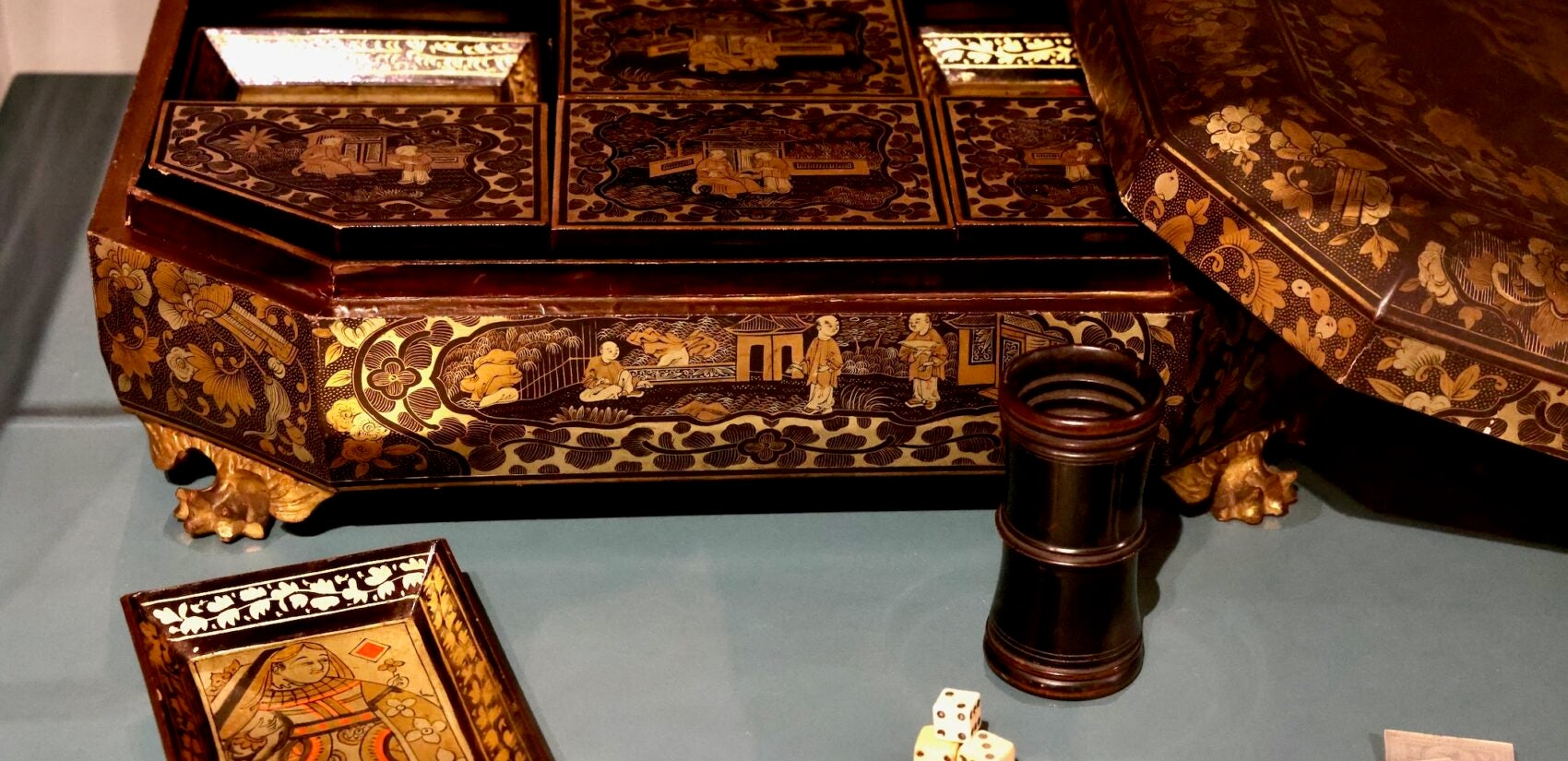
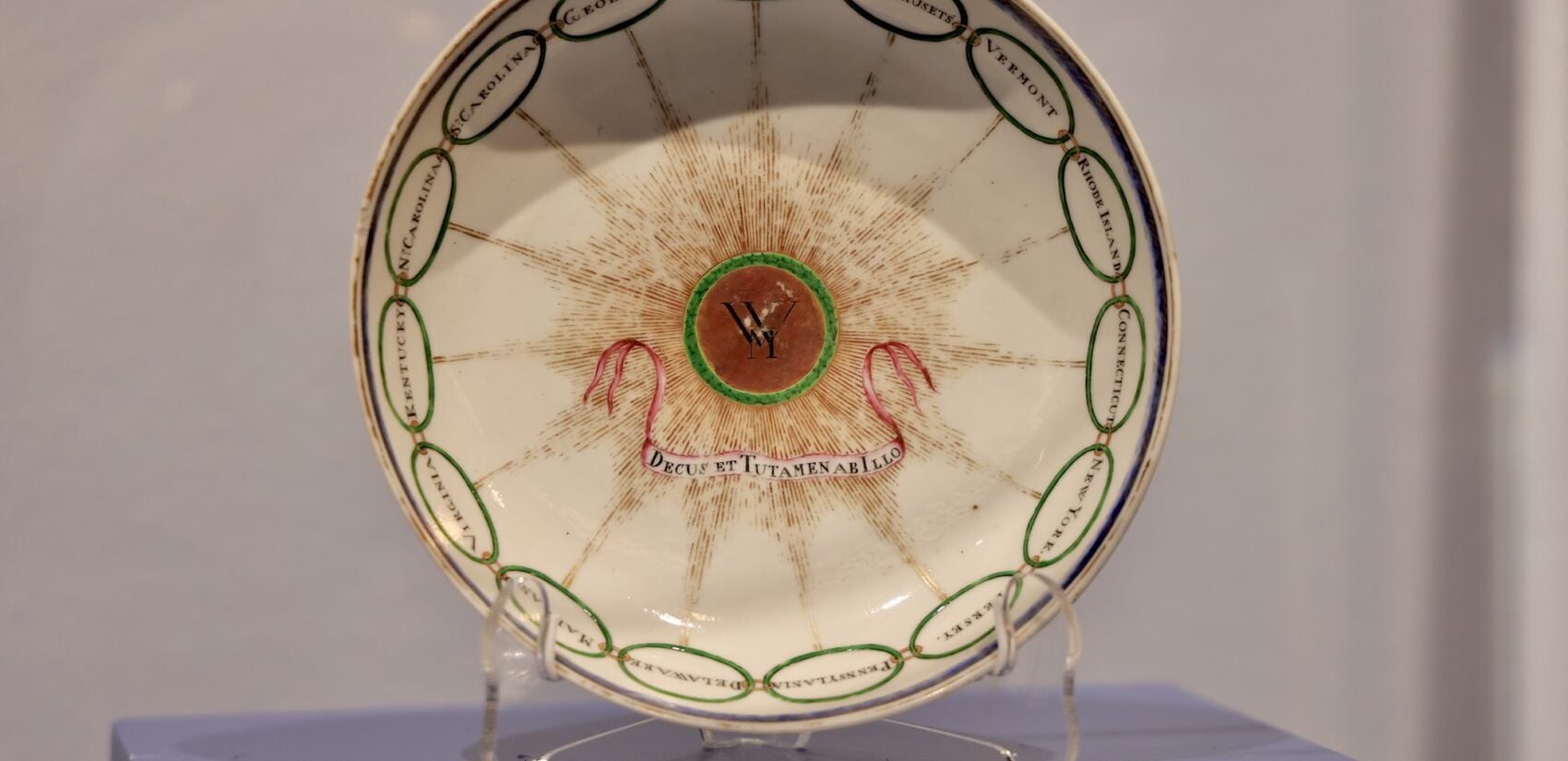
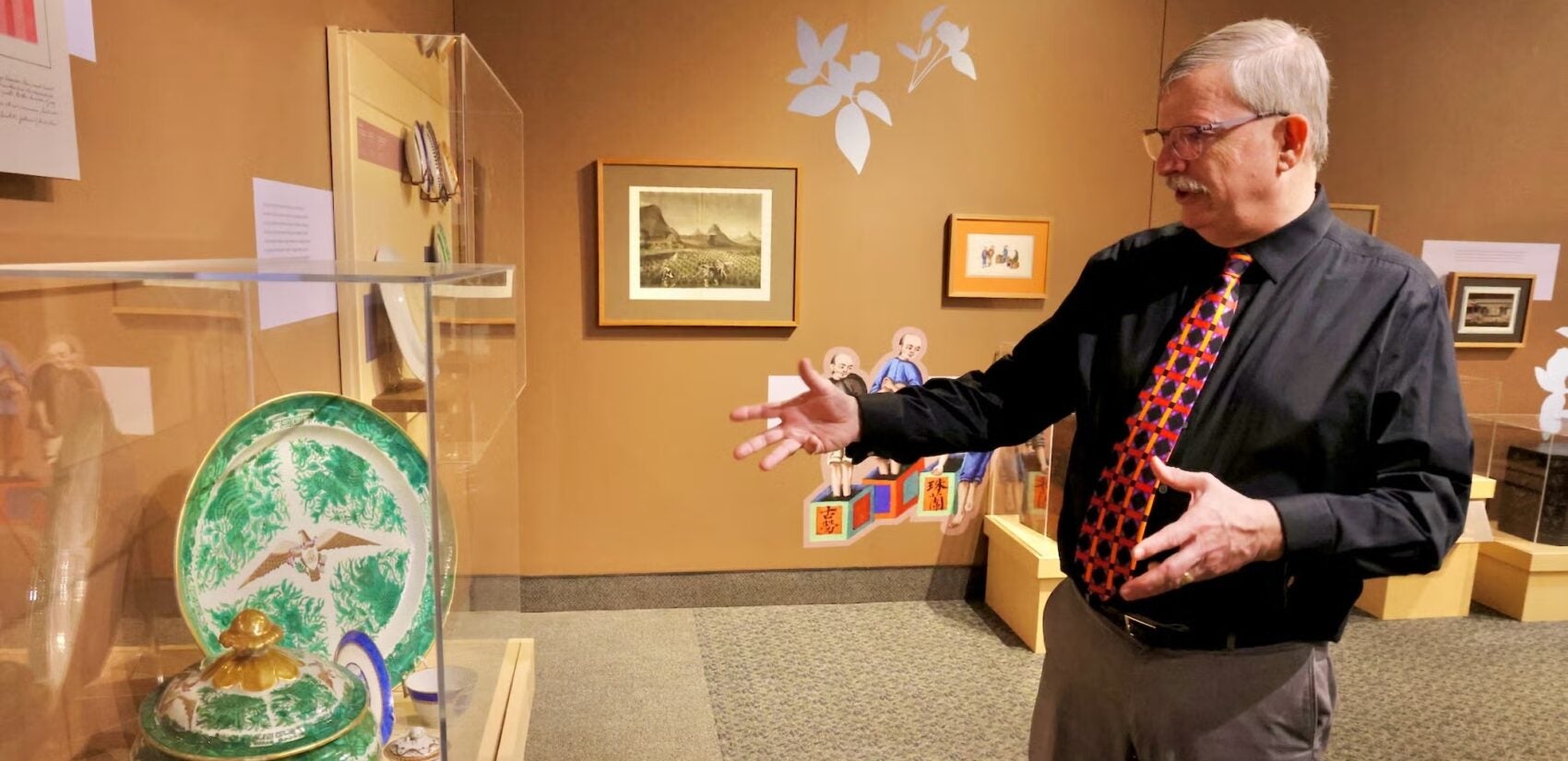
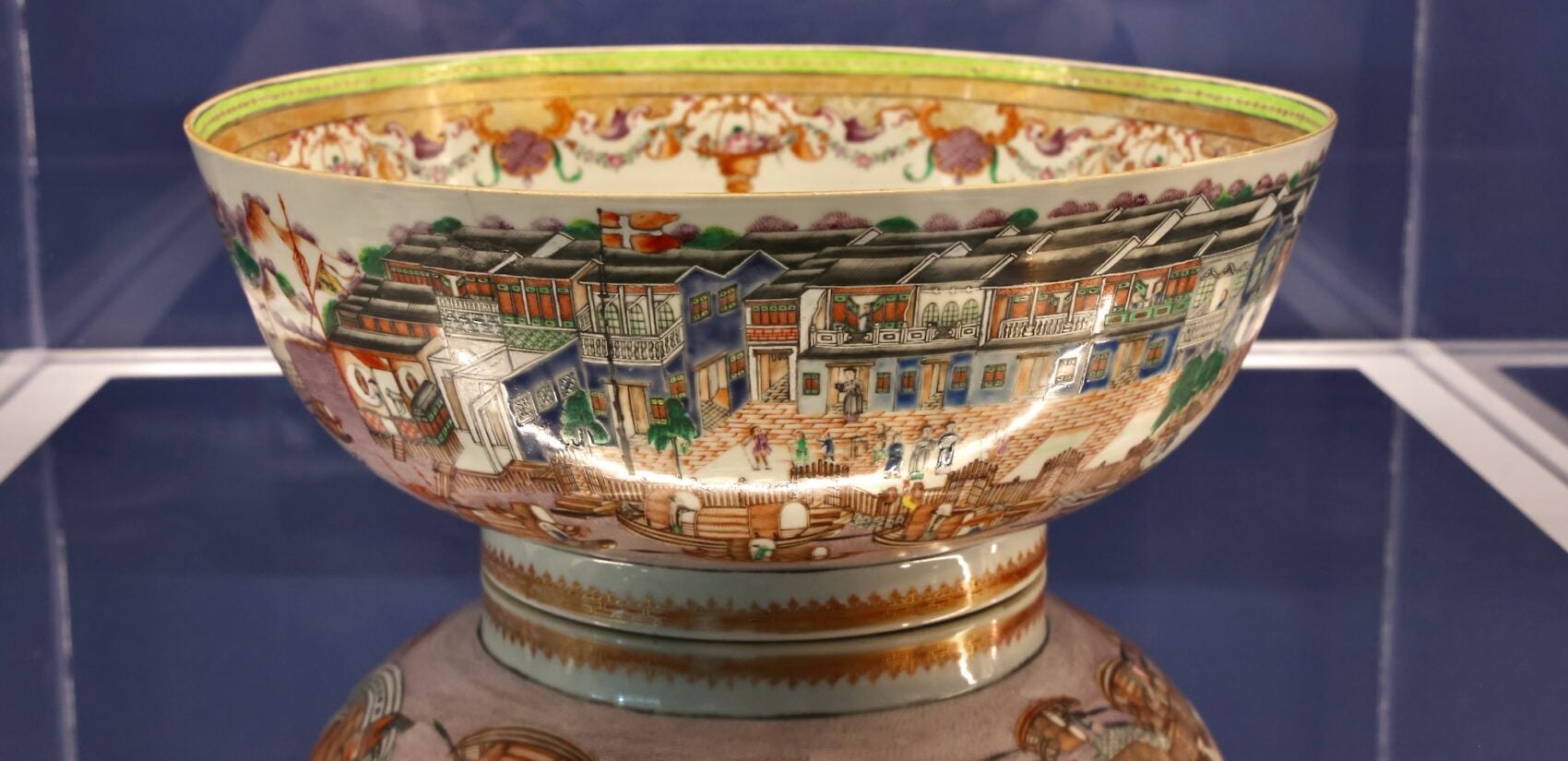
Much of the exhibition features objects brought over in the late 18th and early 19th centuries. One of the major American imports from China was porcelain, which was highly prized and regarded as the best in the world. No other country in the 18th century could produce it to the same quality.
Americans wanted to see themselves on their china. They shipped patterns for Chinese artisans to paint onto porcelain plateware. Some of these examples are showcased in the exhibit, including the Philadelphia financier Stephen Girard, who asked for a Chinese porcelain cup inscribed with his Gothic initials, under a banner reading “America.” A small china bowl that belonged to First Lady Martha Washington features the names of all 13 states of the union linked by a chain.
“It was very much establishing our national identity,” Seibert said. “We’re a new nation. We’re not British, we’re not French, we’re us. You see that particularly on porcelain.”
A one-way relationship
The problem was that China did not want anything from the United States. While American culture embraced the finery of the Far East, the Chinese were far less interested in Americana. Trade was largely one-way. In exchange for its goods, China wanted hard silver currency.
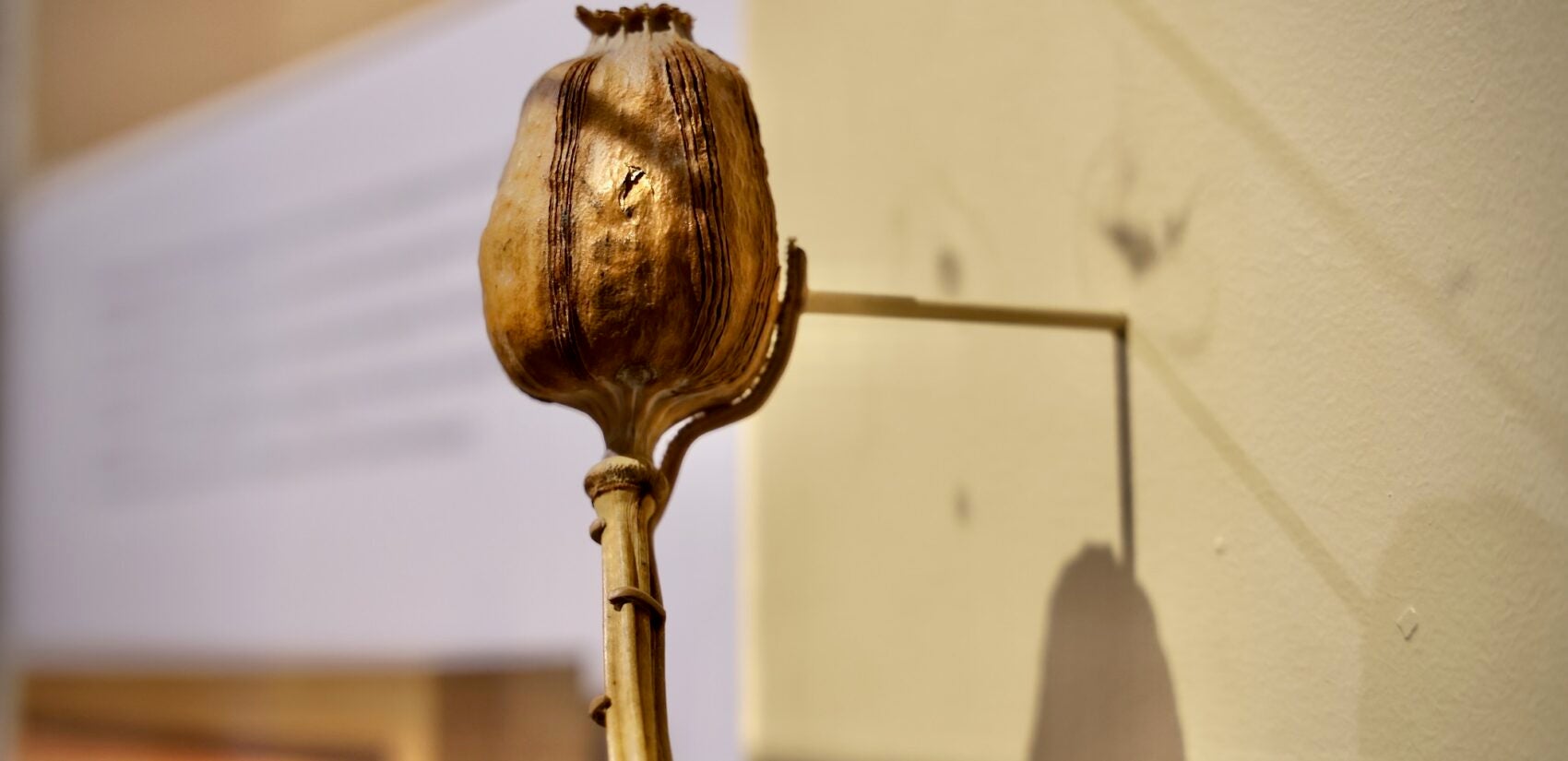
“That was the defining problem,” said Richard Vague, an economic historian and author of the new book, “The Banker Who Made America.” “The solution we arrived at, we copied from Britain because they had the exact same dilemma: Britain had nothing China wanted. The solution was opium.”
Merchant ships, both British and American, would stop in countries such as Turkey, where they could buy opium, then continue on to China to unload it. It created a massive addiction problem in China that lasted decades.
China outlawed the opium trade, but merchants could skirt the law by unloading their opium cargo on Lintin Island, now called Nei Lingding Island, near the port city of Macau, then enter Macau to sell chits to people who would go to Lintin to retrieve their parcels.
The opium trade triggered two opium wars with England, which defeated China.
“It created a generation or two of opium addicts,” Vague said. “Even today, China looks back at that as the Century of Humiliation.”
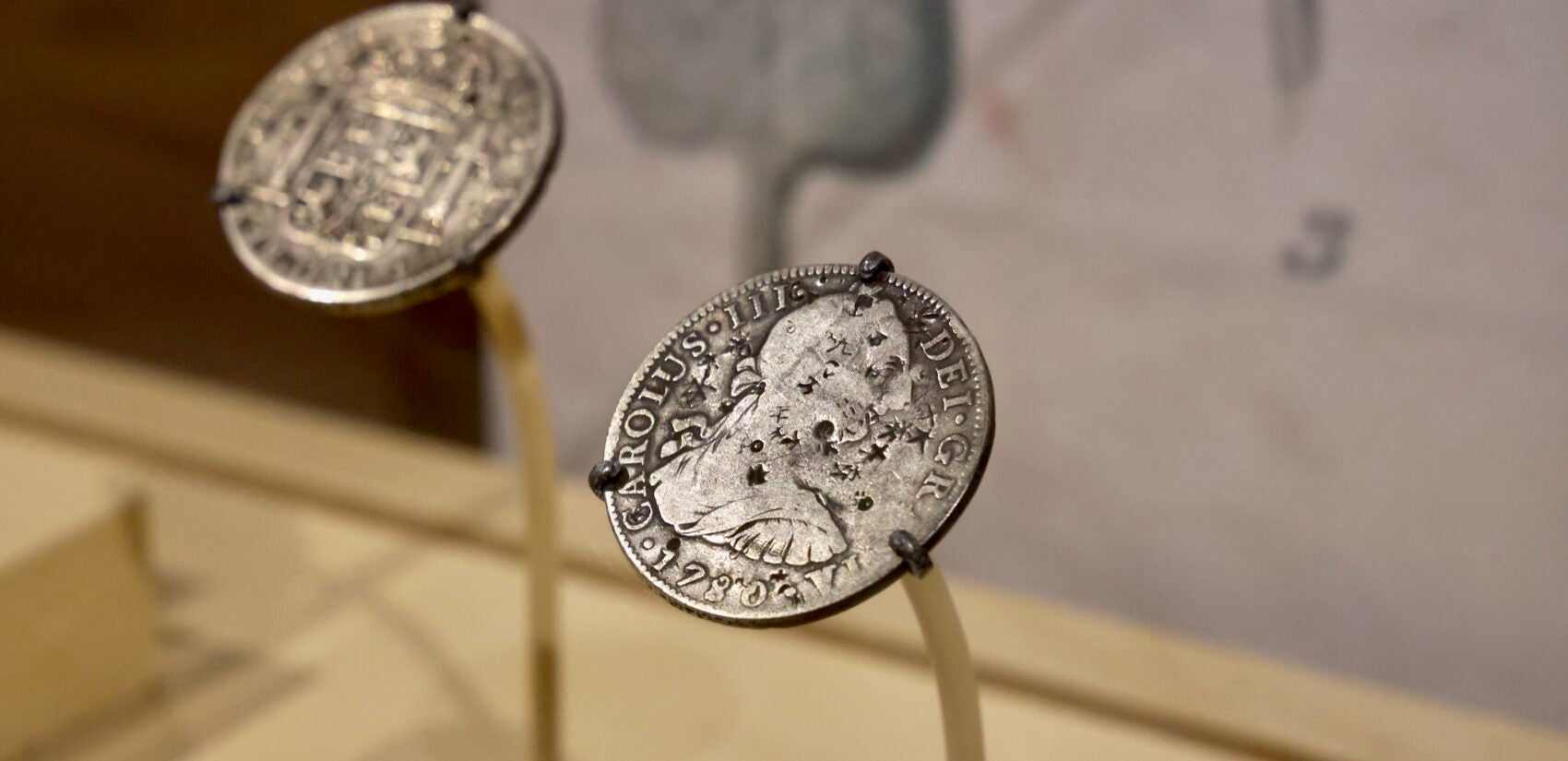
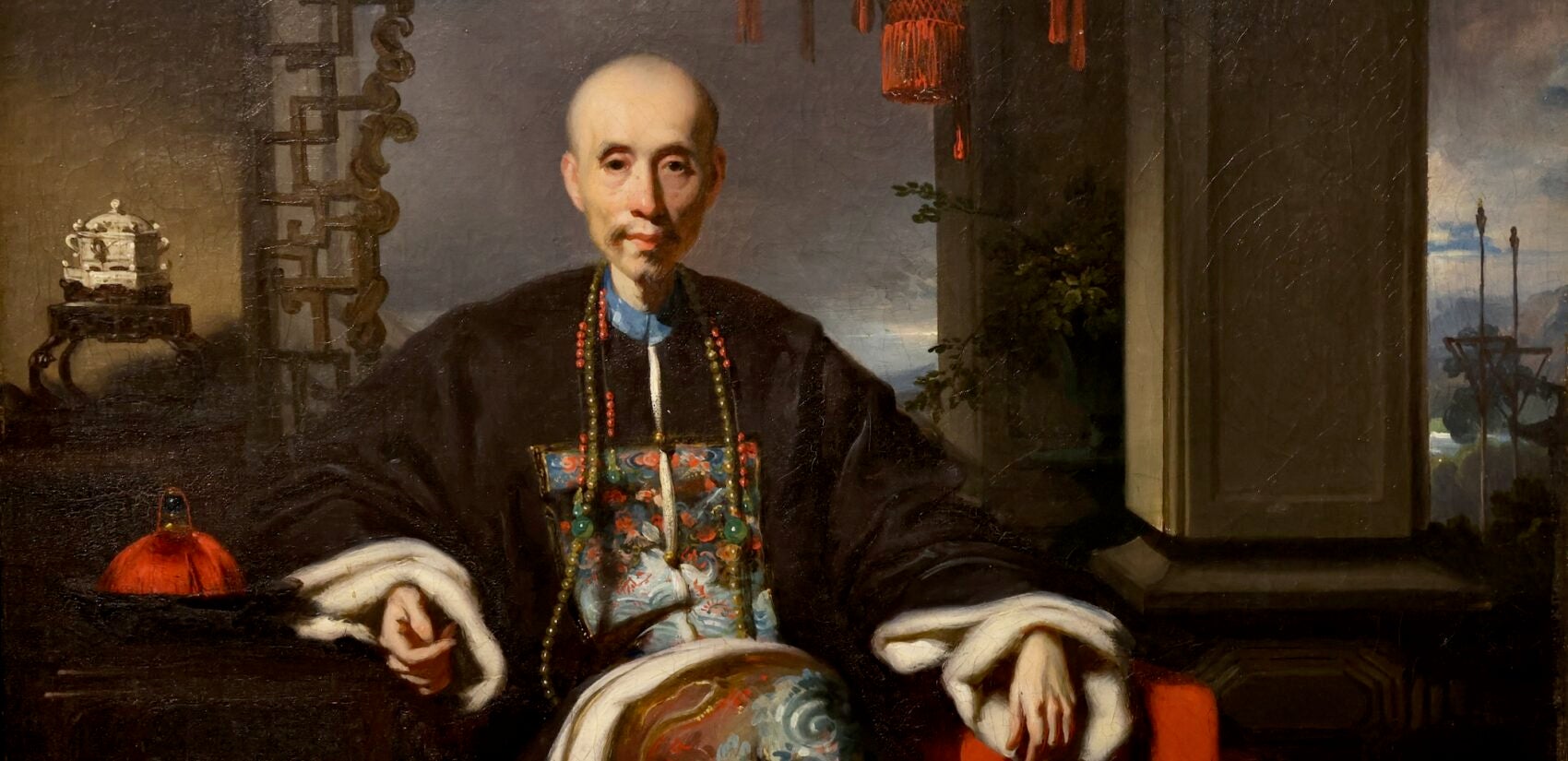
Trade with China was extremely profitable. Stephen Girard of Philadelphia built a robust shipping business from the Far East and became the richest man in America. In China, the merchant Wu Bingjian, known as Houqua, sold most of the tea available in America and became the world’s richest man.
“Seeking Profit and Power” features a single object that suggests a reciprocal Chinese affinity for Western culture. Merchants frequently had their portraits painted as gifts for longtime trading partners. Stephen Girard had at least three such portraits painted in a traditional Chinese style of flattened figures.
But Houqua, the tea merchant, had a lavish portrait painted of himself in a very Western style, with rich fabrics, in an ornate room with deep perspective, likely by a British artist living in Macao.
“What it really suggests is that it’s not just about Americans coming to China and buying and taking. It’s also the impact upon Chinese merchants who profited handsomely from this trade,” Seibert said. “Those influences do spread. That economy does spread. There is an awareness in the 18th century of this Western trade and a passion, maybe, for looking very Western.”
“Seeking Profit and Power” opens at the Independence Seaport Museum on Friday, March 20 and runs until Jan. 23, 2028.
-
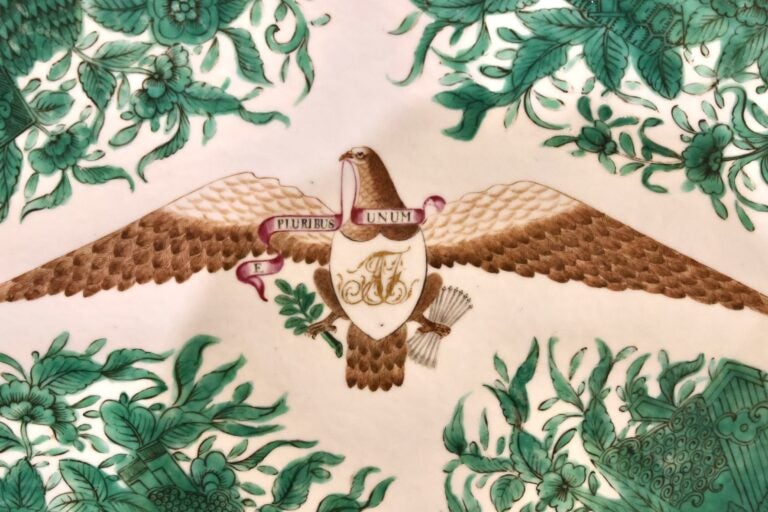
American traders brought prints and engravings of American symbols to be copied on to plates, bowls and tea sets, resulting in a mash-up of Chinese, classical and American motifs. (Emma Lee/WHYY) -
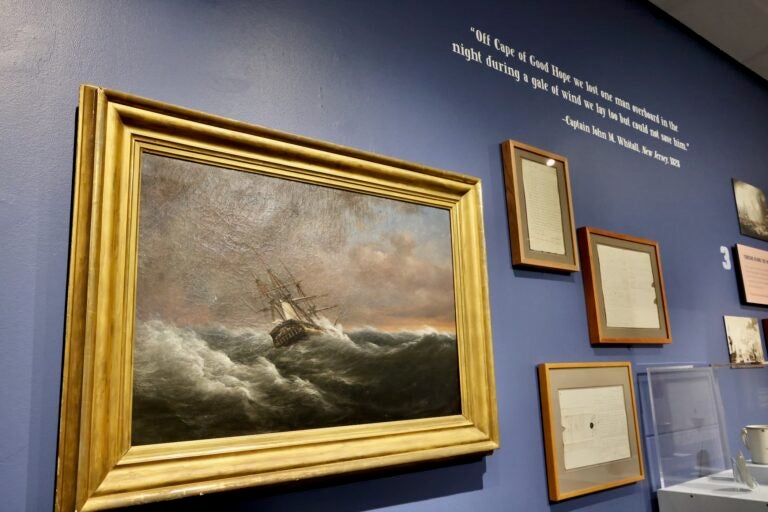
The long journey to China held many risks for American merchant ships. (Emma Lee/WHYY) -
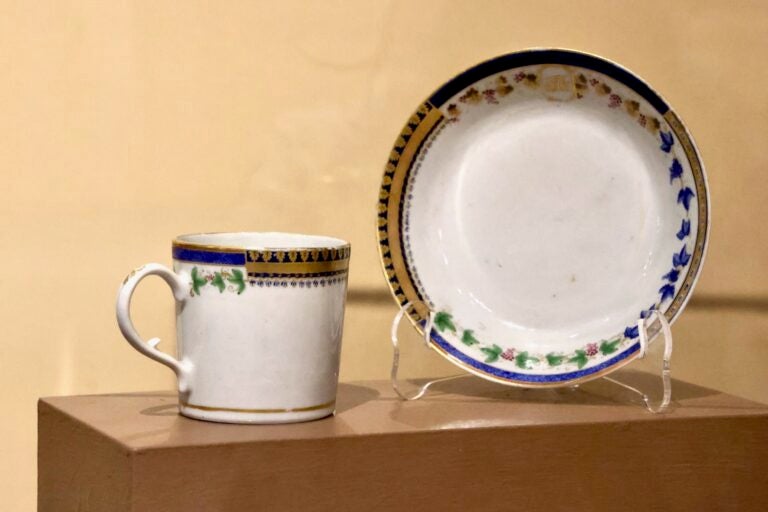
A porcelain salesman's sample produced for the European market around 1800 enabled merchants to show customers how they could customize their porcelain. (Emma Lee/WHYY) -
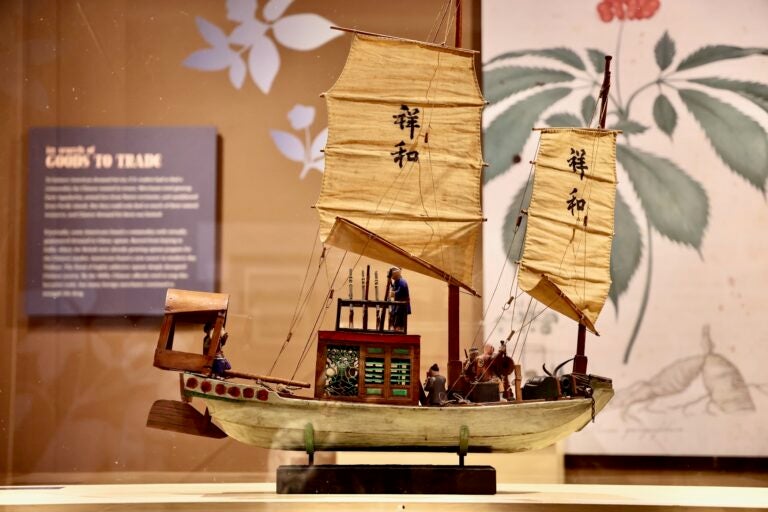
A model of a Chinese customs service patrol boat was made in China in the late 1800s. The Chinese controlled trade by limiting foreign merchants to a single port. (Emma Lee/WHYY) -
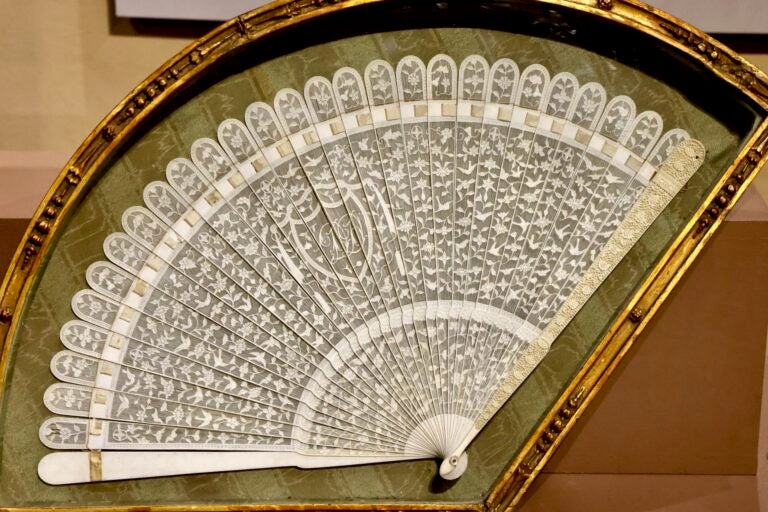
Richard Dale, who captained the first trade voyage from Philadelphia to China, brought back this custom-made hand fan for his wife, Dorothy Dale. The fan appears to be made from lace, but is actually carved from ivory. (Emma Lee/WHYY) -
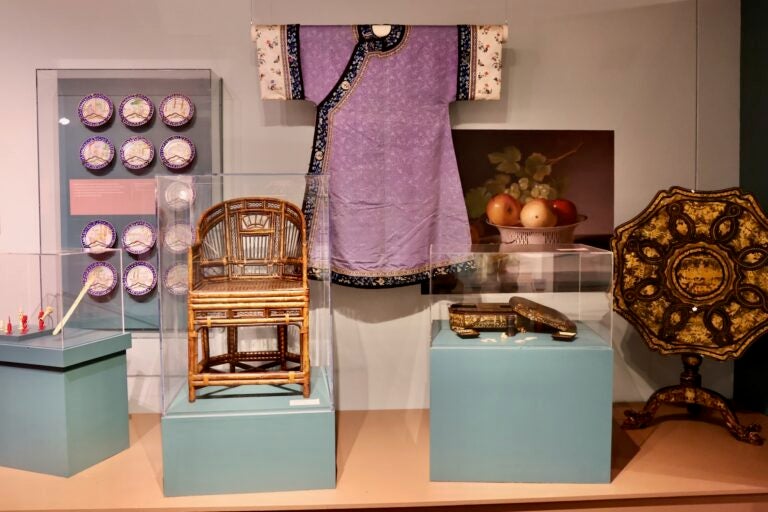
Americans were eager for Chinese goods but the Chinese were less interested in American products, which resulted in a trade imbalance. (Emma Lee/WHYY)

Get daily updates from WHYY News!
WHYY is your source for fact-based, in-depth journalism and information. As a nonprofit organization, we rely on financial support from readers like you. Please give today.
Part of the series
Philadelphia 250
The United States is marking its semiquincentennial — or its 250th anniversary — in and around the City of Brotherly Love.
Philadelphia is set to spend big on U.S. 250th celebrations
A new city controller report states the events could contribute between $1.3 to $2.5 billion to the city’s economy.
3 weeks ago
Pennsylvania Hospital, founded in 1751, treated patients in the Pine Building. The museum will feature the original surgical theater and other exhibits.
4 weeks ago
Listen 1:16
“Burlington County Joins the Revolution” features artifacts, including a letter demanding payment from the British for chickens and razors.
4 weeks ago