

Shapiro pitches $1B housing program to build new stock, reduce barriers to ownership in Pennsylvania
The plan is part of Shapiro’s budget pitch and includes a $1 billion proposal, renter protections, zoning reforms and a strategy to tackle rising housing costs statewide.
Listen 1:07
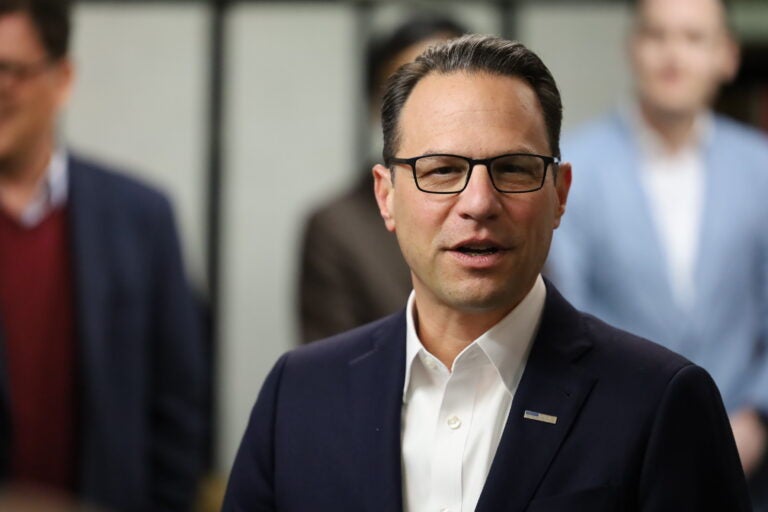
FILE - Gov. Josh Shapiro speaks with community members at Al-Aqsa Islamic Society on Tuesday night. (Carmen Russell-Sluchansky/WHYY)
From Philly and the Pa. suburbs to South Jersey and Delaware, what would you like WHYY News to cover? Let us know!
Pennsylvania Gov. Josh Shapiro on Thursday announced the state’s first-ever Housing Action Plan, pitching it as a long-term strategy to lower costs, build more homes and protect renters and homeowners across the commonwealth.
The announcement took place at The Tower at Henry in East Falls, a newly restored high-rise that sat vacant for years on the former Eastern Pennsylvania Psychiatric Hospital campus and has now been converted into a 173-unit mixed-income development.
The building includes affordable and market-rate units, along with commercial space and is a visible example of the type of redevelopment Shapiro’s administration hopes to replicate statewide.
The project was supported by $1 million in Low-Income Housing Tax Credit funds through the Pennsylvania Housing Finance Authority.
“This beautifully redone apartment building represents the kind of progress we want to make all across Pennsylvania,” Shapiro said, adding that housing prices and rent are “too damn high for too many.”
According to state data, 1 million households in Pennsylvania spend more than 30% of their income on housing, and more than half of the state’s housing stock is already more than 50 years old, increasing maintenance costs for homeowners and landlords alike. At the same time, the governor noted that the state ranks near the bottom nationally in new housing development.
Shapiro said that the Housing Action Plan — which he initiated through an executive order — is the result of more than a year of research and public engagement. Administration officials said they held 18 roundtables across the commonwealth and gathered feedback from 2,500 residents representing all 67 counties.
The final plan outlines a coordinated, long-term strategy focused on expanding housing supply, preserving existing homes, reducing barriers to homeownership, strengthening tenant protections and improving coordination between state and local governments to “modernize” regulations and zoning restrictions.
At the center of the proposal is a $1 billion “critical infrastructure fund,” included in the governor’s 2026 budget, aimed at supporting housing construction across rural, suburban and urban communities. Administration officials pointed to a recent pilot program that set aside $10 million for mixed-use development and received more than $470 million in requests, demonstrating significant demand for state investment.
Related Content
The mayor strongly opposed prioritizing the city's lowest-income households. Now, the H.O.M.E. initiative is set to add millions for repairs and preservation efforts.
8 months ago
Listen 1:06In addition to new funding, the budget calls for reforms designed to protect renters and homeowners. Among the changes are limits on rental application fees, sealing eviction records for tenants who were never ultimately evicted, authorizing transfer-on-death deeds for primary residences and placing guardrails on annual lot rent increases in manufactured home communities.
Going from executive order to state budget-funded, however, will require an act of the legislature and buy-in from Senate Republicans who have balked at the governor’s proposed overall spending.
“The governor simply wants to spend too much money in this budget, full stop,” Pennsylvania Senate Majority Leader Joe Pittman,R-Indiana, said earlier this month.
State Sen. Vincent Hughes, D-Philadelphia, said he “looked forward” to working with both parties.
“There’ll be stuff you can do by executive order, governor, and we want to make sure that gets done,” he said. “But it’s going to be the Legislature that can make sure that all of the systematic changes get done and the money gets appropriated as well.”
Shapiro said the plan would take the commonwealth “from the bottom of the pack to being a national leader when it comes to housing construction.”
“We will reduce homelessness to the lowest levels in the entire region, and we’ll create new opportunities for millions of Pennsylvanians,” he said.
To coordinate this work, the Department of Community and Economic Development will establish Pennsylvania’s first Deputy Secretary for Housing. Rick Siger, who leads the department, said the position will focus on aligning housing efforts across agencies and driving implementation of the plan.
Val Arkoosh, secretary of the Department of Human Services, emphasized the connection between stable housing and health. Drawing on her experience as a physician in Philadelphia hospitals, she described treating patients who repeatedly cycled through emergency rooms because they lacked stable housing.
“I could prescribe antibiotics. I could prescribe insulin. But the one essential treatment I could not prescribe was a home,” Arkoosh said.
At the governor’s announcement, Philadelphia resident Eunique Carr said she and her daughter nearly became homeless after her parental partner passed away, but received legal help from Community Legal Services.
“Not only were we dealing with the loss of our loved one, but we were also in danger of losing our family home and heading for foreclosure,” Carr said. “I would like to thank Gov. Shapiro for announcing his new housing plan, including reforms to help other families going through the same hardship.”

Get daily updates from WHYY News!
WHYY is your source for fact-based, in-depth journalism and information. As a nonprofit organization, we rely on financial support from readers like you. Please give today.
Governors’ races are being increasingly buffeted by the toxic politics of data centers
Pennsylvania Gov. Josh Shapiro is just one of several governors across the country trying to address the hot button issue of residents not wanting data centers near them.
12 hours ago
Shapiro-backed Democrats win House primaries in Pennsylvania swing districts the party hopes to flip
The U.S. House campaigns will put Pennsylvania on the front lines of Democratic efforts to retake control of Congress and block the last two years of Trump’s agenda.
3 months ago
Parents of victims of explicit AI-generated images called for better responses from school districts.
5 months ago
Listen 1:09