

‘We are not perfect’: DOC defends closure of Wilmington work-release program to state lawmakers
Delaware families of offenders say strict rules at the new work-release site are hurting chances for reentry success.
Listen 1:02

Closing the Plummer Community Corrections Center would save Delaware nearly $4 million in scheduled maintenance costs, officials said. (State of Delaware)
What are journalists missing from the state of Delaware? What would you most like WHYY News to cover? Let us know.
The Delaware Department of Correction defended its decision to shutter a Wilmington work-release program to a state Senate committee Tuesday.
The state closed the Plummer Community Corrections Center last month. Delaware Department of Correction Commissioner Terra Taylor said only three people remain, with the remaining transferred to the Community Corrections Treatment Center in Smyrna.
Taylor told Senate Corrections and Public Safety Committee members that the work-release program for lower-level offenders has not been reduced or eliminated since the closure. She said that transportation is being provided for Smyrna prisoners who need it to get to work, go on job interviews and attend treatment appointments across New Castle and Kent counties.
Rachelle Wilson said her son Justin was originally ecstatic to be in the work-release program in Smyrna, but the strict rules and humiliating policies are hindering those housed there from working.
“When systems block employment, [it] undermines dignity and violates civil rights … and creates or supports [the] implementation of barriers instead of pathways, it is not rehabilitating. [The system] is unconstitutionally failing,” Wilson said.
Taylor said the Plummer facility was no longer needed, mostly because fewer people are being locked up. Some people who would previously be participating in work-release programs could be monitored electronically or finish their sentence through home confinement.
“The cost comparison is significant,” Taylor said. “Approximately $2.85 per day for home confinement, versus $340 per day at the Plummer Center.”
Related Content
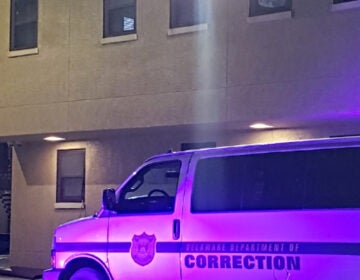
Community advocates say the facility is critical in the transition from incarceration to freedom for Wilmington residents and their families.
9 months ago
Listen 2:07Wilson said her son Justin, who served 17 years in prison and is now at the Smyrna center working toward reentry, is currently not allowed to live with her because of a utility bill issue.
According to the Delaware Correctional Reentry Commission, a copy of the lease or mortgage, and the most recent phone and electric bills must be provided along with a host agreement form, in order to qualify for level 4 home confinement.
While Taylor maintained that the Northern Delaware work-release program had not been diminished by the center’s closure, Wilson argued that some of the men housed at the Smyrna center are locked up 23 hours a day, do not have access to computers and have lost job opportunities because they were not allowed to leave the premises.
She said this is despite a Department of Correction requirement that people in the work-release program find a job within 30 days and cannot be self-employed.
Taylor said they are revisiting certain expectations and continue to evolve.
“We are not perfect, but we do need to evolve, and we have,” she said. “I want to acknowledge we have evolved. We’re not here to sound defensive. We’re here to continue to work together with our partners and keep moving forward.”
Wilson said Justin is currently attending Project New Start, a 10-week, nonprofit reentry program based on the Delaware Law School campus at Widener University. But she said it was “humiliating” for Justin to be strip-searched every time he returned to the Smyrna center.
Related Content

Former graduates of Wilmington’s work release program say it saved their lives. It’s set to close next month.
7 months ago
Listen 1:03Taylor said that the security protocol is the same for other facilities and searching offenders upon returning to the facility is designed to detect people sneaking in drugs and other contraband.
University of Delaware Senior Scientist Dan O’Connell and ACLU Advocacy Director John Reynolds also made presentations, giving the committee insights into improving Delaware’s recidivism rate.
O’Connell, who also teaches criminology, emphasized that the quality of treatment to help people re-enter society is more important than where said treatment is located. Reynolds said the Plummer Center closure could be “a powerful moment for us to build connections and communications.”

Get daily updates from WHYY News!
WHYY is your source for fact-based, in-depth journalism and information. As a nonprofit organization, we rely on financial support from readers like you. Please give today.
Part of the series


Los tiroteos en la vía pública han disminuido, pero siguen siendo un problema persistente. El alcalde creó una oficina para coordinar los servicios.
5 days ago
Se acusa a los hombres de robar a un influencer en internet y de dejar tras de sí para los investigadores un rastro de publicaciones en redes sociales y pagos digitales.
5 days ago

ACLU de Delaware está solicitando a los líderes estatales que establezcan normas a nivel estatal que regulen cuándo la policía puede colaborar con ICE y compartir información.
2 weeks ago